

Share with others:

Microsoft engineer reveals how "fast reboot" worked in Windows 95

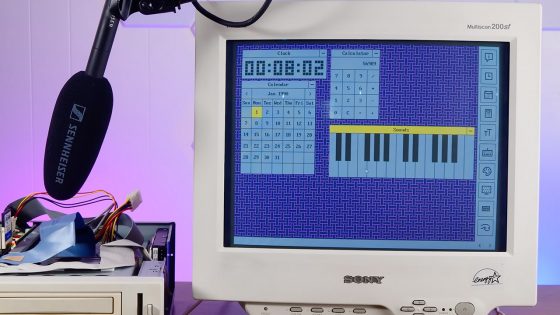
In an era when processors were slow and hard drives were noisy, every reboot of Windows 95 was a test of patience. But resourceful users discovered that they could hold down the Shift key while clicking the “Restart” button, which caused the desktop to refresh in seconds instead of minutes. Raymond Chen has now explained that this trick wasn’t just a software shortcut, but a clever manipulation of the system’s kernel itself.
Instead of the system commanding the motherboard to completely reboot (which would trigger slow BIOS tests and RAM counts), the Shift key command simply shut down the graphics interface and drivers. Windows 95 simply returned to the MS-DOS environment that was always running in the background and immediately restarted the WIN.COM graphical shell. This was a revolutionary solution for the time, as it allowed users to quickly fix minor system errors without waiting for a hardware cycle.
Interestingly, the feature didn't work the same on all computers. If specific drivers were loaded in the AUTOEXEC.BAT or CONFIG.SYS file that required a full hardware reset, the system detected this and performed a classic boot despite the Shift key being pressed. In 2026, when our computers and phones perform background updates, such nostalgia seems almost unbelievable, but it was these innovations that paved the way for modern features like "Fast Startup" in Windows 11. The engineer's revelation reminds us of a time when programming in constrained environments was a true art of optimization.