

Share with others:

Narwal Flow Test – it does almost everything on its own over time

What are my concerns or expectations every time I get a new robot vacuum to test? Will it run around aimlessly? Will it be able to clean past kitchen chairs, under low furniture, the sofa...? What kind of autonomy can I expect? Will I have to move all the cat toys, scratching posts, etc. every time? Can I set a schedule for it to vacuum and mop every day without worrying, even if I'm not home?
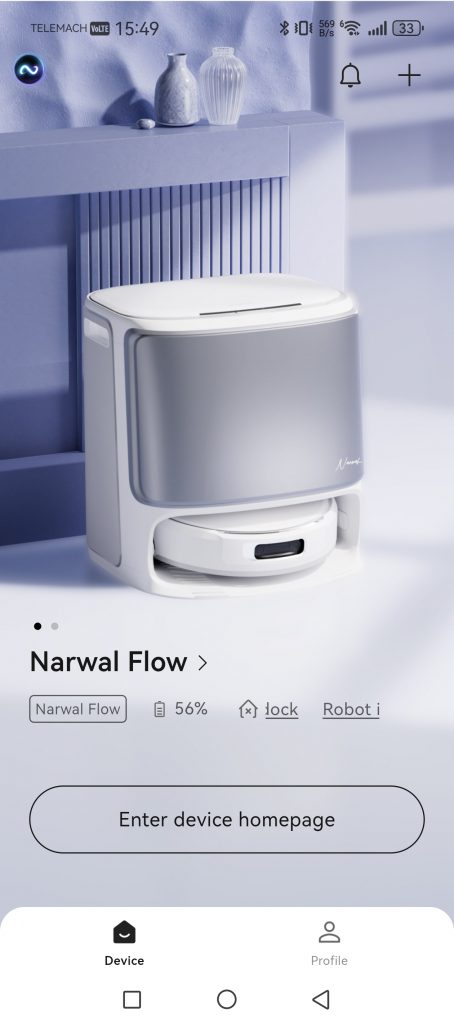
This time there was a robot vacuum cleaner at my home range Narwhal FlowAlthough it's barely six months old (it was released last August), it will soon get a successor (Flow 2), but don't worry. The original Narwal Flow won't be ready for retirement for a while.
Narwal Flow price?
Readers of Computer News can take advantage of the promotional code until 2. 3. 2026 NEWS-FLOW for as much as €450 discount, with which you will get the price of a robot vacuum cleaner Narwhal Flow reduced to only €849.
Easily fits under low furniture, wide hips can get in the way
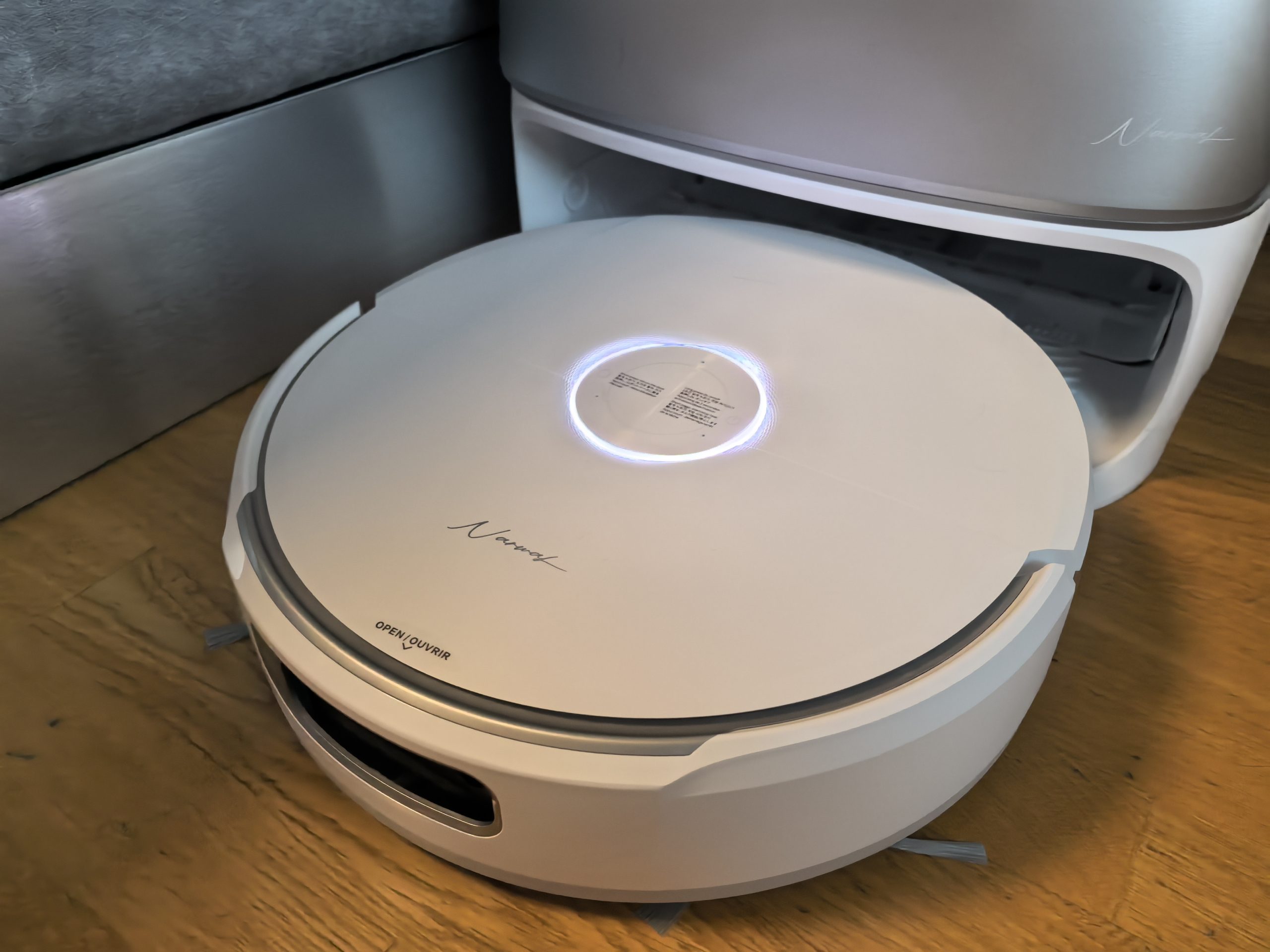
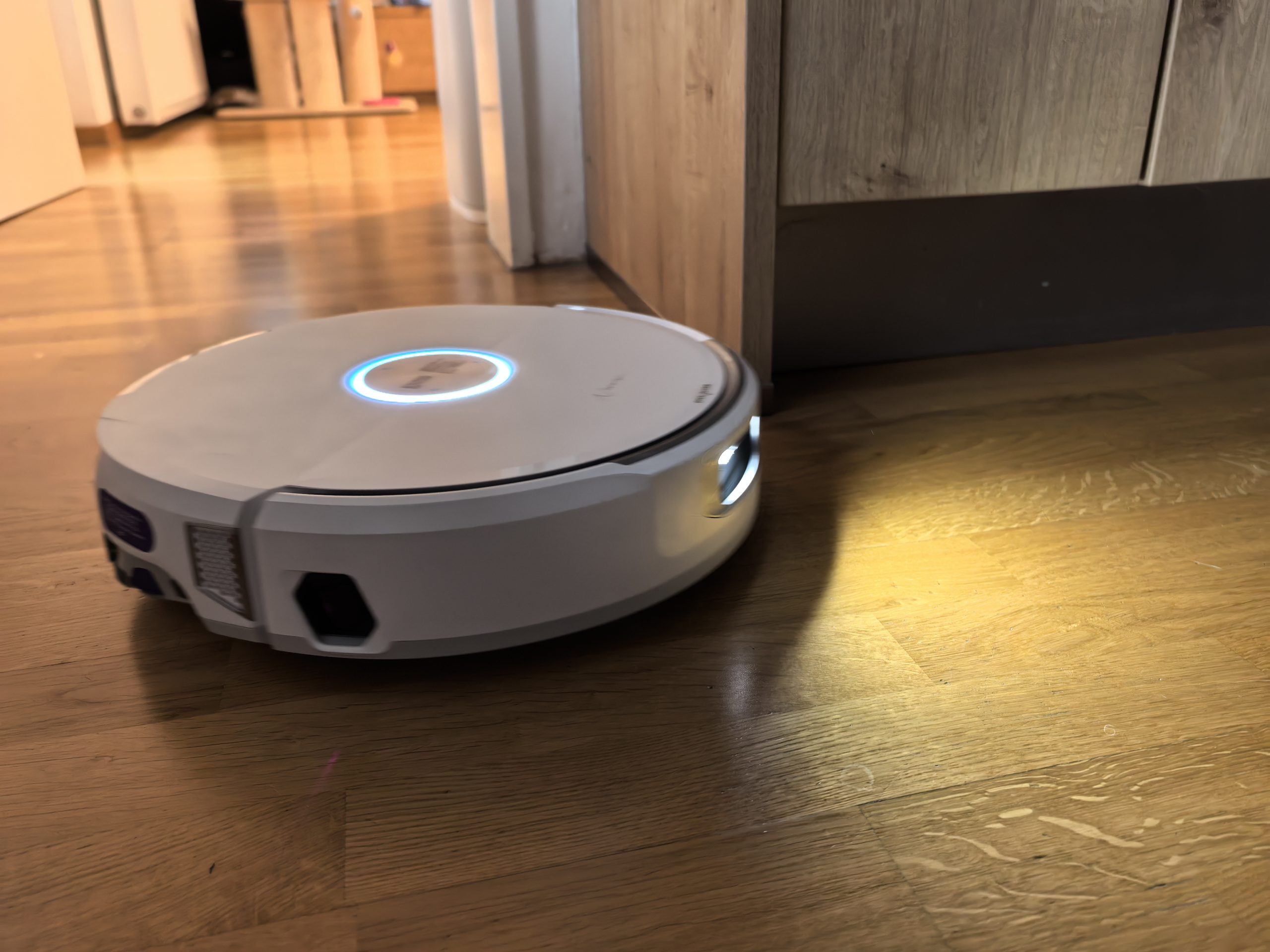
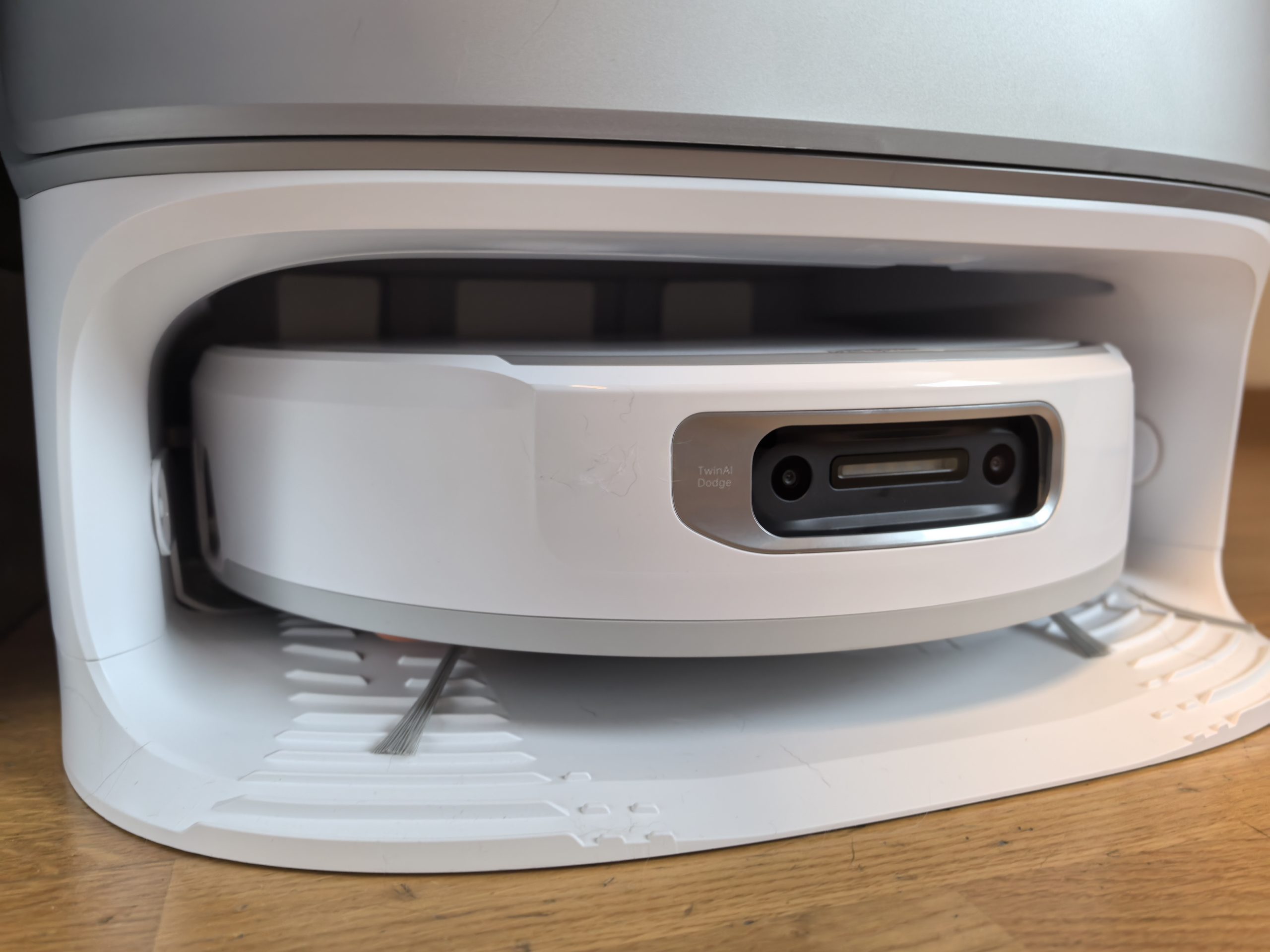
Narwal Flow looks very modern and technically sophisticated. I really like the combination of white (although it gets dirty faster) and purple, which is also the trademark of Narwal. The housing is round with a diameter of about 35 cm, and its height is only about 9.5 cm, which is lower than many competing models. This is achieved by innovatively placing the LiDAR laser inside the back of the robot, instead of in the typical tower on top. The lower profile means that Flow can drive under lower pieces of furniture (for example, under a sofa, a wardrobe, a bathroom sink, etc.), where taller robots cannot reach, and clean dust even under these hidden corners. It has ample sides, which is great because it also has a slightly larger working surface, but this also means that, at least for me, it was not able to get past the legs of kitchen chairs, a coffee table, and the like. Which consequently also affects its autonomy, because I still have to manually make a way for it to clean under the table and elsewhere.
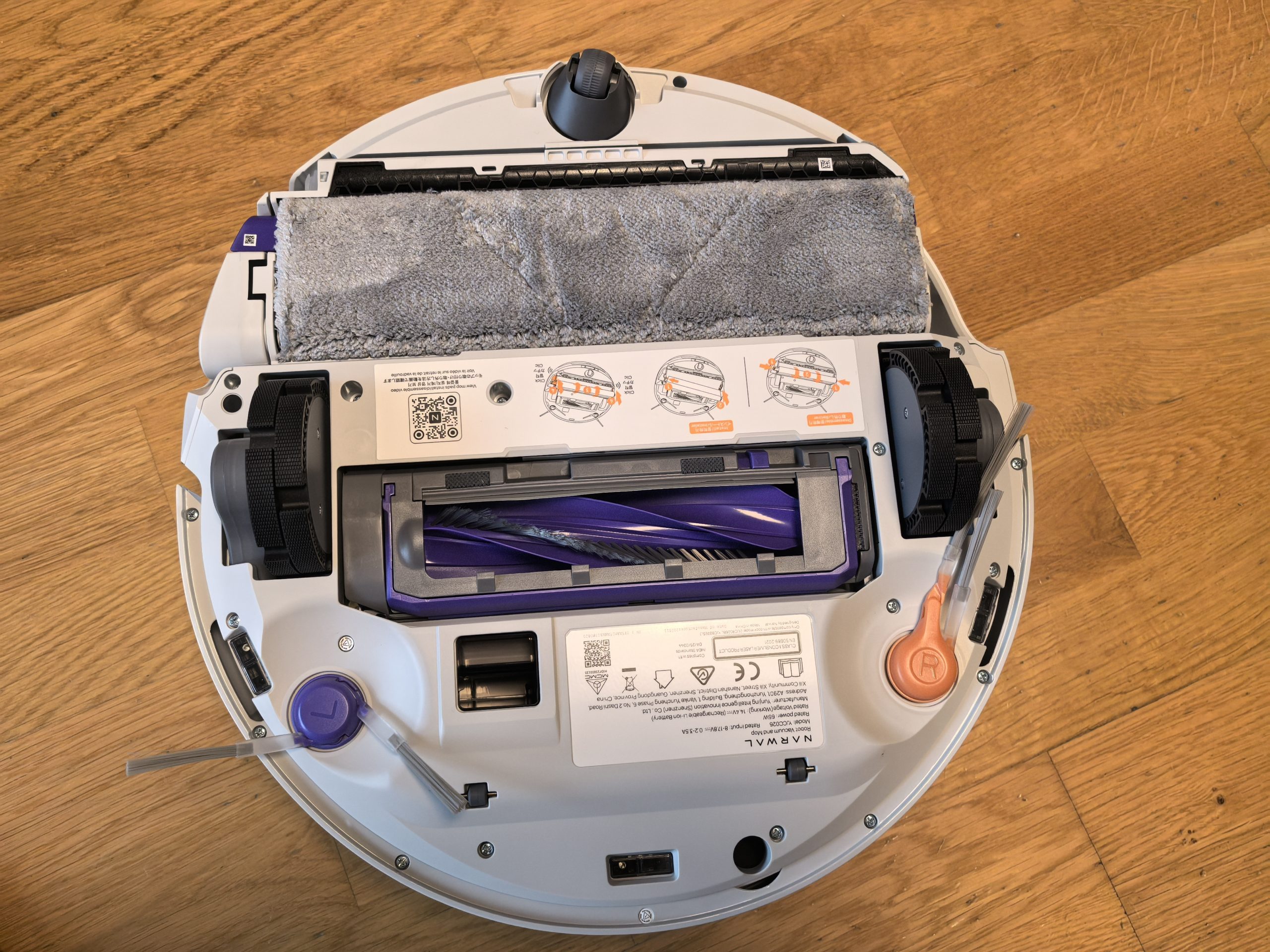
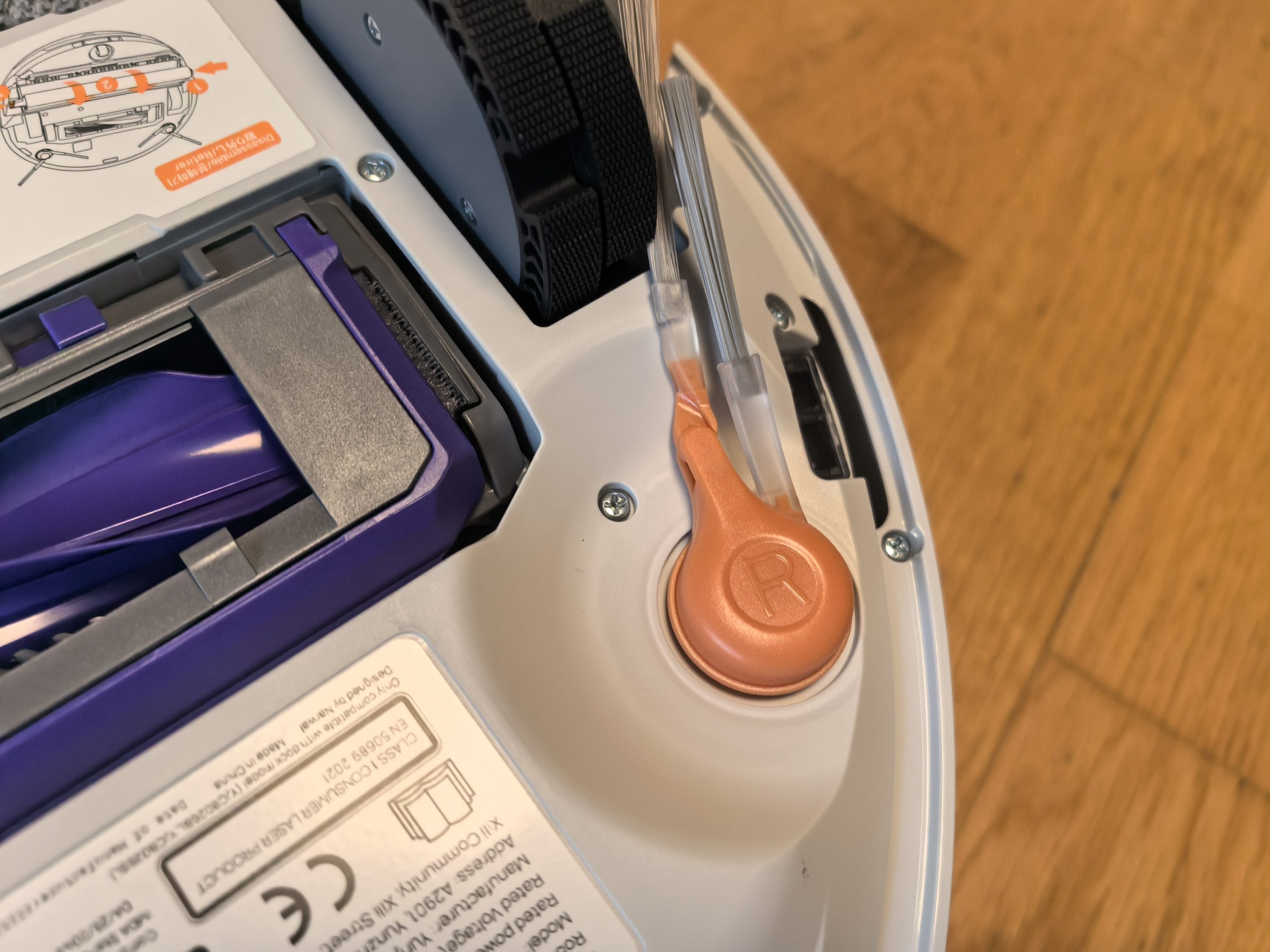
Underneath the body is an impressive brush mechanism. The Narwal Flow has two side brushes that can be extended or adjusted to sweep dirt from corners and along the edges of rooms. During my test, I noticed that the robot automatically adjusts the rotation speed of these side brushes depending on the surface. For example, on hard floors, it slows down to avoid scattering debris around, although it still happens that a piece flies off into the unknown.
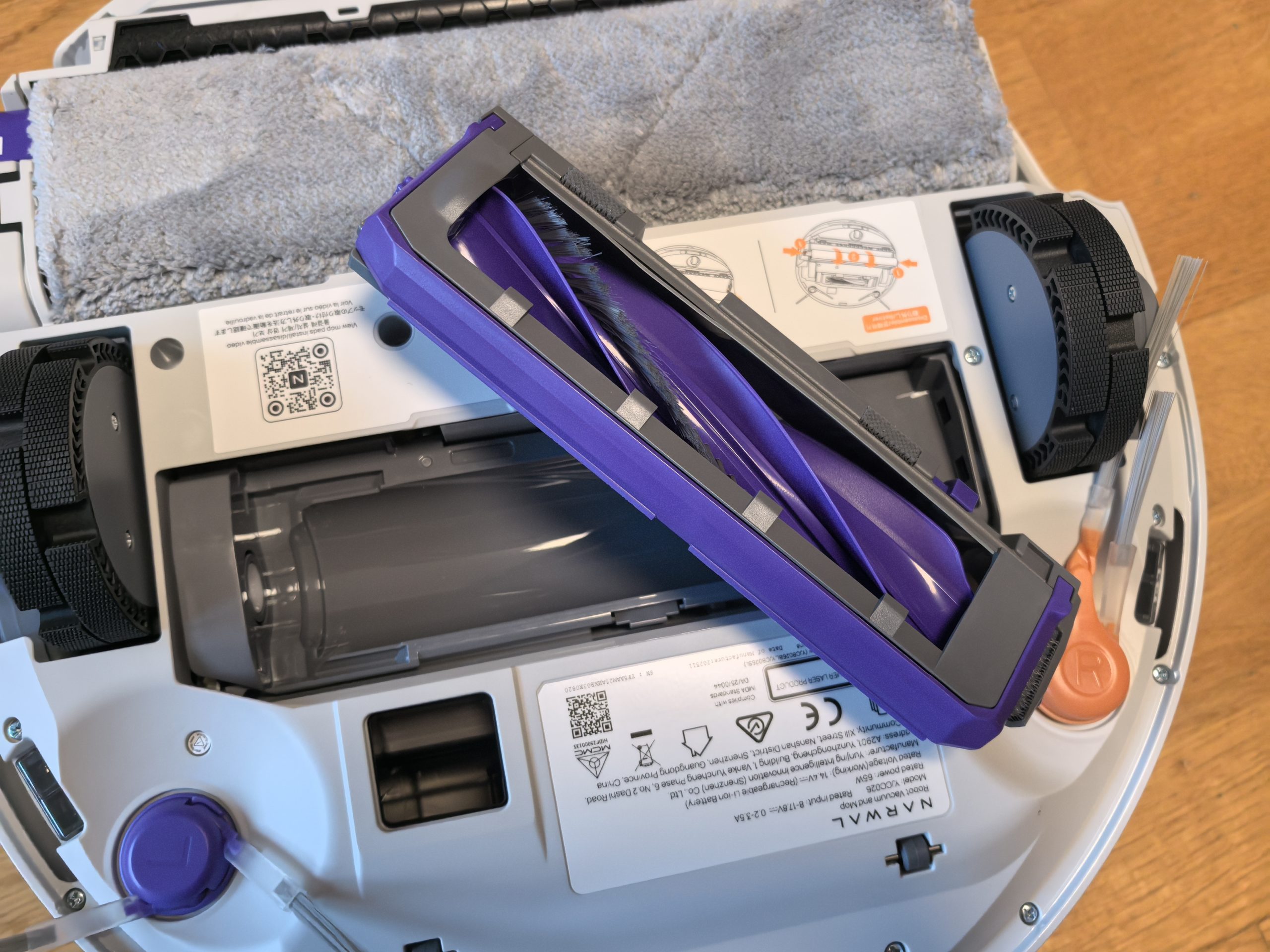
The main brush in the middle is specially designed to prevent hair and fur from getting tangled. It is not attached directly to the housing at one end, which helps direct long hair into the bin. Given that I have two cats (one is long-haired) and a partner who is also a source of endless hair loss, it is very important to me that I do not have to clean the brush every other day, like on my old vacuum cleaner. After a week of use, I only cleaned the brush once, and that was only for small balls of dust. The cat hair and fur did not wrap around the brush, so cleaning was completed in a few seconds and I did not need scissors. The anti-tangle system clearly works.
Not only does it vacuum well, it can also wash dishes
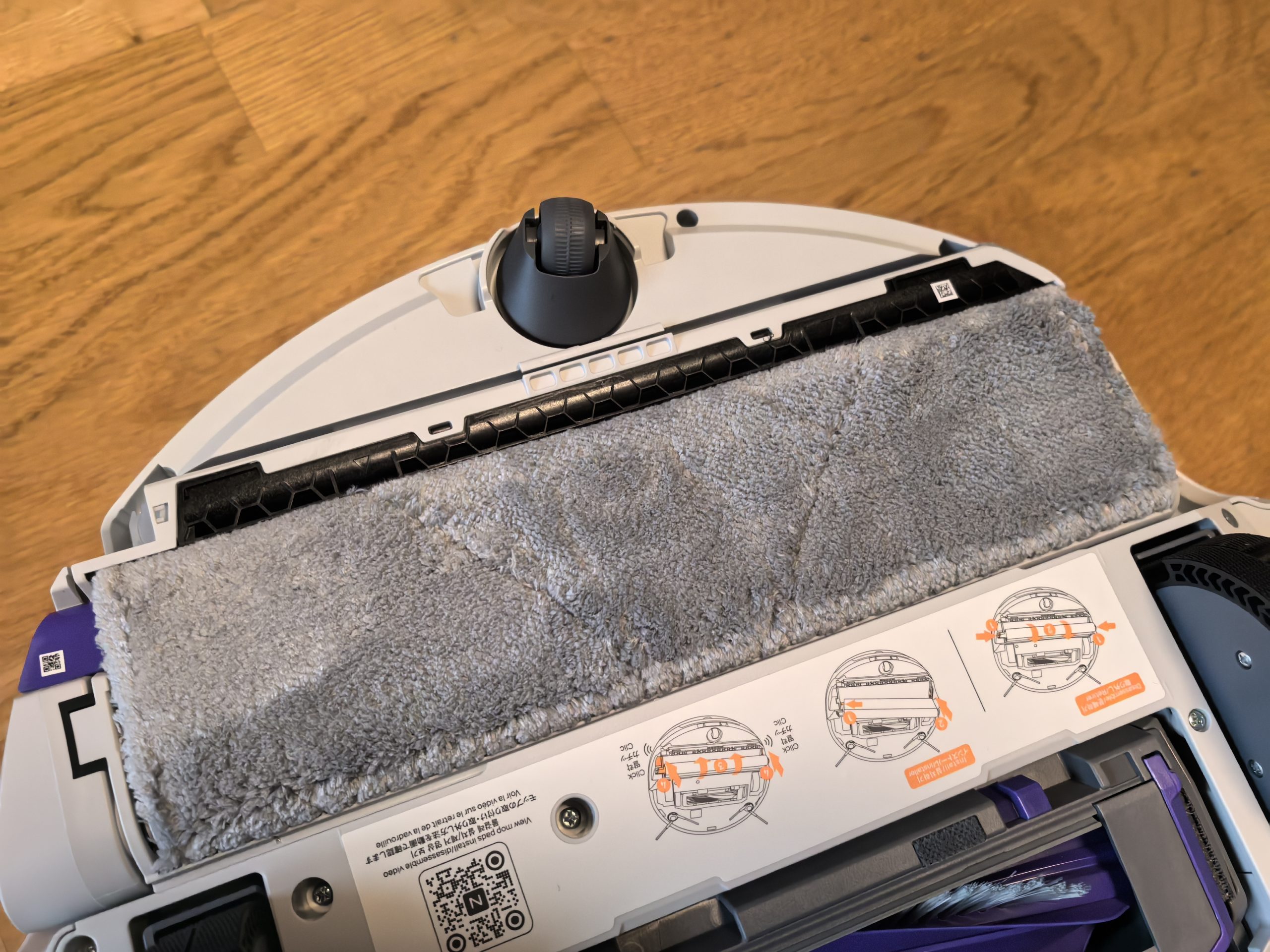
The Narwal Flow vacuum cleaner's special feature is its innovative wet cleaning system, which is quite different from the classic round mop pads. On the bottom there is a wide cylindrical mop attachment (Narwal calls it the FlowWash Track Mop), which is slightly flatter and has a larger surface area for pressing against the floor than the usual small rotating mop pads. This roller is constantly wetted during operation by spraying water from the nozzles, and at the same time, like a kind of wiper, it collects dirty liquid and squeezes it into a special dirty water tank inside the robot.
This means that the robot can pick up small spills or dissolve dried stains without just spreading them on the floor - the dirt is absorbed into the robot as it goes. The roller can also extend slightly over the edge of the housing when needed during cleaning to reach dirt right next to the wall and in corners where the robot usually has difficulty reaching. In addition, the cleaning pad can be raised by approximately 11-12 mm when the robot detects a carpet so that it does not get wet during vacuuming.
I no longer have carpets at home, so I wasn't able to test this. Otherwise, I'm mostly satisfied with how and what it manages to clean. All the fresh dirt that I intentionally set it to (sauce, milk, coffee, etc.) was cleaned in an instant, without even needing an additional pass. It didn't leave any spots behind, which is also very important to me. I let certain stains dry overnight, which is a much bigger challenge for robot vacuums. I compared it to my robot vacuum with two rotating cleaning pads. Although the test was short and I would have needed more time with both vacuums for better results, at this point the Narwal Flow cleaned the dry dirt better. The dry coffee stain was almost completely removed, the edge of the stain was barely visible. The same goes for the tomato sauce stain, which disappeared completely. In the app, you can set how much water the robot should use, turn on double pass, and the like. A very useful feature is that the robot disinfects itself after cleaning to prevent unpleasant odors or mold. If you happen to have carpets, the robot will lift the mop by just under a centimeter.
Unless you have really dried-on dirt that you have to scrub hard by hand, the Narwal Flow will mostly be able to clean it. However, I still maintain that robotic vacuum cleaners are still intended for maintaining cleanliness and not for deep cleaning the home at this point.
The charging base is bulky, but also advanced
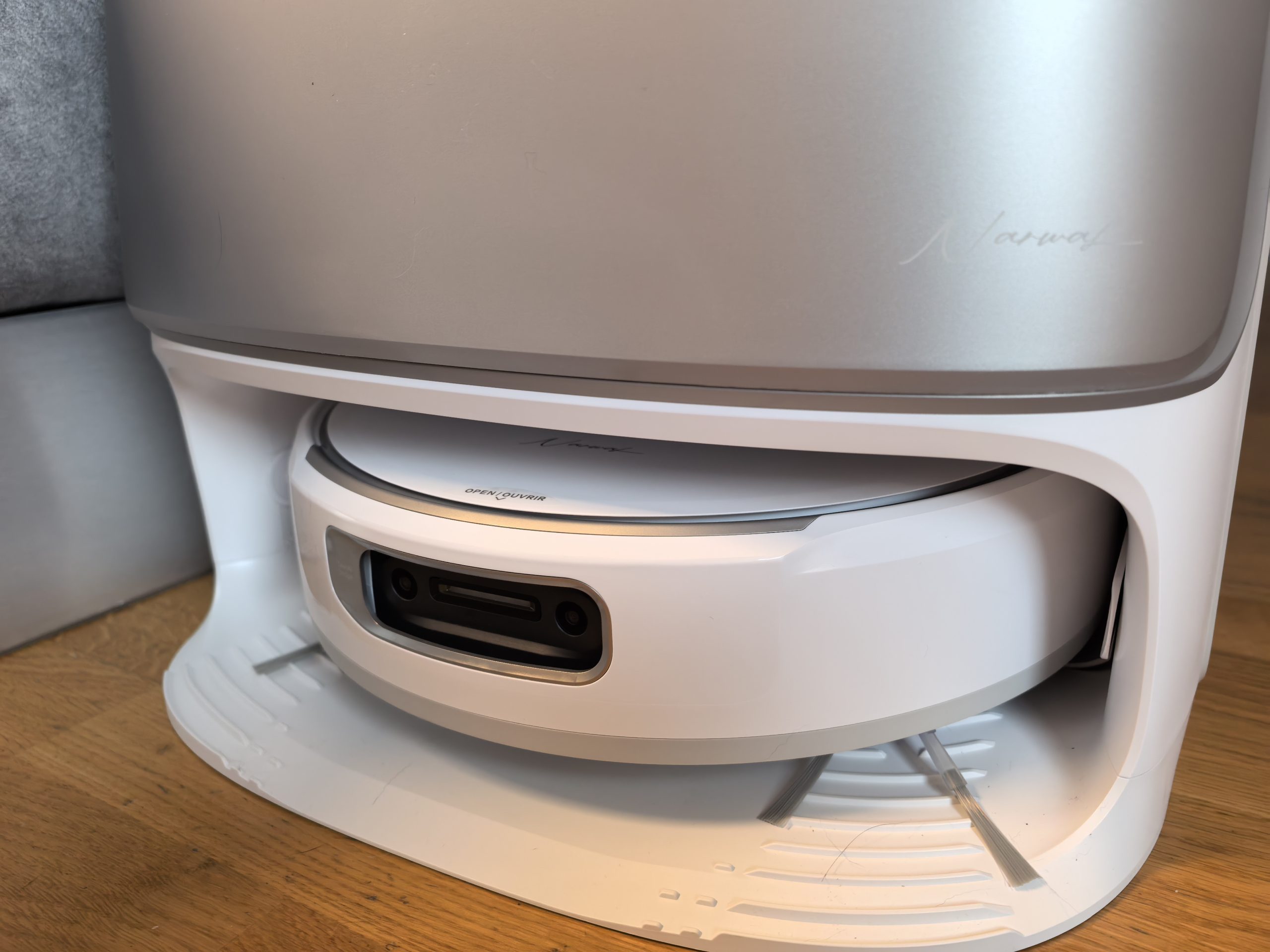
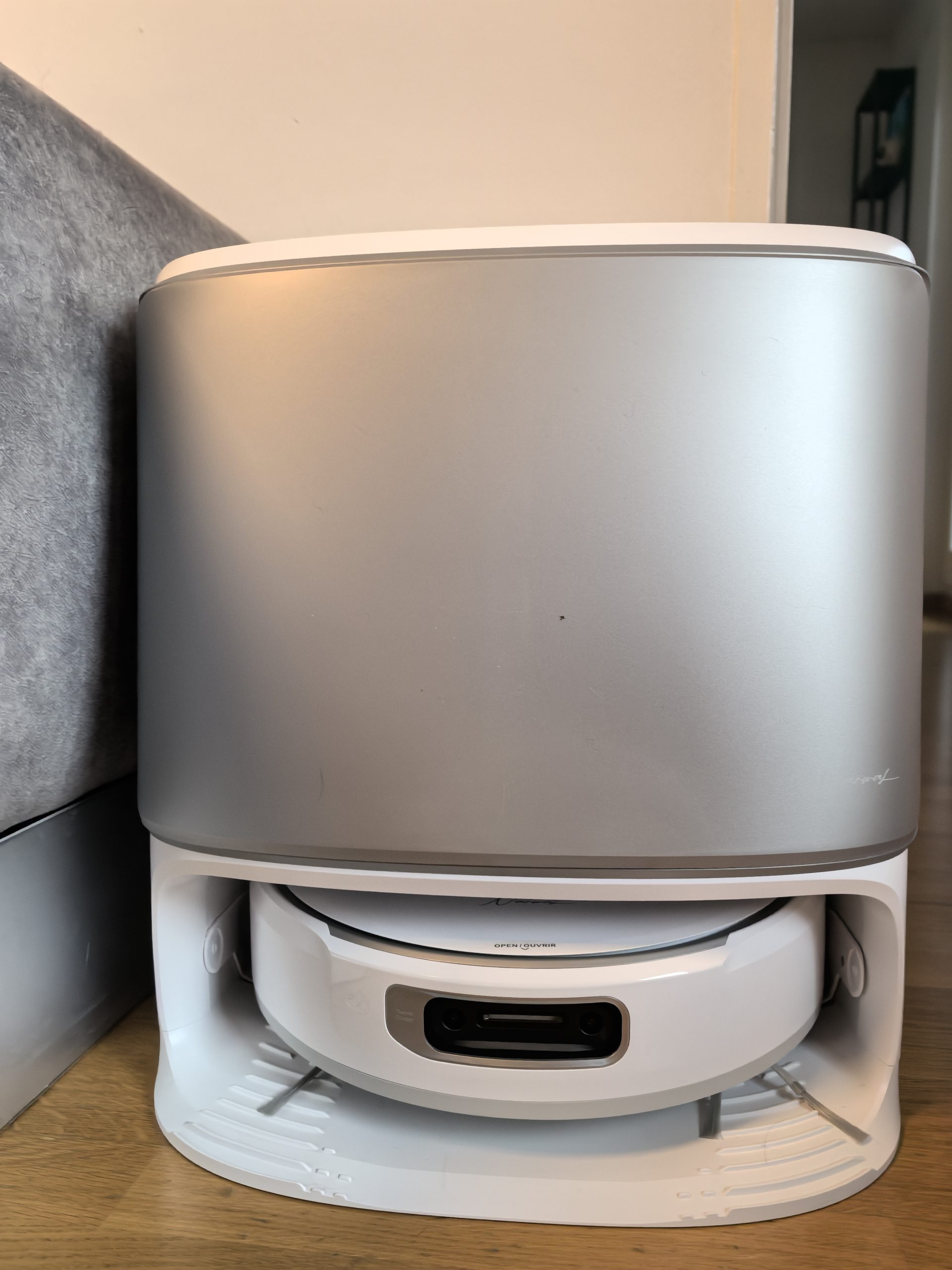
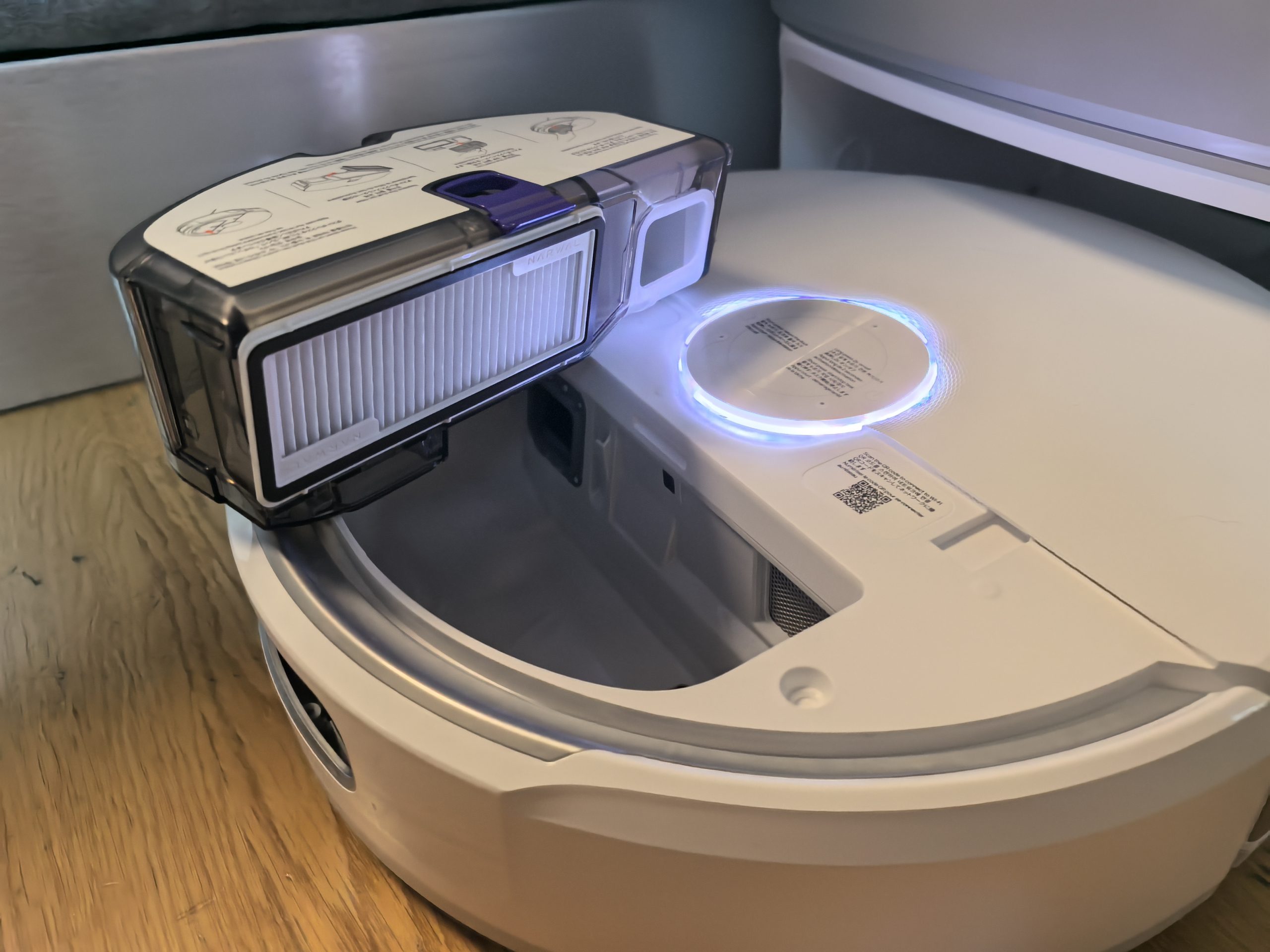
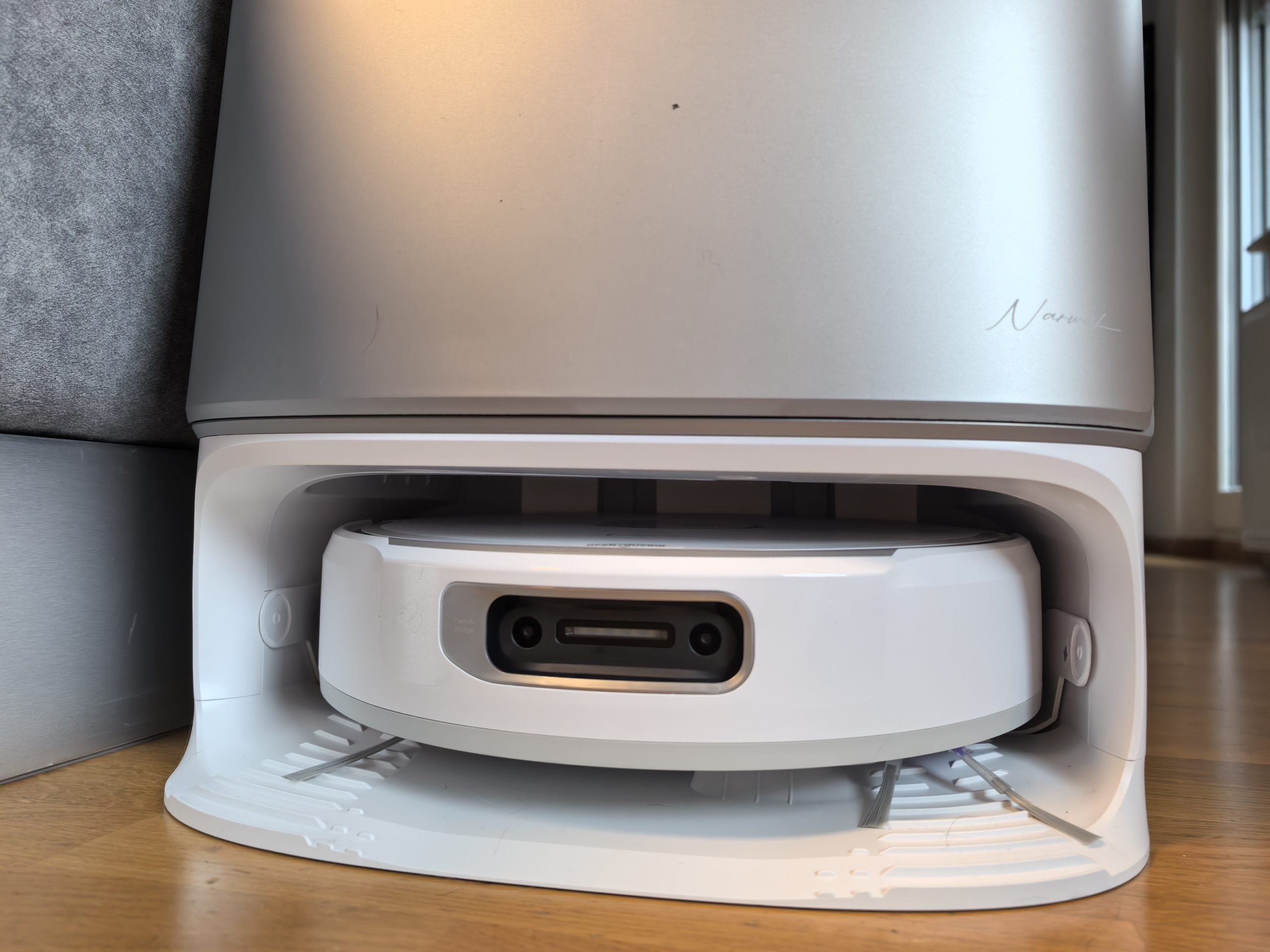
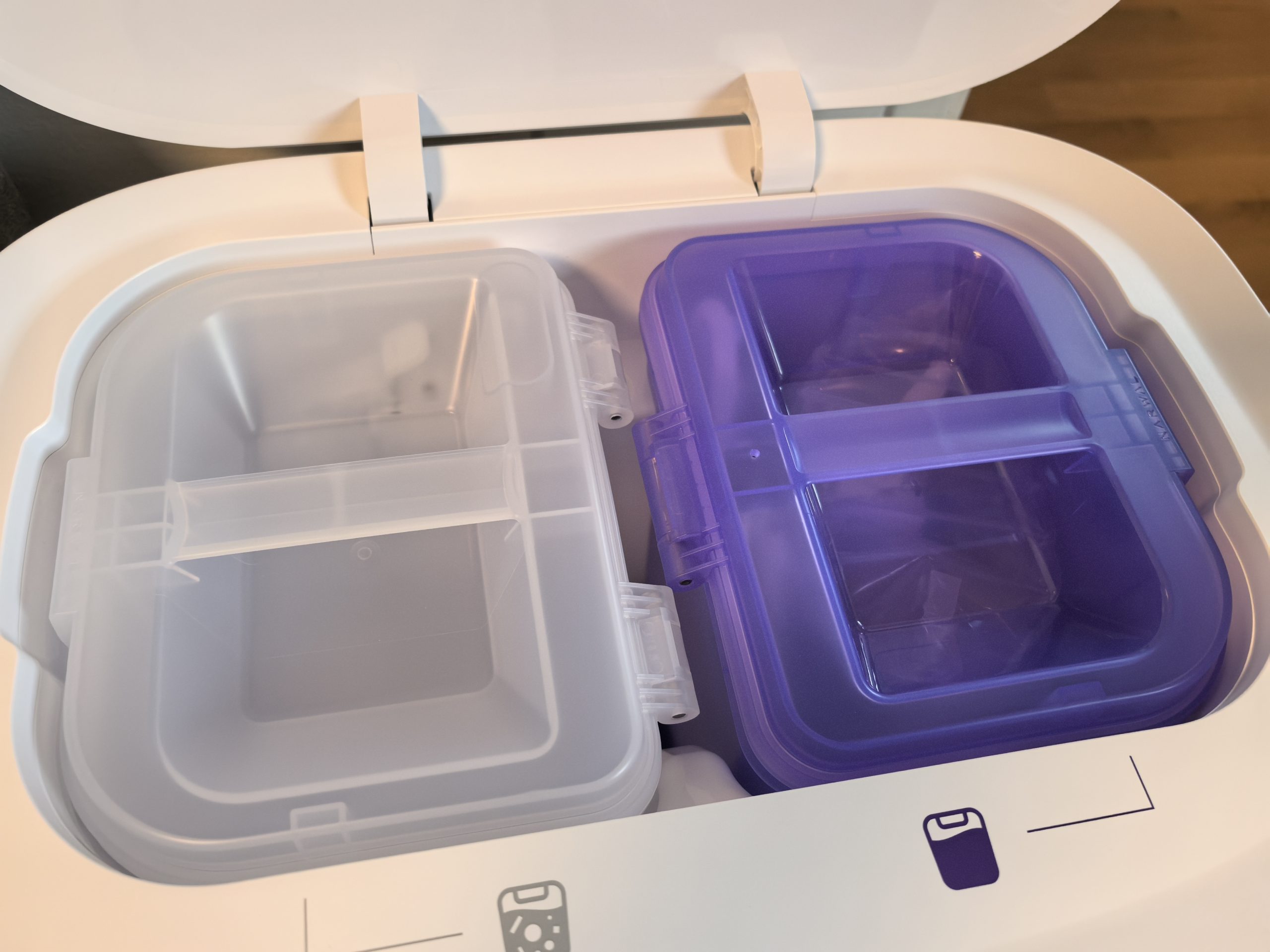
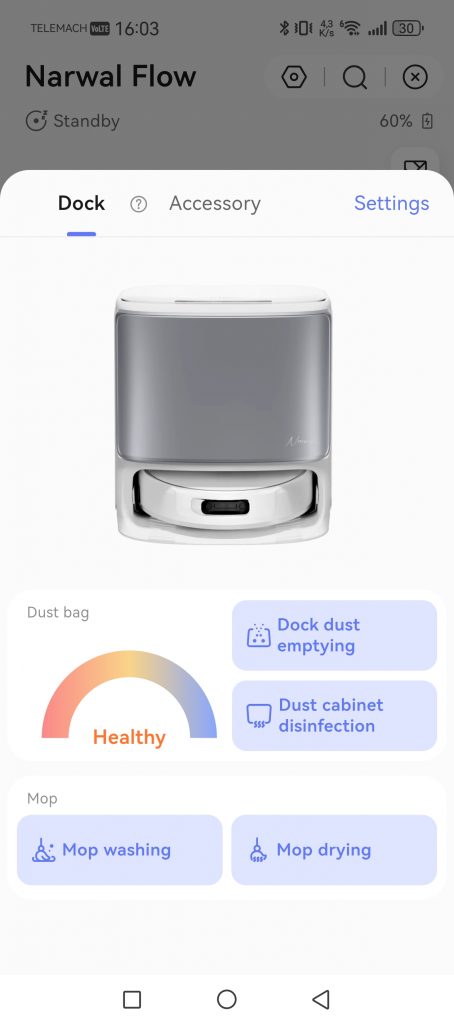
The included charging station or base for the Narwal Flow is substantial and just as technologically advanced. It not only serves as a charger, but also performs a whole range of maintenance tasks for the user. When the robot is finished with its work, it automatically empties itself into the base. Dust and debris from its 480ml bin are sucked into a large 2.5-litre bag (just like a regular vacuum cleaner) inside the station.
After the wet cleaning is complete, the base also washes the cleaning pad. It uses a strong jet of hot water (about 80 °C) to wash away dirt from the pad, then turns on hot air to thoroughly dry the pad and the interior of the robot. This prevents unpleasant odors and mold. After a week of use, the cloth still looked like new, without any brown stains or odors. It is also impressive that the base rinses itself with clean water after cleaning, thus cleaning the pipes and the dirty water tank.
The only thing I missed about the base is automatic detergent dosing. Narwal does include a bottle of cleaning detergent, but the user has to manually pour it into the clean water tank. There is no separate detergent dispenser. This is not a big problem, but it is a bit of extra work. It is also worth noting that there are two versions of the base: the standard one with water tanks, and an additional version that can be connected to the water supply and drain for fully automatic water filling and emptying. I used the standard base in my test and it performed excellently. Over the course of a week, I only had to add clean water and occasionally check how much dust had accumulated in the bag.
22,000 Pa power is sometimes really necessary
Narwal Flow is one of the most powerful robot vacuum cleaners I've had the opportunity to test. The manufacturer lists 22,000 Pa of suction power, which significantly exceeds the usual values and is known for its efficiency in picking up garbage. In my tests on hard floors and tiles, the Flow left an excellent impression. It additionally sucked up that invisible layer of dust on seemingly clean surfaces. While vacuuming on hard floors (tiles, parquet), I noticed that the robot effectively picks up larger fragments and dust, even in corners thanks to the two side brushes. As mentioned, these brushes cleverly reduce the rotation speed on smooth floors so as not to scatter crumbs around.
With very fine dust (such as loose flour or coffee), the Flow sometimes made several passes before completely picking up all the traces on the floor. It automatically detects whether it is small particles, larger pieces of dirt, and then decides whether an additional pass is needed. It does take longer to vacuum, but at least it is cleaned. If it didn't have such high power, it would have problems with certain dirt (at least from my experience with robot vacuums), such as cat litter, sugar crystals, salt, and the like. At the highest level, it is quite loud and you can't have a conversation with it, so it is better to manually set in the app which rooms or areas you want it to vacuum at full power.
The automatic emptying function proved to be very practical. After vacuuming, the dirt is emptied into a large bag in the station. The 2.5-liter dust bag should be enough for about 6-8 weeks of use, depending on the dirt in the apartment. After a week of use, the bag was not even a quarter full.
How does it move around the apartment?
Narwal Flow is equipped with a wealth of sensors that help it navigate and avoid hazards. The central navigation sensor is the aforementioned LiDAR – a laser rangefinder that scans the space 360° around the robot. LiDAR allows for accurate drawing of the floor plan of an apartment and reliable navigation even in the dark (it also uses LED lights).
Flow navigated my apartment perfectly. It created a map of most of my apartment within a few minutes on its first test run. It supports saving multiple floors or maps, and can store up to four separate folders in the app, which is useful if you want to move it between floors. As it drives, the robot updates the map and detects new obstacles. I can set virtual no-go zones and invisible walls in the app to steer it away from unwanted areas (the area where the animals' food bowls are). These options are now standard for higher-end robot vacuums. I also like that I can add furniture to the virtual map myself. So I told it where the cat's litter box, scratching post, food bowls, and the like are.
To recognize objects and small obstacles, Narwal Flow is also equipped with a dual camera and a 3D sensor. On the front, it has a pair of RGB cameras, supported by an LED light for operation in the dark, and a powerful AI chip that has been trained to recognize up to 200 different types of objects. It detected larger objects (plush toys, slippers, etc.) without any problems and made an appropriate detour. It did detect smaller toys (balls, cat toys, etc.), but did not always make a wide enough detour, so it sometimes "swallowed" one of them.
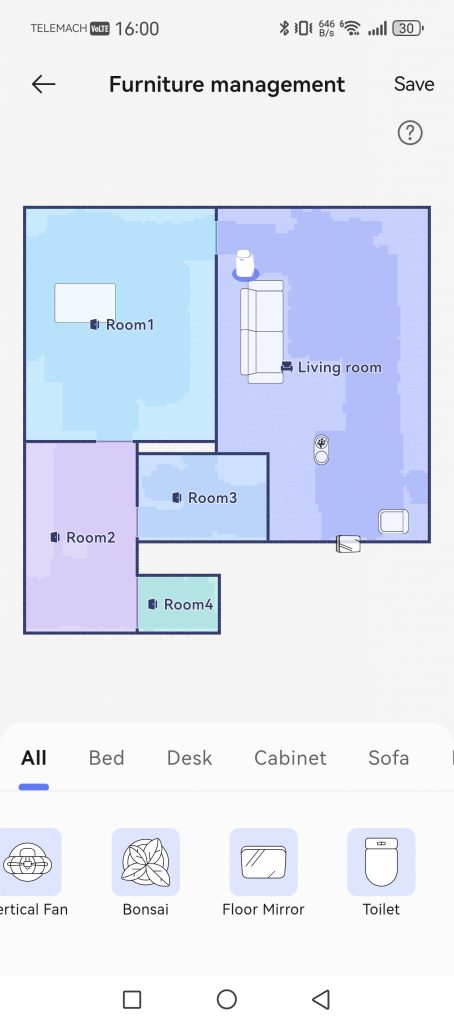
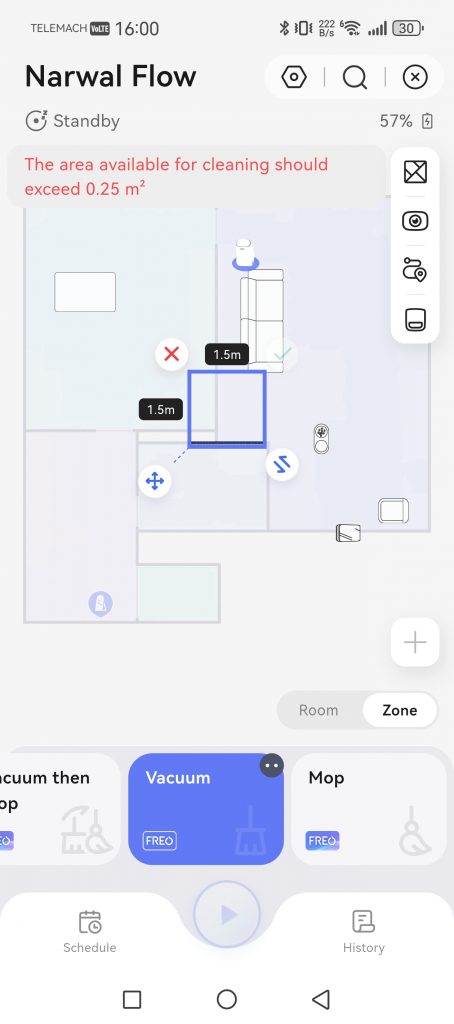
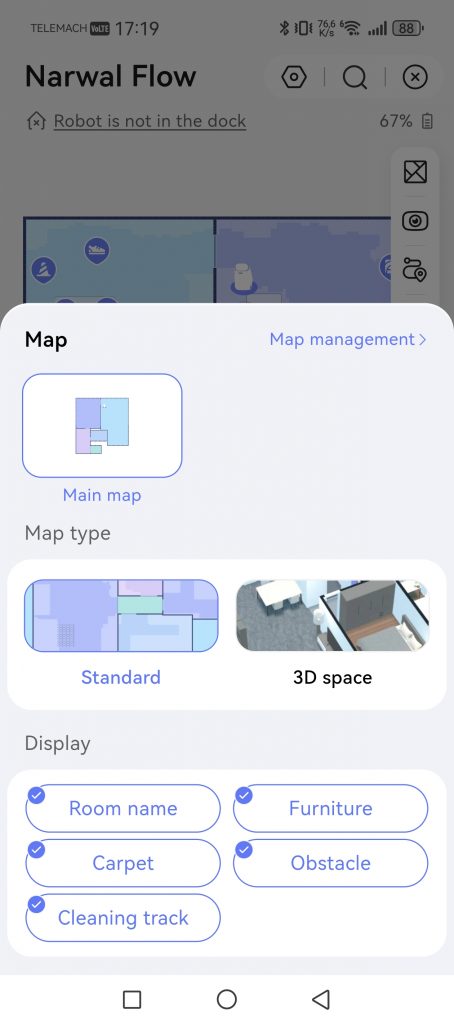

I was particularly impressed that it managed to avoid the thin cable. Most robots would have pulled it at least partially or gotten tangled in it, but this one left it untouched. On the map in the app, I later saw that the robot marked the place where the cable was with a special icon (a cable symbol), while it did not specifically categorize the slippers and socks.
Narwal Flow has large, well-sprung wheels and is capable of climbing obstacles up to 4 cm high, which I was unable to test because I do not have thresholds between rooms. If you have stairs in your apartment or house, you can be reassured by the fact that Narwal Flow is equipped with appropriate safety devices (sensors) that stop it in time to prevent it from falling into a precipice.
There's also a camera for remote monitoring. You turn it on in the Narwal App and you can watch the robot through its eyes, looking from its perspective, for example if you want to check on your pet. There's also a built-in "Pet" mode, where the robot moves around the room looking for your pup and sends you a notification if it finds them.
Narwal Flow is one of the best on the market
Narwal Flow is a robot that wants to do everything for you. In most cases, it succeeds, but this depends a lot on your floor plan, whether you have pets, toddlers, high thresholds, carpets, etc. Its main features are certainly high suction power, very good cleaning, intelligent cleaning, an advanced charging station, and thoughtful navigation with good obstacle avoidance.
Most of the time you can really just leave it alone and let it do its job. It cleans itself, the bin also empties into the station automatically, you just have to check every now and then that there is enough clean water and that the bag is not full. In my case I also had to help it with chairs and similar furniture, but again that depends on what kind of home you have.
The Narwal Flow is a good example of how quickly robot vacuum technology is advancing. They're not quite autonomous yet, but they're getting there.
If you decide to Narwhal Flow, you won't regret it. Don't forget to use the code NOVICE-FLOW for a discount of €450.