

Share with others:

Artificial intelligence creates indestructible robot

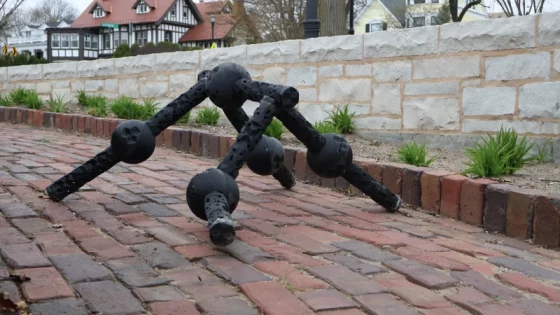
Researchers recently used a process that simulates natural selection to create the most efficient robot design possible. Instead of engineers drawing plans by hand, they left the task to artificial intelligence. It tested millions of different body structures and movement patterns in a virtual environment. The result is an unusual but extremely durable robot that measures about 6 inches long and uses a unique combination of soft and hard materials.
The robot's greatest strength is its ability to adapt. In experiments, scientists intentionally removed parts of its legs or damaged its motors, but the machine did not stop. The artificial intelligence calculated a new way of moving based on the current state of the body within seconds. So if the robot loses a limb, it simply changes its center of gravity and uses the remaining parts to crawl or hop, without the need for human assistance or a system restart.
Such technology opens the door to using robots in environments that are too dangerous or inaccessible for humans. Because of their small size and resilience, these machines would be ideal for searching for survivors in collapsed buildings after earthquakes or for exploring distant planets where servicing is not possible. A robot that “repairs” itself simply by changing its behavior represents a major step towards full autonomy of artificial intelligence in the physical world.
The cost of building such a robot is surprisingly low, as most of the components are 3D-printed from readily available polymers. The entire prototype costs only around €95. The research team now plans to scale the robot to around 45.72 cm, which would allow it to carry heavier sensors and batteries for longer missions in the field.