

Share with others:

Do we even need airplane mode anymore?

Even though we live in an era of incredible technological advancement, where airplanes are equipped with state-of-the-art computers and smartphones are more powerful than the equipment that sent a man to the moon, this requirement seems like a relic of the past. Many passengers (including me) wonder whether one phone left on could really cause a disaster, or if it's just an over-cautious act by airline authorities.
So, do we even need airplane mode anymore?
Where does flight mode and the fear associated with it come from?
The history of airplane mode dates back to the 1990s, when mobile phones became widely available. The technology at the time, particularly the GSM standard, operated in ways that were much more “noisy” in electromagnetic terms than today’s standards. A major concern for aviation regulators such as the US Federal Aviation Administration (FAA) and the European EASA was electromagnetic interference. Airplanes rely on a range of sensitive electronic systems for navigation and communication that operate at specific radio frequencies.

In the early days of mobile phones, pilots would often hear a distinctive crackling or buzzing sound in their headsets when a phone near the cockpit was searching for a signal or receiving a call. This is the same sound we sometimes hear coming from the speakers just before we receive a text message or a phone call if we place the phone next to it. While such interference usually did not directly affect the operation of the engines or control systems, it could obscure important air traffic control messages or cause erroneous readings on older navigation devices.
A problem that arises on the ground, not in the air
Many will be surprised to learn that airplane mode was introduced not only for the safety of the aircraft, but also for the stability of mobile networks on the ground. When you are on the ground, your phone connects to the nearest transmitter (base station). As you move, the connection is seamlessly transferred from one transmitter to another. The problem arises when you are moving quickly in a plane at an altitude of several thousand meters.
At this altitude, your phone “sees” dozens or even hundreds of transmitters at the same time, instead of just two or three. Since the plane is moving at a speed of about 800 kilometers per hour, the phone would have to connect and immediately disconnect from many base stations in a very short time. This puts a huge strain on the ground infrastructure, as the handover processes (so-called handovers) consume a lot of network processing power. If all 200 passengers on a large plane had their phones turned on, this could cause local mobile network outages in the area over which the plane would be flying. Airplane mode therefore also protects those who are left on the ground.
How does the 5G network affect airplanes?
In recent years, the debate over airplane mode has been reignited by the rollout of 5G networks, particularly in the United States. The problem isn't with 5G technology per se, but with a specific frequency band called C-band. This part of the spectrum is very close to the frequencies used by radio altimeters on airplanes.
The radio altimeter is a critical device that tells pilots (and the autopilot) exactly how high above the ground the plane is in the final stages of landing. This is especially important in low-visibility conditions when the plane relies on an automatic landing. The FAA has expressed serious concerns that strong 5G signals from transmitters near airports could confuse these devices, leading to incorrect altitude readings. This has caused considerable political and technical tension between telecommunications companies and the airline industry. As a result, airlines have had to upgrade or replace thousands of altimeters with newer ones that have better filters to prevent interference, which is one of the main reasons why the rules on the devices are still so strict.
Differences between Europe and the US: Why is there liberalization in the EU?
Interestingly, the European Commission made a decision in 2022 that could mark the beginning of the end of aviation mode in the European Union. The European approach differs from the American one mainly in the use of frequencies. In Europe, 5G networks operate on frequencies that are further away from those used by aircraft instruments, and there are stricter restrictions on the power of transmitters around airports.
The European Union is encouraging the deployment of so-called pico-cells on board aircraft. These are miniature base stations that operate at very low power and connect to the ground via satellite networks. Because these cells are very close to your phone, your device doesn't need to emit a strong signal to find a connection, drastically reducing the risk of interference. Although the technological path is open, airlines have been slow to implement them in practice, as it requires expensive equipment and certification.
Airplane mode is still in use for social peace
Besides the technical reasons, there is another, perhaps even more important reason why airplane mode and the ban on in-flight phone calls still persist – and that is peace. The airplane cabin is a cramped space where people are forced to sit close to each other for hours. Imagine if everyone on board were on their phones all the time. I don’t know about you, but for me, that would be a nightmare.
Numerous surveys show that passengers actually don't want to be allowed to use their phones during flights. Research on so-called air rage shows that noise and invasion of personal space increase stress and aggression among passengers. Airplane mode thus serves as a kind of digital hygiene, ensuring that the plane remains a place of relative peace.
Turn on airplane mode, your phone will thank you
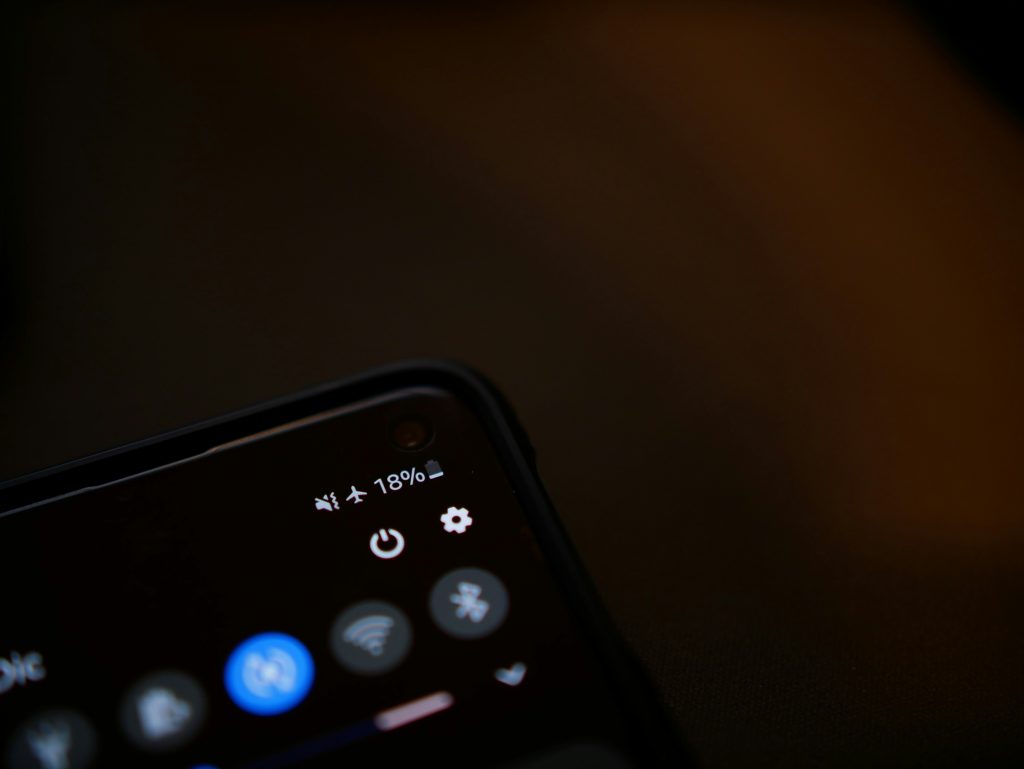
Even leaving aside safety and regulations, airplane mode has some very practical benefits for the traveler. When your phone is desperately searching for a signal at an altitude of 10,000 meters and can't find one, it uses up a lot of power. Its radio transmitter is running at full power, which quickly drains the battery and heats up the device. By turning on airplane mode, you can prevent your phone from being dead when you land.
Additionally, airplane mode allows you to stay connected to the Wi-Fi network on board the plane without activating mobile data. Modern devices allow you to have airplane mode on while having Bluetooth and Wi-Fi activated. This allows you to use wireless headphones and browse the web via the airline portal (if available), while functions that could interfere with instruments or overload ground towers are safely turned off.
Will we ever be completely free of restrictions?
The question is no longer whether the technology can enable secure connectivity, but when the rules will adapt to the new reality. With the development of low-Earth orbit satellite constellations such as Starlink, internet on planes is becoming faster and more accessible. Some airlines, such as JetBlue or certain Emirates lines, already offer free and fast Wi-Fi, allowing passengers to use messaging apps and even video calls over the internet.
But completely eliminating airplane mode is likely to be a long process. Aviation is one of the most regulated industries in the world, where safety protocols remain in place long after the technological rationale for them is deemed obsolete. Until every single plane in the fleet has updated and protected systems, regulators will likely err on the side of caution.
For myself, I know I will still use airplane mode, mainly because I want to save my phone's battery percentage, but also to follow the rules that exist for the benefit of everyone on board.