

Share with others:

Electric car prices in the EU are falling for the first time – will this accelerate the transition to EVs?

After years of rising prices, electric car prices in the European Union have started to fall. New data shows that the average price of an electric vehicle fell by around €1,800 last year, suggesting that electric cars could soon become comparable in price to petrol or diesel vehicles.
Prices fall for the first time since 2020
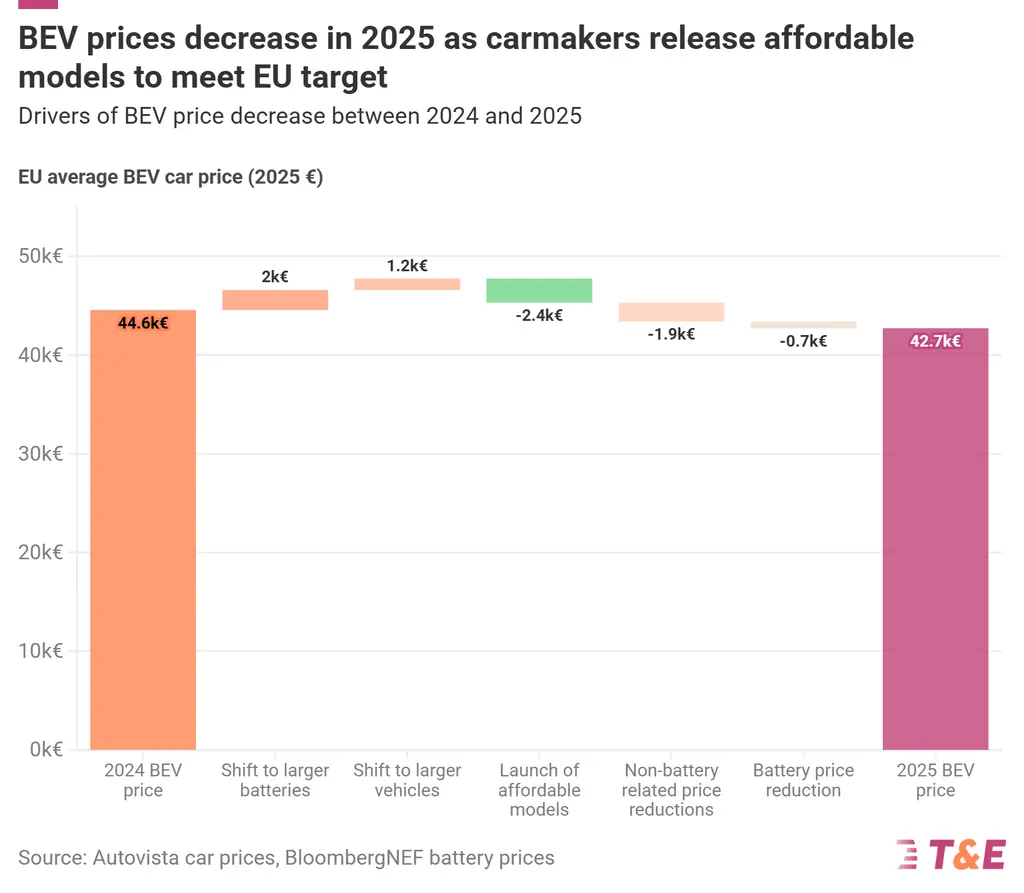
According to an analysis by Transport & Environment (T&E), the average price of an electric car in the EU will fall by around 4% to €42,700 in 2025. This is the first price drop since 2020.
The main reason for the change is the introduction of new, more affordable models in smaller vehicle segments. In the B segment, which includes smaller city cars, average prices fell by around 13 %. Models that contributed to this include the Citroën ë‑C3 and the new Renault 5.
These models have come to market just as manufacturers need to meet stricter European CO₂ emissions targets for the period 2025-2027.
The role of European emissions targets
Analysts say European emissions targets are forcing manufacturers to bring more affordable electric cars to market. In previous years, when targets were less stringent, many manufacturers focused primarily on larger, more expensive electric models with higher margins.
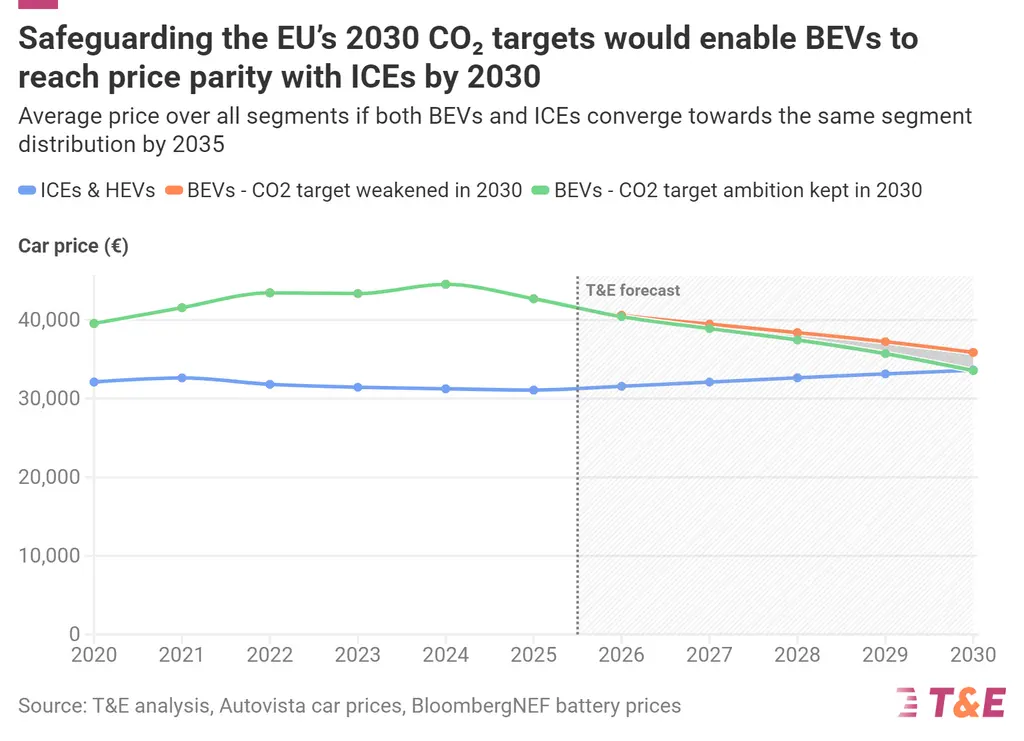
Between 2020 and 2024, the average price of electric cars in the EU even increased by around €5,000, despite battery and production costs gradually decreasing.
Lucien Mathieu from T&E emphasizes that the current targets are already delivering concrete results: “European CO₂ targets are actually making electric cars cheaper. If we don’t lower the 2030 targets, buying an electric vehicle will soon be cheaper than buying a petrol car.”
Manufacturers are already achieving their goals
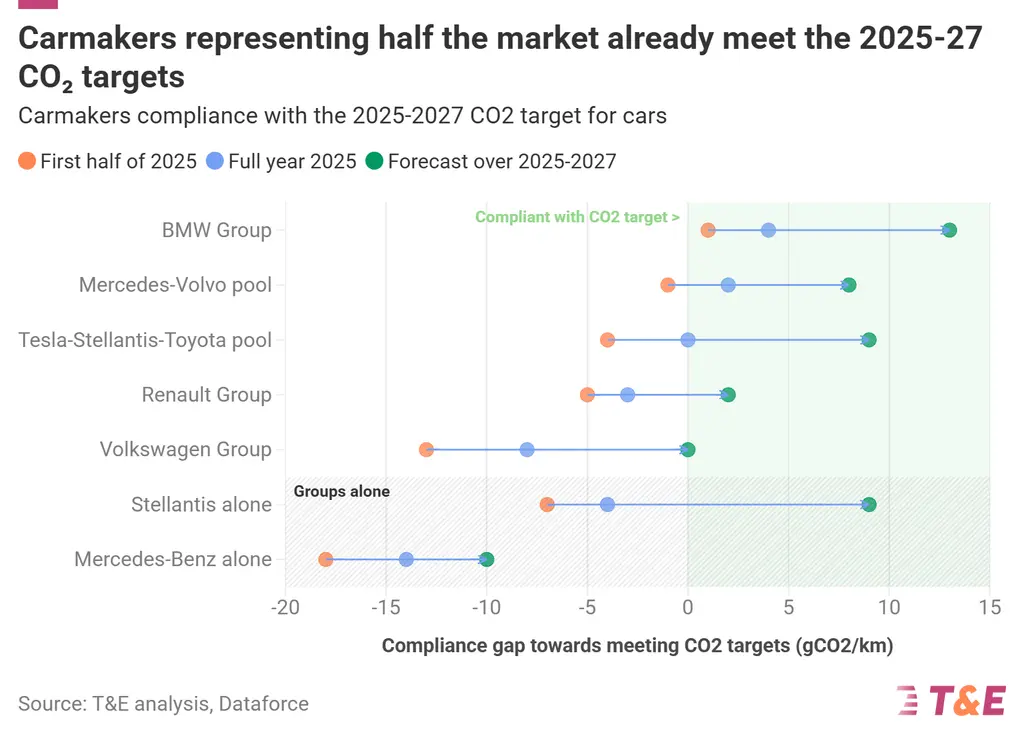
The analysis also shows that manufacturers representing around half of the European market have already achieved their emissions targets for the period 2025-2027 – two years ahead of schedule.
Renault and Volkswagen are currently slightly behind, but are also expected to reach their targets by 2027.
When will electric cars be cheaper than conventional cars?
According to the analysis, electric cars have already reached price parity with internal combustion vehicles in the larger segments D and E. In the smaller segments A, B and C, this could happen by 2030 if savings in production are passed on to consumers.
But this scenario is not guaranteed. The European Commission is considering relaxing the 2030 targets, which would give manufacturers more room to maneuver in meeting emissions requirements.
Risk of slower transition
If the 2030 targets are weakened, the transition to electric vehicles could slow significantly. According to T&E estimates, this could mean that electric cars would account for around 47% of % sales in 2030 instead of the expected 57% %. In the event of even greater relaxation of requirements, the share could even fall to around 32% %.
According to analysts, such a development would slow down the electrification of the European automotive market and weaken the EU's competitiveness in the global race for electric vehicles.
Current trends show that electric cars in Europe are gradually becoming affordable for a wider range of buyers. However, the speed of this transition will largely depend on political decisions in Brussels – in particular whether emissions targets remain ambitious enough to continue to incentivise manufacturers to develop affordable electric models.