

Share with others:

Europe ponders digital sovereignty and what disconnecting from American technology would mean

Imagine your bank cards, access to online stores and most of the digital services you use every day stop working overnight. You can't shop on Amazon, you can't make international bank transfers, even using the dollar becomes problematic. For Canadian judge Kimberly Prost, this is not a hypothetical scenario, but a reality.
The US placed her on an economic sanctions list during the Trump administration after she, as a judge at the International Criminal Court, participated in the decision to investigate alleged war crimes in Afghanistan, including the conduct of US troops. Prost described the consequences of the sanctions as “paralyzing” – her name found itself on the same list as terrorists, hackers and spies.
Warning for Europe
The Prost case has sparked a broader debate in Europe about digital and technological dependence on the United States. Political leaders and lawmakers are increasingly warning that geopolitical disputes and unpredictable decisions by Washington can have a profound impact on the daily lives of individuals and the functioning of countries.
Belgian cybersecurity chief Miguel De Bruycker recently warned that Europe has “lost the internet” as the US controls much of the world’s digital and financial infrastructure. He said it is now almost impossible to store data exclusively in Europe without the indirect influence of US companies.
Politics turns to its own solutions
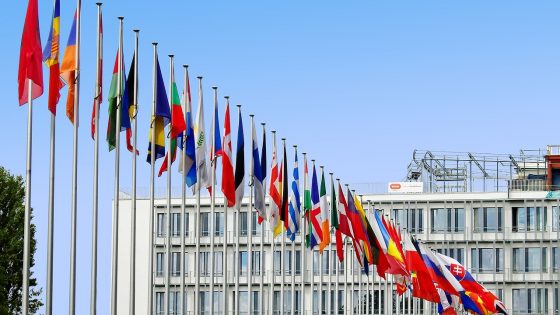
The European Parliament adopted a report on 22 January calling on the European Commission to identify areas where the European Union could reduce its dependence on foreign providers. According to MEPs, the EU and its 27 member states currently rely on non-European countries for more than 80% of digital products, services and infrastructure.
Although the vote is not binding, concrete steps are already being taken. The French government has announced that it will phase out the use of Zoom and Microsoft Teams in public administration, replacing them with the home-grown video conferencing platform Visio.
Old worries in a new guise
The debate about digital sovereignty in Europe is not new. Already in 2001, the US “Patriot Act” after the September 11 attacks enabled extensive surveillance of communications, even in allied countries. In 2011, Microsoft admitted that as an American company it could be forced to hand over the data of European users to American authorities, but the actual extent of the surveillance only became public in 2013 with the revelations of Edward Snowden.
Today's situation is different, but the issues remain similar. Digital services have become essential infrastructure, so political decisions have direct technological consequences.
The push to move away from American technology is not just happening at the national level. Individuals and tech workers are also calling for alternatives, often open source solutions. Guides and platforms are emerging that encourage users to switch from big tech companies to European or independent alternatives.
For example, journalist Paris Marx has prepared a guide to abandoning American technology services, and similar initiatives are offered by websites such as switch-to.eu and European Alternatives.
Looking ahead
The debate over digital sovereignty reveals a fundamental tension in the modern world: technology, which is supposed to connect and simplify life, has also become a tool for geopolitical influence. European initiatives to become more independent from American technology are still in their early stages, but cases like Kimberly Prost's story show why these issues are becoming increasingly urgent.
The question is no longer whether Europe needs more digital sovereignty, but how much risk it is willing to take if it does not achieve it.