

Share with others:

How do pirates break the protection of Netflix and others?

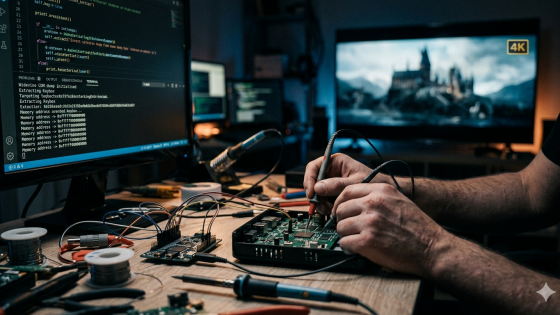
But behind the scenes, a battle is taking place between multibillion-dollar corporations (Netflix, Disney+, etc.), armed with state-of-the-art encryption algorithms, and piracy groups looking for ways to get their hands on free content.
When a new series that was released just a few hours ago appears on pirate websites, one can only wonder how pirates manage to outsmart the film giants every time. They are even more successful than pirate groups that prepare "cracks" for games.
What is DRM anyway?
To understand how pirates break protection, we first need to understand what they are attacking. The key acronym is DRM (Digital Rights Management). You could say it's a lock, but that's too general. Essentially, it's a whole ecosystem of protocols that determine who can watch certain content, where, and how.
The most widespread of these is Google's Widevine, which is used by most streaming platforms (Netflix, Disney+, HBO Max). There are also Apple's FairPlay and Microsoft's PlayReady. These systems work by encrypting a video file, which your browser or smart device can only unlock if it has a valid digital key.
L1, L2, L3... What do these markings mean?
Widevine L3 is the weakest level of protection. Decryption is done entirely at the software level (in the browser). Since the keys travel through system memory, they are relatively easy to intercept. The result? Netflix limits the resolution to 480p or a maximum of 720p on devices with L3 protection.
Widevine L1 is the holy grail of DRM protection. Decryption takes place in an isolated, secure processor environment (TEE). The keys never leave the hardware in a readable form. This enables 4K playback with HDR support.
Pirates don't bother cracking the AES-128 algorithm itself (Advanced Encryption Standard (128-bit) – it's one of the most widely used data encryption algorithms in the world. That would take millennia with current computing power. Instead, they're looking for ways around it.
An attack on the very heart of hardware
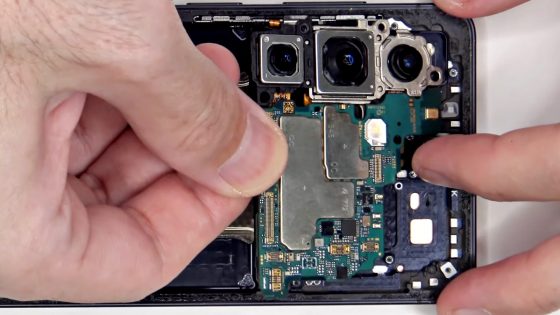
Recent revelations in security circles, particularly research such as the Wideshears project, have shown that even the L1 layer is not impenetrable. While older methods relied on software-based key interception (L3), Wideshears directly targets the Qualcomm Trusted Execution Environment (QTEE).
Wideshears exploits vulnerabilities in so-called Trusted Applications (TA) that run inside the processor. Hackers have found that they can trigger information leaks through specific commands in memory.
The process involves searching for vulnerabilities in the TA, which means they have to identify errors in the code that manages keys within the secure area of the processor. Next, they have to extract the so-called root key or Keybox, which is unique for each device. With its help, the pirates can recreate the entire decryption process on their computer. Finally, there is extraction from the SFS (Secure File Storage). With the help of Wideshears, the researchers and the pirates managed to obtain data from the secure storage area, where the most protected certificates are stored.
This means that pirates no longer need physical access to the screen to “record,” but can instead directly download the original, unadulterated 4K file using these stolen hardware keys.
Who has more ammunition?
Most modern pirated releases labeled WEB-DL are based on the use of stolen CDM (Content Decryption Module) keys. Pirate groups (EVO, NTG or more recent Anonymous cells) use vulnerabilities in specific Android devices for so-called CDM dumping, which involves exploiting security holes in the operating system kernel to extract decryption keys from the processor.
Once the pirate group obtains a valid Widevine L1 key, their software can convince Netflix servers that their computer is actually a certified smart TV or high-end smartphone. The server then sends the video in the highest possible quality (4K, Dolby Vision), which the pirates simply store in unencrypted form using the stolen key.
Netflix and Google are not helpless. When they notice that a particular certificate is being used for mass piracy, they revoke it, which is why piracy of films and series, especially in 4K resolution, has become a matter of economics and inventory. Each stolen CDM key (certificate) that allows access to 4K content has its own lifespan. As soon as a pirate group publishes a film in 4K, Netflix's security systems detect the use of this certificate and blacklist it within a few days (sometimes hours).
That's why pirate groups often save their best L1 keys for big releases (a new season of Stranger Things or House of the Dragon). Less important series are released only in 1080p, which uses the less valuable L3 keys that are easier to replace. They call it "saving ammo."
When Netflix and others win, pirate groups are forced to release a file labeled WEB-Rip. In this case, they have to use powerful capture cards that intercept the video signal as it leaves the device via an HDMI cable. Although these devices are equipped with HDCP (High-bandwidth Digital Content Protection), there are splitters that remove this protection. The image is then re-encoded, causing only minimal loss of quality, but in the eyes of pirate purists, WEB-Rip never reaches WEB-DL status.
Or pirates? hours and hours Are they watching TV?
Of course not. Imagine if individuals had to manually decode every single series or movie that appeared on streaming platforms. Impossible. Instead, they use scripts that largely automate the process.
The script initiates a login to Netflix using a valid (stolen or purchased) account. It automatically retrieves metadata, selects content, checks all available subtitle and audio languages. When it is time to authorize the license, the script uses a valid CDM key from the database. This is followed by the download of encrypted video fragments, which it decrypts in real time and assembles into a final file (usually in .mkv format). As soon as the file is ready, it is automatically uploaded to private servers (seedbox), from where it is distributed to public and private sites using torrents.
How long does the entire process take? Five minutes or less for a 45-minute episode of the series.
Why is Netflix failing to suppress pirate resistance?
It may seem strange that companies with billion-dollar budgets can't stop a group of hackers. The reason lies in the very nature of digital distribution. In order for a user to view content, their device must decrypt it. And wherever content is decrypted, there is a theoretical possibility that this process could be intercepted.
Furthermore, Netflix is fighting a battle on a thousand fronts. It has to support everything from the latest iPhones to 10-year-old smart TVs and cheap Android TV boxes from China. Each of these devices is a potential weak point. If Netflix completely blocks access to all but the most secure devices, it will lose millions of subscribers who have older equipment. Pirates exploit this gap between security and accessibility.
Artificial intelligence is also helping pirates
In the rare cases where piracy groups fail to outsmart the streaming giants and keep 4K movies and series out of their sight, there is still the option of “upscaling.” As we mentioned earlier, 1080p content is many times easier to intercept than 4K. In this case, UI models can be used to artificially increase the resolution to 4K, while also removing noise and improving sharpness.
The results are sometimes so good that the average user can't tell the difference between the original 4K transfer and the UI-enhanced footage.
Watermarks hide deep in the pixels
Because technological protection often fails, Netflix and others are turning to forensic marking. These are invisible digital signatures embedded in the video signal. These characters are unique to each subscriber or region.
If a pirated copy appears online, Netflix engineers can analyze the file and determine which account the content was stolen from. However, pirates have developed countermeasures – algorithms that compare multiple different recordings of the same content and remove elements that are not common to all of them (i.e. watermarks).
Can this war have an ultimate winner?
The battle to decrypt Netflix is a classic example of a technological arms race. Every time corporations build a higher wall, pirates use a longer ladder or build a tunnel underground. While DRM systems like Widevine L1 are extremely advanced, there is no such thing as perfect security.
There will likely be no ultimate winner in this war. A decade ago, at the very beginning of the streaming industry, it was said that pirates were close to extinction. Not because they couldn't crack the protection, but because the legal offer was good and accessible. Since then, all streaming content providers have regularly raised prices, reduced the offer, fragmented it, and the like. The idea of having to be signed up to three or more such platforms is no longer as attractive (and cheap) as it once was.
And this is grist to the mill for piracy, which is on the rise again.