

Share with others:

POCO F8 Ultra review: crazy performance, even crazier value

There's nothing better than starting the new year by playing games on the POCO F8 Ultra gaming phone, which I got at the end of last year.
POCO phones have a two-fold reputation. Ever since the first F1 series, they've been known for offering a lot for significantly less money than the best phones on the market, even though they can compete with them in terms of performance. On the other hand, over the years, there have also been quite a few skeptics who have (rightly) worried about the rest of the quality, especially the cameras and software.
I admit (I've used POCO phones for years and recommended them to my loved ones) that the operating system has never been at the level of its rivals and that the long-term support has been worse or shorter (usually two years of Android upgrades). When it comes to cameras, I don't agree with the loud voices that say they're bad. In good light, they take pretty solid photos and videos. Yes, at night and in low light, you notice that the built-in lenses don't perform as well as they do during the day. But, you're buying a gaming phone, not, for example, a Galaxy S25, HONOR 400 (Pro), Xiaomi 15T and similar phones, which are much more focused on the photography experience. With the latter, you expect photography that is just a step below "flagship" phones. Not with the POCO F8 Ultra, whose main task is to run every game available in the Android ecosystem.
But in this role, he is almost unmatched.
| Advantages | Weaknesses |
| Neutral look | HyperOS is not as sophisticated as other systems |
| Relatively good workmanship | Difficult to unlock the system bootloader (a drawback for advanced users) |
| Very good AMOLED display | Ads in certain system apps (you can get rid of them with DNS) |
| Incredible performance | Slightly faster heating |
| The fastest drive currently available | Problems connecting controllers |
| Solid cameras during the day | |
| Bose speakers and subwoofer | |
| 100-W charging and good battery | |
| Very competitive price considering the performance |
POCO F8 Ultra price and specifications
- POCO F8 Ultra 16GB/512GB: around €750
If 256 GB of space is enough for you, you can save an additional €50.
The POCO F8 Pro is an even better buy for many. For €200 less, you don't lose much. You have to be content with not having the latest chip, but last year's Snapdragon 8 Elite, which is really not such a big loss.
| Chip | Qualcomm Snapdragon 8 Gen 5 |
| Graphics core | Adreno 840 |
| RAM | 16GB LPDDR5X |
| Drive | Up to 512GB UFS 4.1 |
| Screen | 6.9-inch AMOLED, 3500 nits (candel), 120 Hz |
| Battery | 6500 mAh, 100 W (cable), 50 W (wireless) |
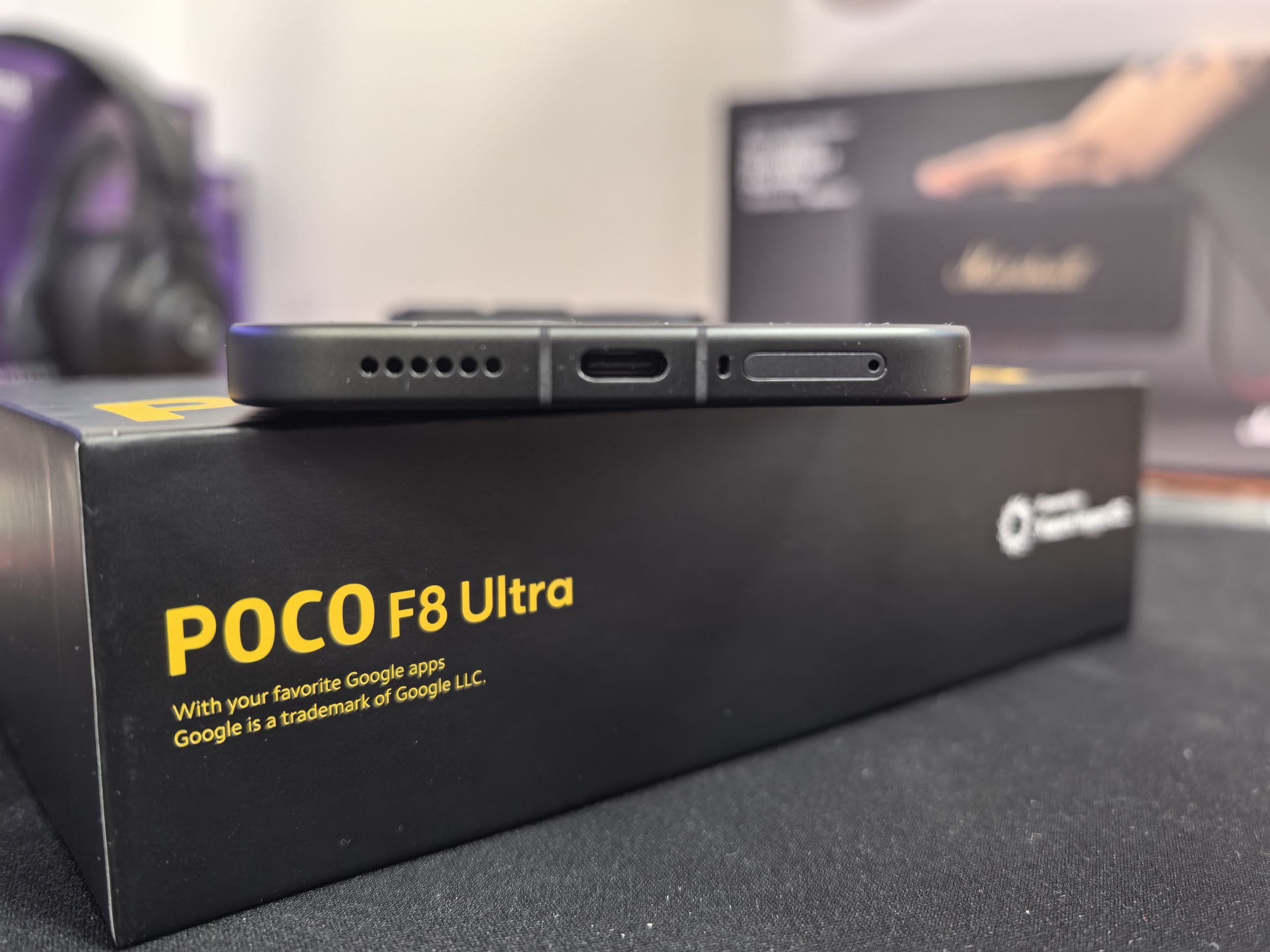
| Connectivity | eSIM, NFC, Wi-Fi 7, Bluetooth 6.0 |
| Cameras | Main: 50 MP f/1.7, OIS Periscope telephoto: 50 MP f/3.0, OIS, 5x optical zoom Ultrawide: 50 MP f/2.4; 102° Front: 32MP f/2.2 |
| Materials | Aluminum (housing), fiber-reinforced plastic (back), glass (front) |
| The rest | Dolby Vision, Dolby Atmos, rear-mounted subwoofer, IP68, DC dimming, color sensor |
POCO F8 Ultra – only a handful of phones can do what it can
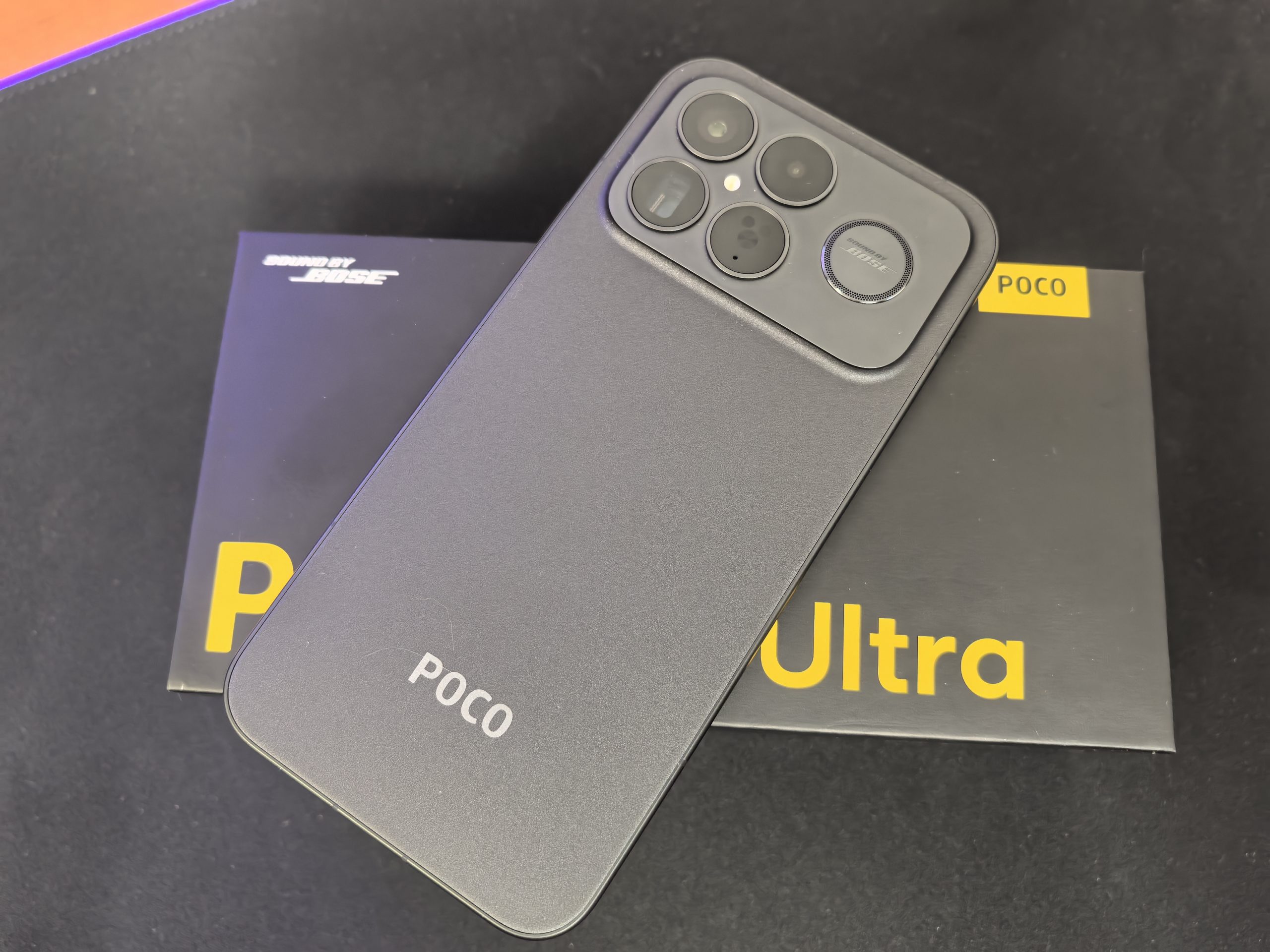
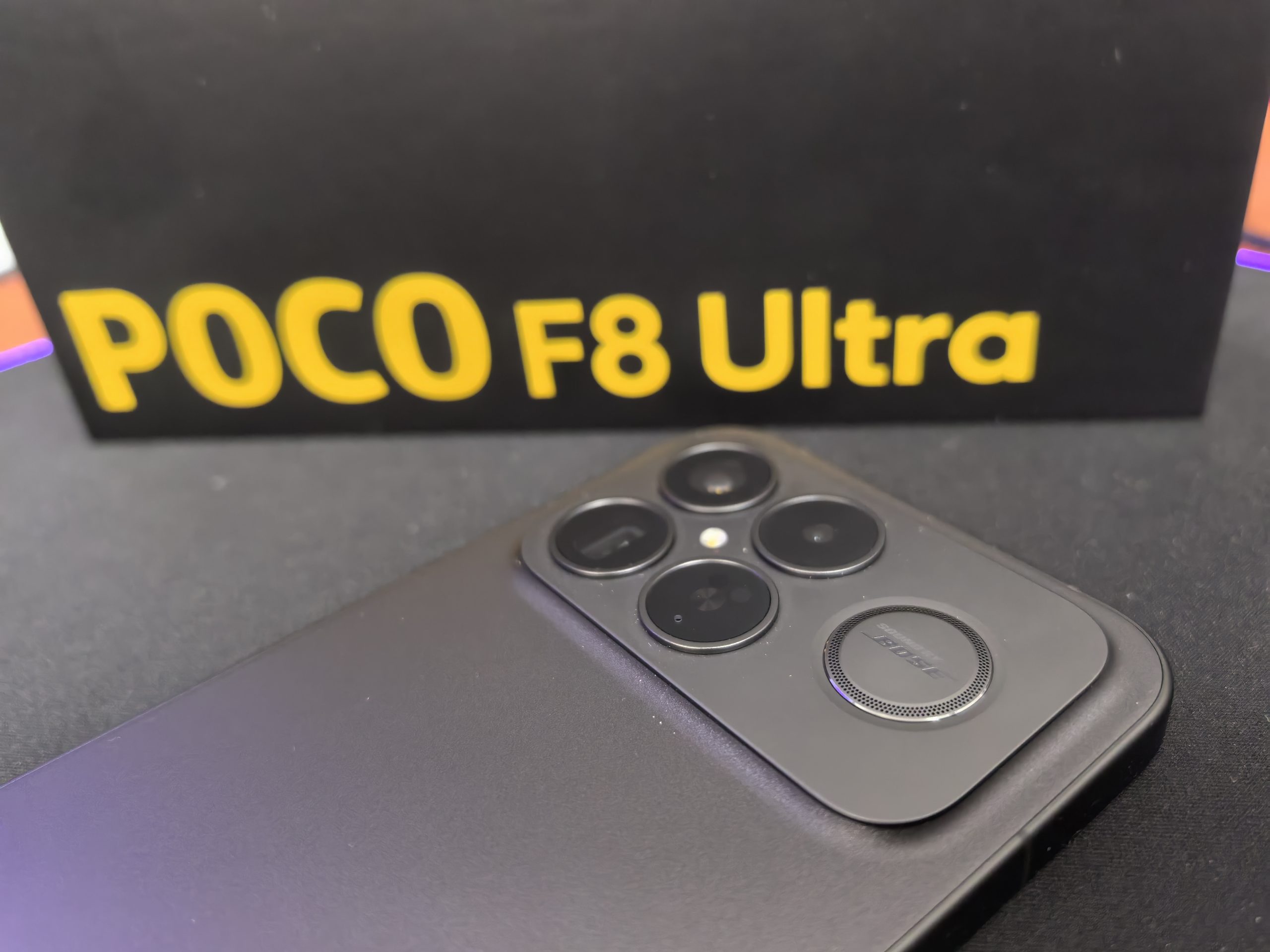
The POCO F8 Ultra is not a pure-bred gamer. For this, it lacks shoulder buttons (trigger buttons), which I see increasingly rarely, and a more pronounced cooling system, such as the new Red Magic 11 Pro. At the same time, it is not saturated with kitschy applications, avatars, which you can find, for example, in Red Magic 10 Air. It looks like a normal phone, you can even quickly replace it with Xiaomi's T series, mainly due to the placement of the cameras.
Then you start loading games. I filled the entire capacity (512 GB) with various Android, Switch and Windows games. I've never gone this deep before and I hope you can help yourself with my results.
I used Scene to monitor temperatures and fps, as well as the tools provided by the emulators. I used Winlator and Gamehub to run Windows games, and mostly the Eden emulator for Switch. Unfortunately, the lowest fps metric (1 % Lows) is extremely difficult to monitor on phones, so I didn't include it.
What can I say? It's good to be a gamer in 2026. I haven't found an Android game that the POCO F8 Ultra couldn't run at its default resolution, highest settings, and maintain high frames per second (fps). With Windows and Switch games, you still have to fiddle with the settings to get the optimal ones. We also won't get dedicated Turnip drivers for quite some time, which will only improve optimization and performance in these games. It would be great if Qualcomm would get up and work more on its drivers, but unfortunately that's not the case.
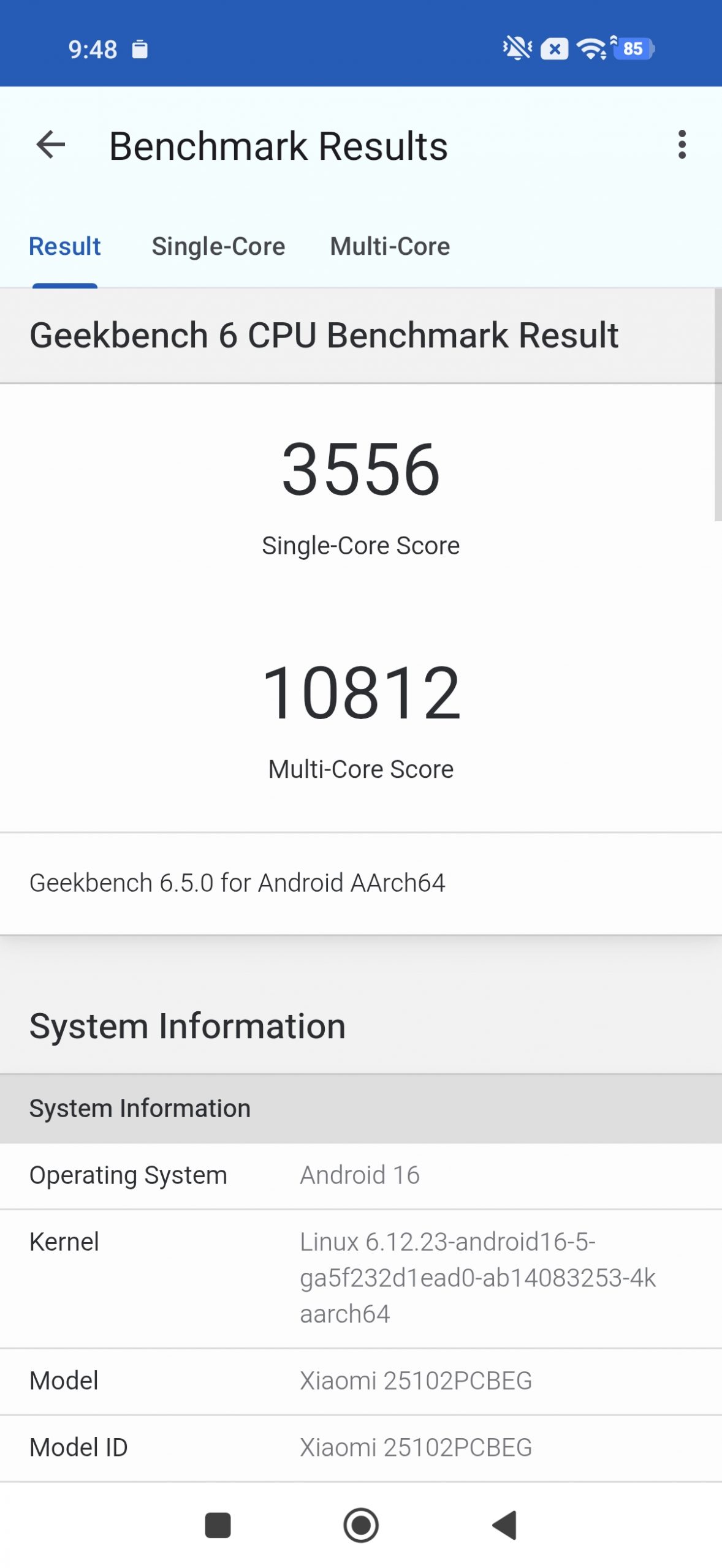
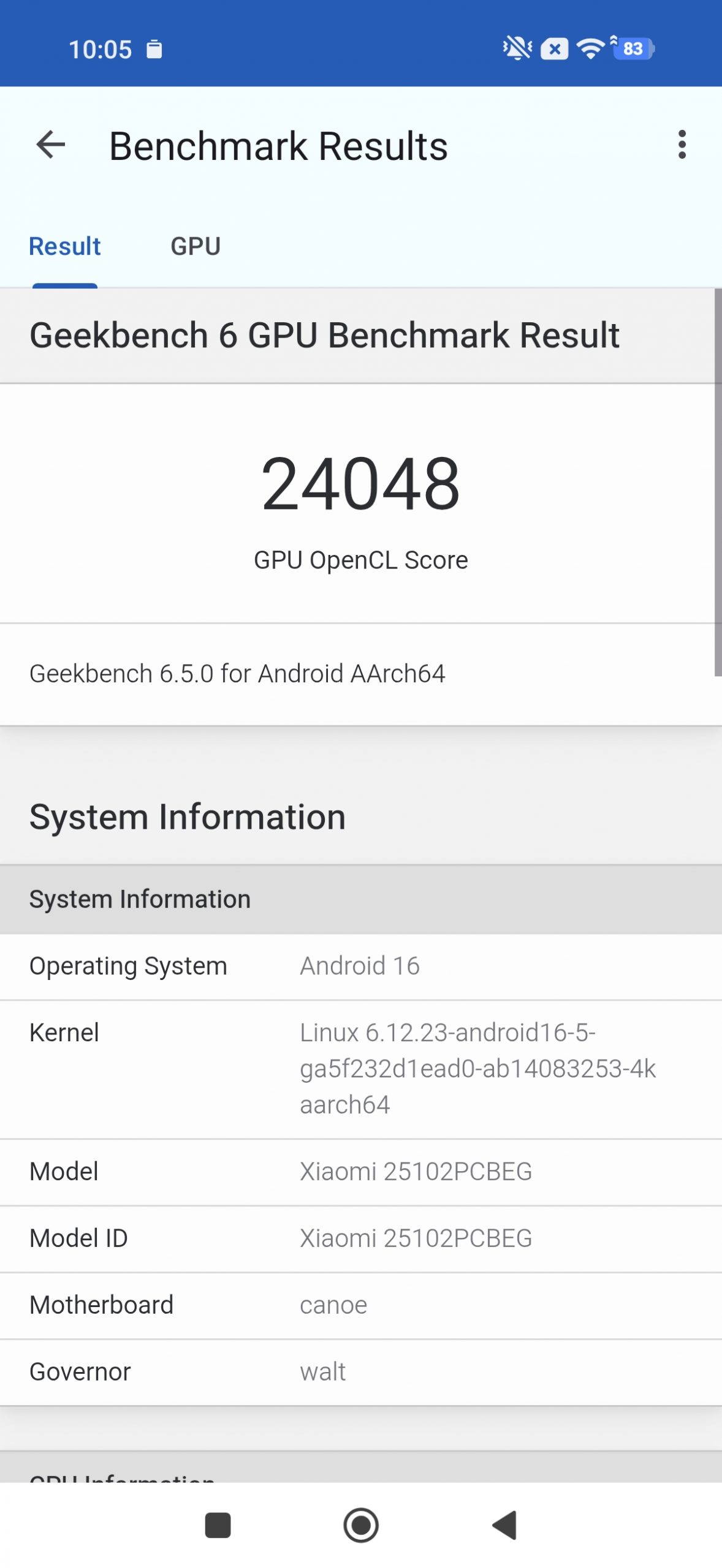
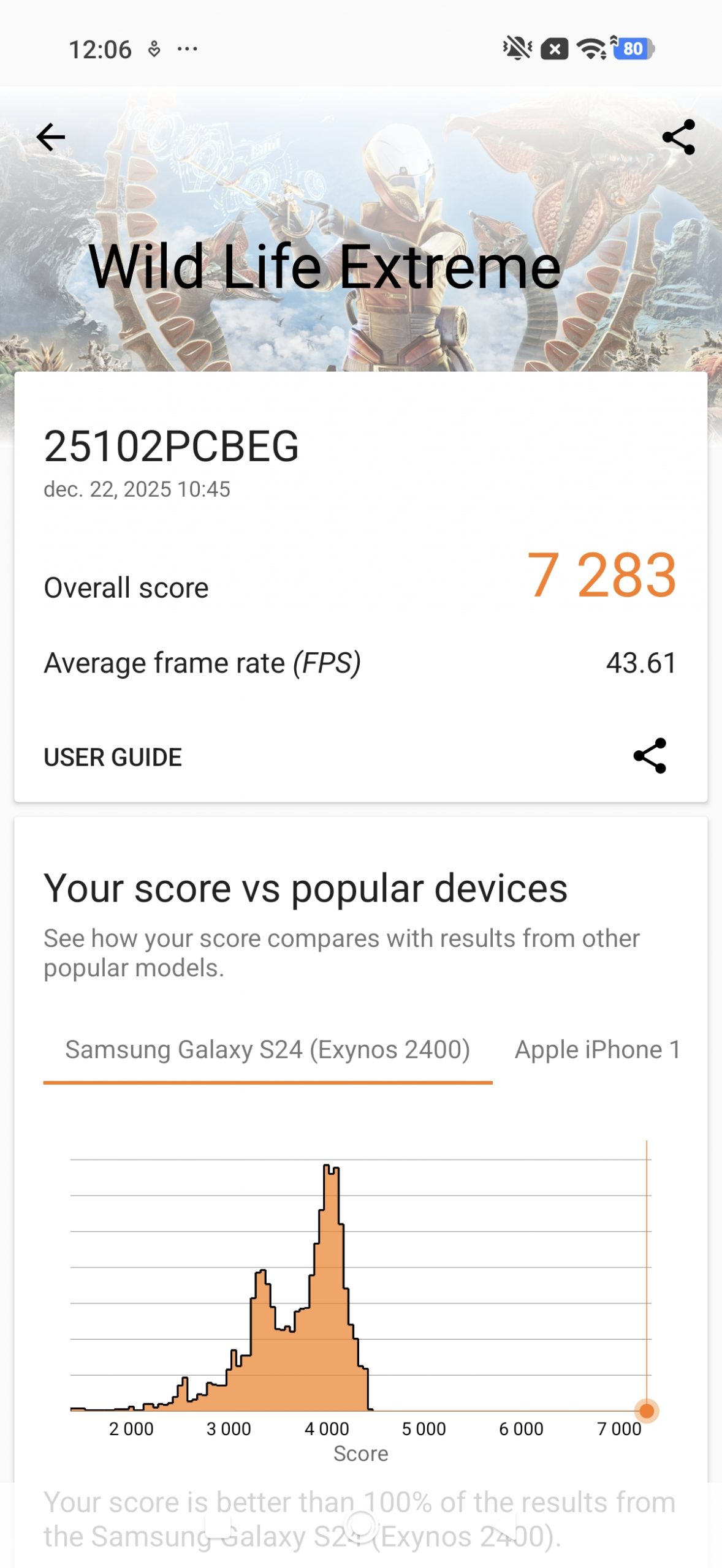
Being able to play fairly new games (God of War, Resident Evil 2, Hades 2, Sekiro …) on your phone is a dream come true for many, especially for those who don't have a decent computer or console on which to play similar games. The only thing you really need is a controller and a fan/cooler (or both in one, like for example GameSir X3 Pro) if you plan on playing for hours at a time. Playing with the touch screen is awkward in most games, and you're also blocking your view. The cooler is because unfortunately POCO hasn't figured out how to significantly improve the cooling on the F8 Ultra. Red Magic is playing with water cooling with mixed results, others are increasing the chambers and heat dissipation surfaces, but none of this means the phone will stay moderately warm after 2-3 hours of gaming.
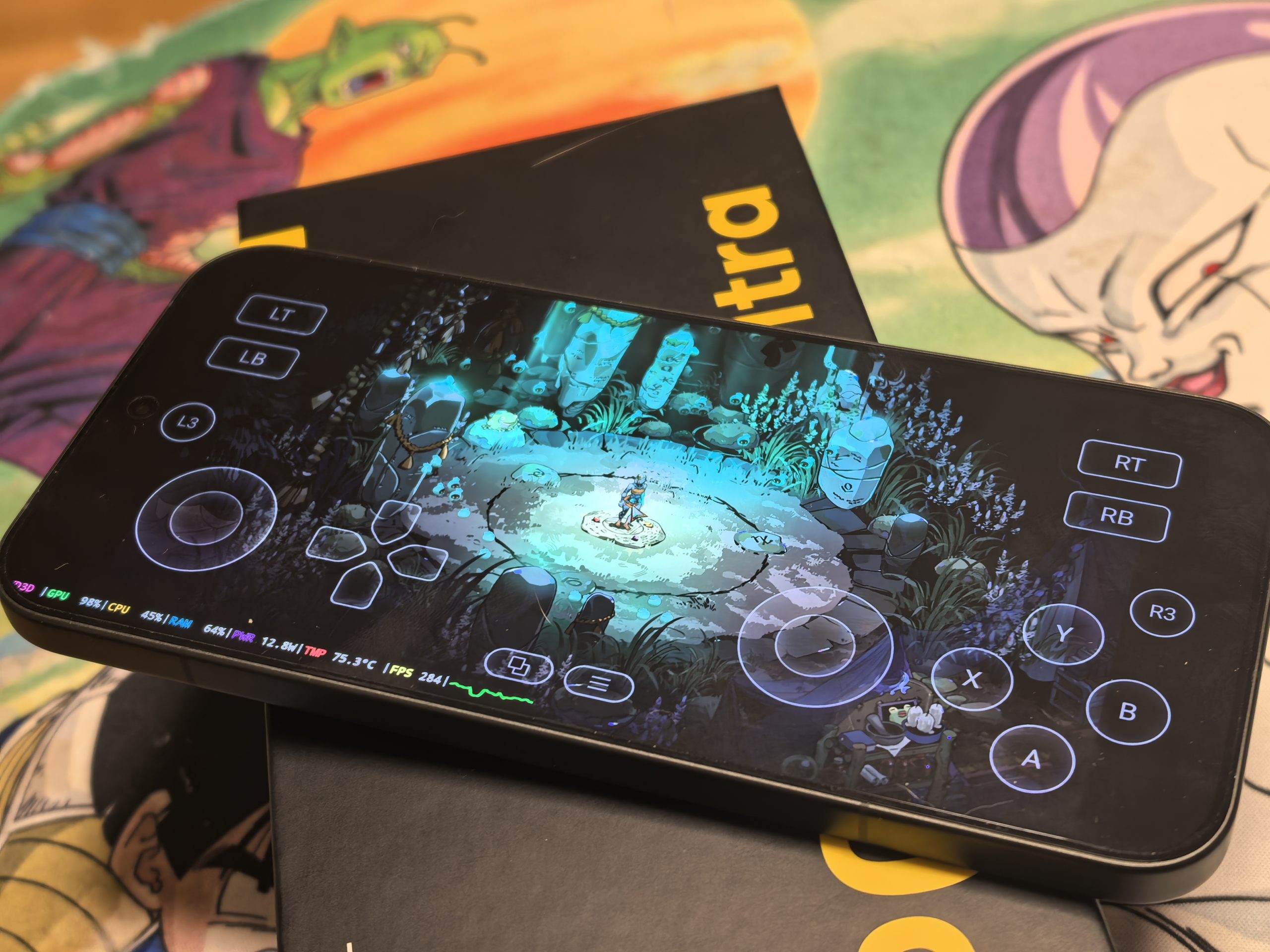
POCO F8 Ultra uses LiquidCool technology with 3D dual-channel and dual-layer IceLoop cooling system with a total area of 6700 mm². The increased cooling surface and volume are designed to dissipate heat from key heat sources and enable long-term operation at peak performance. The dual-channel separately cools the chip and camera module. As mentioned, the system works well to a certain extent, but it is only with prolonged gaming that you reach the temperature ceiling.
Obviously, I couldn't test all the games for several hours. After an hour of playing, the POCO F8 Ultra didn't get dangerously hot. In most cases, the processor temperature rose above 60°C, and the battery around 42-45°C. My rule is not to let the battery heat up above 45°C. Charging while playing is out of the question, the exception would be if the POCO F8 Ultra supported so-called "bypass" charging. Unfortunately, it doesn't have this feature.
Xiaomi or POCO was also generous with the RAM (16 GB LPDDR5X), which is well above the standard (even for premium phones). 12 GB would be enough, but it's always good to have a reserve when emulating, especially for future games. The drive supports the fastest standard currently UFS 4.1, which I have only seen so far in Xiaomi 15 Ultra and the upcoming HONOR Magic8 Pro. Again, they shouldn't have to, but it's just another detail that speaks in its favor and its price-performance ratio.
The battery has a capacity of 6500 mAh, charges at 100 W via cable and 50 W wirelessly. With the POCO F8 Ultra, you can also charge other devices (such as smartwatches) at 22.5 W.
Despite the capacity, the battery life is not top-notch, not even close to the most durable phones on the market. Playing games drains the phone in about 4-5 hours (depending on the game and settings). With just everyday use (YouTube, Reddit, browsing the web...) you'll get through the evening with about 30-35 % of battery (6-7 hours of total screen on/SoT).
I can also criticize that in our market you don't get a charger with your purchase, only a cable and a protective case.
Connecting the controller was giving me a headache and to this day I don't know where the problem lies. I used the controller GameSir X2 Pro and Razer Kishi V3 Pro and I encountered a problem with both of them, that the phone did not recognize them. First, I manually turned on the OTG function, which is sometimes necessary for connecting USB-C devices, but it did not bear fruit. I played around with the settings, which could mix things up, but in the end the only thing that worked was to plug the charger directly into the controller and thus "encourage" the phone to recognize that I had connected an additional device. Annoying, but fortunately solvable.
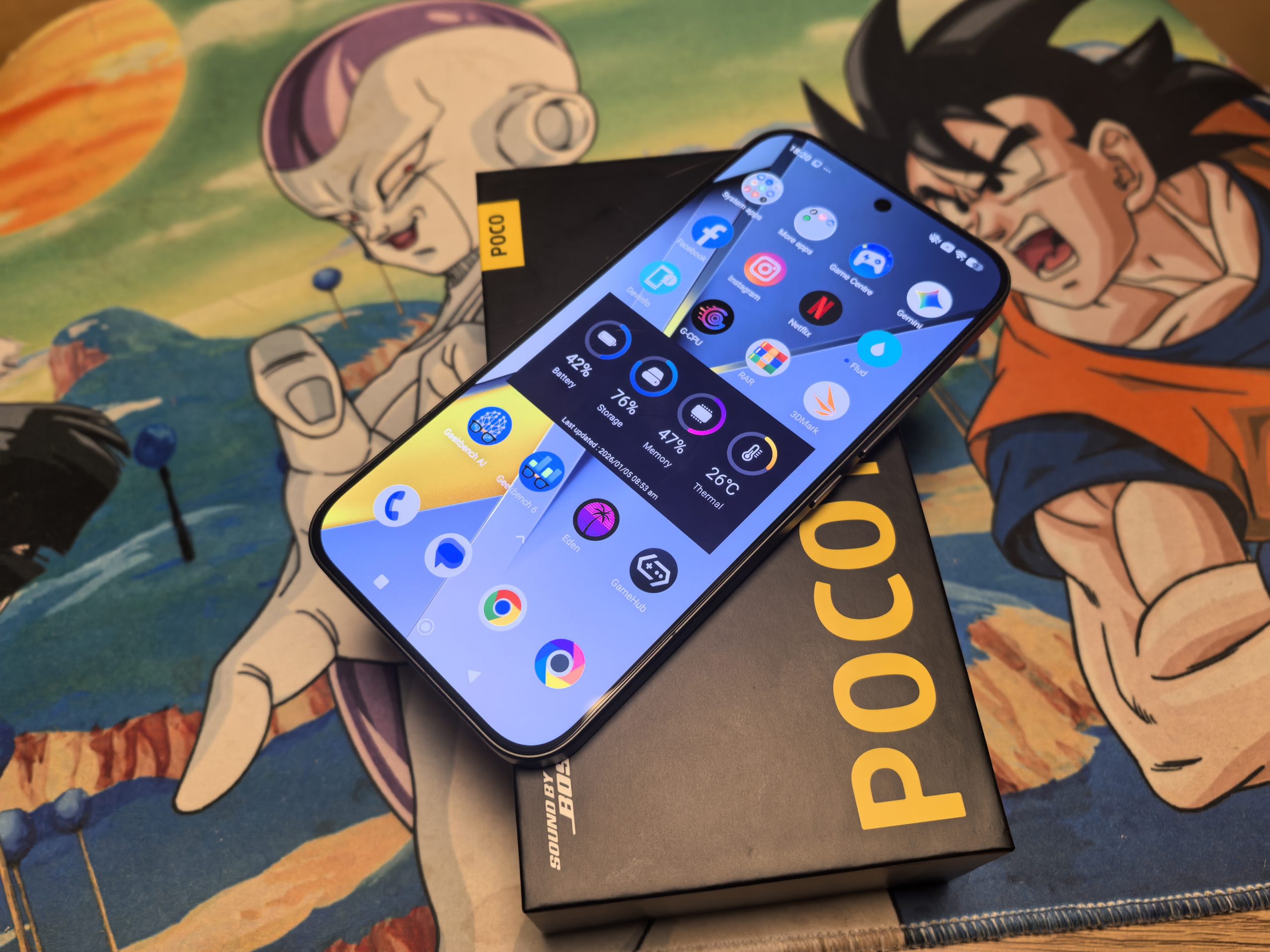
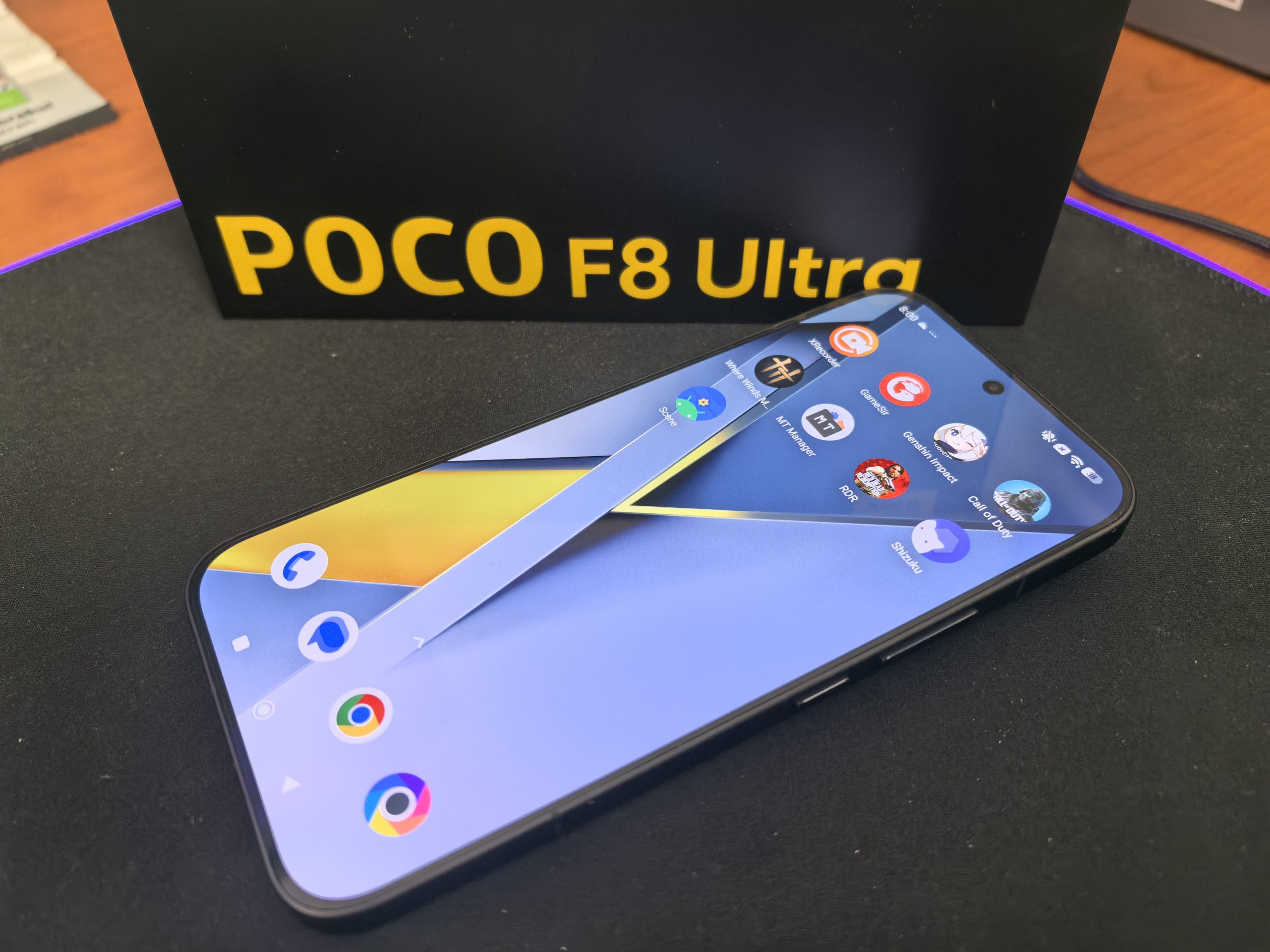
HyperOS 3 is not a bad system, but it still needs to mature a bit.
What's new? Not much. The elements are more minimalistic, the icons are a bit different (simplified), and the animations and transitions are perhaps a bit smoother compared to previous iterations of the system.
In everyday use, HyperOS 3 is stable, at least after a few weeks of use. Apps stay in memory for a long time, even if you jump between them a lot during the day. It rarely happens that an app reloads for no apparent reason. HyperOS 3 can be quite strict when it comes to power consumption (sometimes too strict). The system closes background apps without hesitation if it determines that you no longer need them, which helps with battery life. On the other hand, this means that you have to manually allow some apps (messaging, smart accessories, certain games) to run in the background if you want full notification reliability.
There are still certain apps installed by default that no one needs, except POCO (and Xiaomi), which has to please its partners. You may encounter ads in some system apps, so I recommend setting up your DNS filter first.
Gemini, Google's AI, is also integrated. You can use it as an app or as an assistant. Xiaomi also has its own set of AI features (HyperAI) that helps you with writing, translating, creating dynamic wallpapers, interpreting, subtitles, and more.
In Gallery, you can use the AI Beautify feature, which automatically "enhances" your photo, although this often just means making the light warmer. Ultra HD is a tool that increases the resolution of your photo, but sometimes you won't even notice the difference. You can download two additional UI modules, which add the ability to remove motifs and reflections in photos.
HyperOS replaced the now forgotten MIUI and I have to say I miss it. Not because it was better, but because unlocking the bootloader was much easier. Since the introduction of HyperOS, Xiaomi has tightened the unlocking requirements and I'm afraid we're only a year away from it becoming completely impossible. Most manufacturers have already done this (Huawei, HONOR, Samsung, Red Magic...) and Xiaomi could be next.
I can praise them for improving support. The POCO F8 Ultra will get 4 Android upgrades and six years of security patches. How quickly they will prepare new Android updates and how consistent they will be with security patches (monthly, every three months...) remains to be seen.
Considering he's a "geek", he can also take photos if there's enough light.
The POCO F8 Ultra doesn't have a bad lens portfolio. It even has a telephoto lens, which many phones in this range don't have, let alone a phone that's designed more for gaming than artistic expression.
We've rarely seen the sun in recent weeks. I spent most of my time shooting with clouds overhead, but I have to say that I'm happy with what I saw on the screen. The main lens with the Light Fusion 950 sensor, which is also available in the latest Xiaomi 17, is very good. It doesn't miss a lot of details, mostly due to slightly worse software processing (at least compared to premium phones). I almost didn't notice any noise during the day, the contrast is good, and the color accuracy is also good, although it can sometimes overdo the shades, but nothing critical.
At night, the clear quality of photos and videos drops slightly, but not to the point where you can't take a solid photo. If you view them under magnification or on a larger screen, you will notice some shortcomings.
The same goes for the ultra-wide lens, which is better than expected, especially during the day. It also sometimes comes in handy for macro photography, although the main and especially the telephoto are much better for this.
It can even record in 8K resolution (30 fps) or 4K (30 or 60 fps), and in FullHD it can capture up to 960 frames per second (fps) if you want to make slow-motion recordings.
Photo gallery









POCO F8 Ultra: very good screen, but not the fastest. Bose helped with the sound
They have installed a 6.9-inch AMOLED with a maximum brightness of 3500 nits (candelas), a refresh rate of 120 Hz and a resolution of 2608 x 1200 pixels. It is not the brightest, nor the fastest, but it still has a few features that make it stand out. First of all, DC dimming (instead of PWM), which completely eliminates the possibility of causing eye fatigue for certain users. The touch sampling rate is a high 2560 Hz (important for gamers, you turn it on in the Game Turbo application), and the Dolby Vision and HDR10+ standards are also available.
The screen is protected by POCO Shield Glass, which I'm not familiar with, but I believe it provides at least basic protection against drops and scratches, if not more.
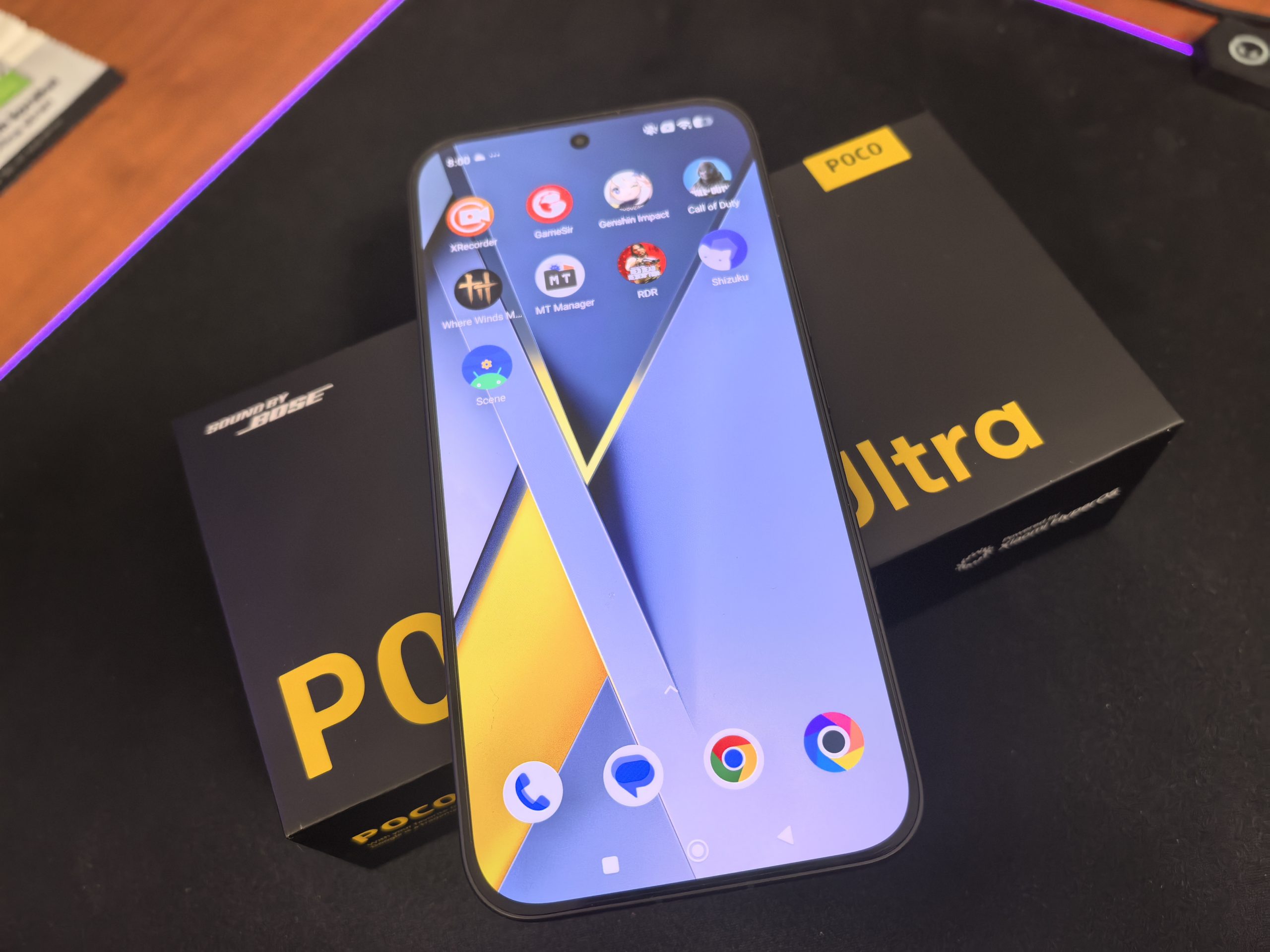
I have no complaints about the screen. It was always bright enough that I had no problems with visibility, and responsive as befits a gaming phone... In short, a good screen, but they didn't go a step higher in brightness or refresh rate.
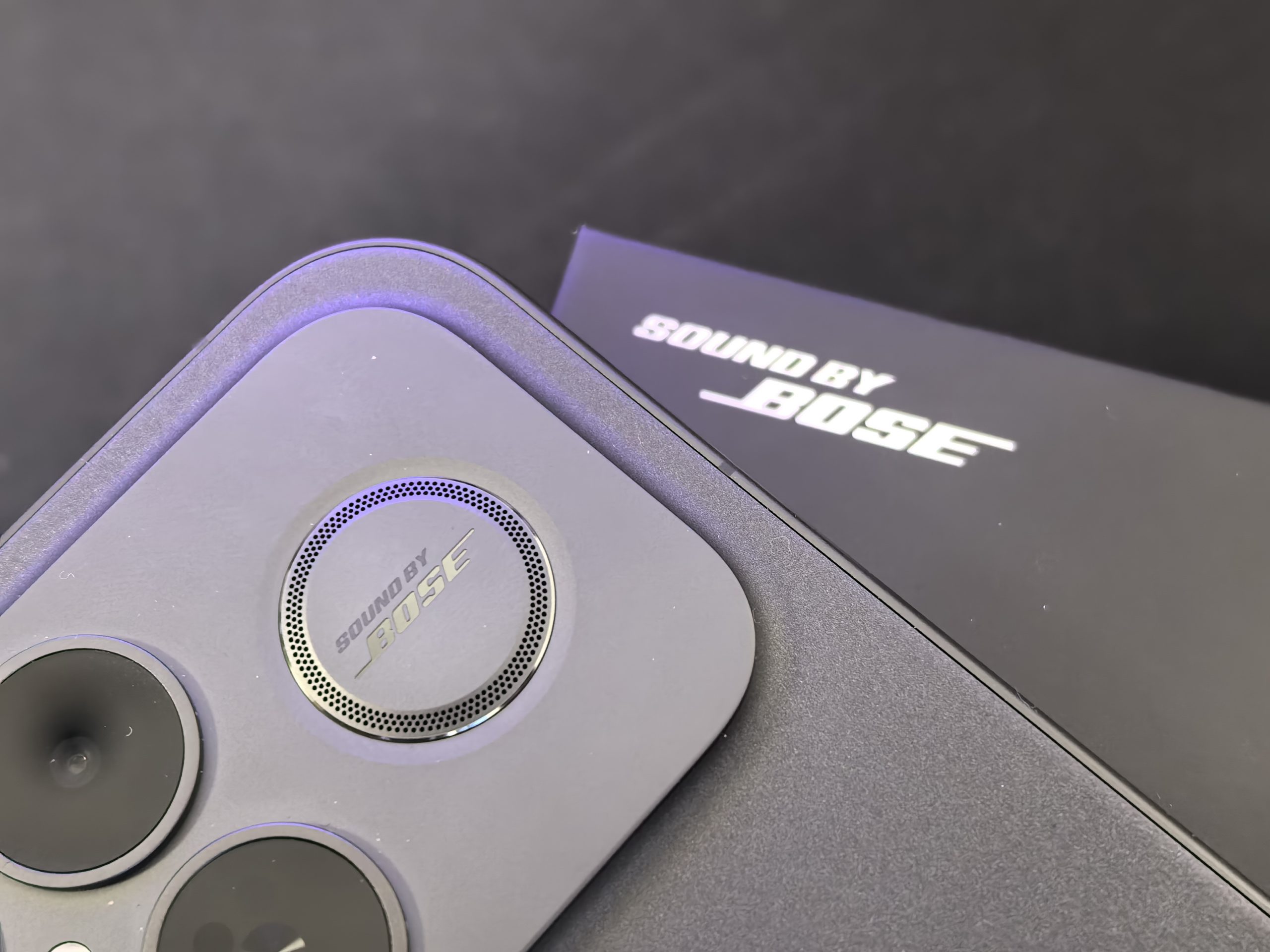
There's another little thing on the back that I've never seen on a phone before - a subwoofer. It was developed in collaboration with Bose, which also helped with the overall sound quality. I can't say that the sound is bombastic. It's good, but the subwoofer is especially useful for me when gaming, where the extra vibrations help to make the gameplay feel more immersive.
The materials aren't the most premium, but they're good enough for this price range
The body is made of aluminum alloy, with glass on the front and fiber-reinforced plastic on the back, and a matte finish that repels fingerprints. There will also be a special "denim" version that mimics the look of jeans.
In the packaging you get a solid protective case, which they also use on Redmi and T series phones. The appearance is neutral in my opinion. You can't criticize anything about it, but at the same time it's not an eye-catcher.
POCO F8 Ultra: good price, good performance, good phone
The POCO F8 Ultra delivers what it promises, and for a relatively fair price. The performance is fantastic, although they need to work on the cooling, the display is exceptional, the build quality is good, the cameras are average. The four-year support is enough for me, the battery could be better in terms of capacity, but at least you have very fast charging.
The more I think about it, the harder it is to find any serious flaws. Maybe the HyperOS system, which may lack a level of deeper personalization, but again, nothing major.
The POCO F8 Ultra is a very good phone, and it will be even better when its price drops by a few hundred, which usually happens very quickly.
If you're looking for alternatives, check out the Realme GT 8 Pro, One Plus 15, and Red Magic 11 Pro. Other phones with the new Snapdragon 8 Gen 5 chip are coming in the coming months, starting with Samsung's S26 series.