

Share with others:

Samsung Galaxy S26 Ultra review – old friends, new powers and a screen that doesn't like prying eyes

Samsung has a privilege that only Apple and no other manufacturer can afford. Even if they don't release a revolutionary phone for a year, they have such a strong and loyal user community that they are forgiven.
Now the only question is, is the new Samsung Galaxy S26 Ultra revolutionary or a phone that you have to forgive for certain things?
Advantages
- ✓Snapdragon 8 Elite Gen 5 chip performance
- ✓Good, but not the best display
- ✓Private screen and Horizon Lock features very useful
- ✓Good cameras, but need a refresh
- ✓Ultimate fast charging (60W)
- ✓Some UI features are useful
- ✓7-year software support
Weaknesses
- –Boring shape
- –Some UI tools are just ballast
- –It's time to say goodbye to 3x telephoto
- –More expensive than the Galaxy S25 Ultra
Samsung Galaxy S26 Ultra price and specifications
- Samsung Galaxy S26 Ultra 12GB/256GB: 1449 €
- Samsung Galaxy S26 Ultra 12GB/512GB: 1649 €
- Samsung Galaxy S26 Ultra 16GB/1TB: 1949 €
Available in purple, black, blue and white.
10 MP (f/2.4), 67mm, OIS, 3x optical zoom
50 MP (f/2.9), 111mm, OIS, 5x optical zoom
12MP (f/2.2)
Samsung Galaxy S26 Ultra – remember when titanium was hot?
That was two years ago now. Back then, Samsung and Apple were competing over who had the highest value and quality of titanium in their phones. The “war” only lasted two generations, as this year’s Galaxy S26 Ultra has an aluminum body (Samsung calls it Armor Aluminum 2). The reason is said to be to save weight (aluminum is also cheaper and easier to machine), but it’s more likely that they’re following Apple, which also decided it didn’t need it.
A significant difference for the user? Not at all, unless it was a point of pride for you, but I doubt it. What is important is that the phone is resistant, which of course it is. However, we are talking about a phone for one and a half thousand. Again, it is not as resistant as, for example, HONOR Magic8 Pro or Xiaomi 17 Ultra, which have an IP69 rating (HONOR even IP68K). As long as you don't put the phone directly in front of a strong jet of water, you won't have any problems, despite the lower resistance number. But with premium phones, I have to split hairs like this, because the differences between them are already minimal.
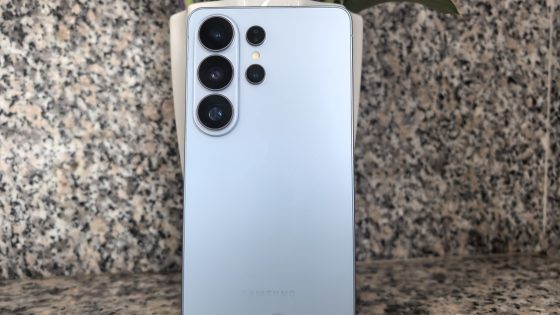
If I compare it to last year's Galaxy S25 Ultra, the facade has remained mostly the same. The screen is completely flat, Samsung has not liked curves for some time. The sides are flat, only the edges are slightly rounded, so that they do not bother you, for example, while playing games or taking photos. The special feature of the Ultra is still the S Pen, which has its own space in the case. Last year, its functionality was severely curtailed (Bluetooth and all accompanying functions were removed) and unfortunately this year they did not reverse this decision. I will especially miss the ability to use the pen as a remote control for taking photos. But you can still use gestures (stretch your hand and open your palm) or voice commands (Cheese, Smile ...). The quality of the pen otherwise seems the same to me, it also feels very similar to the touch. I think it is more curved on one side, but that is also the only change I noticed. But you have to be careful how you insert the pen into the case. It only fits one way.
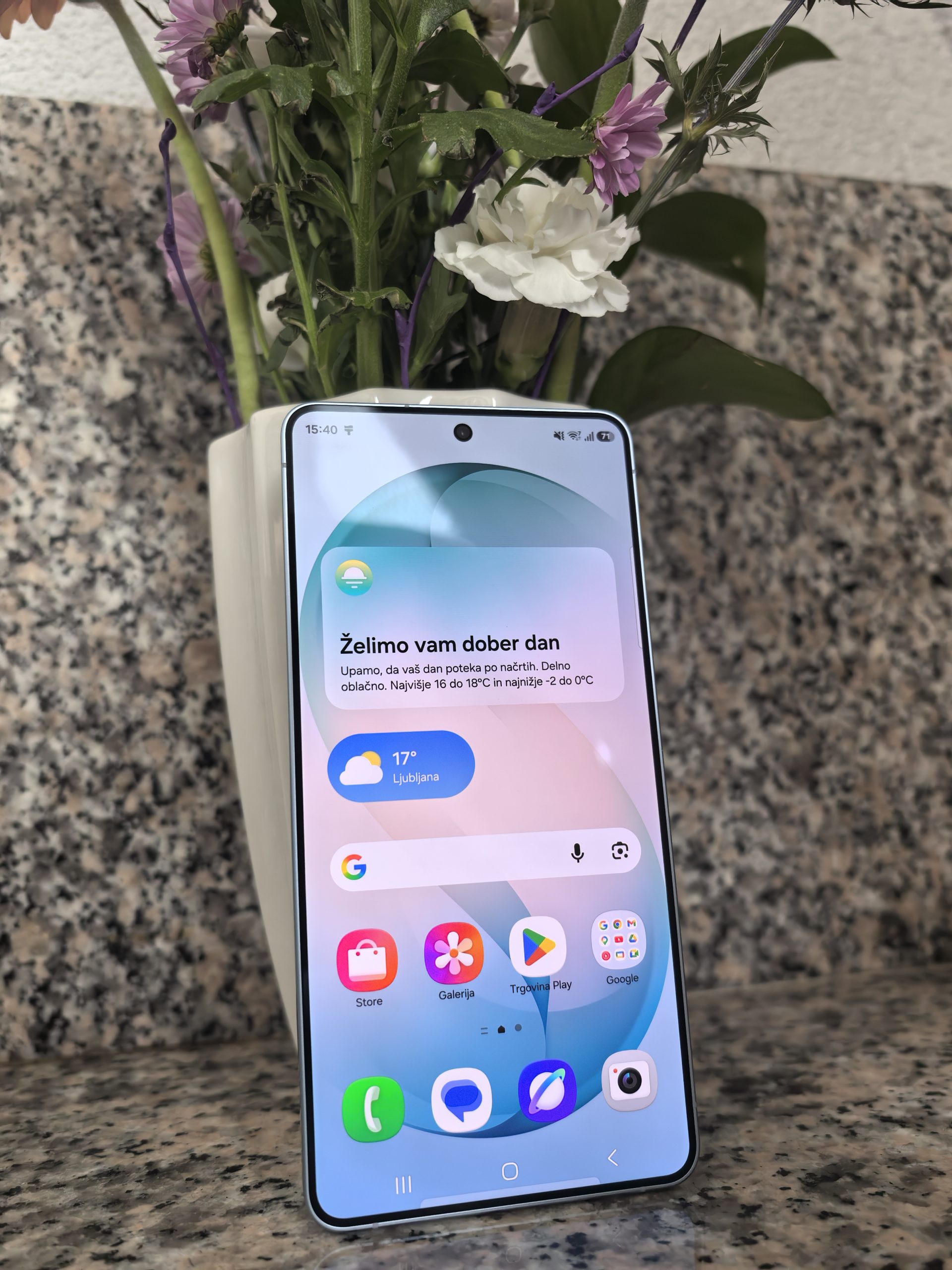
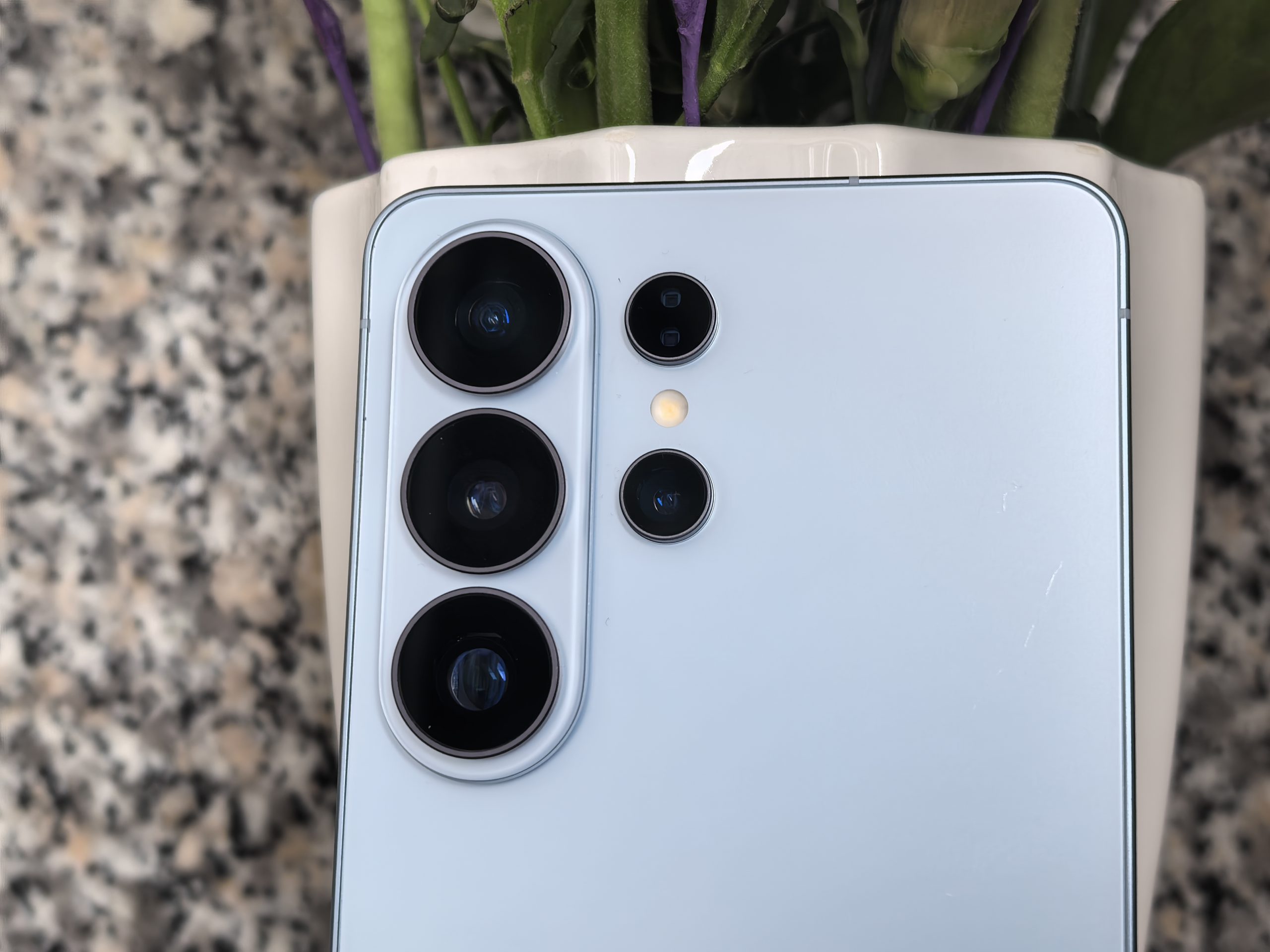
Last year, I boldly predicted that we might be without a built-in stylus this year. I'm glad I was wrong. I hope it stays that way next year as well.
What's different is the cameras. The individual sensors are no longer separate, but are in the same frame. The change is not drastic. Judge for yourself which shape you like better. Personally, I would prefer to see Samsung be bolder. I'm a little tired of the almost identical look for at least the last four years. I know that this shape has become a kind of trademark (across the entire line, even in the A series, which also bothers me a little), but I still think that many users would welcome the freshness in the appearance.
The Samsung Galaxy S26 Ultra is slightly thinner (7.9 mm, previously 8.2 mm) and has also lost four grams (214 g) in one year. On the front we have Gorilla Armor 2 glass with the addition of ceramic for extra durability and also to help with light reflections, and on the back we have Victus 2, both of which are the best that Corning has to offer.
AMOLED and the infamous Privacy Display
Forget about the chip, cameras, and everything else. This year's main innovation is the screen, or a new layer of protection that prevents passersby from seeing the content on your phone.
But first, the boring data. The AMOLED is the same as last year's, i.e. 6.9-inch with a refresh rate between 1 Hz and 120 Hz. The maximum brightness is "only" 2600 nits (candelas), which is almost three times less than on HONOR and Xiaomi phones. As long as the screen is not exposed to strong sunlight, there are no problems. In the summer on the beach or by the pool, you can expect to have to find shade for the best readability. The resolution is very good (1440 x 3120, defaulting to FullHD+), and even more so the pixel density (as much as 500 ppi). It's a bit strange that they stayed at 8-bit screen depth, even though they said they had upgraded to 10-bit.
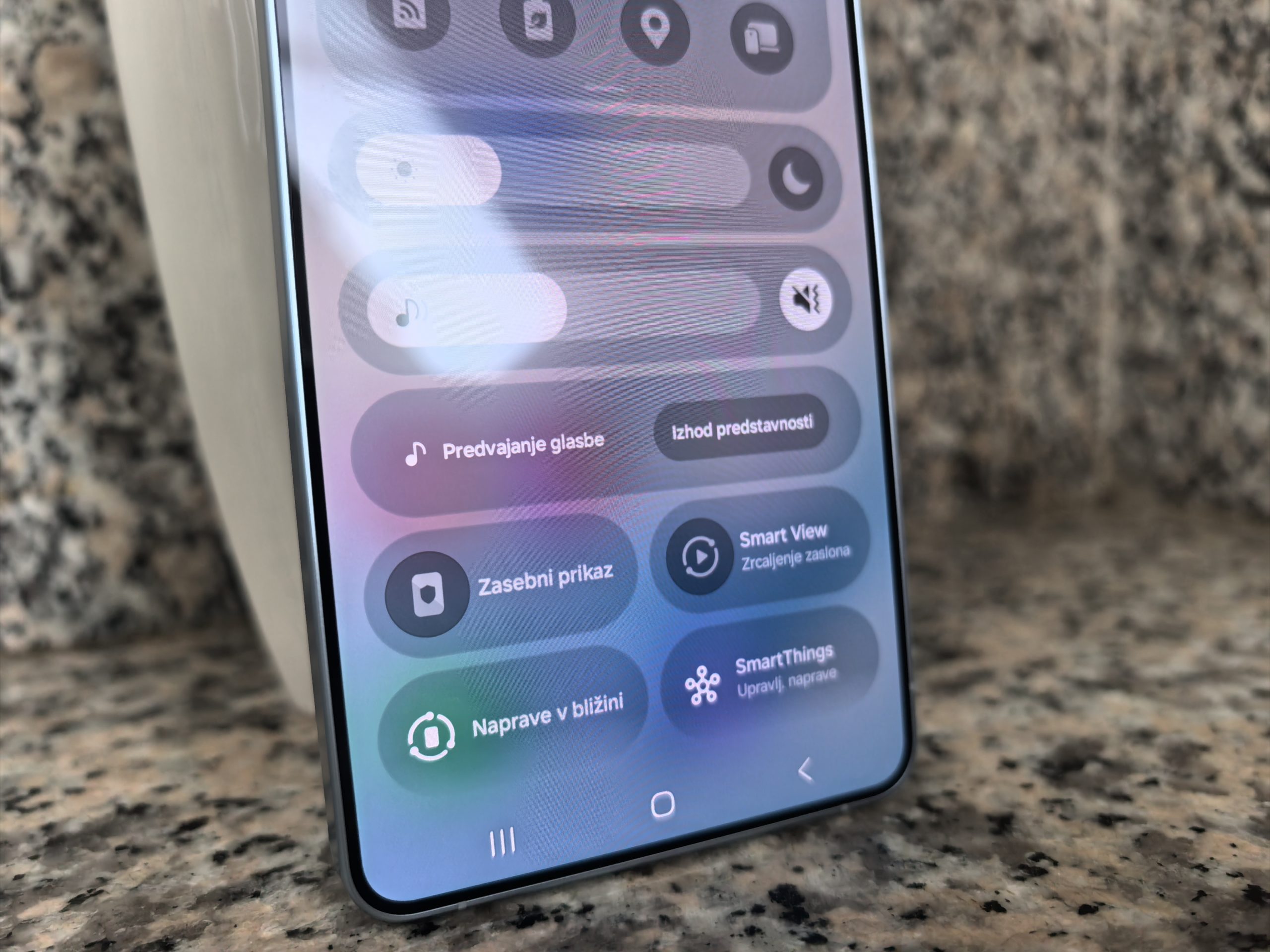
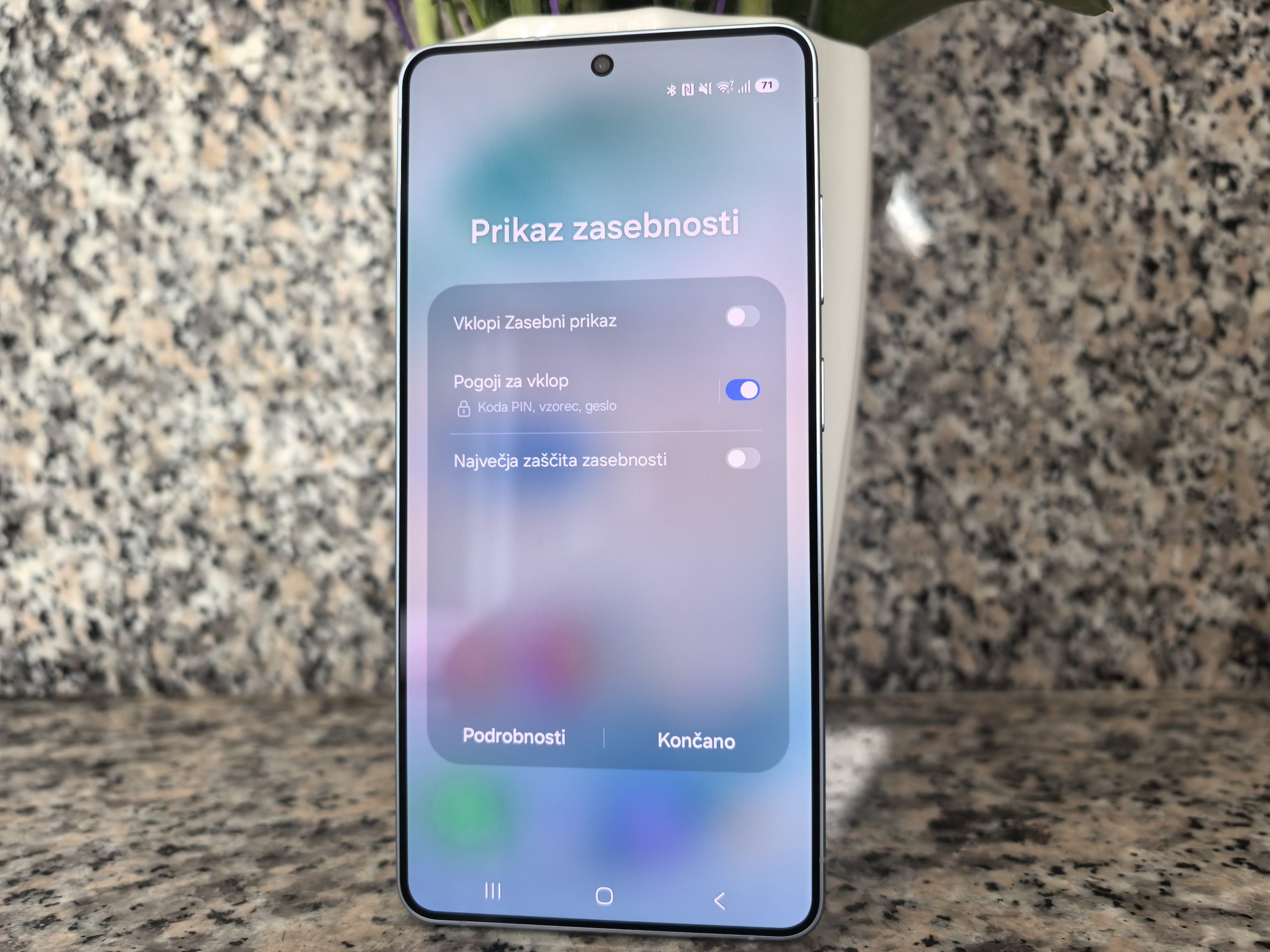
Now we can focus on the "Privacy Display".
At the heart of Samsung's Privacy Display is a dance of photons, with Flex Magic Pixel technology acting as a kind of light director. Instead of letting light escape freely at wide angles, the multi-layered black matrix (an architecture that resembles tiny, invisible lattices) physically tames it and forces it to travel exclusively towards your eyes. When you activate this mode, a voltage field is created inside the panel, changing the orientation of the liquid crystals and creating the conditions for total internal reflection. Light that would otherwise be caught by a curious eye from the next seat on a train or a park bench is simply reflected back into the device's interior, as if hitting an invisible mirror. The result is an almost eerily effective optical isolation. While I was able to enjoy full color clarity and sharpness, for anyone looking just a little to the side, the screen instantly turns black (depending on the settings).
Yes, the result is similar to what you can create yourself with dedicated protective glass. But, the advantage of having privacy controlled at the hardware level is that you can customize when it is turned on. For me, the best thing about the new privacy layer is that you can choose which apps will not be visible to prying eyes, such as banking, messaging, the PIN field, and the like. You can also mask notifications while the rest of the screen will still be visible.
If you have the normal level of private display turned on, someone looking from the side may still be able to partially see what you're doing, what app you're using, but they won't be able to see, for example, the content of the message, who you're talking to, etc. If you turn on the highest level of privacy protection, the screen from the side is completely black.
But not everything is rosy. When you turn on the private display, you first notice that the brightness is reduced, perhaps by about 10 nits. If you turn on the maximum level of protection, by even more. In this case, contrasts are also lost and, unfortunately, sharpness, which you can also see with the naked eye and not only when comparing with another phone. I am also worried about how this affects users who are sensitive to (invisible) screen flicker. Others solve this with high PWM frequencies, but Samsung has never emphasized this technology. With this private layer, I think the situation would only be worse for them.
In short, a useful technology, but not without compromises.
There's also an ultrasonic fingerprint reader hidden under the screen, which is responsive, but I miss being able to program quick shortcuts to specific apps (like on Vivo phones).
Snapdragon 8 Elite Gen 5 delivers power, but cooling is only marginally better than last year
I have to correct myself, the Samsung Galaxy S26 Ultra has the Snapdragon 8 Elite Gen 5 chip for Galaxy, just like it has for the past few years. Apart from the name, this is reflected in slightly higher core frequencies, and in numbers, maybe a percent or two more performance. Nothing alarming for rivals, this is more of a feature that Samsung can boast about in marketing messages.
You can get up to 16 GB of RAM (LPDDR5X), but the starting drive configuration is 256 GB, which I don't recommend if you're a gamer, a passionate photographer, or a data hog in general. Any slightly better Android game quickly takes up more than 50 GB of space, and Windows games can even take up more than 100 GB. Since I got the 256 GB model for the test, I had to constantly delete games that I had already tested. The drive standard is UFS 4.0, the second fastest currently available.
Below is a table of the games I tested. There is no change compared to other phones with the same chip.
Temperatures are a little better than last year, despite the improved cooling system and the increased heat spreader (by about 20 %). If I'm not mistaken, they also added thermal paste (previously only graphite pads) to the chip and RAM modules. Also, aluminum generally has better thermal conductivity than titanium. When I played games, I quickly reached 50°C on the case (average 42-43°C on the battery, about 57°C on the chip), which is quite pleasant to the touch. Up until about an hour or so, the temperature might have fluctuated by a degree or two, but then it rose sharply, like most phones. There's no doubt that they've improved the cooling system, but we're not at the point where we can play games, record in 4K or 8K, and edit footage for hours without any worries.
The battery has a capacity of 5000 mAh, far behind Chinese competitors, which are approaching or have even exceeded the 7000 mAh mark, mainly thanks to the new silicon-carbon battery, which Samsung has been avoiding for a long time. Every time I ask their engineers or representatives why this is the case, I get a PR answer that is not even worth publishing. Recently, news has also been circulating online that the new battery technology is dangerous due to proliferation, but so far there is no concrete data to confirm this theory. At least we finally got 60-W charging. At least five years too late, but I'm glad we're finally at this point. However, this only applies to the Ultra, the remaining models have 25-W and 45-W charging.
Battery life is good despite the smaller capacity, again helped by the very well-optimized OneUI system (we're at number 8.5). On average, I was able to achieve around 9-10 hours of screen on time (SoT) with moderate use, which is a day and a half of use.
The Samsung Galaxy S26 Ultra is certified for Qi2 wireless charging, but it doesn't have built-in magnetic coils, so you'll need a suitable case.
Agent-based artificial intelligence, is it really as useful as they say?
I was surprised when TM Roh, the alpha and omega of Samsung, recently stated that the company will no longer chase the best specs unless it improves the Galaxy AI and user experience. A strange statement, considering that you buy the Ultro because you want the best phone. I understand what he was trying to say, but if the competition offers a better screen, better cameras, maybe some additional innovation every year (like Samsung introduced the private display this year, Huawei dual telephoto lens on the same sensor...), then you have to respond.
Well, given that there is so much emphasis on artificial intelligence and programming experience, let's see where we stand.
The Samsung Galaxy S26 Ultra uses two models (a third, Perplexity, is said to be on the way). Local UI functions are handled by Gauss 2, while all tools that require the cloud use Gemini 3.1 Pro. There's also a more powerful NPU behind the scenes to help with AI tasks.
The first layer of UI tools are the classic tools to help with writing, translating, summarizing, and editing content. The second layer is contextual features like Now Bar and Now Brief, which try to assemble a more useful daily interface from my habits, notifications, calendar, weather, and other elements. The third, most ambitious layer is agent-based AI: Now Nudge, a revamped Bixby, and Gemini with screen automation, where the phone no longer remains just an advisor, but tries to perform multi-step tasks. It is this third layer that is the most interesting, but also the most inconsistent.
I had the least reservations about the basic Galaxy AI tools. Live Translate and Interpreter are still among the most tangible features, as they allow for real-time translation of calls and conversations (unfortunately, Slovenian is not yet supported), and some of it also works offline, which is important for privacy and reliability on the go. Surround search can now highlight multiple objects on the screen, a great upgrade.
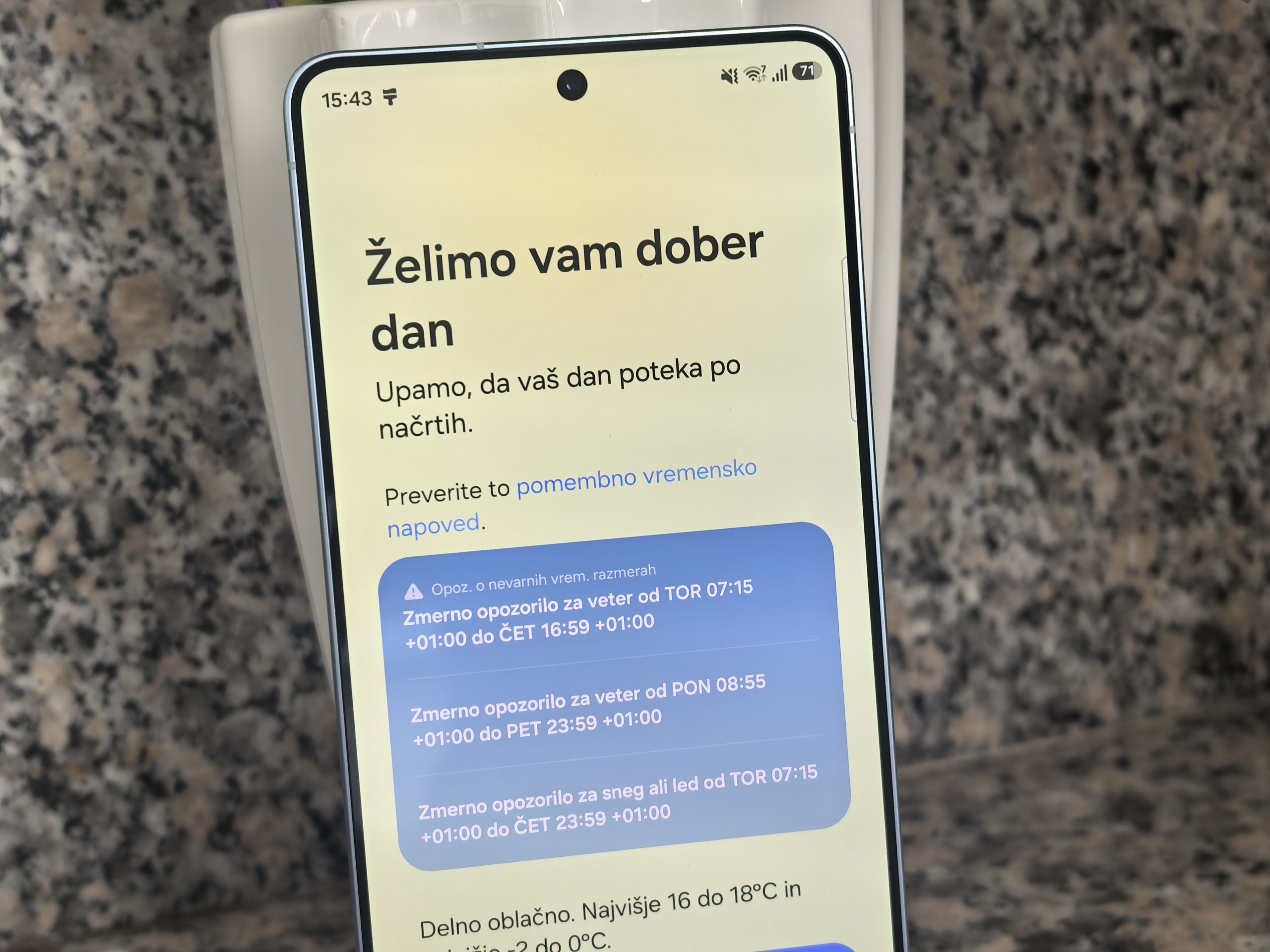
I don't usually use writing assistance features, but I know users who use them to help them quickly reformat text, correct tone, and translate. When I have an interview, I always have a recorder and speech transcription turned on, which makes it much easier to prepare an article. Although I find NotebookLM much better in this regard.
The creative side of Galaxy AI also works very well. Generative Edit and the newer Photos Assist allow you to edit photos based on text commands, moving or removing objects and completing the frame, which is really useful when quickly preparing photos for social networks or for an article. Creative Studio is another example of the direction Samsung is pushing the phone in. For someone who is making quick visual sketches, stickers, invitations or simple graphic motifs, this is convenient.
When it comes to video, I got the feeling that Samsung has better understood this year that artificial intelligence needs to solve concrete problems. The audio eraser can reduce or remove certain types of noise, such as wind, crowds, or background music, which is very useful when I'm recording a quick video in the field and don't have time to do serious audio processing. It also works, for example, within YouTube or similar. Auto Trim is interesting for quick collages and "highlight" videos, as it can extract highlights from longer material, and Instant Slow-Mo remains one of the more fun and practical UI tricks, because I don't have to think in advance whether I need to record in slow-motion mode. If I add Horizon Lock (also available on Vivo) for extremely stabilized video, I get a phone that is very clearly aimed at people who record and edit a lot directly on the device.
The most “agentic” feeling I got was from the combination of Gemini’s screen automation, the revamped Bixby, Now Nudge, and Now Brief. Gemini can open apps, navigate menus, select items, add things to a cart, and take the process to the point of confirmation, like when ordering food. This is the purest example of a phone not just answering a question, but performing a task.
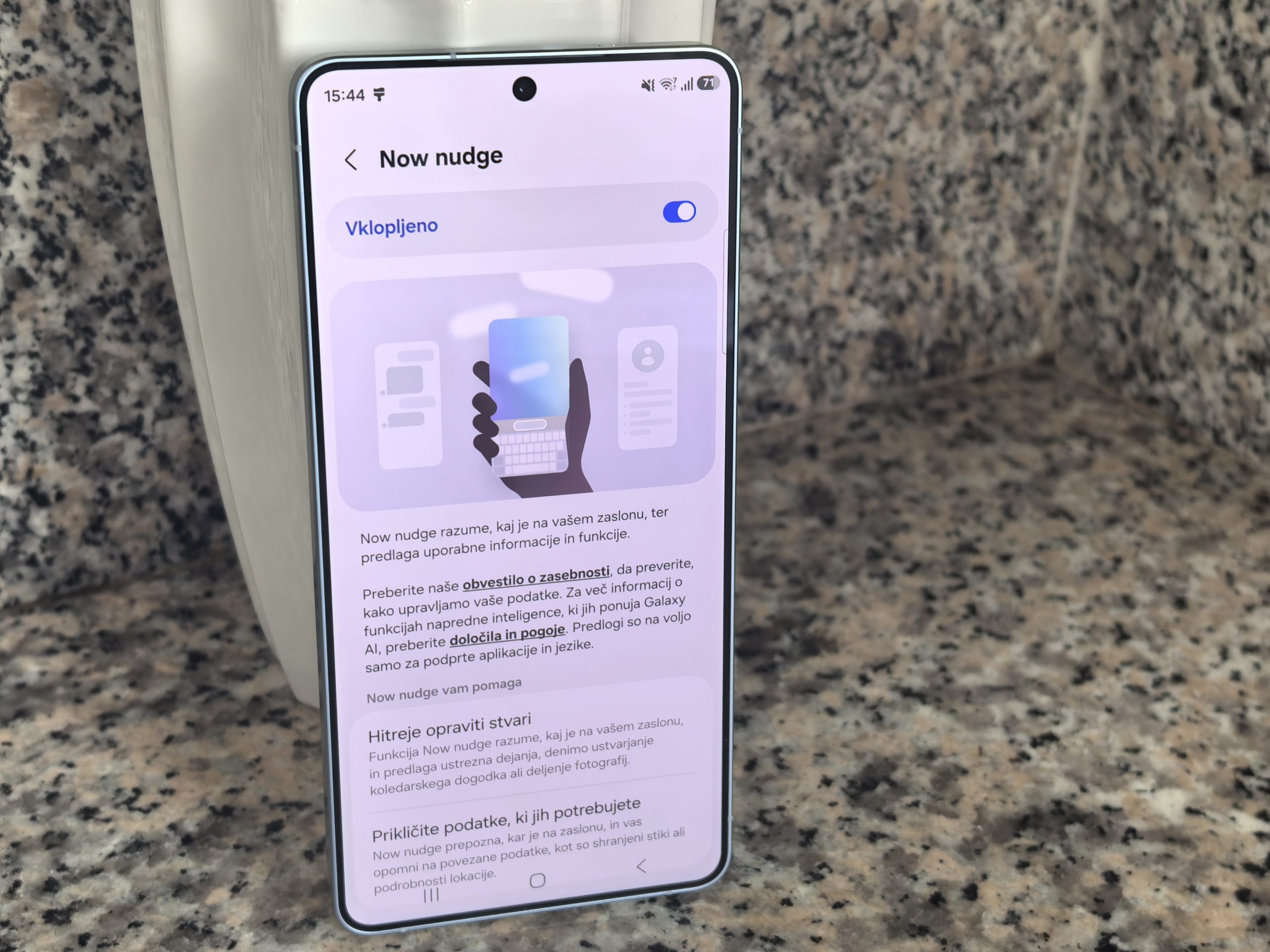
The revamped Bixby is supposed to make conversations more natural and intuitive, while Now Nudge tries to extract timely suggestions from my apps and behavior. Now Brief turns all of this into personalized overviews of my day, from traffic and weather to calendar and other useful cues. When it all works together, it's a useful thing. My problem was that it didn't always work the way I imagined it would. Recognizing what was happening on my screen wasn't consistent. Sometimes the UI suggested something useful, other times it didn't offer any suggestions at all. As a result, Now Brief can quickly become too general and lacking in useful information. App compatibility is also still a big issue. For example, Now Nudge doesn't work in WhatsApp, where I spend most of my time.
We're not at the point where I can say "my phone will take care of everything for me". I don't even know if I want that or if I need that. I know that many people can't wait to raise their hands and have artificial intelligence do everything for them. But I still like to do most things myself.
It's time to refresh the cameras
While Huawei and HONOR, for example, pay more attention to optics, that is, the hardware side of the cameras, Samsung is clearly more on the software side. At least judging by the fact that they haven't really updated their photography lineup for a few years. That's what I was saying at the beginning. The Samsung Galaxy S26 Ultra doesn't have bad cameras, far from it, but on the other hand, they don't represent anything revolutionary either. They do just enough to stay just below the top.
The layout will be familiar to you. The main sensor with 200 megapixels reigns supreme, accompanied by a new 50 megapixel periscope telephoto lens with 5x zoom and the now almost "legendary" 10 megapixel 3x camera that Samsung has been sticking to for several generations. In the daytime, the photos are exactly what you expect from the Ultra, full of detail and colors, sometimes a little too "screaming", but which is precisely why they are perfect for immediate publication without additional editing.
When darkness falls, the power of the new Snapdragon 8 Elite Gen 5 processor and slightly larger apertures really comes into play, as Galaxy AI does a lot of work in the background to clean up noise without losing the natural feel of the night, although the system sometimes brightens shadows a little more aggressively than a purist would like. In portraits, separating the subject from the background is now almost surgically accurate, mainly thanks to the Photos Assist function, which better understands 3D space and can adjust shadows so that the person no longer looks like a flat sticker on a blurry background. The biggest improvement you'll notice in practice, however, is when taking pictures of moving subjects, where Samsung has finally tamed that infamous shutter lag a bit, so your cat or child in the picture will no longer be just an artistic blur, but captured in a moment of clarity.
The Horizon Lock feature deserves special mention, as it ensures that the video remains perfectly horizontal and stable, even if you rotate the phone a full 360 degrees in your hand while recording. This works by using artificial intelligence to take advantage of the huge surface area of the main sensor and crop a stabilized frame from it in real time, meaning that the horizon is always where it needs to be, no matter how clumsy you are while running or walking.
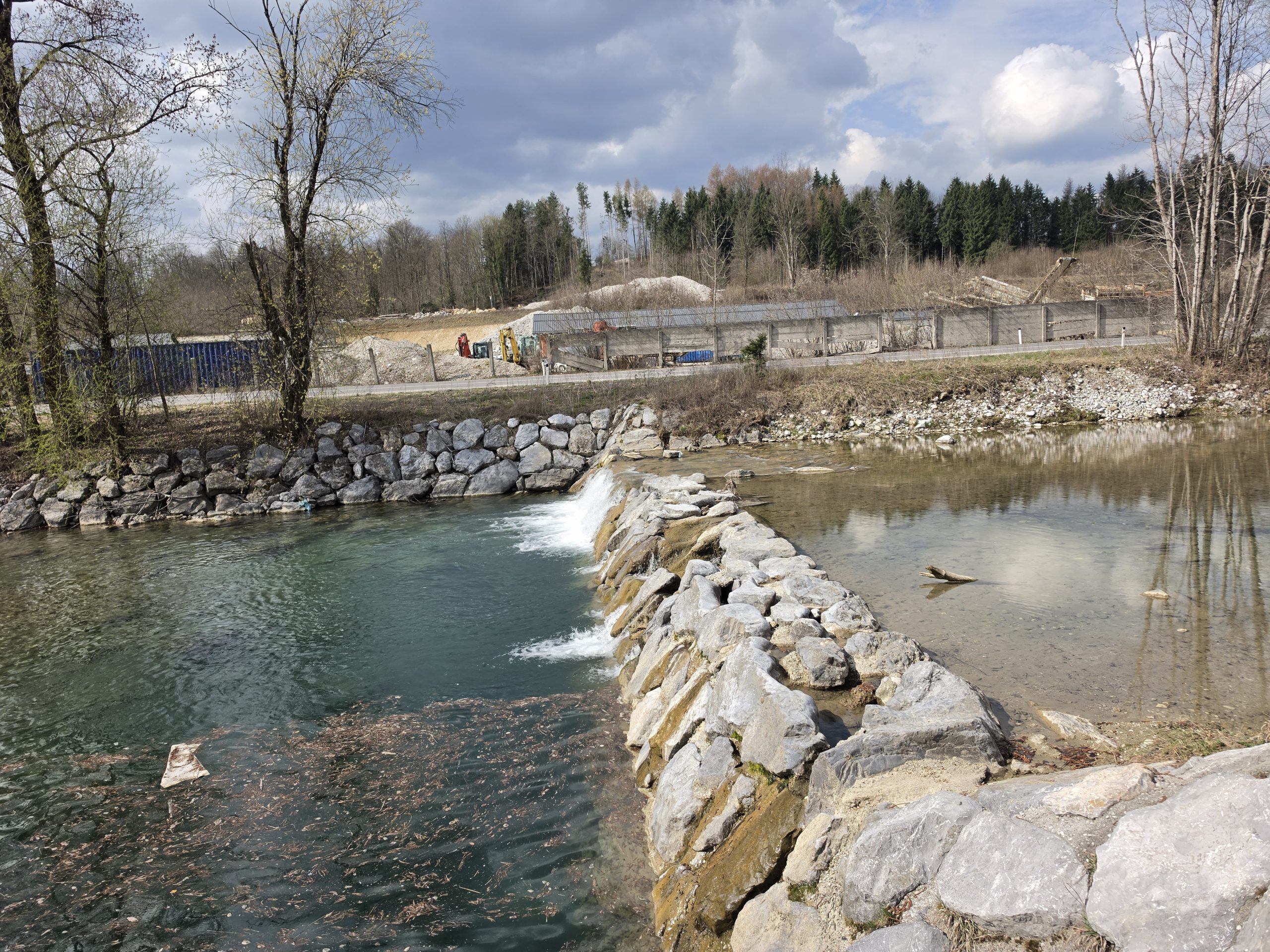
Photo gallery













Samsung Galax S26 Ultra – the Ultra name no longer shines as brightly as in previous years
The Samsung Galaxy S26 Ultra is, as it always is, a great phone. The performance is top-notch, the build quality is top-notch, the software support is the longest, the battery is solid, it finally charges quickly, and I also like the private display, which is not without compromise, and the Horizontal Lock video feature.
What I would like in the future is for them to upgrade the screen brightness, battery capacity, it's also time for them to discuss internally about upgrading to silicon-carbon and a 10-bit screen. Finally, I would like them to take me out of the cameras in 2027. I'm already happy to see what I'm holding in my hand, I hope that in less than 12 months I'll be smiling even more.