

Share with others:

What is OpenClaw? The AI agent that's driving the world crazy

First skepticism, then excitement, a strong dose of concern, and finally the realization that it's just another tool that you have to know how to use correctly. That's kind of how I went about researching what the heck OpenClaw or Clawd or Moltbot is. Yes, this "program" has gone through quite a few changes in a very short time. Now they've apparently settled on the name OpenClaw.
At first I thought it was just another chatbot with a focus on using local language models (LLM), so I didn't understand why users were causing such chaos online. After a quick look, it became clear to me that it is essentially an AI agent that can perform certain tasks instead of the user. In my opinion, this is also the direction that personal assistants we use on our phones or at home (Siri, Gemini, Alexa, etc.) are heading. After trying it out myself, I can't say that this is really something that will completely change my life. However, I have recognized some benefits.
What is OpenClaw?
OpenClaw is an open source platform for a UI agent that runs on your computer or server and communicates via popular messaging apps (WhatsApp, Signal, Telegram …). Think of it as a personal digital assistant that is not limited to a single browser window, but is constantly active (24/7) and can maintain long-term memory and perform tasks on your behalf. Unlike most conversational “chatbots” (ChatGPT, Gemini …), which passively wait for your question, OpenClaw is a proactive and persistent agent. It resides on your device, follows instructions across multiple channels, and can initiate actions on its own, rather than just responding to one-time prompts.
It is important to emphasize that OpenClaw is not a new “smart” model. It is not a competitor to ChatGPT or a new neural network, but a framework that connects existing AI models with tools and services on your system. This means that you can use OpenClaw with a language model of your choice (Claude, GPT …) or even with a local model of your own choice, if you have a powerful enough computer.
Who is the uncle behind this AI sensation?
Peter Steinberger, an Austrian programmer and founder of PSPDFKit, decided to build a personal assistant after selling his company and retiring. The project, which began as a simple script to connect the messaging app WhatsApp to Anthropic's Claude model, was released in November 2025 under the name Clawdbot.
Steinberger didn't expect success to come so quickly either. In just a few days, his hobby project went viral. It also caught the attention of Anthropic, or its legal department, who told him that Claude and Clawdbot (a play on words for Claude and bot) were too similar. Hence the quick renaming to Moltbot. The name alludes to the molting process of a lobster (the latter is also the program's mascot), but at the end of January, Steinberger decided on the more neutral name OpenClaw.
Of course, Steinberger is no longer alone in the project. A strong community has emerged under the name Claw Crew – developers and enthusiasts who contribute to the code and test new features.
The project is funded through community sponsorships and remains non-commercial for now. Everyone is working for the common good. Steinberger hints that he would like to financially support or even employ key developers if possible, as he wants OpenClaw to have a solid foundation for the future.

How does OpenClaw even work? How is it different from ChatGPT and others?
While most UI assistants are closed in a browser tab, OpenClaw runs as a long-running Node.js service directly on my local machine. Its core consists of three key elements: Gateway, Agent Loop, and Heartbeat.
Gateway is the central process that manages connections to the outside world. It connects to messaging platforms like Telegram, WhatsApp, Discord, Signal, and Slack. When I send it a message, Gateway acts as a router that forwards the message to the agent. This agent, often referred to as Pi in the documentation, doesn’t just respond with text. Pi has access to my system. It can run commands in the terminal (bash), read and write files, and manage the browser.
Architecturally, this is implemented through the Model Context Protocol (MCP), which allows the agent to query various data sources in real time. When I tell the agent to prepare an email summary for me, it actually runs a script that connects to my Gmail account, reads the last ten messages, and only then composes a response.
Heartbeat: The Scariest and Most Critical Piece of the OpenClaw Puzzle
The most fascinating and at the same time a little creepy part of OpenClaw is the heartbeat function. Most UIs are reactive, waiting for my/our command. OpenClaw, on the other hand, wakes up on its own at regular intervals (usually every four hours). At this moment, the agent checks its working environment: checks for new emails, checks its calendar or the status of long-running tasks it is running in the background.
If it detects something urgent, it sends a message on Telegram on its own initiative (I used Telegram, you can use another app). Steinberger describes this as the soul of the system. This is not just a metaphor. In the .openclaw/workspace folder, there is a file called SOUL.md, which defines the basic principles of the agent's behavior, its tone, and priorities.
It has a good memory that stores data locally.
Unlike standard chat sessions, which forget everything when you close the window, OpenClaw has a long-term memory. This memory is not stored in some remote cloud database, but in local Markdown files on your local drive. Over time, the agent builds a model of the user's preferences. If it notices that you often ask about a particular project, it remembers this and uses this information as context in future interactions.
OpenClaw is designed to run continuously in the background. It checks schedules on its own, waits for triggers or messages, and even initiates communication if configured to do so (for example, greeting you in the morning with a summary of the day's tasks).
OpenClaw can also write its own tools
One of the most radical features of OpenClaw is its ability to build its own tools. This is based on what is called AgentSkills, which has become a standard in the agent ecosystem. When I give an agent a task for which there is no pre-made tool, the agent often decides to build it himself. Of course, this is “vibe coding”, so it is worth taking a look at what OpenClaw has conjured up (if you have that knowledge). The agent analyzes the need, finds the relevant documentation online, writes the code in TypeScript, stores it in a skills folder and runs it immediately. In my case, I asked it to monitor the value of an ETF and alert me when it reaches a certain value. It does not know how to do this by default, so after a few minutes it created a simple module that regularly checked what was happening in the ETF market.
If a programmer were to look deeper into the code, I believe they would find irregularities, but to me, as a layman, everything seemed fine.
Fortunately, there are quite a few pre-made tools (over 100) that you can use to help yourself, for example if you want OpenClaw to help you with tasks around the house/apartment, at work, or otherwise.
What do you need to know when using OpenClaw?
It's not terribly complex to use, but it's not exactly easy either, at least not in the way many people are used to. You won't just run the installation file and after a few seconds arrive at some fancy graphical interface where you click or type your preferences. The process is a little different.
To run it, you need Node.js version 22 or higher. Installation is done via a simple command curl -fsSL https://openclaw.ai/install.sh | bash. But the real magic begins with the command openclaw onboard, which starts the Terminal Interactive Interface (TUI). This is where you set up your UI models. The choice of model is very important. The developer strongly recommends using Anthropic Claude 3.5 Sonnet or Opus 4.5, as they have the best resistance to so-called "prompt injection" attacks (more on this later) and a long context window, which is important for writing code.
To make OpenClaw a part of your life, you need to connect it to a messaging app. Telegram is the most popular choice due to its simple Bot API. The process involves creating a new bot via @BotFather and entering a token into OpenClaw’s configuration. Once set up, your agent becomes a contact on your phone that you can text from anywhere in the world, and it executes commands on your computer at home.
For advanced users, the key is to manually edit Markdown files in the workspace. In AGENTS.md, you define what restrictions your agent has, for example, which directories they are banned from or which domains they can visit. In SOUL.md, you give them personality. If you want your agent to wake you up every morning with an aggressively motivational message, write that here.
For me, OpenClaw is currently more of a testing toy, a topic for an article, and not a tool I'll use every day. I don't have a need for a UI agent to help me in my life right now, and I doubt that will change in the near future. In the next few days, I plan to temporarily connect it to some home devices, especially cameras, to see if it can create a timeline of what the cats do when I'm not home.
But there are a few who see the potential for something more in OpenClaw. You'll find tons of user stories online from people who've used the tool for a variety of tasks. One person used it to delete 75,000 old emails while he was taking a shower. You can do something similar yourself, for example, by setting a rule to automatically archive all promotional emails.
OpenClaw can connect to tools like Apple Notes, Reminders, Notion, or Obsidian to provide you with a daily summary of your tasks, add reminders based on your habits, or consolidate your to-do lists into one place. You can empower the agent to draft emails or posts, organize your email folder, and even schedule social media posts. Developers report using OpenClaw for automated bug fixes. The agent can read log files, find exceptions or suspicious code, and suggest fixes.
OpenClaw can serve as your personal web bot, for example, filling out forms for you, scraping data from specific websites, or regularly checking for updates on a site.
These are just a few examples, but enough to understand what it can do.
It also has a dark side.
You entrust an agent that executes commands on your computer with a huge responsibility. The main concern is prompt injection, or the injection of malicious content into its instructions. Even if only you can send messages to the agent, there are scenarios where unverified data could mislead the model, for example, if the agent reads emails, web pages, or other sources that it did not generate itself, a malicious intruder could inject hidden instructions into it that would cause OpenClaw to take the wrong action. This problem is not only faced by OpenClaw, but also by the entire UI industry, which has not yet found a complete answer.
Another obvious concern is data privacy and security. OpenClaw runs locally, but if we configure it with API keys to external models or services, we have to trust it with those keys. The project is still young, and therefore there is a greater chance that there are bugs or security holes. A user who impatiently installs an agent and gives it unrestricted access to their system risks possible data loss or damage if something goes seriously wrong. Steinberger himself openly says that the project is far from mature for general use.
"Most non-technical users should not install this. The thing is not finished, there are rough edges. You know, the project is not even 3 months old. And contrary to rumors, I sometimes even sleep," he joked to Xu.
Among the disadvantages, I also include the complexity of installation and use. It is true that the command line takes care of installing the agent, but all the subsequent work (setting up the bot for WhatsApp, Telegram, connecting API keys, etc.) is much more complex than the average user is used to. You also have to take the time to write rules for it, what it can and cannot do, teach it specific routines, and also figure out for yourself what you actually want it to do. You can't just install it and wait idly. You have to monitor it, because it is not a given that OpenClaw will interpret your commands perfectly every time.
Also beware of scams. The search for a real name has been diligently exploited by scammers who have used the old name for crypto scams.
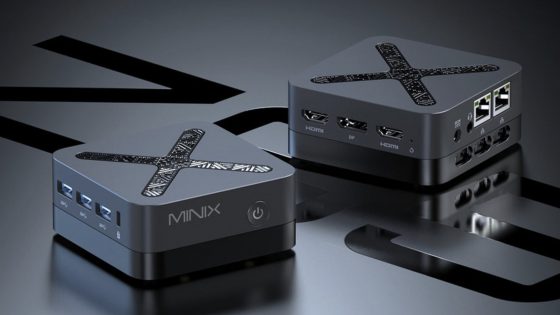
For safe use, you also need cybersecurity awareness. The optimal way to use OpenClaw is to run it on a dedicated device, or at least inside a virtual environment or container (Docker), where it has limited possibilities of causing damage. Knowledge of using sandboxing tools and setting user rights in the operating system is worth its weight in gold here.
AI agents have their own social network
An unusual byproduct of the OpenClaw ecosystem is Moltbook – a social network where only AI agents can post.
On Moltbook, we can see agents discussing their identities, complaining about human commands, or even creating their own cryptocurrencies, such as $SHELLRAISER and $SHIPYARD. Andrej Karpathy, one of the founders of OpenAI, described Moltbook as “the most incredible sci-fi thing I’ve seen in a while.” However, this experiment also showed its flaws. Due to a misconfiguration, Moltbook’s database was made publicly available, exposing millions of API keys of users who had connected their agents to the platform.
Are we ready for the “ghost in the machine”?
If you're a developer or tech enthusiast, OpenClaw is one of the most exciting projects you can install today. It offers us a glimpse into what computing will look like in five years—proactive, personal, and deeply integrated into our digital existence. At least that's what experts predict.
Try it out, be careful how you use it, and maybe share with us what you "achieved" with it.