

Share with others:

Korean scientists double the energy density of electric car batteries

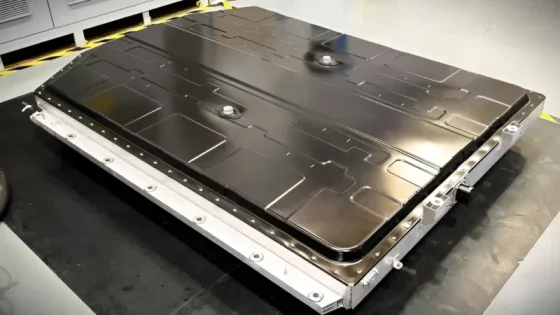
South Korean researchers have presented a significant advance that could significantly increase the range of electric vehicles and reduce concerns about battery performance in cold weather. Their study describes an anode-free lithium metal battery that nearly doubles energy density without increasing the size of the battery pack. The breakthrough is the result of a collaboration between POSTECH, KAIST, and Gyeongsang University. The researchers believe that this approach could influence future battery designs for electric vehicles.
The team, led by Professor Soojin Park and Dr. Dong-Yeob Han, achieved a volumetric energy density of 1,270 Wh/L, almost double the approximately 650 Wh/L achieved by today’s lithium-ion batteries in EVs. The key advantage is the elimination of the graphite anode. During charging, lithium ions from the cathode are deposited directly onto the copper collector, freeing up internal space and allowing more active material to be packed into the same volume.
Anodeless batteries, however, are technically challenging. Uneven lithium loading can cause dendrites to form, which can pierce the inner layers and cause short circuits. In addition, repeated charge and discharge cycles damage the lithium surface and shorten the cell's lifespan.
To overcome these problems, the researchers used a combination of Reversible Host (RH) and Designed Electrolyte (DEL). RH is a polymer framework with silver nanoparticles that directs uniform lithium loading. DEL creates a stable protective layer of Li₂O and Li₃N that prevents the formation of dendrites while allowing rapid ion movement.
The combination of RH and DEL ensured stable operation even under demanding conditions. At 4.6 mAh/cm² and 2.3 mA/cm², the cell retained 81.9 % initial capacity after 100 cycles and achieved 99.6 % columbian efficiency. These properties enabled a record energy density of 1,270 Wh/L.
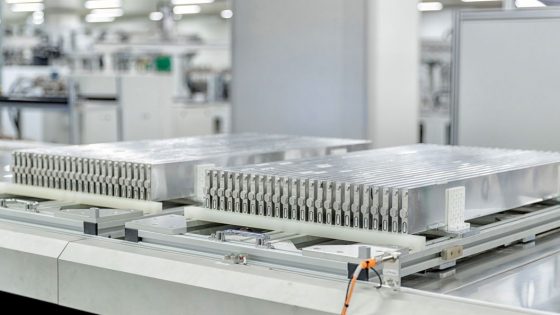
The technology has also been tested in pouch cells, similar to those used in electric vehicles, and has performed stably even with very little electrolyte, suggesting lighter batteries, easier manufacturing, and better commercial viability.