

Share with others:

How did the SD card beat all competitors and rule the world?

I have it, you have it, we all have at least one. Maybe in an old phone, camera, camera, Nintendo Switch or ROG Ally.
Every time I push microSD card into her home, I think about how we take it for granted that it simply works, and that it works everywhere. It wasn't always like that. Between the mid-1990s and the early 2000s, the portable storage market resembled a format war, similar to the one between VHS and Betamax, except there were at least six or seven battlefields at once. Every major electronics manufacturer wanted its own, closed system that would keep the user within its own ecosystem.
What standards existed before the SD card, which ones tried to supplant it, and why none of them stuck.
The world before SD cards was fragmented
Before the Secure Digital (SD) card was even introduced in 1999, there were several competing solutions for portable flash memory on the market. Each solved a similar problem (how to cram as much space as possible into a small, inexpensive chip), but each in its own way, with no common agreement on a mechanical or electrical interface. The result was that a reader for one type of card would completely fail with another, and customers had to buy multiple adapters if they wanted to transfer data between devices of different brands.
CompactFlash started the flash memory revolution
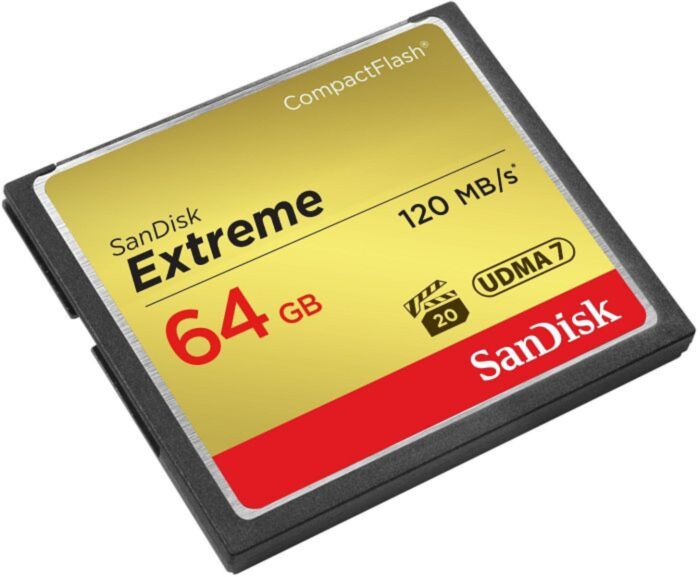
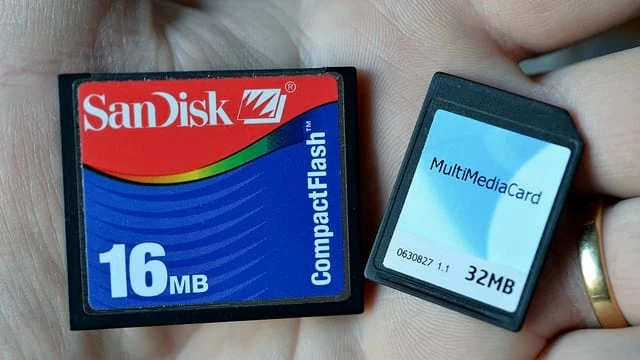
CompactFlash (CF) was introduced by SanDisk in 1994 and was a breakthrough for its time. Physically, the card resembled a miniature hard drive. It was much larger than today's memory cards. However, this very size allowed it to incorporate a parallel interface similar to that used by PATA (IDE) hard drives of the time. This gave CF cards a significant speed leap over early SD cards, which were designed primarily for small size and low power consumption, not for raw speed.
That's why CompactFlash was the standard for professional digital cameras for a decade or more, while SD remained the consumer choice. But as SD technology caught up and surpassed CF in speed while remaining significantly smaller, CompactFlash lost its dominance in the mass market.
The format is not dead, however. Its successor, CFexpress, lives on today in professional cameras and cinema cameras, where sustained write speed is more important than card size. More on that below.
MultiMediaCard (MMC) is the direct ancestor of the SD card
In 1997, SanDisk and Germany's Siemens introduced the MultiMediaCard (MMC), a small card with a serial interface designed for early portable devices, from PDAs to the first digital music players. The MMC is important primarily because it became the technical basis for the SD card. SD is essentially an MMC with added copyright protection (DRM), an additional contact for secure communication, and improved transfer reliability.
Because the SD card was mechanically very similar to the MMC, early SD readers also supported MMC cards without any problems, giving SD an immediate base of compatible devices and accelerating its expansion. MMC as a standalone format slowly disappeared as SD took over and upgraded its role.
The birth of the SD card: a compromise that won
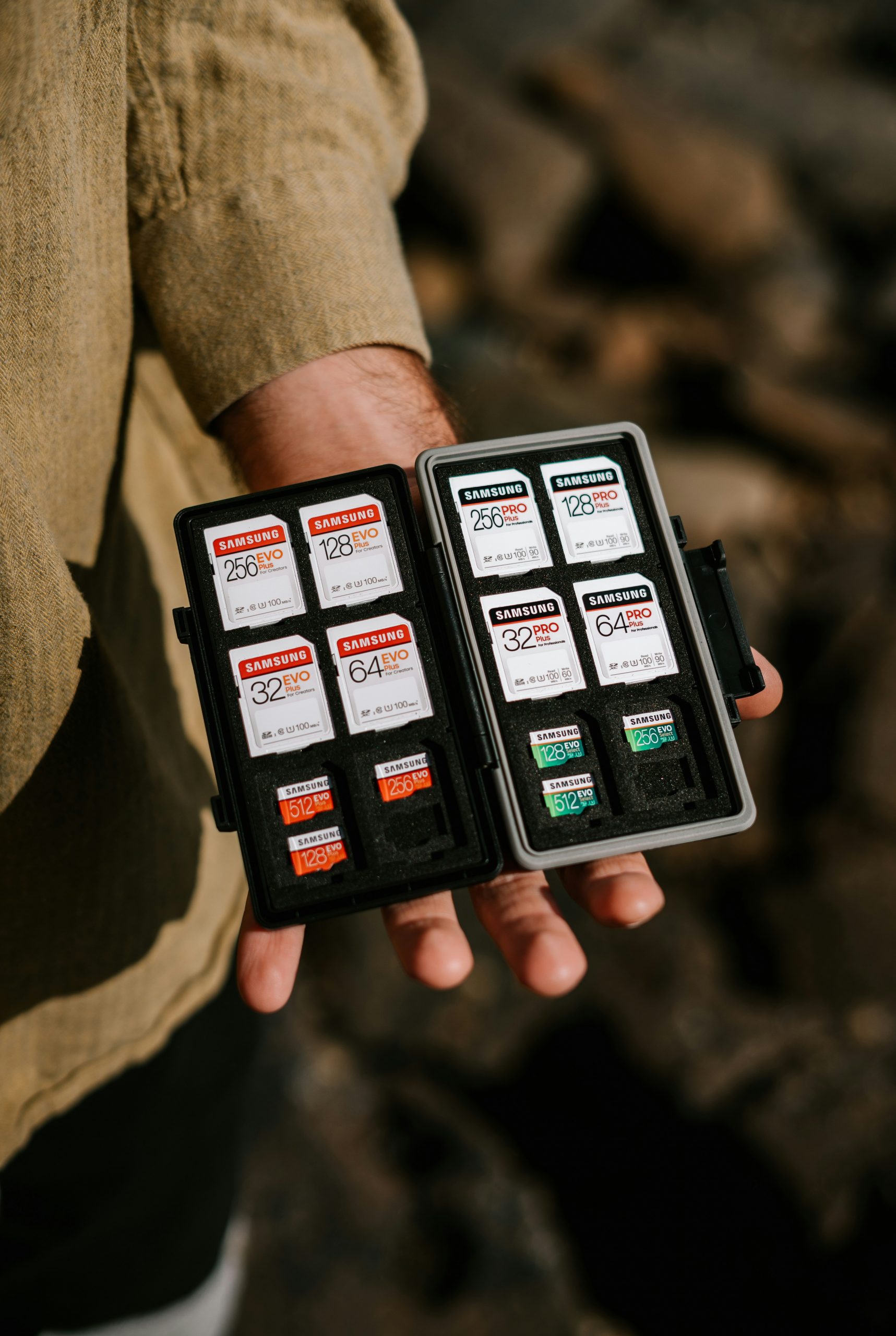
The SD card was jointly introduced in August 1999 by SanDisk, Panasonic (then Matsushita Electric), and Toshiba, and in January 2000, they formed the SD Association (SDA), a non-profit organization that has been responsible for the standard ever since. The idea was a direct response to Sony's Memory Stick, which had been released the previous year with its own DRM system. The creators of the SD card wanted a similar level of content protection, but in the form of an open, licensed standard that could be used by anyone, not just one manufacturer.
The decision would catapult them to the top in the years to come. SD didn't win because it was technically the most revolutionary, but because it was licensed from day one to almost every interested electronics manufacturer. By 2010, the SDA had about a thousand member companies, a network of support that closed formats had never achieved.
Toshiba didn't give up easily.
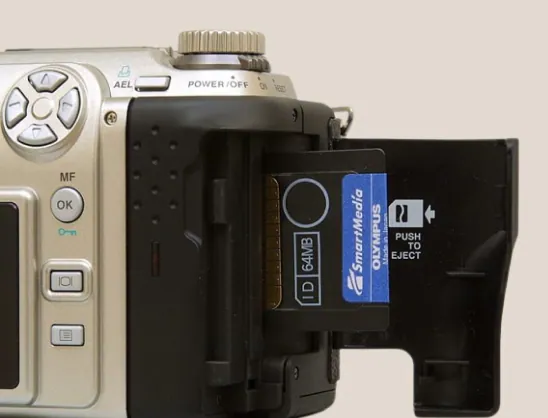
Toshiba entered the fray with SmartMedia cards, which were physically very thin, much more similar to later SD cards than to the thick CompactFlash. The problem was in the internal design. SmartMedia had no built-in memory controller, so it relied entirely on the host device's hardware to manage data. This limited the maximum capacity to just 128 MB, which was too small, as digital camera resolutions were increasing at the time. In addition, the thin construction was also physically fragile. The cards broke and were damaged much more easily than thicker alternatives.
Sony also tried
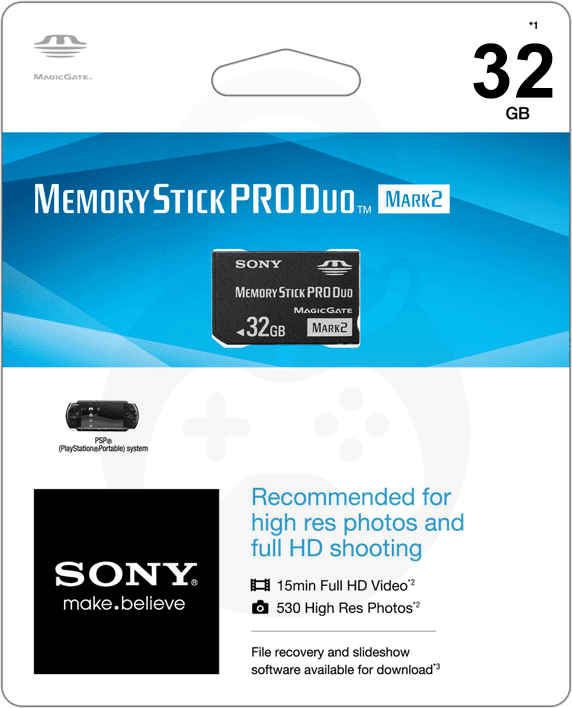
Sony had been building its own Memory Stick storage ecosystem since 1998, appearing in Cyber-shot cameras, VAIO laptops, and later the PlayStation Portable. Technical capabilities weren't the main problem that prevented the standard from catching on with users. Transfer speeds were generally comparable to SD cards of the time.
The real problem was fragmentation within its own product family: Memory Stick, Memory Stick PRO, Memory Stick Duo, Memory Stick PRO Duo, Memory Stick Micro (M2). Each version required its own reader or adapter, which confused and frustrated users.
An even bigger problem was business. The format was useful practically only to owners of Sony equipment, and transferring data often required a special card reader, also made by Sony. In a market where a single manufacturer sets the rules, the customer always loses in the end, and customers ended up choosing a format that worked everywhere.
xD-Picture Card: A promise that came too late
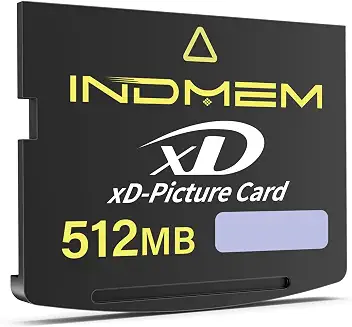
Olympus and Fujifilm introduced the xD-Picture Card in 2002, aimed primarily at compact digital cameras. The cards were impressively small for the time, but the format never gained traction outside of those two brands. As long as Olympus and Fujifilm were strong names in the compact camera market, that was enough. But as SD card prices plummeted and their speed and capacity skyrocketed, xD remained slower, more expensive, and limited in capacity. Some later Olympus cameras therefore offered two slots, one for xD and one for SD, a clear admission that the battle was already lost.
miniSD and RS-MMC are intermediate stations before microSD
As mobile phones became thinner in the mid-2000s, manufacturers needed smaller cards than the standard SD. In 2003, miniSD appeared, and a year later, Nokia's RS-MMC (Reduced-Size MultiMediaCard), a scaled-down version of MMC, was introduced, primarily for Nokia phones. Both formats were successful in their own right, but only for a short time. Both were superseded in 2005 by microSD, which was originally developed by SanDisk under the name TransFlash and then taken over and standardized by the SD Association that same year. MicroSD was smaller, cheaper to produce, and officially supported by the entire SD consortium, so it quickly became the default choice for smartphones.
UFS cards are technically more impressive, commercially dead
Perhaps the most telling example of a failure is the Universal Flash Storage (UFS) card, introduced in 2016 by JEDEC, the same consortium behind most memory standards, including RAM. On paper, the UFS card was remarkable. It offered speeds comparable to SSDs and (unlike SD cards) simultaneous reading and writing of data instead of alternating access.
The problem wasn't the technology, but the timing and market context. When UFS cards hit the market, smartphones (their main potential target market) were already moving away from removable storage and increasingly relying on faster onboard storage. External UFS cards never really caught on with consumers. Ironically, UFS as a technology didn't die out. It has become the standard for onboard storage in almost all modern smartphones, with UFS 4.0 and the newer UFS 5.0 achieving sequential read speeds comparable to powerful desktop PCIe SSDs. So UFS won the battle for internal phone storage, but lost the war for removable cards.
CompactFlash returns as CFexpress
CompactFlash (the first format on this list) never really went away. Its modern successor, CFexpress, uses the PCIe bus and the NVMe protocol, the same as modern SSDs, allowing it to achieve sequential write speeds that classic SD cards still struggle to match. That's why CFexpress (in Type A, B, and C versions) is found in professional cameras from Canon, Nikon, and Sony, where continuous recording of large RAW bursts or high-bitrate 8K video is required. CompactFlash has thus evolved upward into the professional segment, while SD has taken over as the mass, consumer standard for practically everything else.
Why did the SD card win in the end?
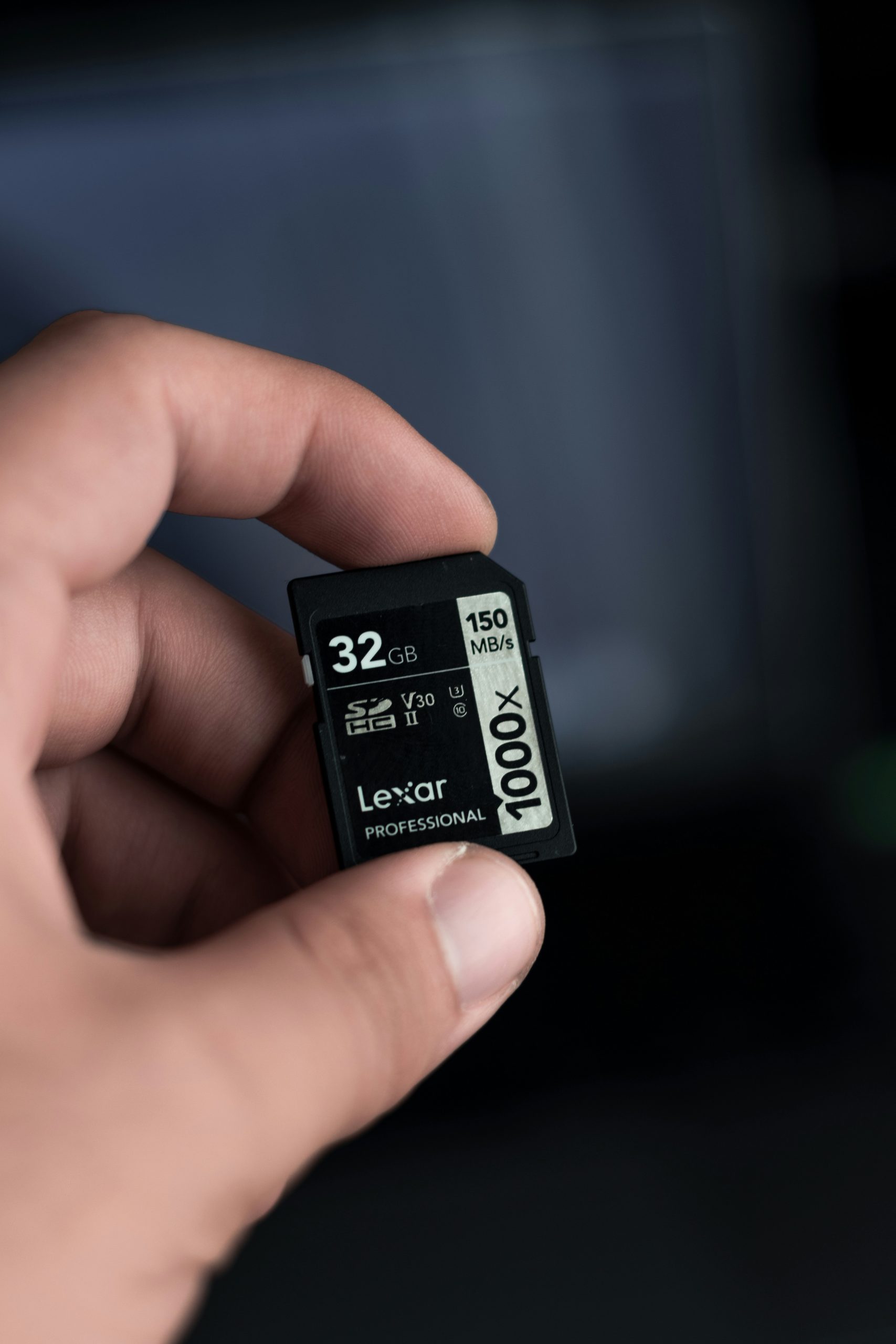
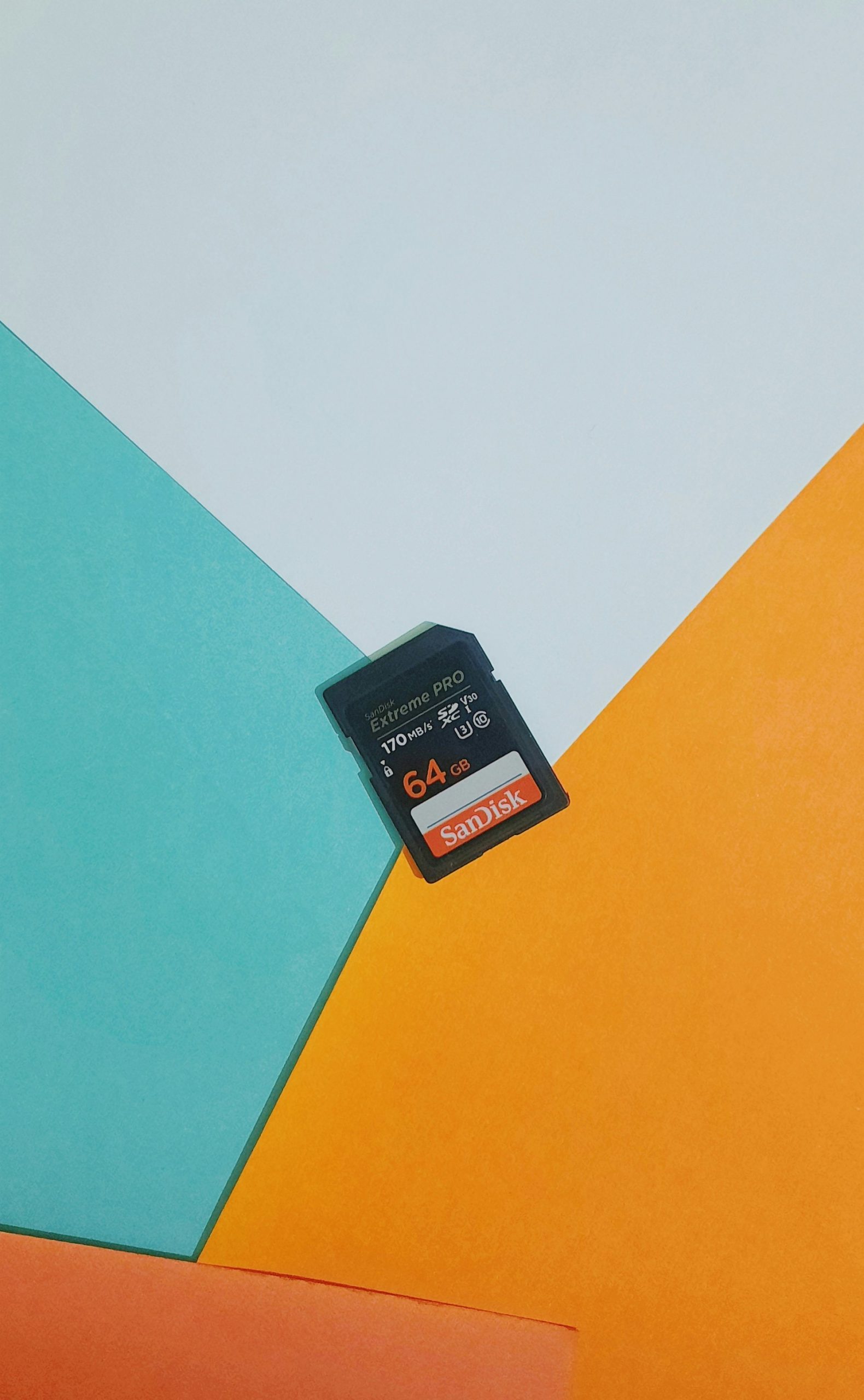
The SD card didn't win on a single, overwhelming technical advantage. It wasn't first to market, it wasn't always the fastest, and it certainly wasn't always the smallest. microSD, for example, was created in response to the need for a smaller format, not the other way around. Instead, the SD Association bet on a combination of factors that have proven to be more important than specifications: open licensing, a wide range of compatible devices, consistent upgrades in speed, capacity, and reliability, and, perhaps most importantly for the consumer, falling prices.
In what direction is SD developing now?
The format war isn't over, it's just shifted. Today, SD Express is fighting for space with the accelerated onboard UFS storage technology in phones, while CFexpress is slowly replacing classic SD cards in professional photography and film production, where write speed is becoming a bottleneck when shooting RAW video. For now, SD and microSD remain the only truly universal, cross-generation compatible standards.
A card purchased today will work in a reader from fifteen years ago without any problems. It is this long-term compatibility that is why, despite all the technically sophisticated competitors that have come and gone, the SD card remains the default choice for removable storage.
You never know, maybe phone manufacturers will decide that SD cards are trendy again.
Are you running out of space and looking for a new (micro)SD or CFexpress card?