Share with others:

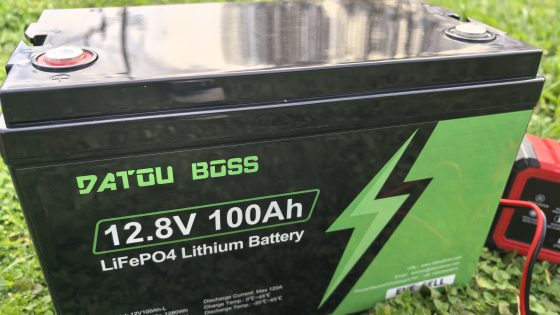
DatouBoss 12V 100Ah LiFePO4 test – how much electricity can we store in one battery?

One hundred ampere-hours. For someone who knows about batteries, this is a completely understandable figure. For everyone else, it's a number that doesn't really mean much. Is this enough to run a refrigerator all weekend? Can I power a laptop, a TV, and lighting? And why would I even buy a battery if I already have a few portable charging stations at home?
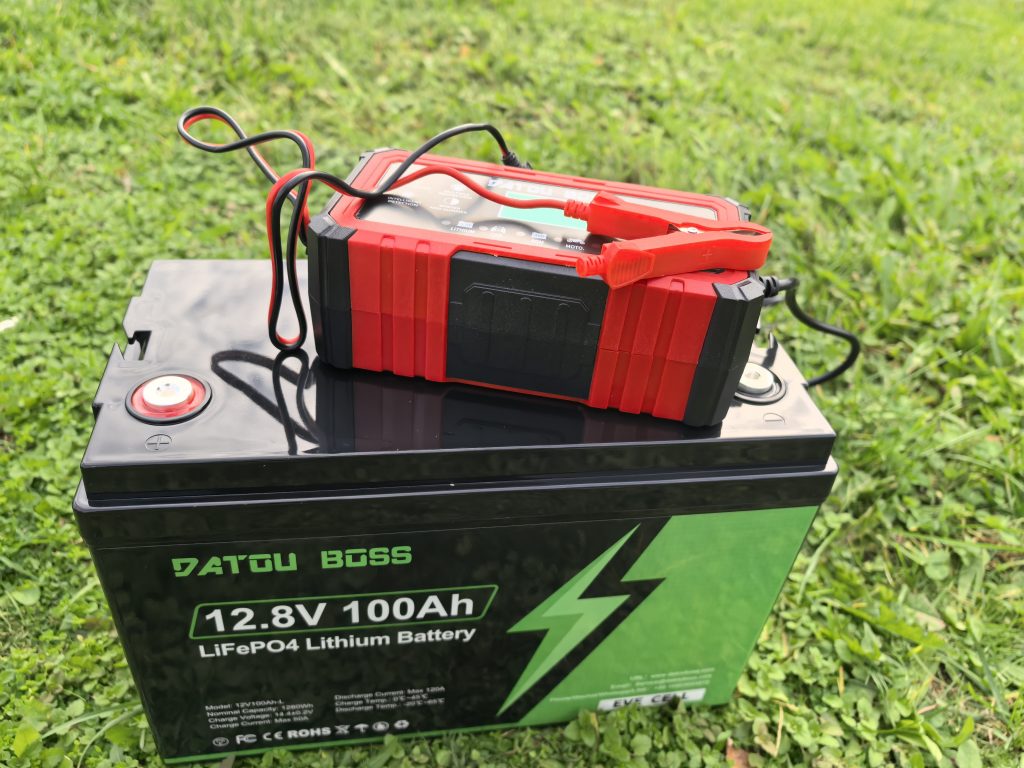
The DatouBoss 12V 100Ah EVE LiFePO4 offers a significant amount of power for a relatively small amount of money. Around €230 for a 1280 Wh battery sounds like a good deal, especially when compared to the prices of portable power stations. But we quickly realize that it is a slightly different device that also requires some additional knowledge and equipment.
DatouBoss 12V 100Ah – price and specifications
DatouBoss 12V 100Ah EVE LiFePO4 is available for 199,99 €.
For the readers of Computer News, DatouBoss has prepared 10-% discount on all products in your online store. Use the promo code when purchasing COMPUTER.
You can take advantage of the discount when purchasing:
- DatouBoss 12V 100Ah LiFePO4 batteries
- LiFePO4 battery chargers 12V/24V
- Other products in the DatouBoss online store
| Technology | LiFePO4 |
| Cells | EVE |
| Rated voltage | 12.8V |
| Capacity | 100Ah |
| Rated energy | 1280 Wh (1.28 kWh) |
| Protection system | Built-in 100-A BMS |
| Maximum charging current | 50 A |
| Continuous discharge current | 100A |
| Maximum stated discharge current | 120 A |
| Charging temperature | 0 to 45°C |
| Discharge temperature | –10 to 60°C |
| Mass | Approximately 10.7 kg |
| Connecting batteries | Sequential and parallel |
| Warranty | Advertised for 5 years, documentation not coordinated |
What can we actually power with 1280 Wh?
First, we need to understand the difference between capacity and power. The DatouBoss stores 1280 Wh of energy, which under ideal circumstances means that a device with a consumption of 100 W could be powered for 12.8 hours. In the real world, losses are inevitable, especially when using an inverter to convert 12-V voltage to the usual 230 V. On average, you can expect around 900 Wh of usable energy, also depending on the efficiency of the inverter.
| Device consumption | Framework autonomy |
| 20 W (LED lighting, router) | 43 hours |
| 50 W (smaller consumer) | 17 hours |
| 100 W (laptop or TV) | 8.7 hours |
| 300 W (larger consumer) | 2.9 hours |
| 500 W (more demanding device) | 1.7 hours |
For a weekend getaway or a camper, this kind of capacity is very useful. It can power lighting, charge phones, use a laptop or a small refrigerator. However, if we plan to regularly use an electric kettle or hob, we will quickly realize that 1.28 kWh is not an unlimited supply of electricity.
Why LiFePO4 and not a regular car battery?
The DatouBoss uses lithium-iron-phosphate technology, or LiFePO4, which has become popular primarily due to its long lifespan and relatively low weight. The battery weighs around 10.7 kilograms, while a comparably powerful lead-acid battery can be more than twice as heavy.
The more important difference is the usable capacity. As a rule, we do not want to discharge classic lead-acid batteries regularly, as this significantly shortens their lifespan. LiFePO4 tolerates such loads much better, so we can use a larger proportion of the stored energy.
DatouBoss mentions the use of cells from the manufacturer EVE, which is encouraging, but the manufacturer's name alone does not guarantee the quality of the entire battery. The connections between the cells, their coordination, and especially the electronics that control them are also important.
Built-in BMS is more important than it seems
The battery has a built-in BMS (Battery Management System) with a nominal continuous discharge current of 100 A. This monitors the electrical parameters of the battery and provides protection against excessive or low voltage, excessive current, and inappropriate temperature conditions.
At 12.8 V and 100 A, we get about 1280 W of DC power. This does not mean that we can easily connect a 2000-W inverter and expect the battery to power a device with that much power. In addition to the BMS limitation, we must also consider conversion losses and device inrush currents.
For one such battery, I would therefore choose an inverter with a power adapted to the actual needs, and not the largest one I can find in the store. The DatouBoss also does not have a built-in socket, USB ports or display. To power household appliances, we need additional equipment, suitable cables and appropriate fuses.
Improvising is not a good idea when it comes to high currents. Loosely attached connectors or cables that are too thin can get very hot, so proper installation is more important than saving a few euros.
Solar panels are also a consideration
The maximum allowed charging current is 50 A, which means that under ideal conditions the battery could be charged in just over two hours. In reality, the time depends on the charger and the final charging phase, when the current decreases.
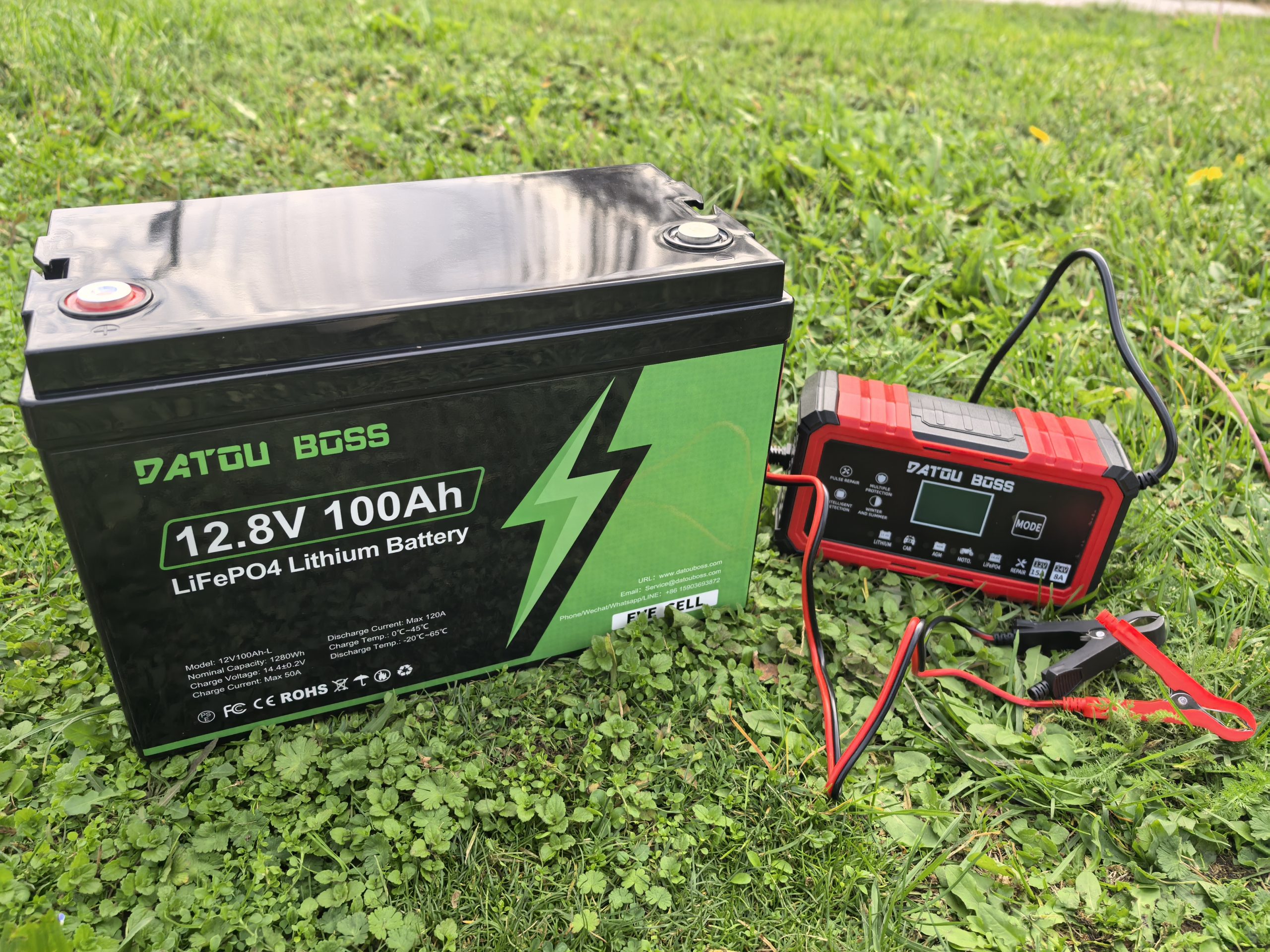
The battery requires a suitable LiFePO4 charger, with a voltage and charging mode that meets the manufacturer's specifications. I would not connect an older lead acid battery charger without checking its compatibility, especially if it uses a "desulphation" mode.
In theory, the battery could be equipped with solar panels. With the appropriate MPPT controller, we can create a small independent electrical system that charges the battery during the day and supplies power to consumers in the evening. Of course, the solar panels are not connected directly to the battery.
For a camper or weekender, this combination makes the most sense, and my boss has exactly those plans with this battery. If we want to charge it while driving via the car alternator, I recommend a suitable DC-DC charger that controls the charging current and prevents overloads.
You need to be especially careful in winter
LiFePO4 has some limitations that should not be overlooked. DatouBoss allows for discharge at temperatures from -10 to 60 °C, but charging only between 0 and 45 °C. This means that the battery can still be used in cold weather, but it should not necessarily be charged.
The built-in electronics include protection against charging at too low a temperature, but this is not the same as actively heating the cells. If the battery is used in an unheated camper or weekend house in the winter, we must ensure that the temperature remains within the permissible range during charging.
I would also not expose it to rain or moisture. Although it has a protected plastic casing, it is not intended for outdoor use without proper additional protection.
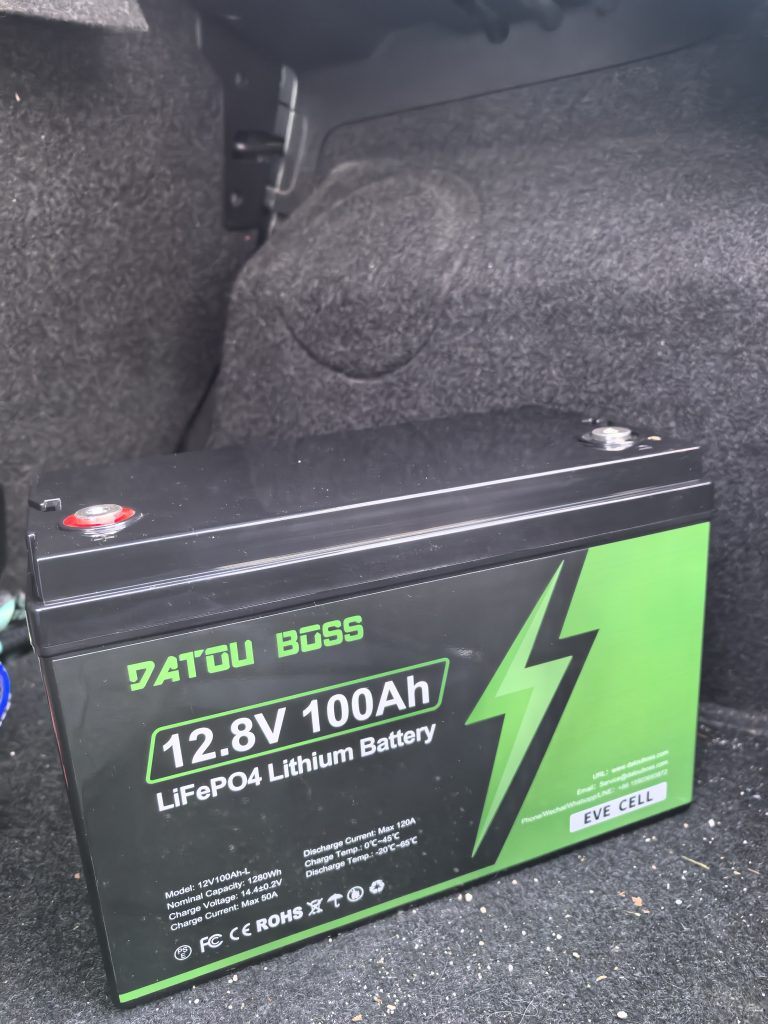
DatouBoss 12V 100Ah – a battery to understand before buying
DatouBoss offers an interesting price-performance ratio. For about €230, we get 1.28 kWh of nominal energy, a relatively lightweight housing, and a built-in 100-A BMS. I see the most sense in campers, weekend houses, and smaller solar systems where we need a reliable supply of electricity. But unlike a portable power station, here we don't get a product that we just plug in and start using. We have to take care of the operation of the entire system ourselves.
| Advantages | Weaknesses |
| 1280 Wh of energy | Without 230 V output and USB ports |
| LiFePO4 and EVE cells | Required additional equipment |
| Relatively low weight | Continuous discharge current limited to 100 A |
| Built-in BMS with protections | Charging below 0 °C is not recommended. |
| Suitable for solar systems | No active heating |
| Possibility of connecting multiple batteries |