

Share with others:

I ran out of chargers, I blame durability

The title is a bit of a clickbait, but my dilemma is real. I used to have too many chargers because I could always count on them being included when I bought a phone, headphones, speaker, toothbrush, computer... In the meantime, a sustainability initiative happened (I think around 2020), which manufacturers diligently took advantage of to get rid of this unnecessary expense in its name. All in the name of protecting nature and reducing the carbon footprint. At least that's how they interpret it. The financial burden that manufacturers relieved themselves of fell on us consumers.
However, it took me a while before I felt this emptiness in the packaging. Maybe it's because I've only recently increased the number of electronic devices. All computer peripherals have become wireless (keyboard, mouse, headphones), I've added new electric toothbrushes to the household that charge via USB-C and no longer via the dedicated charger that was included with the previous generation. My partner has two phones, one for work, the other for personal life. I've had one for many years for experimentation, and the other for everyday life. To name a few other devices that we recently had to buy and didn't get chargers with them: wireless headphones, a portable speaker, an electric breast pump, a controller, a gimbal, a Polaroid camera, a smartwatch... So far, the charger that came with my Huawei phone has often saved me. Huawei is one of the few manufacturers that hasn't abandoned tradition. The bonus is that it's a 100-W charger that I can also use for charging laptop or ROG Ally.
I was getting annoyed with having to constantly change adapters, so I finally put an end to it. I picked up two chargers that I know will serve me well for the next few years.
I decided on the Anker charger.
I was mainly choosing between Anker and Ugreen. Baseus was in third place because it's much cheaper, but I ended up going with Anker because I already have one of their chargers at home and I haven't had any problems so far. If you choose one of the others, there's nothing wrong with that either.
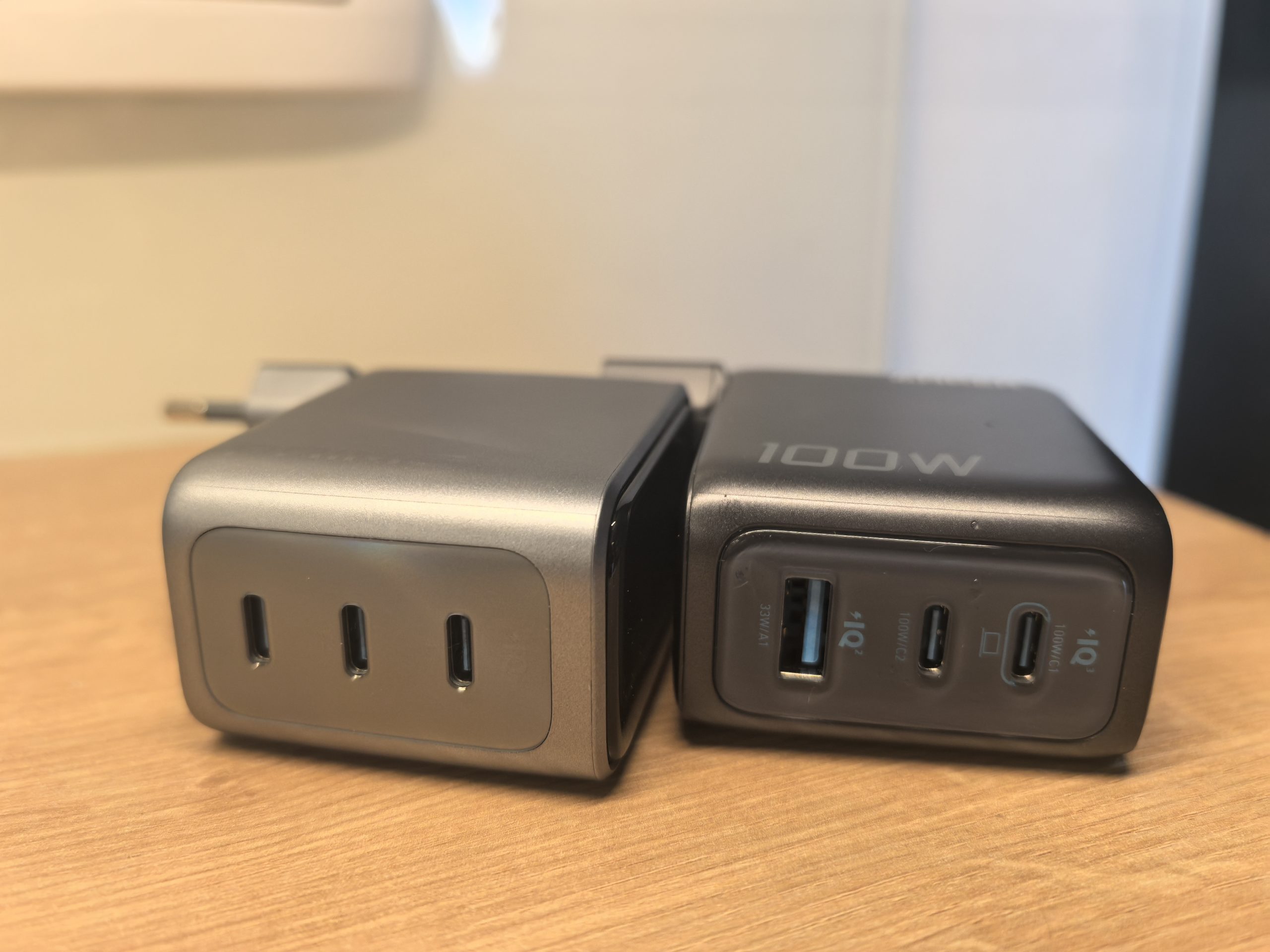
Anker Prime 160W is a charger for my slightly more wasteful devices, Anker 100-W charger but for my partner. I wasn't looking for a classic charger with one input, but wanted at least three. This allows me to charge all the devices around my computer at the same time, for example. Apparently the keyboard, mouse and headphones are conspiring against me, because it often happens that all three run out of power at once. How strange.
The second charger also has three charging slots. My partner also has a habit of charging her headphones, phone, and toothbrush at the same time. Even if I somehow found three adapters, I would still have to fill three sockets. It's not a nice sight when you walk into the living room or kitchen.
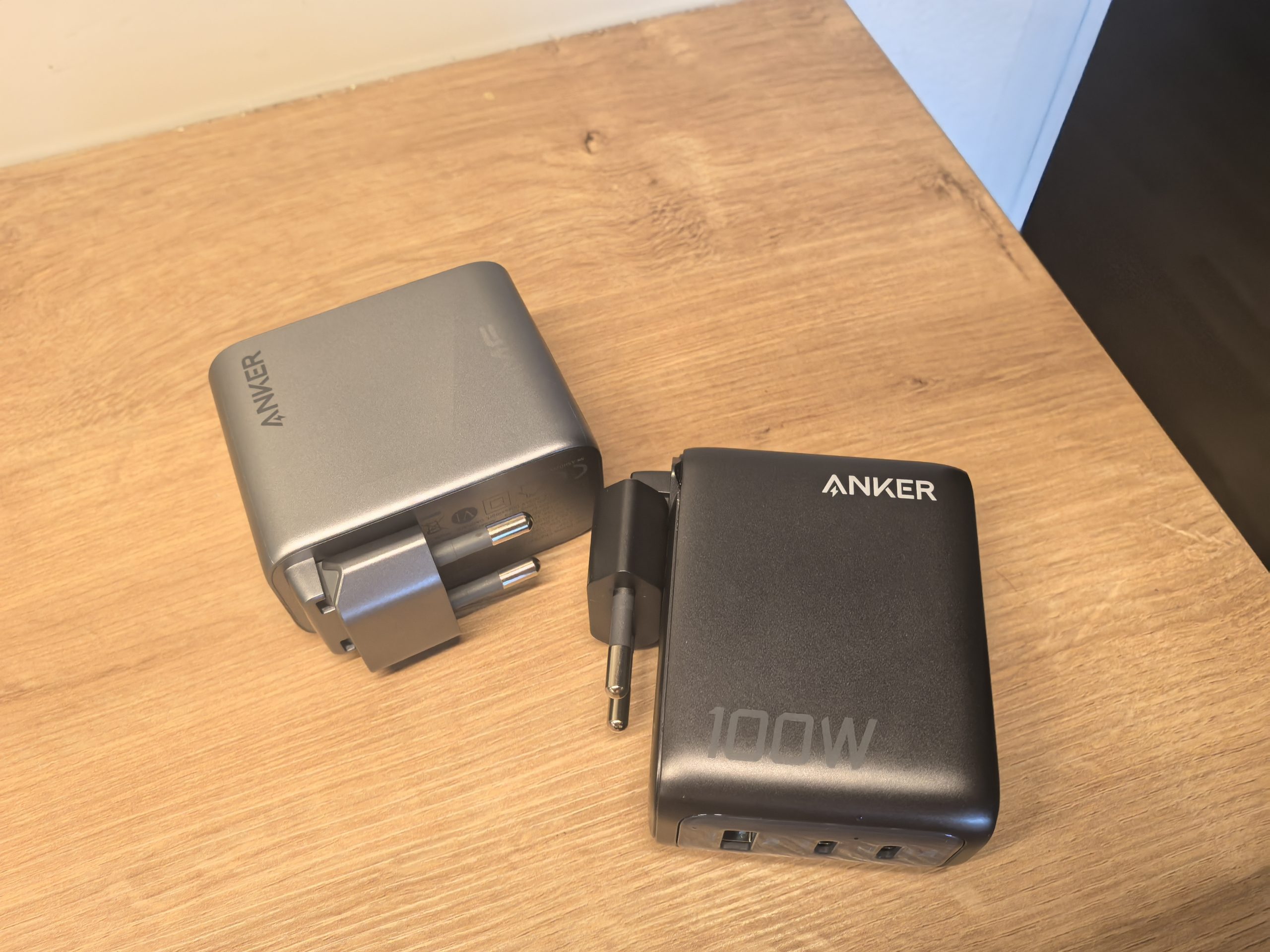
I have a few comments. With the more expensive Anker Prime 160 W, I didn't get a cable included, but with the cheaper Anker 100 W, I did. Why such a strategy, I don't understand. I really hope that this doesn't mean that I'll be in a deficit with cables in the coming years, especially fast ones. Not just any cable is enough. For fast charging, you need something at least a little better than the usual ones.
One more thing I miss – USB-A. The Anker Prime 160W has all USB-C ports, which is great for the future, but I still need another USB-A today. Luckily, the cheaper Anker 100W has one. Also, be sure to check the standards you need before buying. I knew that none of the chargers would be able to charge my Huawei Pura 70 Ultra at the full 100W because the charging standards are not compatible. But as long as I have a Huawei charger, I don’t mind.
Both Anker chargers also have a small screen for monitoring charging speeds. I wasn't specifically looking for this, but it's a welcome addition, especially for testing different devices.
The Anker Prime 160W is clearly the better charger. It uses GaNPrime technology, which gives it impressive power density in a very compact package. Unlike conventional chargers, GaNPrime achieves up to 95-% efficiency, which reduces energy loss and prevents the conversion of electricity into excess heat. Built-in PowerIQ technology allows for dynamic power distribution between ports without interruptions, as the system constantly detects the needs of devices and automatically allocates more watts to the one with the lowest battery. Safety is ensured by the ActiveShield system, which uses millions of daily temperature measurements to prevent overheating and protect connected electronics.
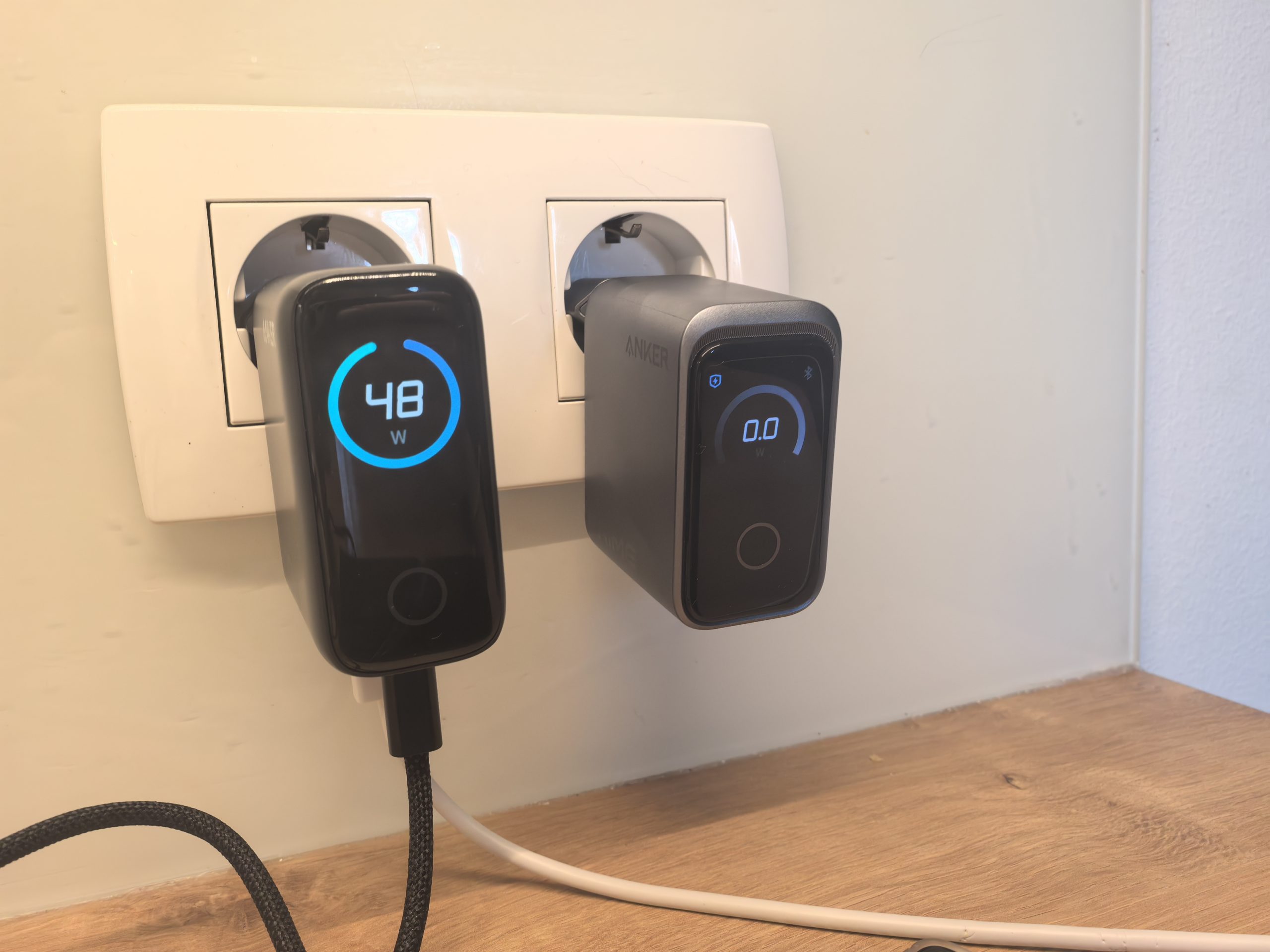
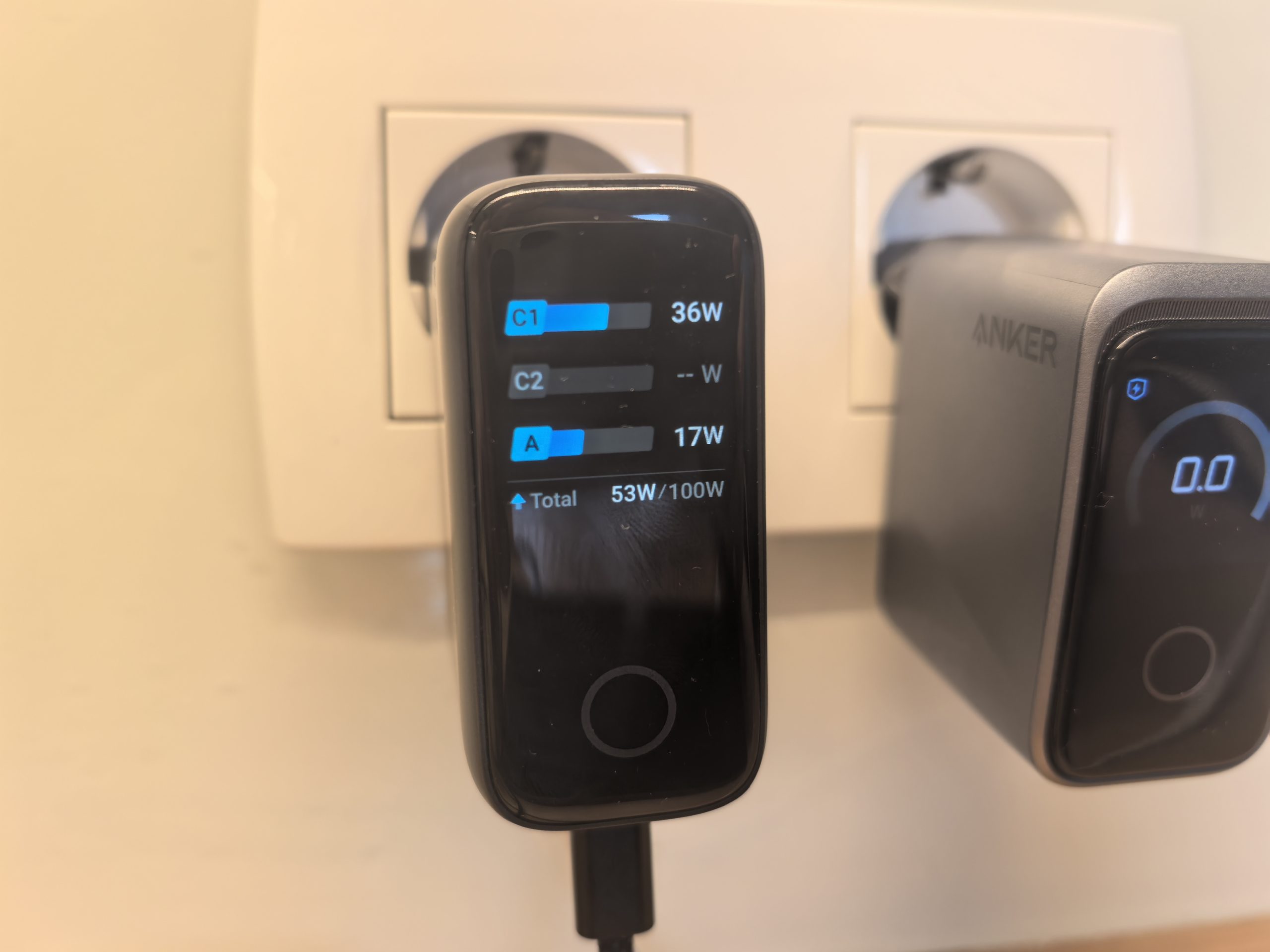
You can even fold the plug for easier carrying and to prevent damage during transport. It supports the Power Delivery 3.1 protocol (this is the most important information for you when buying), which allows the charger to squeeze out up to 140 W of power through a single port. If you fill all three, the power is distributed: 100 W + 30 W + 30 W. If you fill two, the first takes 100 W, and the second 60 W. But it also depends on what you're charging. For example, if you charge two laptops, both will get 70 W of power. You'll see all this on the charger's screen, or you can download the Anker app.
The Anker 100-W charger is a bit weaker, but for most people it might be a more sensible purchase. It also has a display and a foldable plug. Unlike the Anker Primer charger, it even has one USB-A port that delivers 33W of power. Both USB-C ports support up to 100W, but individually. If you use them at the same time, the power will be distributed intelligently again. The first USB-C port takes priority.
A special highlight of this charger is its low-power device algorithm. When the device detects that the secondary port power has dropped below 5W for more than a minute, the system automatically switches to safe mode, protecting the tiny batteries of smartwatches and wireless headphones from long-term degradation.
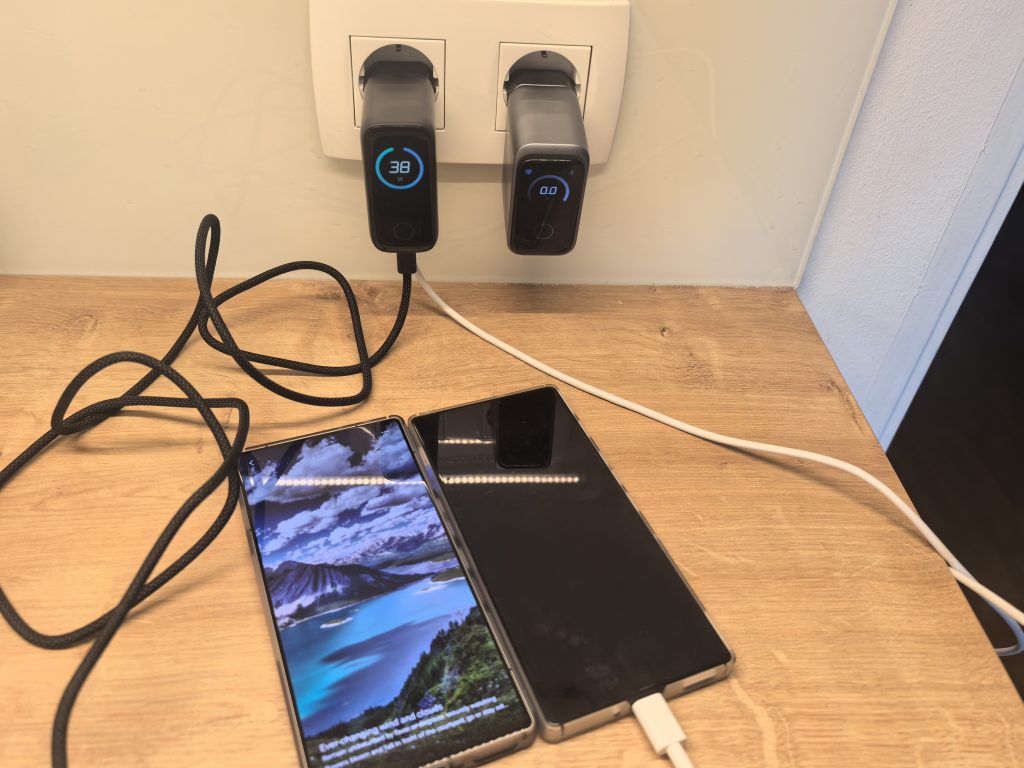
I've had them for about a month now and they've both been great so far. The more powerful Anker Prime regularly charges my laptop, ROG Ally, and everything else that's lying around on my desk. The second charger powers the downstairs of my apartment, where I usually charge phones, headphones, and other things.
Do you still have enough chargers?
Maybe for now, but with each new purchase, the risk of devices sharing a single adapter increases. When it comes time to buy, you might be choosing between these two Anker chargers.