

Share with others:

IFA 2026: solar computers, dishwashers with cameras, 1100-Hz monitors...

The fair officially opened today, September 4, at the Messe Berlin exhibition center in Berlin and will last until September 8. It is one of the largest consumer electronics fairs in the world, which has been taking place on approximately 190,000 square meters in 27 halls since 1924. This year's theme is The Future Is Now, and around 1,900 exhibitors, 220,000 visitors and participants from 140 countries are expected. Artificial intelligence is literally everywhere this year, even in devices that don't need it at all.
Lenovo Project AeroBlade: I'm more interested in cooling than the processor
It's been hard to do anything with laptops that really raises an eyebrow for a long time. The new processor is faster, the OLED has higher brightness, the chassis is two millimeters thinner, and that's it. Lenovo's Project AeroBlade could change that monotony.
At first glance, it's just another 14-inch ultralight computer. It's less than 10 millimeters thick and weighs less than 830 grams. But the interesting part is inside. Lenovo has replaced the classic fan with Frore Systems' AirJet technology. Instead of rotating blades, it uses piezoelectric membranes that create a stream of air by moving very quickly. The prototype has four AirJet modules, and there's no traditional fan at all.
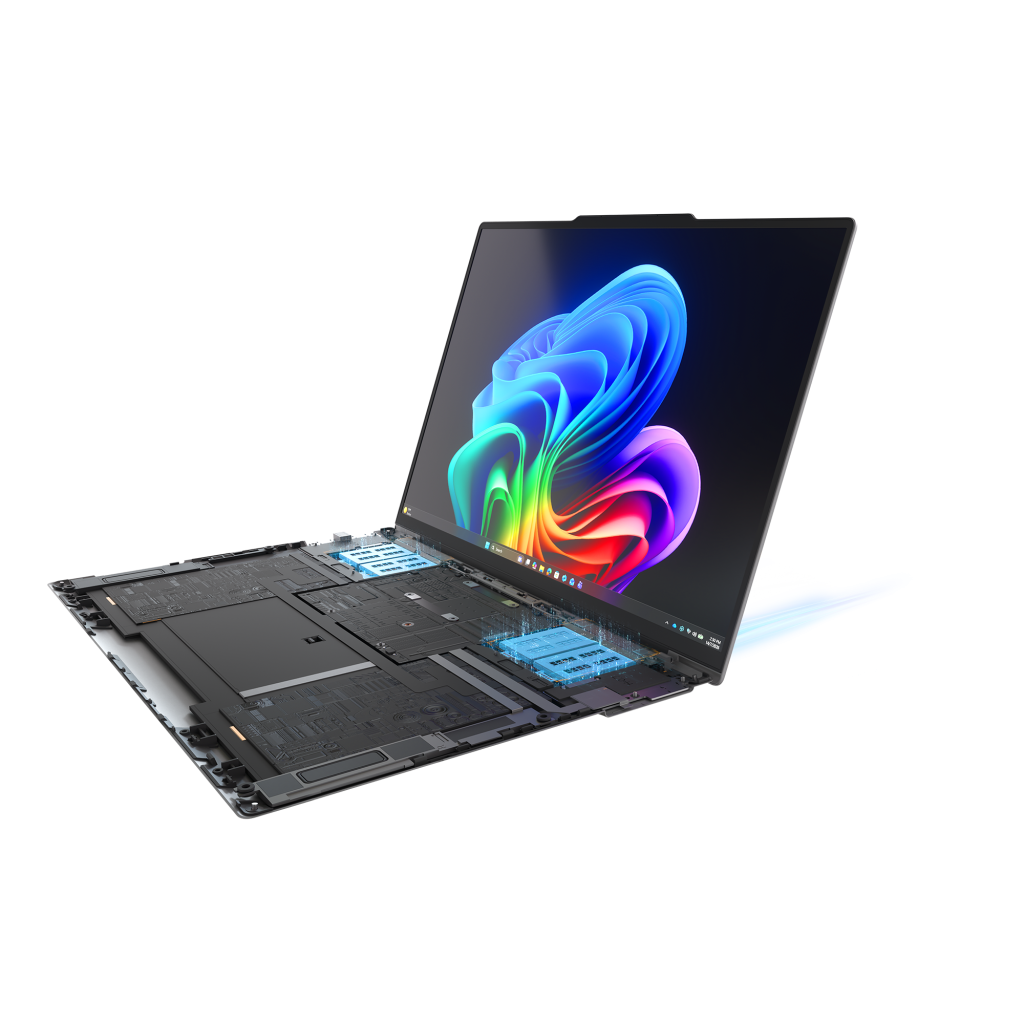
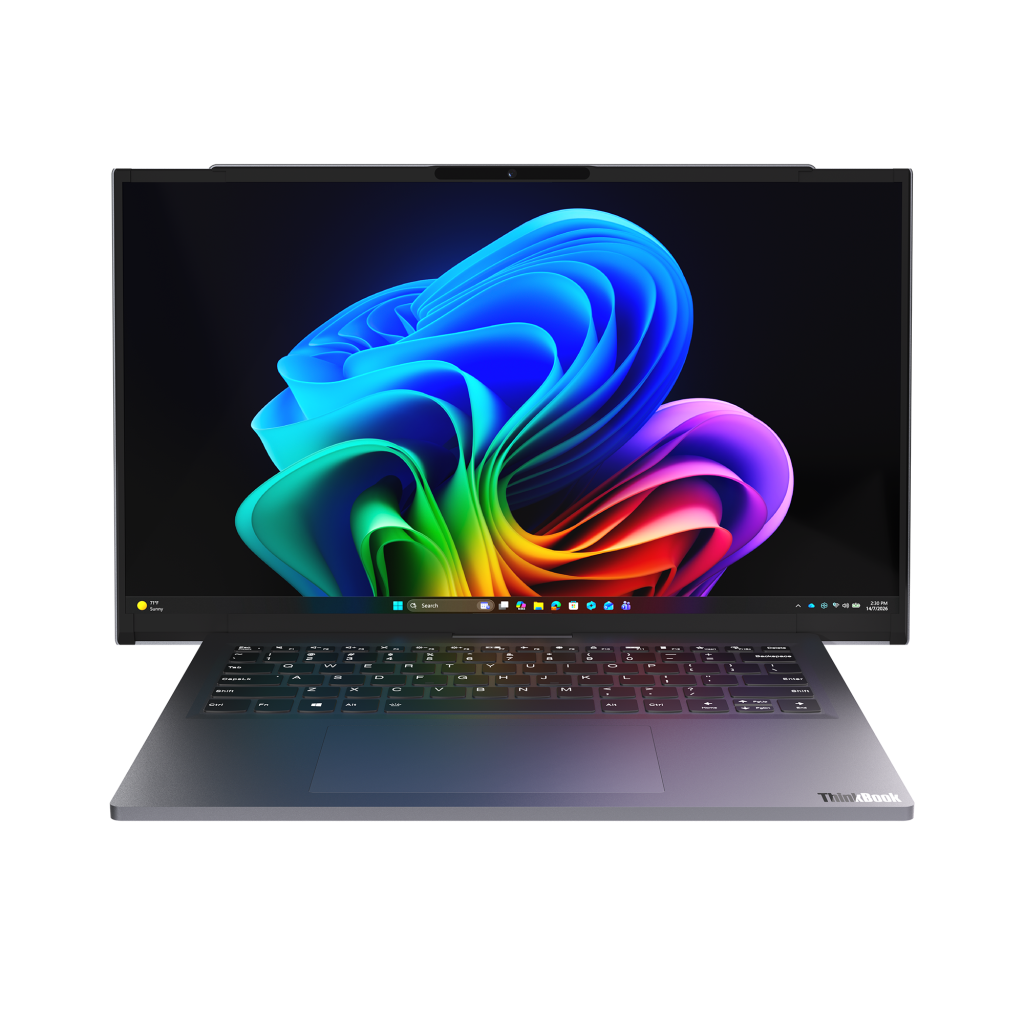
Why is this important? Because cooling is one of the main reasons why powerful laptops are so thick. A fan needs space, vents, and ducts. When you get rid of it, suddenly new design possibilities open up.
Project AeroBlade has an Intel processor, an OLED display, Thunderbolt 4, and Wi-Fi 7, but those specs are almost secondary to the concept. I'm much more interested in whether the AirJet can make it into mass production in the next few years. If it does, it could change the design of ultraportables more dramatically than another generation of processors.
For now, this is just a concept, so we don't have pricing or a potential production start date.
Lenovo showed off another concept, Project Swan. It's a 14-inch ThinkBook whose flexible OLED display stretches laterally to 17 inches. This wasn't my first encounter with such a concept. I still find it interesting, but I'm waiting for them to put it into production.
Acer Vero 16: the best news is that you can open it
The industry has been convincing us for the last decade that a good laptop should be as closed as possible. Glued battery, soldered memory, special screws and construction... The Acer Vero 16 has taken a different path, towards greater freedom for the user.
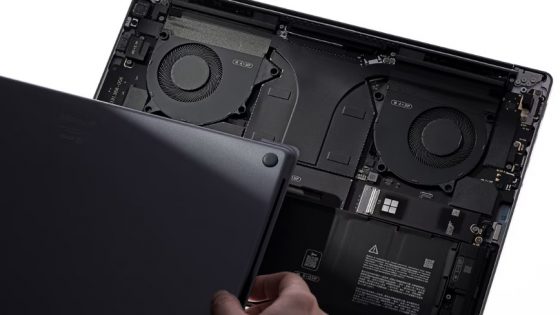
It has a tool-free access mechanism on the bottom. The user can replace the battery and SSD themselves, the connector covers are removable, the hinge is designed so that it can be detached from the chassis and replaced. Acer even goes so far as to design the computer with the possibility of upgrading the processor platform through at least two generations (the laptop will have to be sent to Acer service).
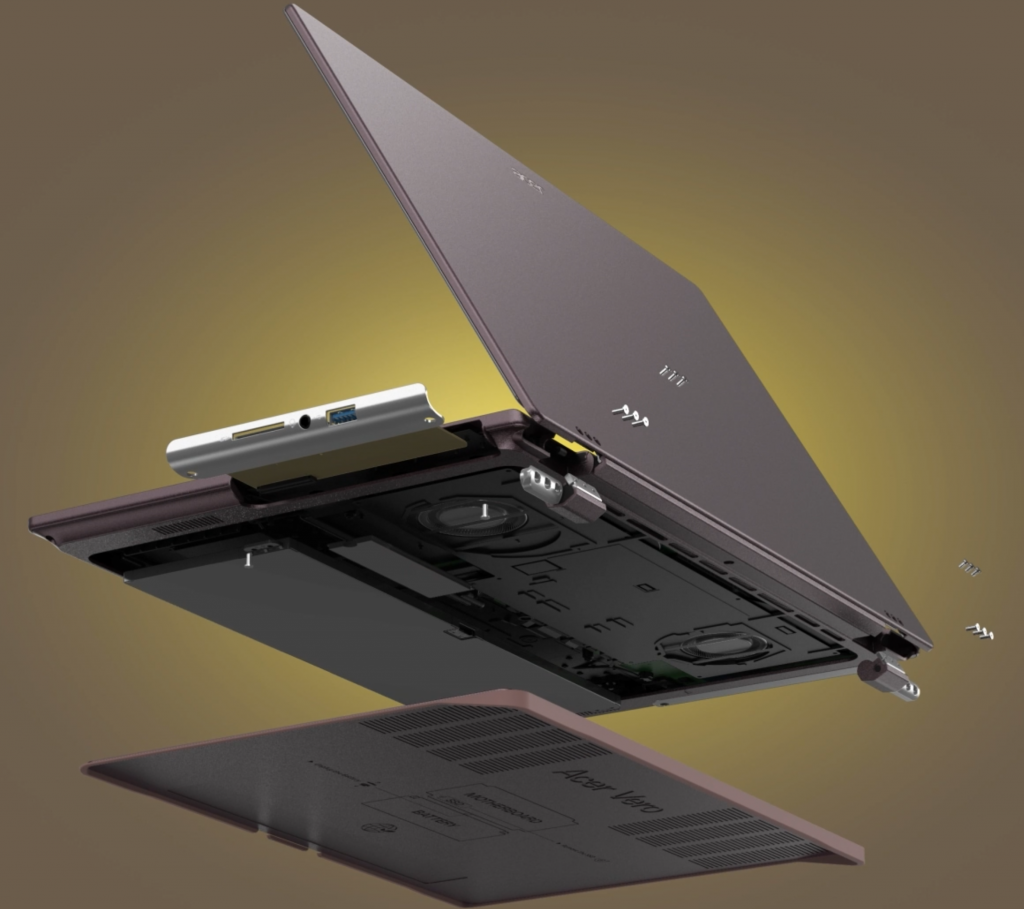
This isn't some kind of slow "eco laptop." The Vero 16 can use an Intel Core Ultra X9 388H, up to 32GB of LPDDR5X memory, and a 16-inch 3K OLED with a 120Hz refresh rate. It weighs about 1.56 pounds. Materials are also part of the story, but I would put a much greater emphasis on repairability than on the percentage of recycled aluminum.
Acer crossed the Steam Deck with a mini laptop
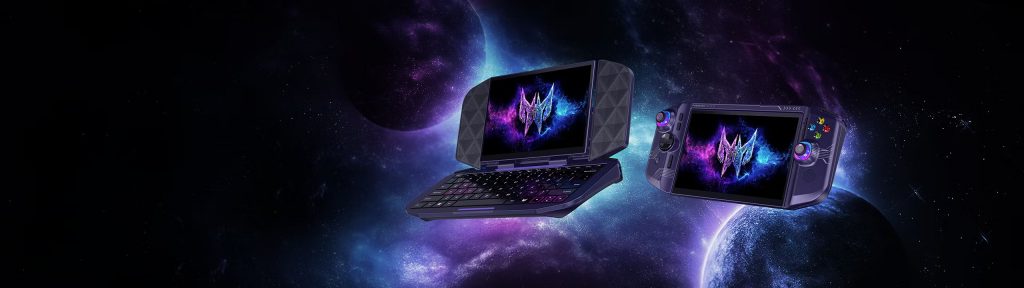
Acer, on the other hand, has something a bit crazier. The Project DualPlay Mini is an 8-inch concept that aims to act as a handheld gaming console one moment, and a small laptop the next. The screen can be flipped around, and underneath it is a physical, backlit keyboard. In one position, gaming buttons are available, in the other, the user gets a mini laptop. Acer even envisions connecting an external display and using a mouse.
Would you want to work on an 8-inch laptop for eight hours? Absolutely not. Do I get the idea? Absolutely.
1100 Hz… because apparently 500 Hz has become boring
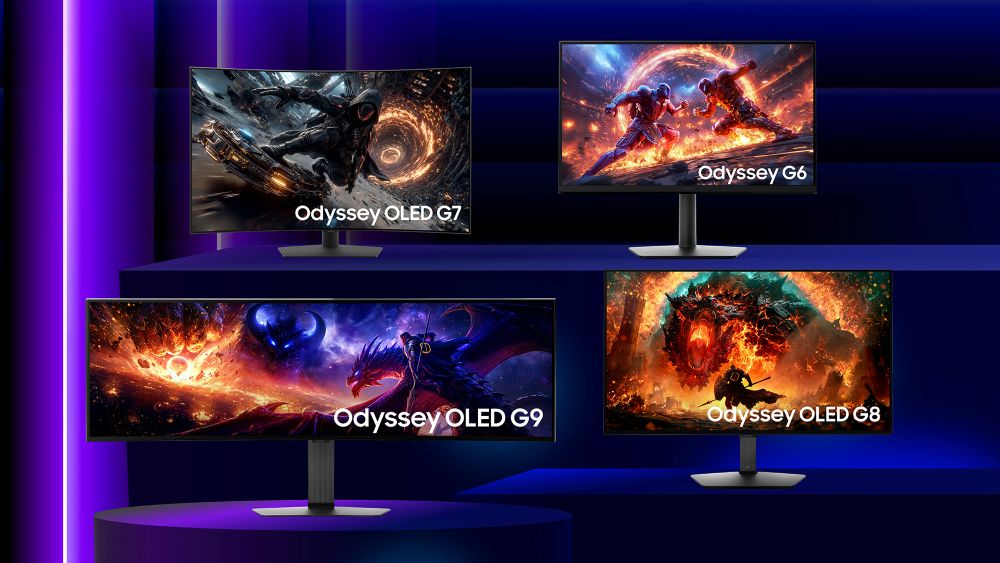
Samsung brought the 27-inch Odyssey G60H to Berlin, which can reach 1100 Hz in its fastest mode. At the higher QHD resolution, it stops at a still absurd 600 Hz. In addition to it, Samsung has the 42-inch curved OLED Odyssey G75SJ, the 49-inch DQHD OLED G9 with 360 Hz, and the 32-inch 4K OLED G8 with 360 Hz.
Acer responds with the Predator XB253Q U1, a 24.5-inch IPS monitor with a 1000-Hz refresh rate at Full HD. Alienware is finally trying to move the pro gaming competition to OLED with the AW2527HX. This uses a 24.5-inch QD-OLED at Full HD and 560 Hz.
The average user doesn't need those speeds, of course. Most computers aren't even powerful enough to reach 500, let alone 100 fps. Perhaps more important than speed is the fact that OLEDs are becoming a fixture in the world of esports.
The TCL P80 Ultra is one of the few phones this year that solves a real problem
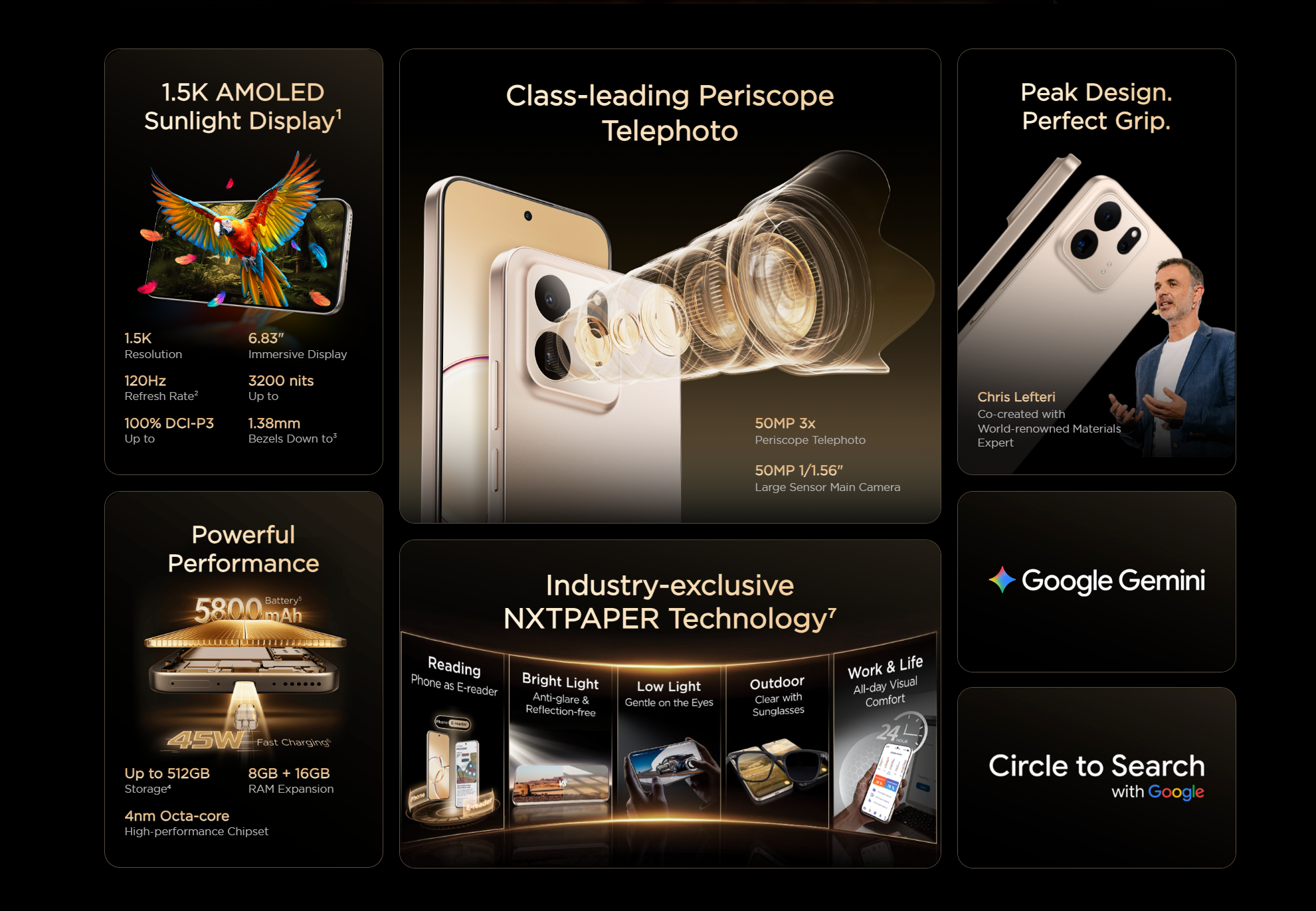
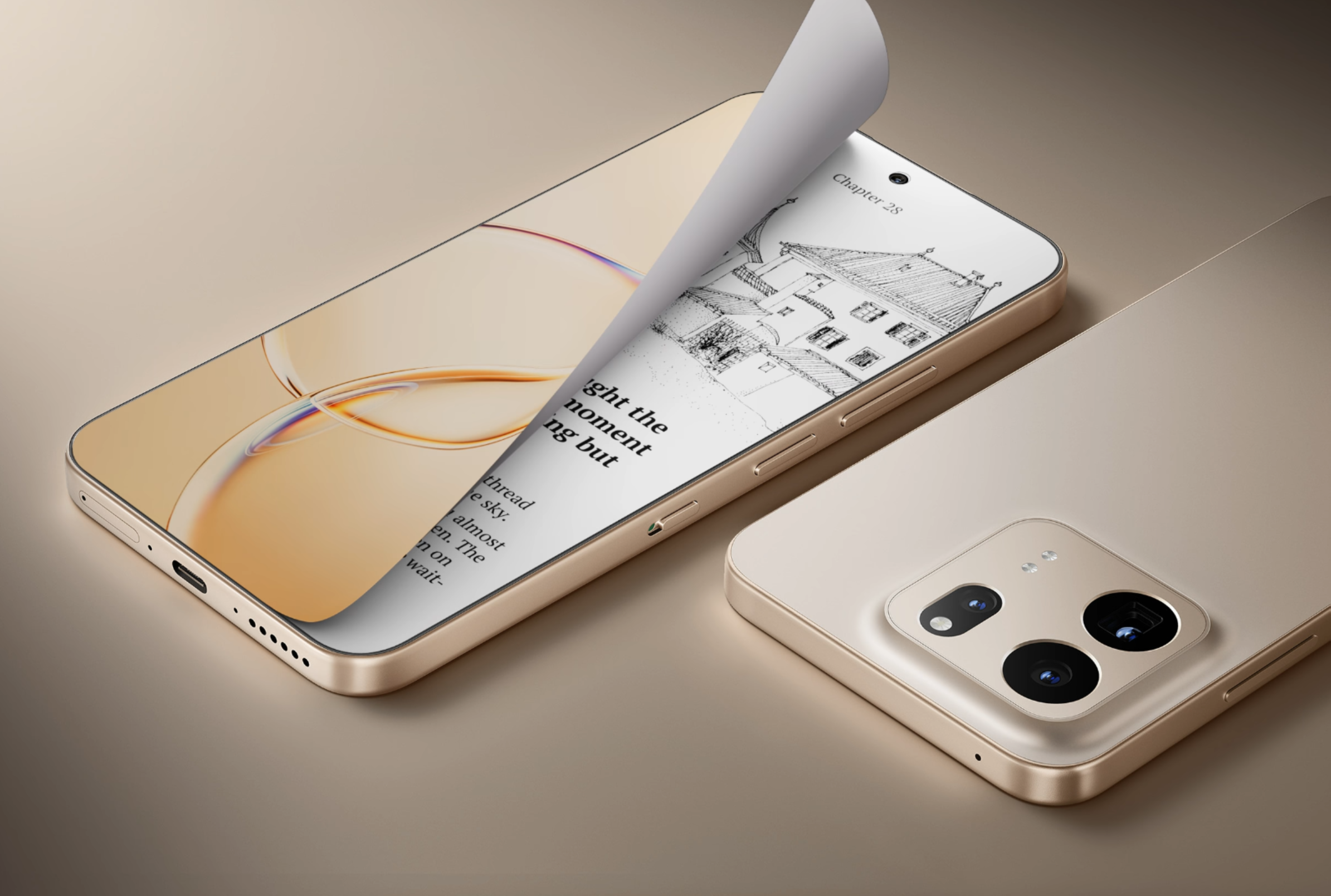
IFA is not usually a phone show, but the TCL P80 Ultra still caught my eye. But not because of some new processor, but because of the screen. For the first time, TCL has combined its NXTPAPER technology with an OLED display. The P80 Ultra has a 6.83-inch 1.5K OLED with a 120-Hz refresh rate, an anti-reflective surface and a maximum brightness of up to 3200 nits. With a special button, the screen can be switched to Max Ink mode, which behaves more like a black and white e-reader while limiting distracting elements of the user interface.
OLED is great for video, gaming, and photos, but it's not necessarily the most pleasant screen for reading for hours on end. TCL is trying to get both worlds in one device. The phone also has a pretty decent base: a Dimensity 7400 Elite, 8GB of RAM, up to 512GB of storage, a 5800mAh battery, and 45W charging. The Ultra has a 50MP main camera and a 50MP telephoto with 3x zoom. European prices for the series start at 349 euros.
Oukitel RG14-P: a laptop you can leave in the sun – on purpose
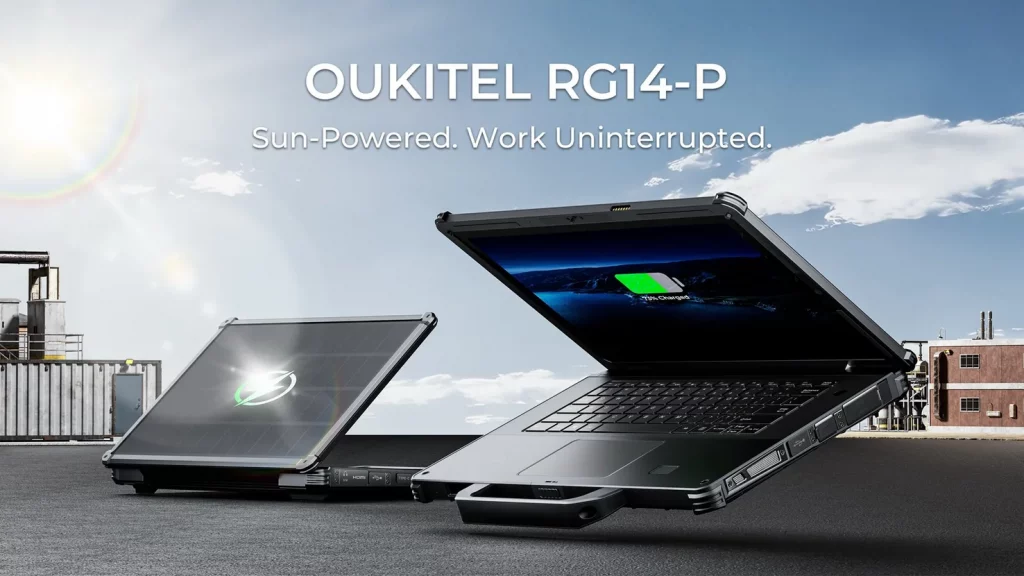
Oukitel is primarily targeting industry, field work, service teams and other users for whom “finding a power outlet” is not always a realistic solution. Almost the entire screen cover is covered with a photovoltaic panel. According to the latest data, it can provide up to 15 W in favorable conditions, and the 95-Wh battery should be half-charged in about six hours of sunlight. Since the solar power is small compared to the consumption of a powerful laptop, it is more realistic to expect an extension of autonomy than to carefreely power the computer all day long exclusively on the sun.
The RG14-P is also a solid all-terrain vehicle. It weighs 3.7 kilograms, has a 14.1-inch display with up to 1000 nits, IP69K protection, classic Ethernet, HDMI and even RS-232. In addition to the built-in battery, it has a removable battery that can be replaced.
Wi-Fi 8 is here. Wi-Fi 7 probably feels pretty uncomfortable
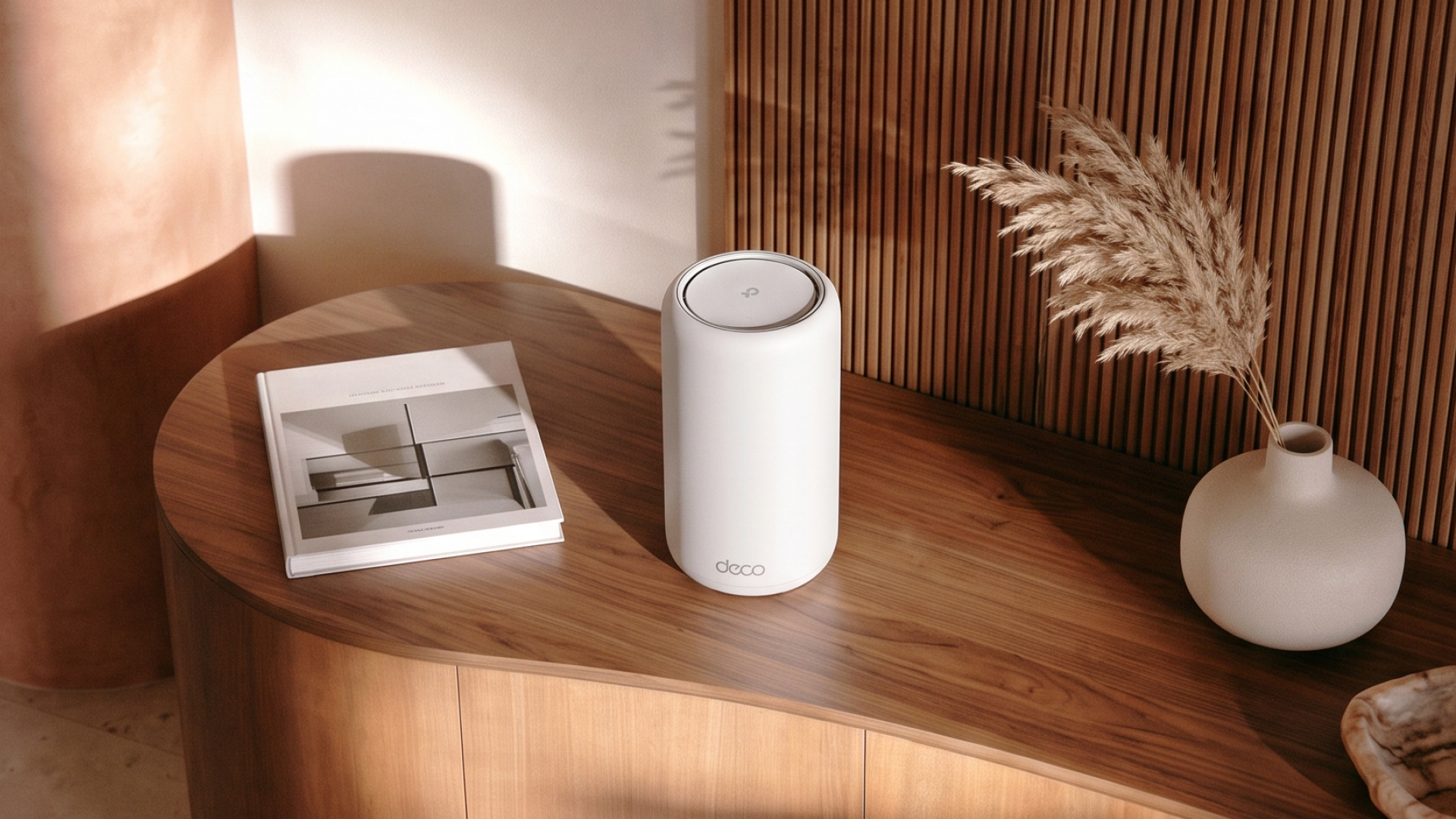
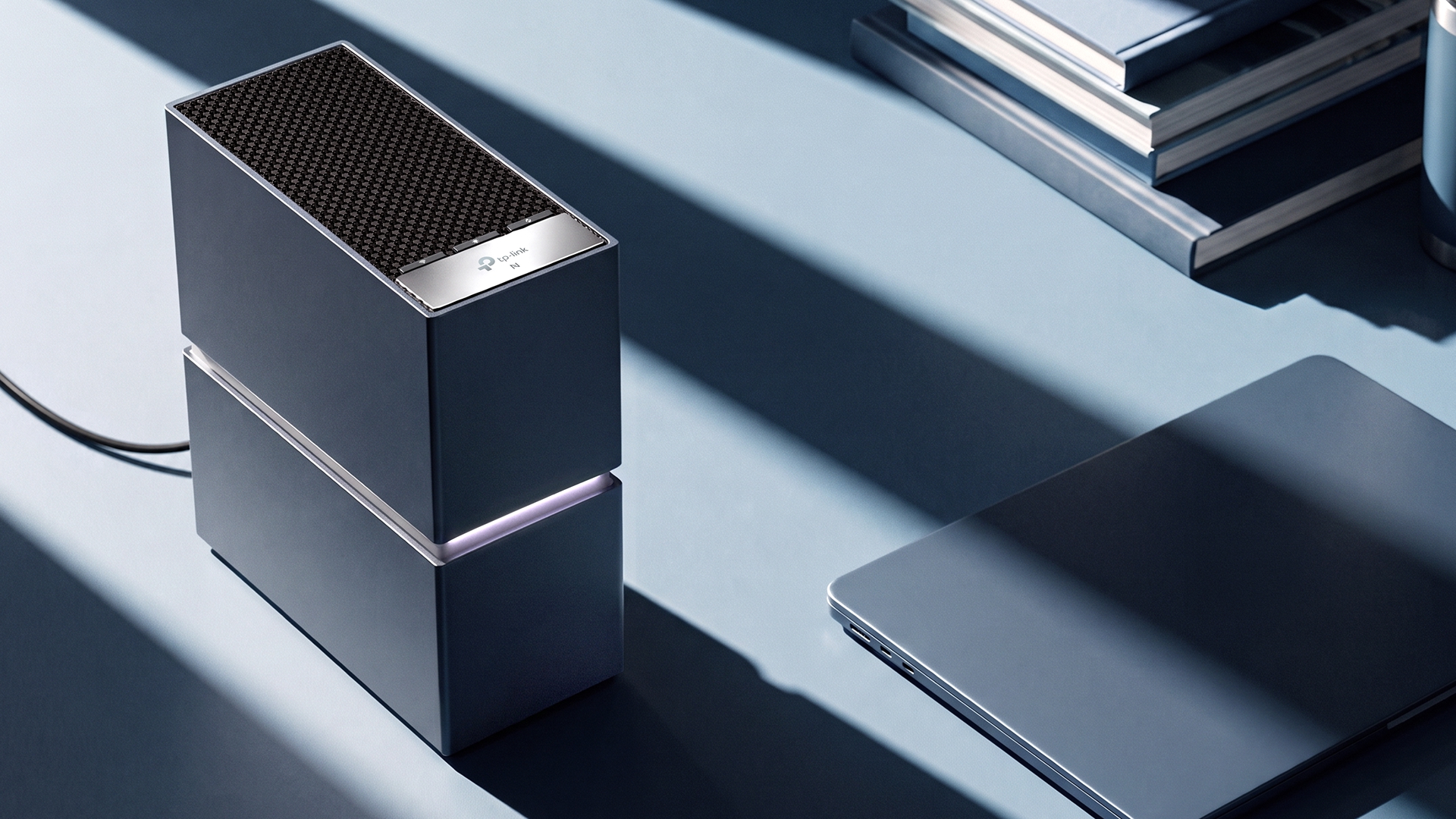
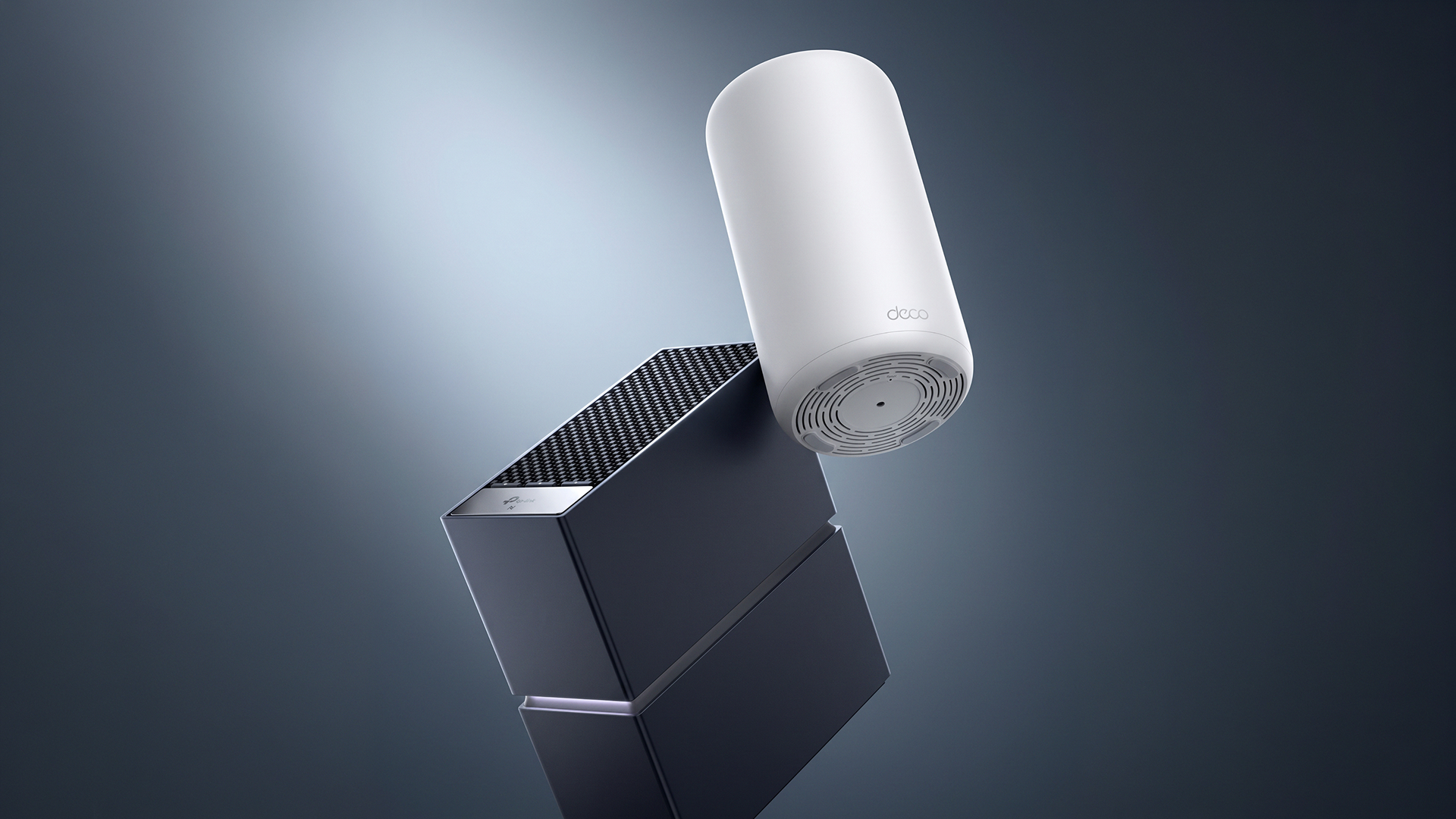
TP-Link introduced the Archer 8 Ultra and Deco 8 Ultra at the trade show, starting the next chapter in home networking. The Archer 8 Ultra is a tri-band router with a claimed total wireless throughput of up to 19 Gbps, 10 Gigabit wired, and 18 internal antennas. The Deco 8 Ultra is a mesh version with total speeds of up to 22 Gbps. TP-Link says the three-unit set will cover about 910 square meters and more than 200 devices.
IEEE 802.11bn, or Wi-Fi 8, places a strong emphasis on reliability, edge-to-edge performance, interference reduction, and more efficient collaboration between a large number of devices. TP-Link is building a StabilityEngine around the new devices, along with technologies such as Enhanced Long Range, Distributed Resource Units, and Non-Primary Channel Access.
This is the direction that home networks actually need. Many people today don't have a problem with the internet not being fast enough at their router. The problem is the bedroom two walls away, the smart camera in the garden, or twenty devices jostling for a connection at the same time.
Wi-Fi 8 is not yet a finished standard. The IEEE currently does not anticipate the final stages of standardization until 2028.
Miele G8 Diamond: camera in the dishwasher, seriously?
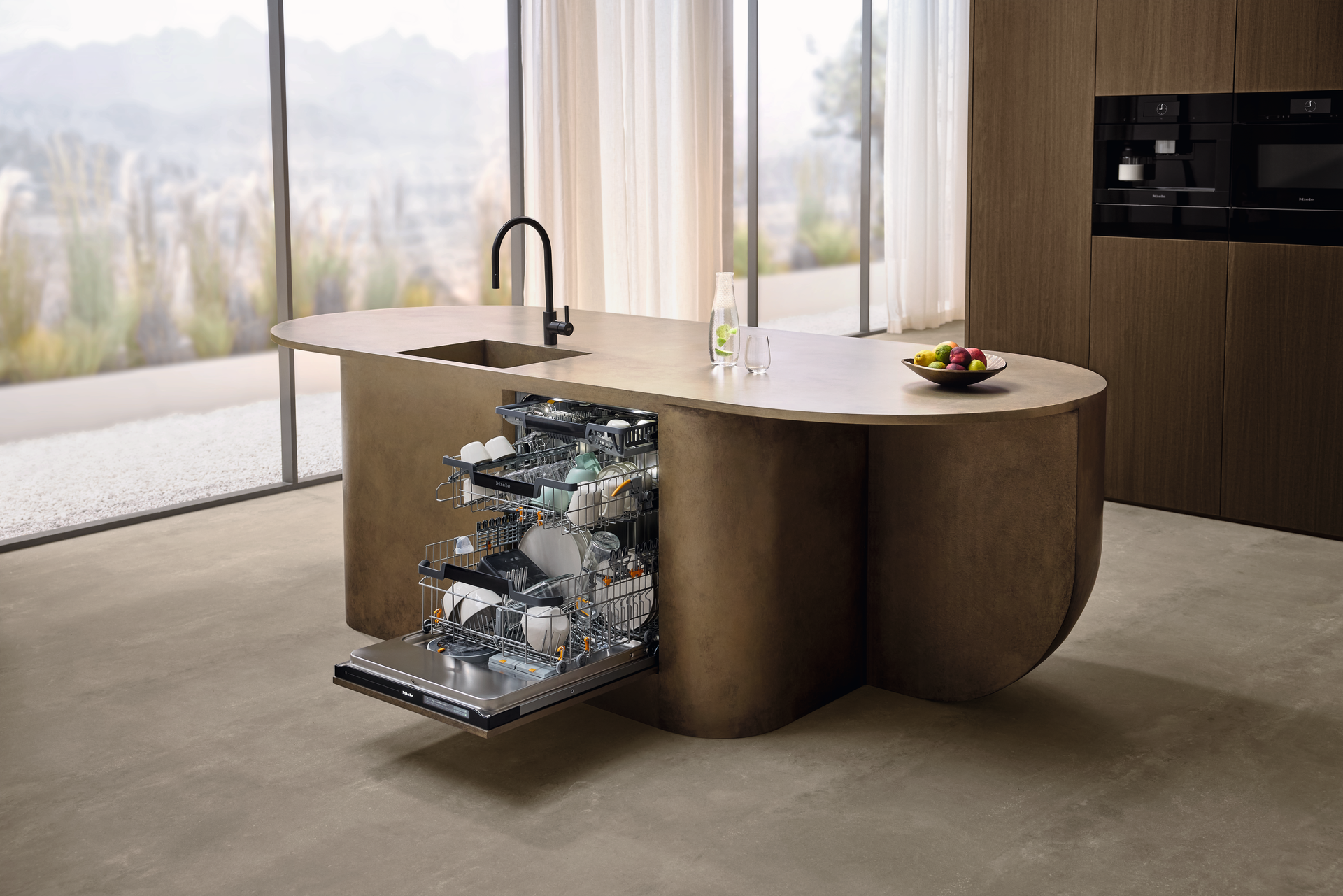
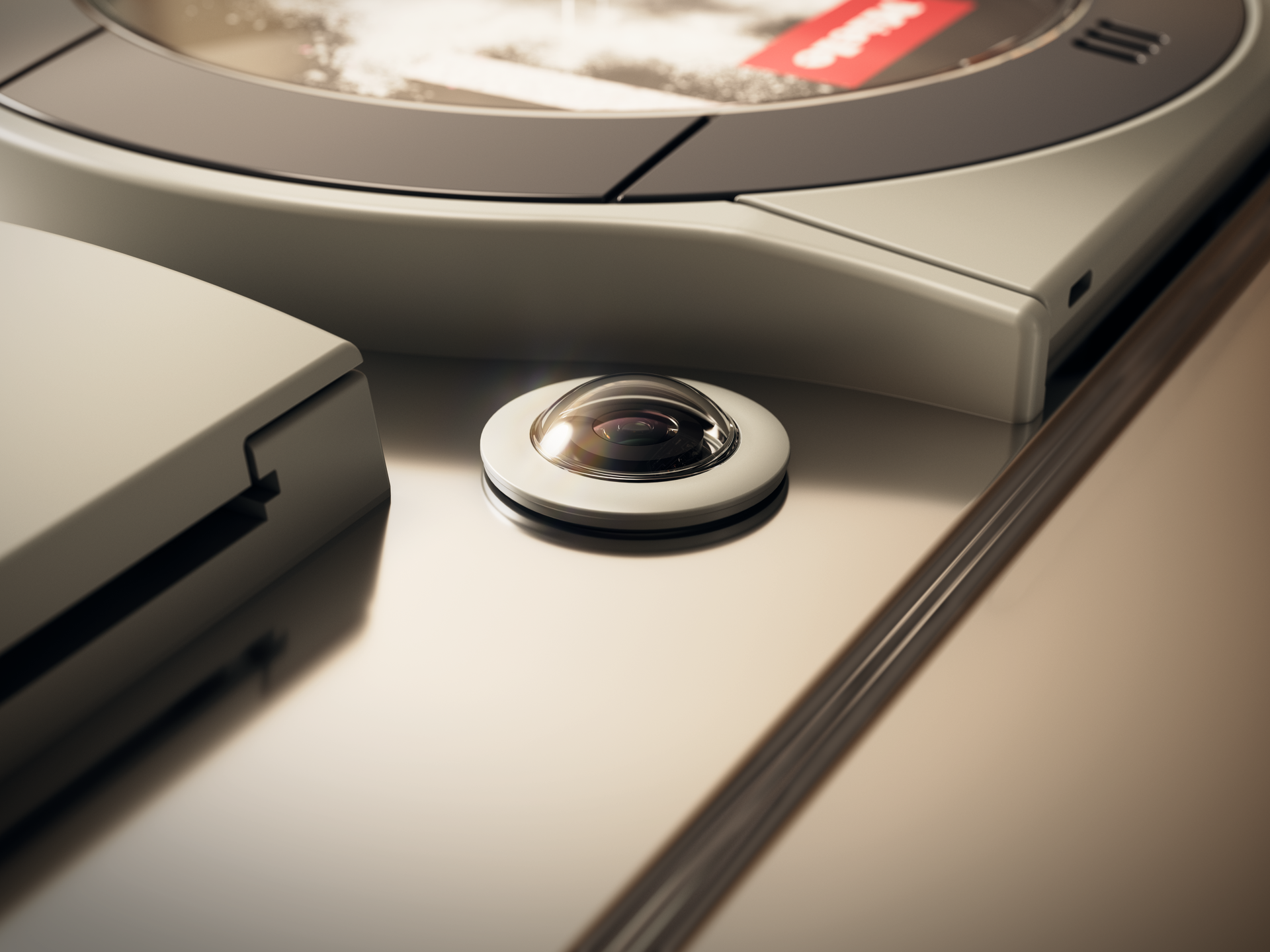
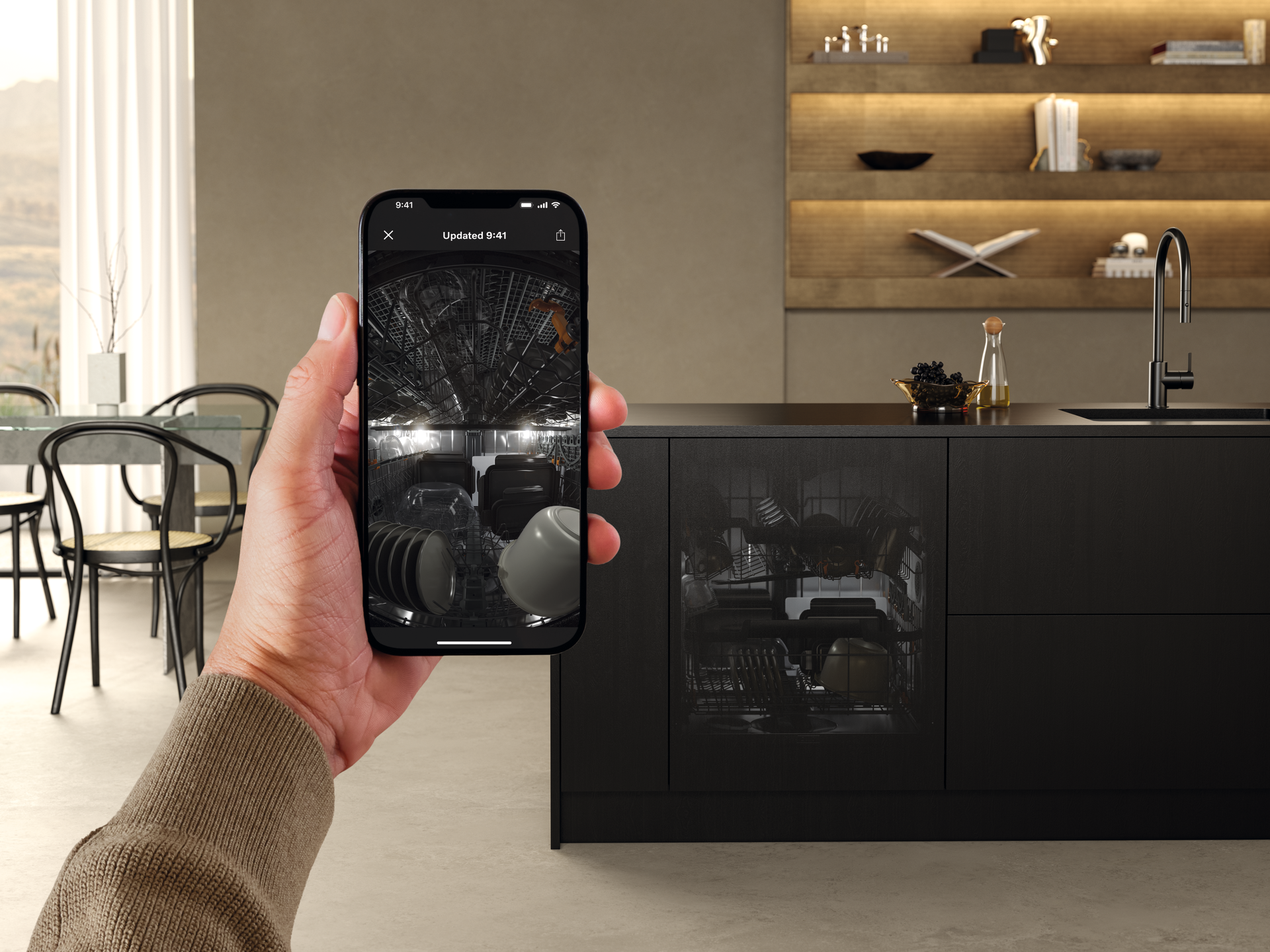
I am amazed and wonder if I really need a camera in the dishwasher. The AutoVision function uses a camera to analyze how full the dishwasher is and what dishes are in it. If it recognizes pots, it can increase the cleaning intensity. If it detects bottles, it adapts the program to wash them. It can change the drying mode for plastic items. The AutoDos automatic dosing and the new ExcellentDry drying system then do the rest.
Rules can also be set via the app, for example, to have the dishwasher only start when it is sufficiently full, or only after a certain time.
I'm just wondering if this will make the washing up so much better that it will outweigh the higher price (which will definitely be higher)? My regular Bosch dishwasher has been doing its job well for years, without the camera.
Even more futuristic is Miele's Cary concept for a washing machine. It uses sensors and AI to recognize laundry and determine the appropriate program, temperature, spin speed, and other settings.
Roomba is back with an interesting idea
Roomba, now operating under the auspices of new owner Picea Robotics, has apparently grown tired of chasing Chinese rivals and has begun trying to innovate again, just like at the beginning of the robot vacuum cleaner category.
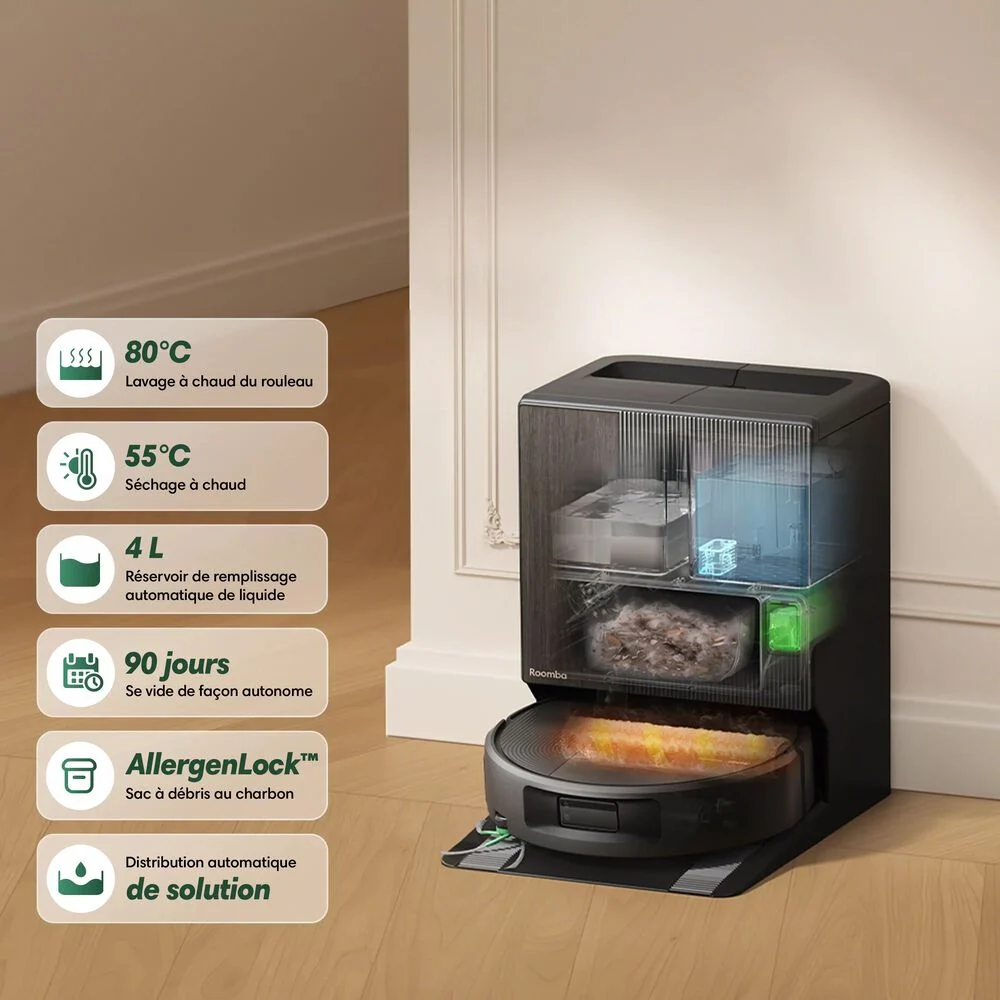
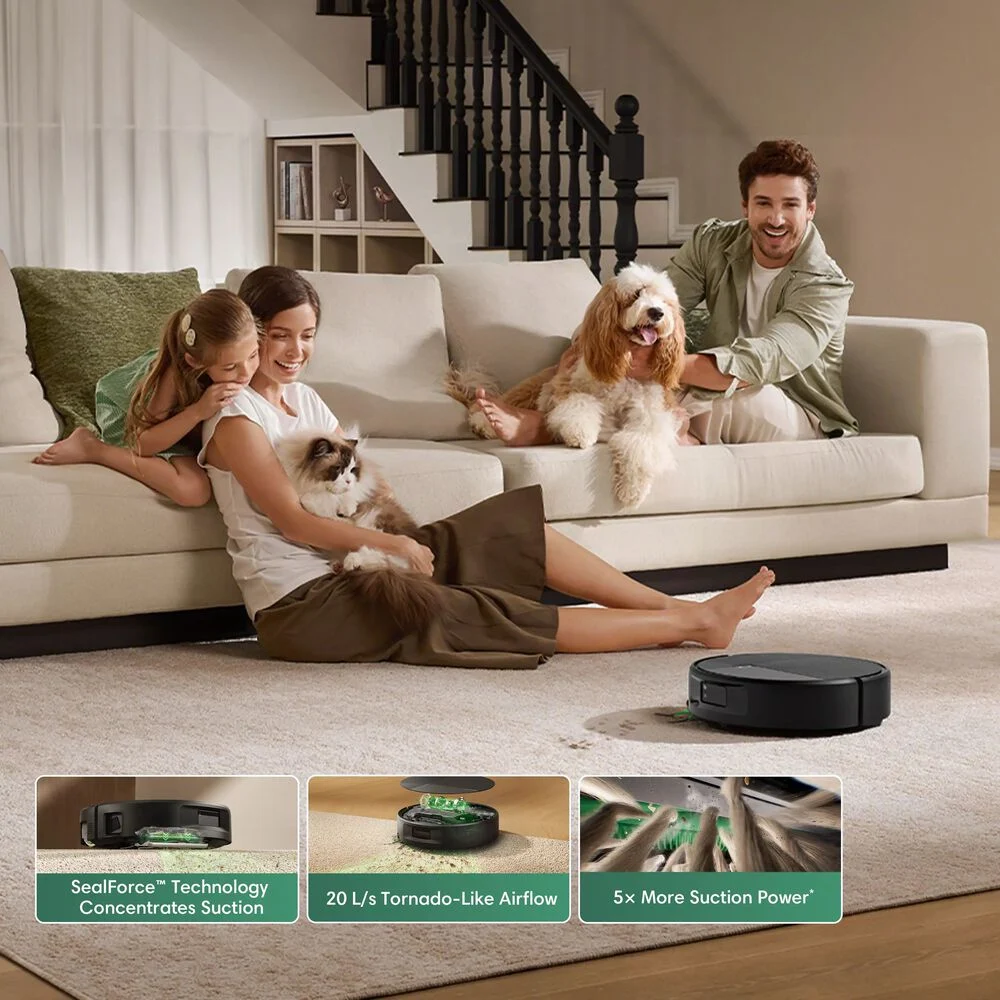
In addition to all the suction power numbers, the Roomba Max 875 Combo has another special feature, SealForce. When the robot comes to the carpet, it lowers the border around the bottom of the housing, trying to create a more sealed space between the vacuum cleaner and the carpet. This is supposed to direct the 35,000 Pa of suction power more effectively through the fibers instead of around the robot. The Roomba Max 875 Combo also has a heated ThermaMist spray for stains, a roller system for wet cleaning and a station that washes and dries the mop. Navigation uses lidar and cameras. The price in the US is $ 1,199.
Robotic lawnmowers will also mow along the edge
Anyone who has used a robotic lawnmower knows its most ironic problem: The robot mows almost the entire lawn, but then you have to take out the trimmer and trim the edges yourself.
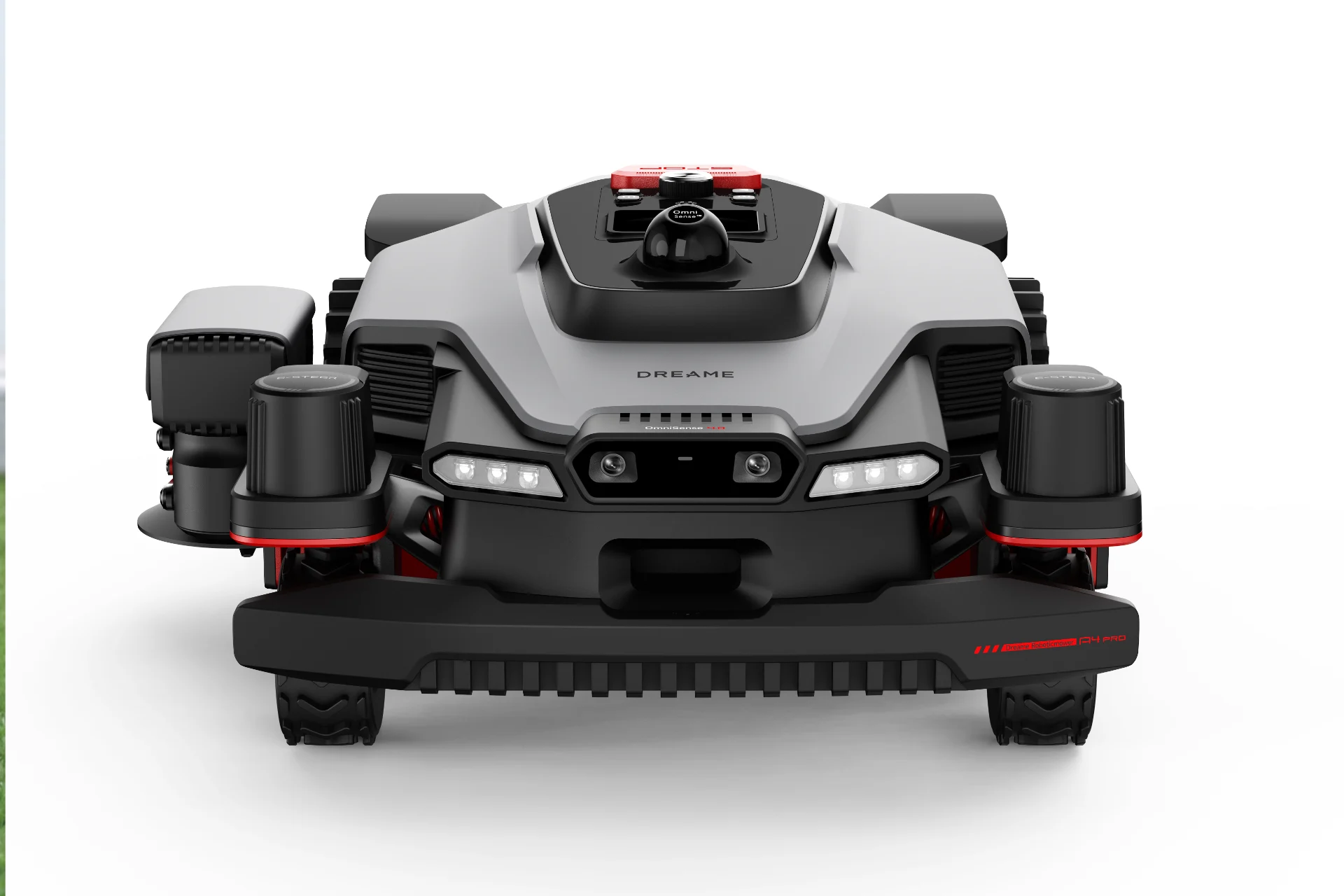
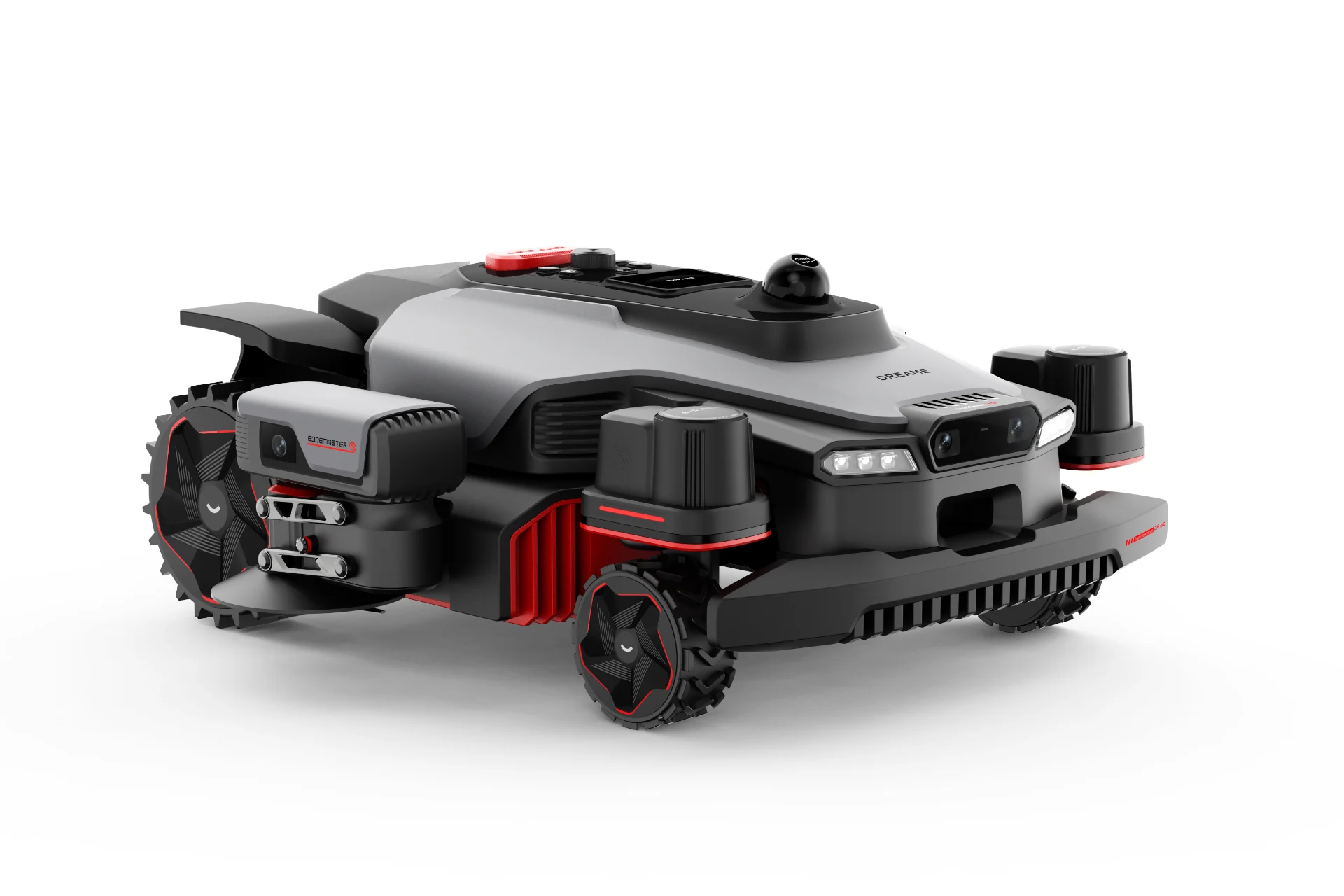
The Dreame A4 AWD Pro tries to fix just that with its retractable EdgeMaster cutting mechanism. I’ve seen something similar from Husqvarna before. The company talks about “0cm” edge mowing, although that’s their own lab measurement and the practice will of course depend on the shape of the garden. The navigation combines lidar, satellite positioning and cameras, while additional sensors take care of edges, obstacles, people and animals.
Eufy and Mammotion also showed lawn mowers with additional edge trimming mechanisms.
Projectors are slowly erasing the "yes, but TV is brighter" argument
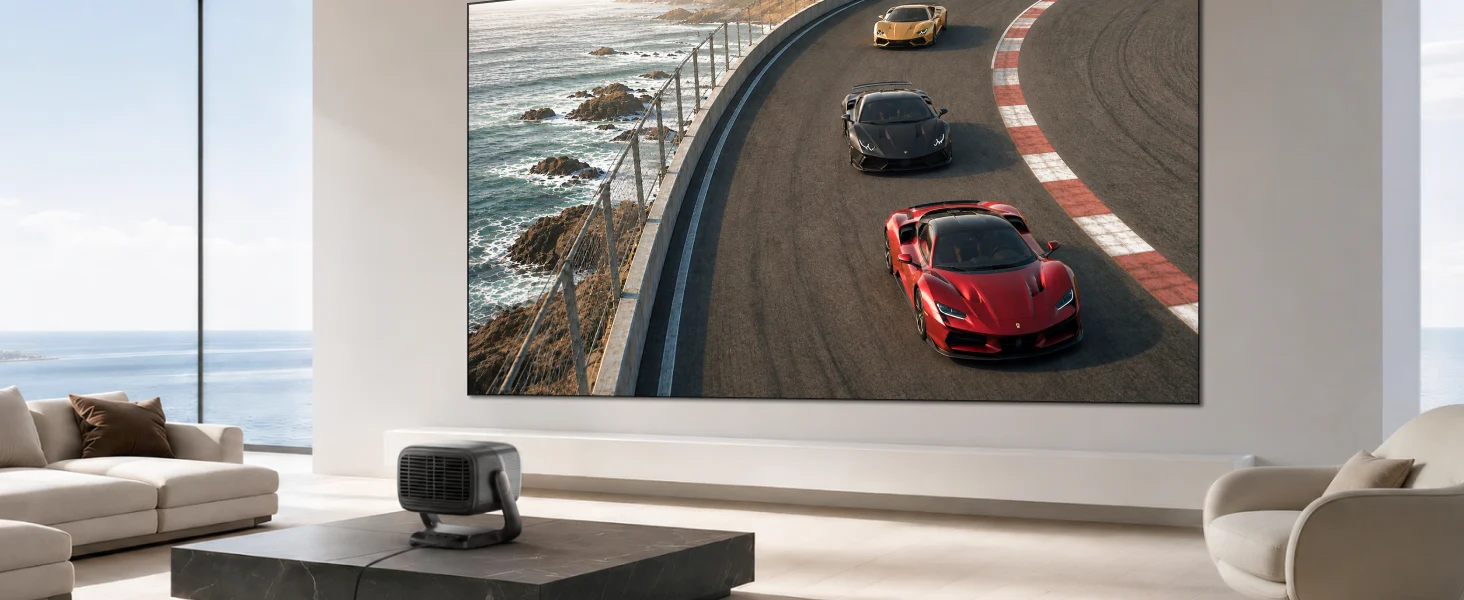
Among the home entertainment devices, the JMGO Iris Ultra Max stands out. It is a 4K projector with three lasers with 6500 ISO lumens, a dual aperture system and a contrast ratio of 10,000:1. It supports 4K at 120 Hz, VRR, ALLM and Dolby Vision, has a motorized position adjustment mechanism, 0.88-1.7:1 optical zoom and more. The price is $ 3499, and the first deliveries are expected in October.
Sure, $3,500 gets you a very good and very large TV. But it's still not that easy to fit a 100-inch or larger TV into your living room.
Xiaomi didn't bring one product. It brought almost an entire store
This is its first major appearance at IFA, and it wants to showcase its “Human × Car × Home” strategy in a more than classic way. It is exhibiting more than 380 products at the fair, from phones and wearables to home appliances and cars.
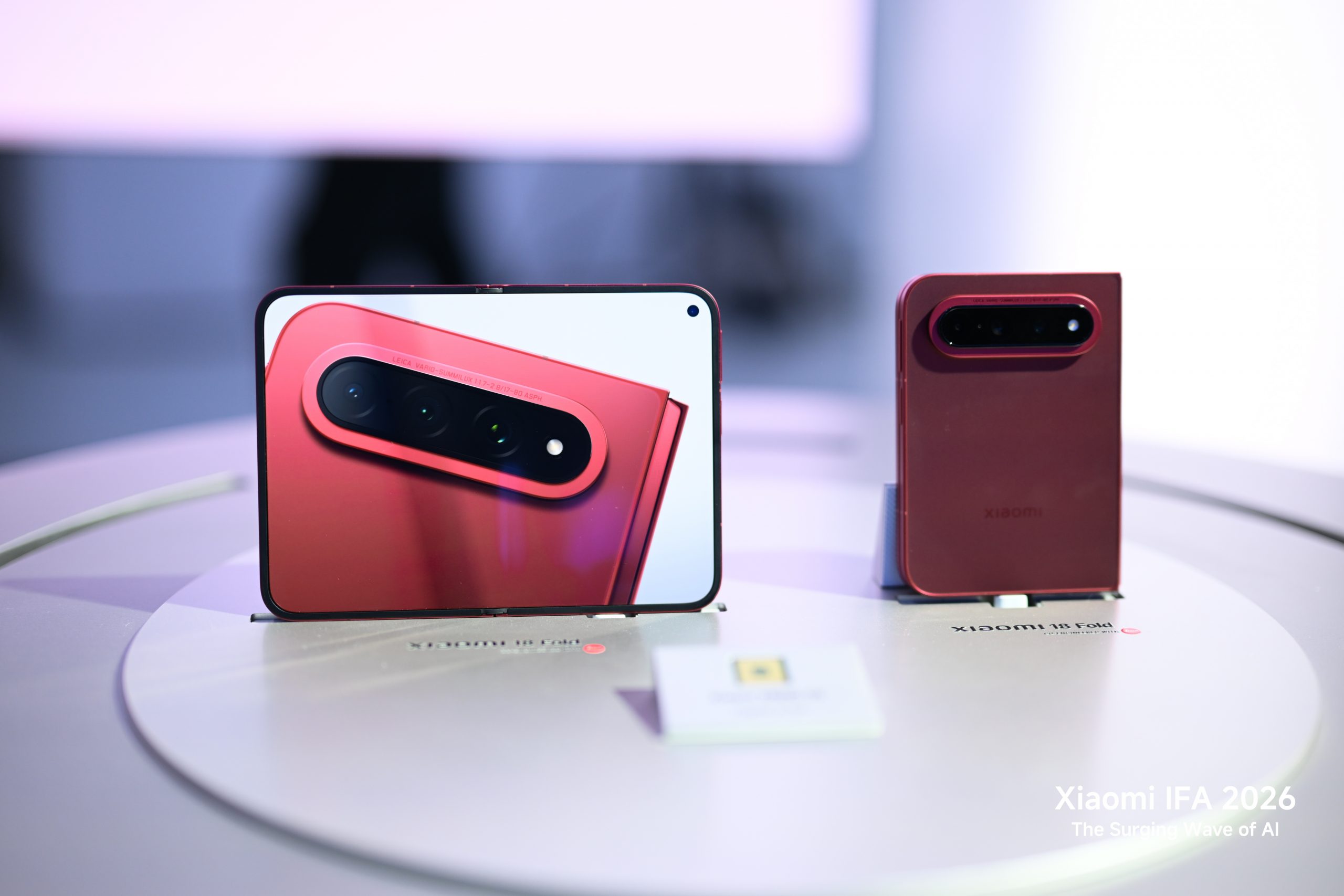
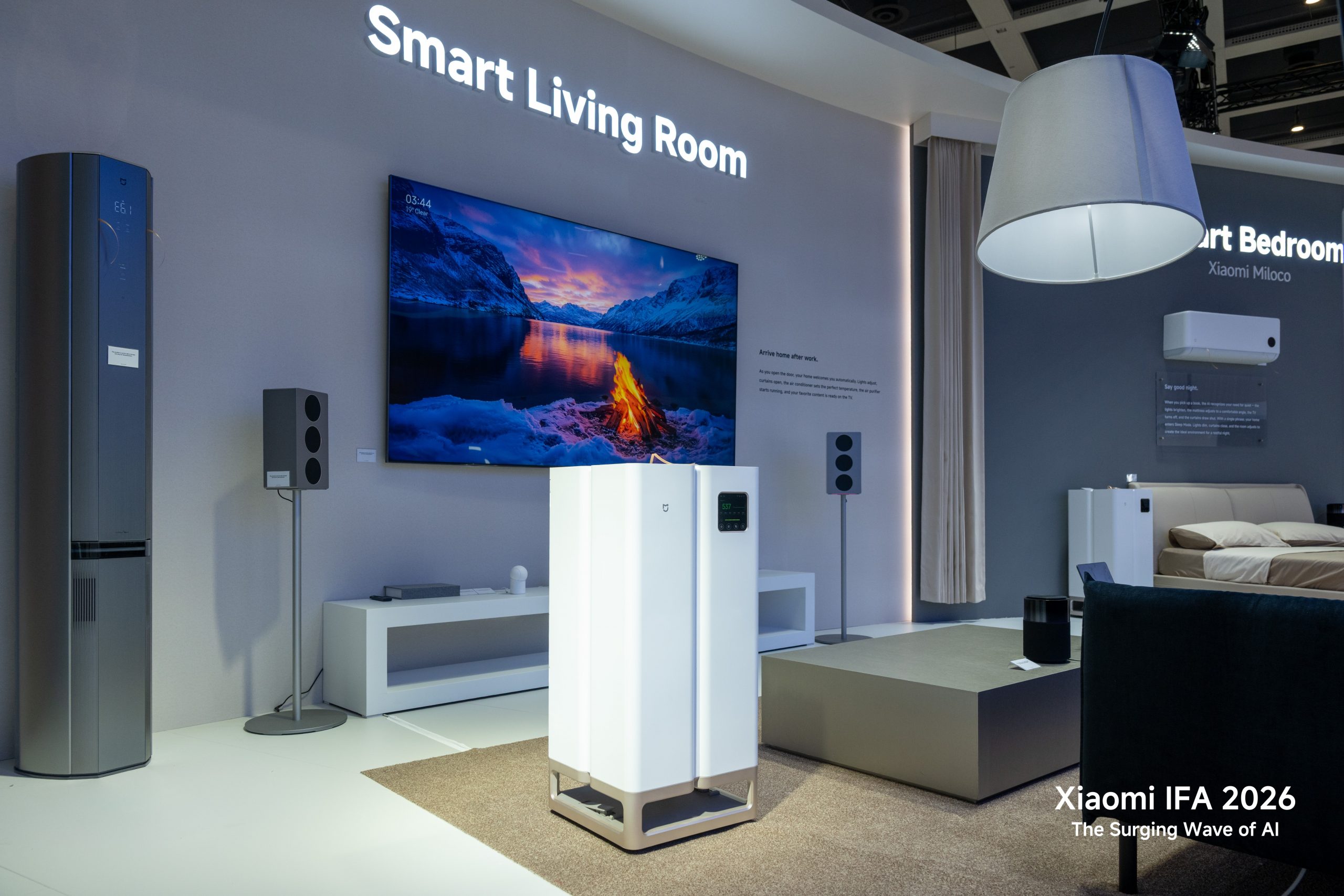
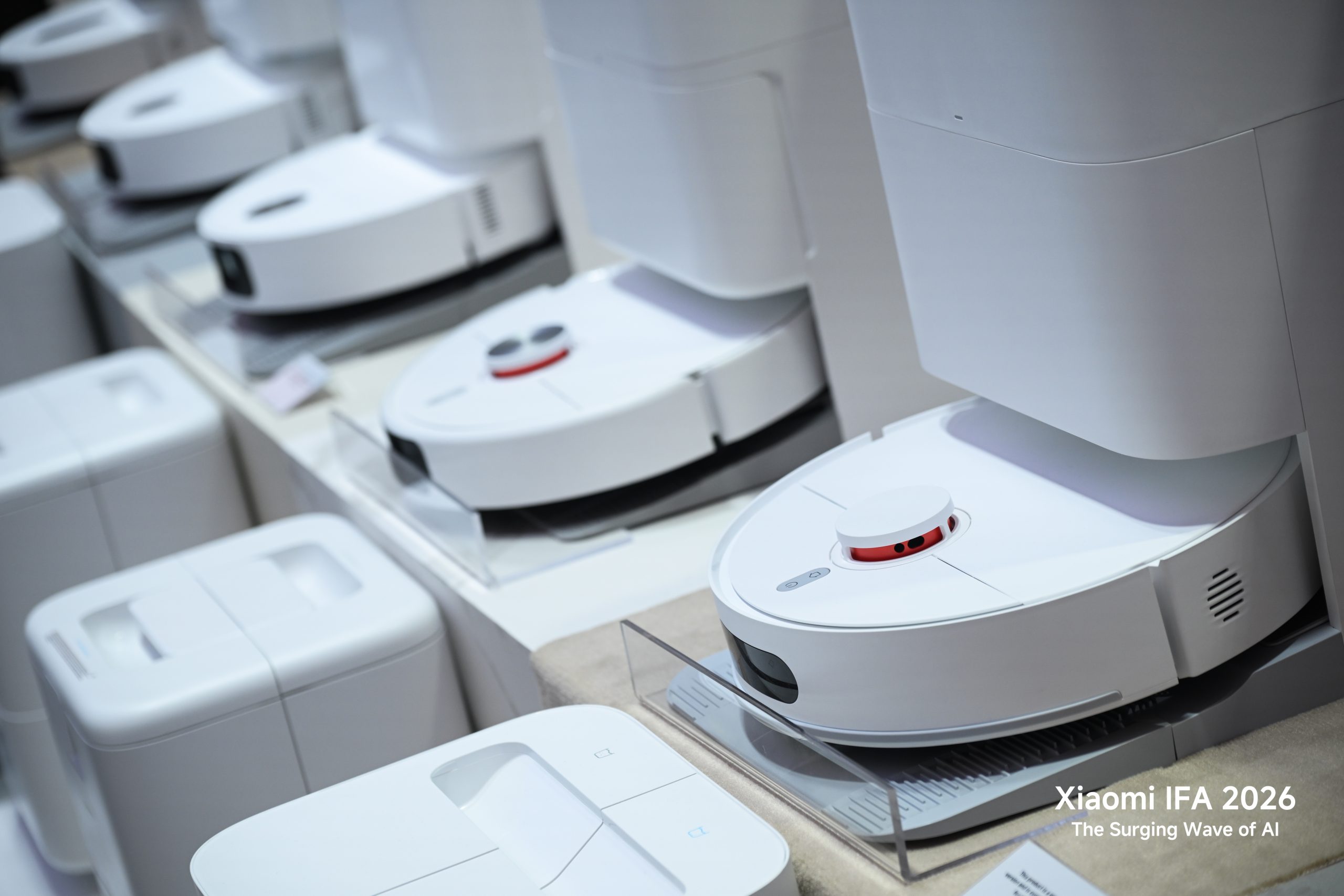
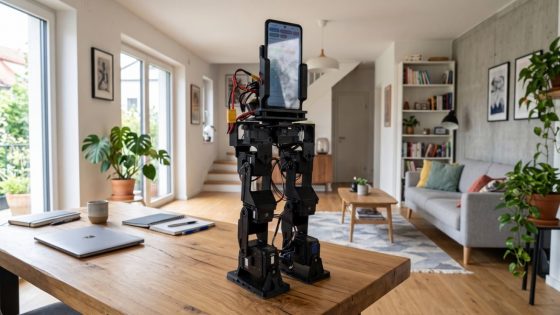
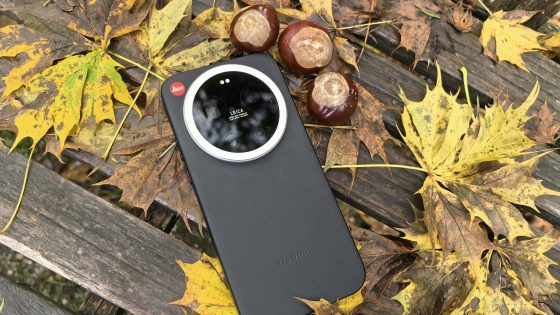
Visitors were able to preview the Xiaomi 18 Fold foldable phone, with a wider aspect ratio (like the Huawei Pura X and Galaxy Z Fold8), the new 3-nanometer XRING O3 processor and LPDDR6 memory, as well as the CyberOne humanoid robot, which shows visitors a live heart gesture with its fingers and is currently being tested on assembly lines in electric vehicle factories for fastening nuts.
IFA 2026 has just started, so we will be adding to this list in the coming days.