

Share with others:

Xiaomi 17 test - is its specialty just the size?

First of all, I have to complain to you that I am sad that we did not get the Xiaomi 17 Pro Max in Europe, which has a very special addition – an additional screen on the back. Apparently, it will remain in China this year. They probably want to test first on a limited market whether such a novelty attracts buyers. I think so. Maybe not so much because of the usability of this screen, but more because it looks something special. And people who buy in the range above €1000 want to have something unique.
Instead, we got "only" the Xiaomi 17 Ultra (the second best photographer for me) and the Xiaomi 17 from the new series.
Although the title is partly apocalyptic, I really have nothing against the new Xiaomi 17. Its small size will appeal to many (especially since small phones are becoming less and less common) and the price, which is a few hundred euros lower than the Xiaomi 17 Ultra, is also very tempting. Yes, the cameras are not the best, but that's normal. Even Samsung and Apple always have regular versions of their phones equipped with cameras that are not at the very top. It's important that they don't overdo it elsewhere, maybe with the chip, the battery, because it's still a lot of money.
What bothers me more is the fact that its price positioning is very close to its compatriot, the POCO F8 Ultra, which basically has everything the Xiaomi 17 has (even the same cameras), but is €300 cheaper.
During my time with the Xiaomi 17, I mainly wanted to find out why I should choose it and not the POCO F8 Ultra.
Advantages
- ✓Fantastic display
- ✓Compactness is very welcome
- ✓Premium workmanship and durability
- ✓Excellent performance (Snapdragon 8 Elite Gen 5)
- ✓More durable battery than the Xiaomi 17 Ultra
- ✓Very good cameras
- ✓Fastest drive (UFS 4.1)
- ✓7-year support
Weaknesses
- –HyperOS 3 less feature-rich than rivals
- –Same overheating as all phones with this chip
The Xiaomi 17 is not ashamed of its size
It is aware that it was created this way on purpose, and that there are users for whom it is primarily important to be able to use the phone with one hand and that it fits in any pocket. The smaller size has its advantages elsewhere as well. A smaller screen uses less power, the image density can be denser, which is the case with the Xiaomi 17 (compared to the Ultra), and it is generally more pleasant to use a smaller phone than a titan. The weight (only 191 g) is also generally better distributed. For example, the Xiaomi 17 Ultra has most of the weight concentrated at the top, near the cameras, while you don't feel that way with the Xiaomi 17. Since they haven't built in a giant camera frame, the phone also tilts less when we have it placed on a flat surface (although this doesn't matter if you use a case).
Then you also have the disadvantages, which depend greatly on the individual. I find it more enjoyable to browse the web and read content on a larger screen, and movies and series (when I'm forced to watch them on my phone) offer more enjoyment on almost seven inches than on a good six. Games also mostly come out better on larger phones, although controlling with the on-screen buttons is faster on a smaller diagonal.
Smaller phones shouldn't die out, so the Xiaomi 17 and phones like it are gems that we should cherish while they're still among us.
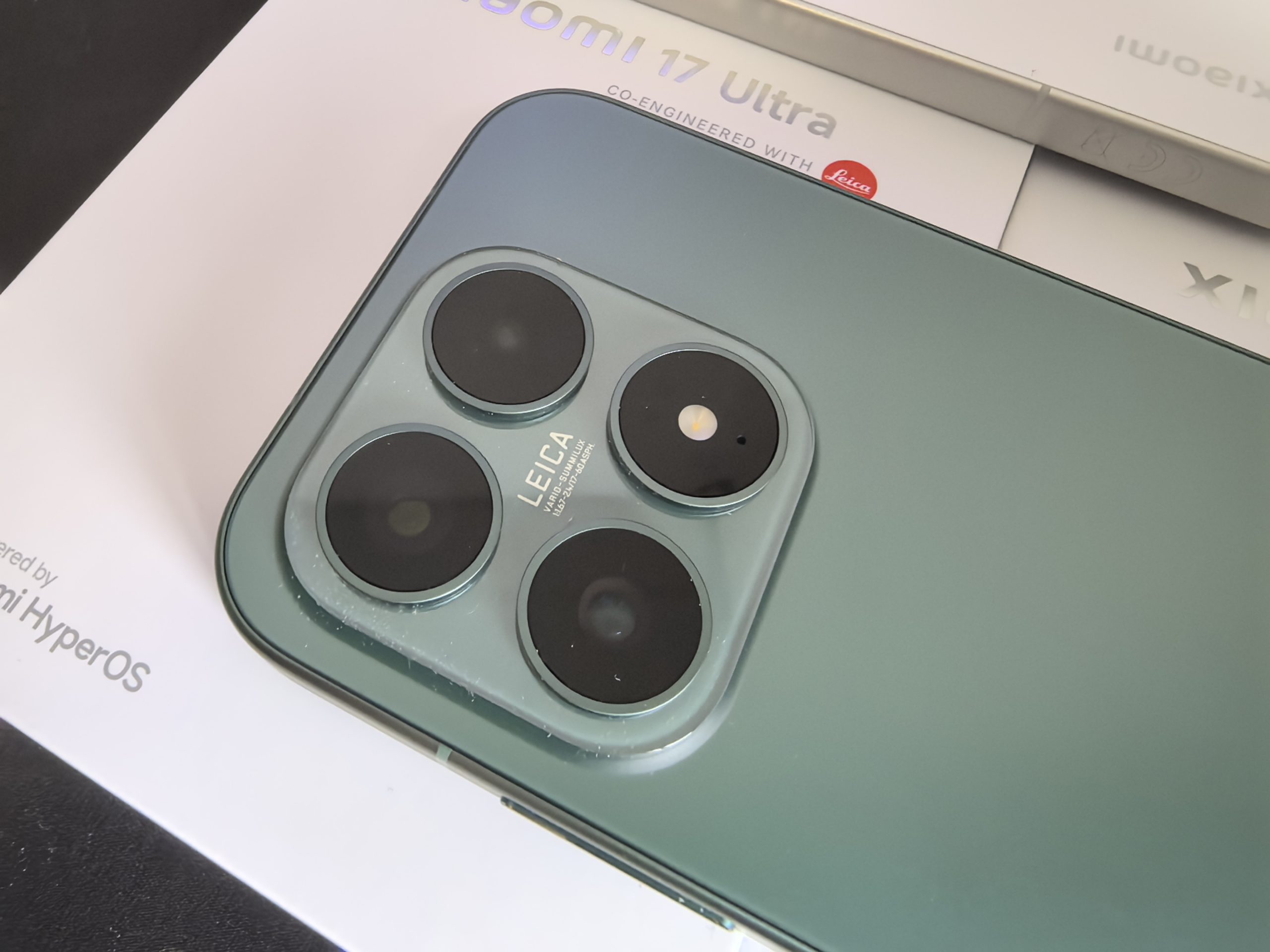
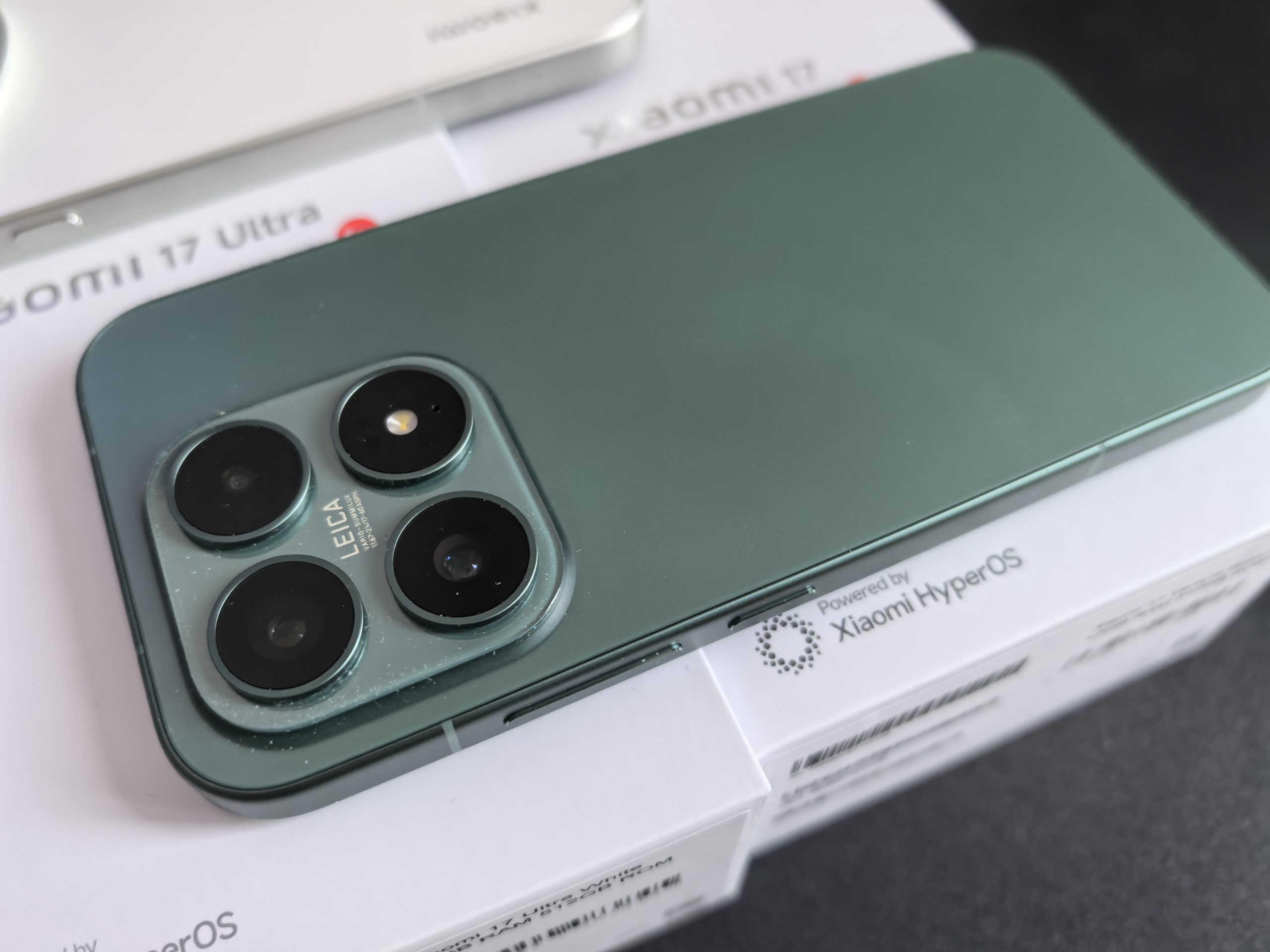
Otherwise, the Xiaomi 17 is made like all premium phones. The front is glass, the body is made of aluminum, and the back is plastic this time (there is also a leather version), which is additionally reinforced with fibers. Xiaomi is the second manufacturer, after HONOR, to opt for a plastic back for this year's flagship models.
The screen is flat, with the sides and edges partially curved, just like the Xiaomi 17 Ultra. The slot for the front camera is very small, mainly because they didn't opt for an additional depth sensor.
Resistance is expected, but not as aggressive as HONOR's flagship – IP68 and IP69 for resistance to water intrusion and other foreign objects.
Excellent 6.3-inch AMOLED and Snapdragon 8 Elite Gen 5 performance
It shares all the features (120 Hz, 3500 nits, Dolby Vision, all HDR standards) with the Ultra, the only difference is the size and resolution (1220 x 2656) and consequently the pixel density (464 ppi). Even if you buy in the lower range, it's really hard to come across a screen that will disappoint you these days. Almost all of them are more than bright enough for use in sunlight, color accuracy is no longer an issue, nor are viewing angles. All of this also applies to the AMOLED used by the Xiaomi 17.
The Snapdragon 8 Elite Gen 5 chip will be a significant advantage for the Xiaomi 17 when buyers inevitably compare it to the new Samsung Galaxy S26, which will be equipped with the Exynos 2600 chip in our country. Samsung's own chip is not bad, quickly closing the gap that was as big as a canyon a few years ago, but today is more of a small hole. But this year Snapdragon remains the better choice, which could mean that the Xiaomi 17 will offer better value at the same price.
They added up to 16 GB of RAM and up to 512 GB of space (in our market, up to 1 TB elsewhere) on a fast UFS 4.1 drive. I repeated the game test that I tested on the Xiaomi 17 Ultra. It is clear that the performance is the same. The difference is in temperatures, where the smaller size again does it no favors. Because there is less surface area for heat dissipation, the phone heats up faster than the Ultra and also holds its performance at its peak for less time before it has to reduce frequencies. Short sessions (up to 1 hour) are not a problem, but anything more than that you still have to pay attention to the temperatures, otherwise in two years you will be complaining why the battery only lasts a few more hours.
If you're gentle with the battery, you can expect an average of 13-14 hours of screen-on time before it's time to plug it into a cable (100-W charging) or place it on a wireless dock (50-W charging). There's a "Bypass" charging option in the Game Turbo app settings if you need to quickly top up your battery while gaming. That's of course, provided you're using the right charger.
To avoid repeating myself, you can see everything about HyperOS 3 at Xiaomi 17 Ultra.
Xiaomi will provide 7 years of Android upgrades and security patches.
Leica optics can create beautiful memories
- Main (wide-angle) camera: 50 MP, f/1.7 aperture, 23 mm focal length, 1/1.31″ sensor size (1.2 µm pixels) with dual PDAF focus and optical stabilization (OIS).
- Telephoto camera: 50 MP, f/2.0 aperture, 60 mm focal length (2.6× optical zoom), 1/2.76″ sensor (0.64 µm pixels), PDAF + OIS. Supports macro photography with a zoom of up to 10 cm.
- Ultra-wide camera: 50 MP, f/2.4 aperture, 17 mm focal length, 102° field of view, 1/2.76″ sensor
- Video recording: Supports up to 8K@30 fps (HDR) and 4K@30/60 fps (HDR10+, Dolby Vision) for the rear cameras and 1080p up to 960 fps. The front camera supports 4K@30/60 fps HDR recording
The Xiaomi 17 features an advanced 50MP triple camera system, led by the Light Fusion 950 main sensor (same as the POCO F8 Ultra) with an f/1.67 aperture, which delivers superb sharpness and natural texture during the day without excessive artificial processing. Leica color science lets you switch between Authentic profiles, which offer deep contrasts and dramatic shadows for that signature “filmic” look, and Vibrant for saturated yet balanced colors with high dynamic range.
At night, the main sensor captures an impressive amount of light with minimal noise thanks to its large aperture and optical image stabilization (OIS), while the 2.6x telephoto (60mm) and ultra-wide lenses maintain good color accuracy, although they lose some quality compared to the main lens in extreme darkness. Video capabilities are also top-notch, with the device supporting 8K recording at 30fps and 4K at 60fps with Dolby Vision and 10-bit LOG support, which, together with advanced hybrid stabilization and audio tracking, ensures professional footage with a cinematic look and smooth transitions between lenses.
The telephoto lens allows you to get as close as about 10 cm, which means the camera can take very detailed macro shots of small objects. This is useful for photographing textures or small objects with a lot of sharpness.
When photographing people, either the wide-angle or telephoto lens can be used to blur the background. Especially with the 50 MP f/2.2 front camera, various bokeh filters are available to blur the background appropriately. Leica algorithms usually deliver natural, not overly saturated colors.










Xiaomi 17 – just below the top, but also very close to the middle
The Xiaomi 17 is flawless when you analyze it in isolation, without comparing it to others. For this price, it has a Snapdragon 8 Elite Gen 5, more than enough RAM, the fastest drive, very good cameras, good workmanship, durable battery and long support. The HyperOS system needs some more maturation before it can compete with Samsung, but even now you will be very hard-pressed to find really critical flaws in it. €1000 for all this is not such a bad deal.
But is it really the best deal? I mentioned the POCO F8 Ultra at the beginning, which is primarily aimed at gamers, but it shares quite a few similarities with the Xiaomi 17. They even have the same main sensor, for those who will immediately point the finger at it as having worse cameras. Yes, the Leica algorithms are much better than those on the POCO, but for those of you who are not photography purists, I don't think this will be such a big problem. They also share the chip, RAM and storage capacity, the screen is very similar, and the scales tip in favor of the Xiaomi 17 when it comes to software support and general manufacturing, although the POCO has improved a lot.
The difference between the two? More than €300 and the POCO is often available on sale.
Both phones are great, but I think all phones (not just the Xiaomi 17) that start at around €1000 are under heavy pressure from phones around €600-700. They've gotten to the point where I've even asked myself what I would pay more for for almost the same phone. Do you agree?
Xiaomi 17 price?
- Xiaomi 17 (12 + 512 GB): 1099 €
With purchase, you will receive a Xiaomi G27Qi gaming monitor as a gift (valued at around €200).