

Share with others:

Huawei Watch 6 Pro (43 mm) test: ceramic case, X-TAP 2.0 and three days of battery life

When it comes to smartwatches, the choice is often quite unpleasant. If I want a stylish watch that also goes well with slightly more formal clothes, I usually have to make some compromises in terms of sports features. If I choose a powerful sports watch, I often have a rather large piece of plastic or metal on my wrist that looks better in the gym than at dinner. The Huawei Watch 6 Pro in white ceramic tries to combine both. But at a price of almost 700 euros, it is not enough for a watch to just be beautiful.
Huawei has a lot more courage in designing smartwatches than most of its competitors. With the Watch GT 7 series, it stayed close to classic sporty-elegant watches, with the Watch Ultimate it experiments with more prestigious materials, and the new Watch 6 Pro represents a slightly different approach.
The smaller, 43mm version is made of ceramic and, in white with gold accents, is quite different from most smartwatches I usually come across. There is also a 46mm version with a titanium case, which is of course aimed at the male population.
Underneath the attractive casing is one of Huawei's most powerful smartwatches. It has eSIM support, ECG, advanced health monitoring, dual-band satellite receiver, fall detection, contactless payment, and a fairly extensive selection of sports features.
But Huawei had to make a compromise for all these features, which will annoy many. The Watch 6 Pro can't compete with the battery life of its top GT watches. The difference is especially noticeable in the smaller version.
I tested the white Ceramic Edition with gold accents on the crown and button.
| Advantages | Weaknesses |
| Ceramic case and sapphire glass | Battery only lasts 2 to 3 days |
| Lightweight (50g) and thin (10.2mm) | High price |
| Very bright AMOLED display | Ceramics are more brittle than steel when subjected to strong impacts |
| X-TAP 2.0 for quick fingertip measurements | The ceramic strap is not suitable for water and sweat |
| eSIM, WiFi, NFC, ECG, dual-band GPS | Modest range of applications |
| Works with Android and iOS | |
| Fast wireless charging |
Huawei Watch 6 Pro price and specifications
- Huawei Watch 6 Pro (43 mm, ceramic): €699
- Huawei Watch 6 (42 mm, white or gold): €469
Until November 15th, get a €50 discount on your purchase.
| Watch 6 Pro 43mm | Watch 6 Pro 46mm | |
| Housing | ceramics front and back | titanium front, ceramic rear |
| Belt | white ceramics | black titanium (Space Edition) |
| Dimensions | 43.5 × 43.5 × 10.2mm | 46.4 × 46.4 × 11.4 mm (Space Edition) |
| Weight (without strap) | about 50g | about 60g |
| Wrist circumference | 130–190mm | 140–210mm |
| Screen | 1.38-inch LTPO AMOLED, 338 ppi | 1.5-inch LTPO AMOLED, 310 ppi |
| Resolution, brightness | 466 × 466 pixels, up to 3500 nits | 466 × 466 pixels, up to 3500 nits |
| Protection | sapphire glass, 5 ATM, IP69, free diving up to 40 m | the same |
| Battery | 540mAh | 867mAh |
| Typical use | up to 3 days (2 days with AOD) | up to 4.5 days (3 days with AOD) |
| Power saving mode | up to 7 days (light), 5 days (typical), 3 days (with AOD) | up to 11, 7 and 4.5 days |
| Connectivity | eSIM, WiFi 2.4 + 5 GHz, NFC, dual-band GNSS | the same |
| Compatibility | Android 9+, iOS 13+ | the same |
Ceramic on the wrist feels premium, but also occasionally uncomfortable
The Ceramic Edition is clearly designed as an elegant watch. The case is white, the gold details on the crown and buttons are sufficiently restrained, and the glass is slightly convex and also sapphire, which makes the watch resemble a classic wristwatch. It is 10.2 mm thick, and weighs about 50 g without the strap.
The strap is articulated and also ceramic. You also get a rubber one in the box (EasyCross, like the Watch GT 7), which many of you will reach for. Not because the ceramic one is bad, but because it is not suitable for every scenario. First of all, they are not intended for water activities, which means that you will not swim in the sea with them or anything like that. I also generally do not like it for sports activities, because it is less comfortable than the rubber one. However, if you want to complete your "outfit", the ceramic strap is undoubtedly a better choice. The watch itself withstands 5 ATM, IP69 and free diving up to 40 meters, but for swimming and exercising, as mentioned, you need to use a different strap.
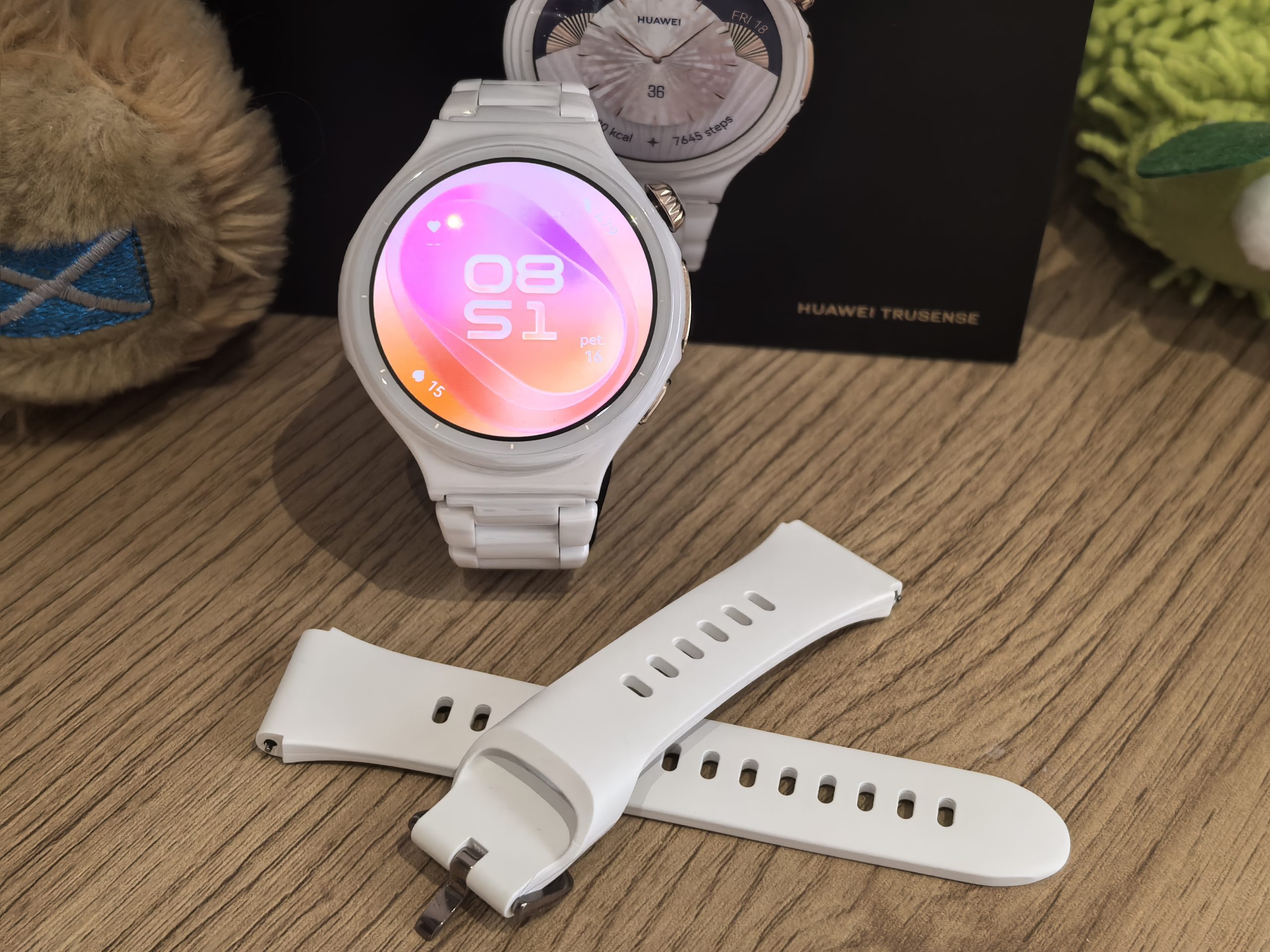
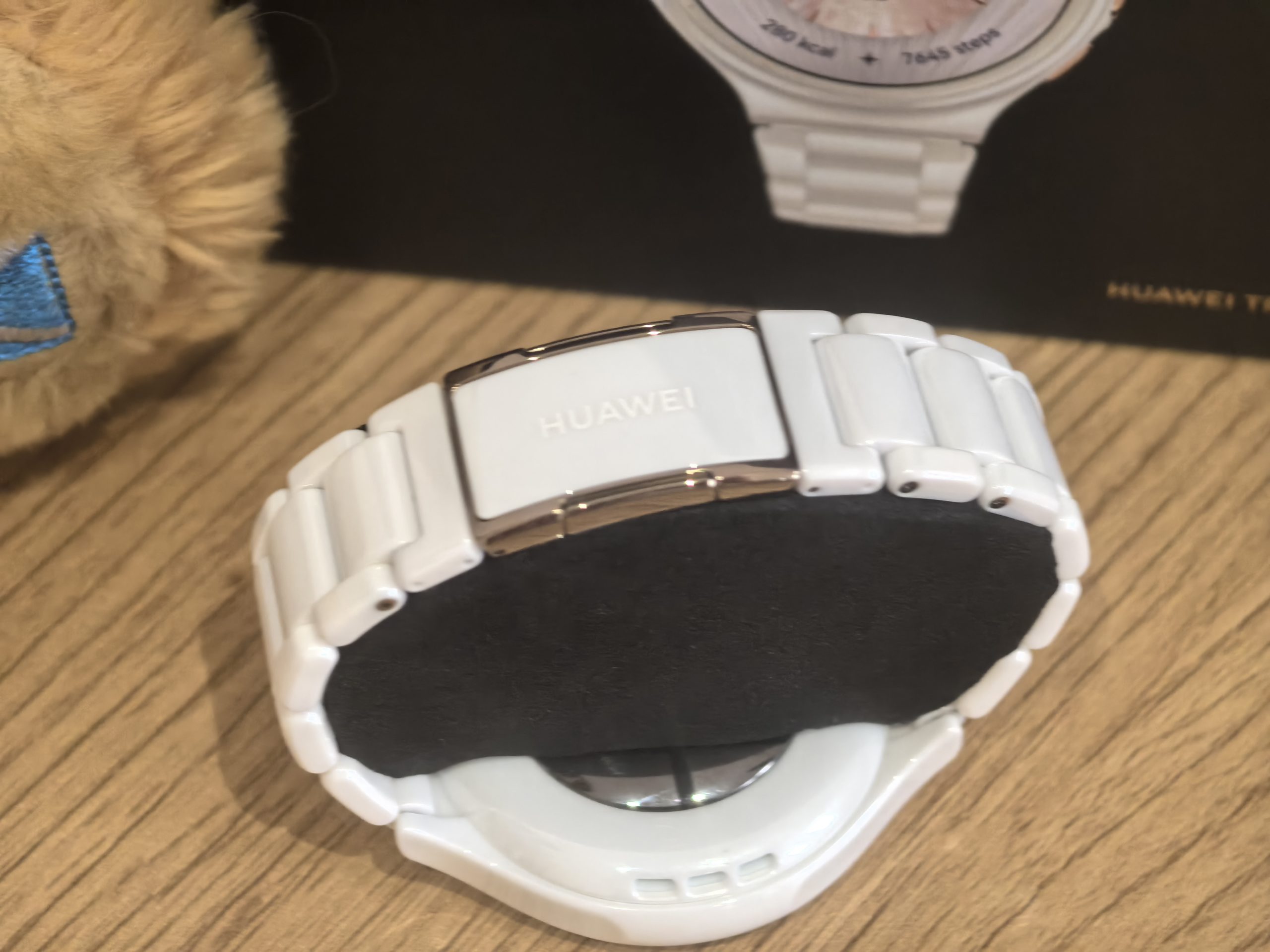
You have to adjust the strap before wearing it, which means you have to remove (or add) a link or two. You don't need any additional tools to do this. I first removed two, then added one back because the watch was too tight. The watch didn't bother me when I slept. It doesn't put pressure on the bone in my wrist (if you put it on correctly), and the weight, although hefty, wasn't a noticeable factor for me when wearing it. Of course, it depends on whether you're already used to having something on your wrist when you sleep. I know that bothers a lot of people.
Ceramic is very hard to scratch, and is more brittle than steel or titanium when subjected to strong impacts. There were no impacts or shocks during the test, so I can't comment on its durability, but it feels very solid and durable. I also encountered the problem that the ceramic strap would come off randomly, mostly when I made quick movements with my hands. The clasp opened, but luckily the watch stayed on my wrist. This was also one of the reasons I preferred to take a spare strap.
The screen is great in the sun, in the shade, and under tree canopies
The Huawei Watch 6 Pro has a 1.38-inch LTPO 2.0 AMOLED display in the 43mm version with a resolution of 466 × 466 pixels. The density is about 338 pixels per inch, which is more than enough for a smartwatch. Text is sharp, individual pixels are not noticeable, colors are pronounced, and blacks remain completely dark thanks to AMOLED technology. The maximum brightness reaches 3500 nits, which is a slight upgrade from last year's, also excellent screen (3000 nits).
The sun is not as strong as it was a few months ago, but I never had any problems with visibility while walking with my little one. Even if I got caught in the rain, I could still browse the tabs with wet hands. At first, I also used the always-on display, but I soon turned it off because it was a big drain on the already modest battery (by Huawei standards). I would still like to use it on a watch like this. The beautifully designed dial is part of its look, and I think it's a shame if there's only a black surface on my wrist most of the time.
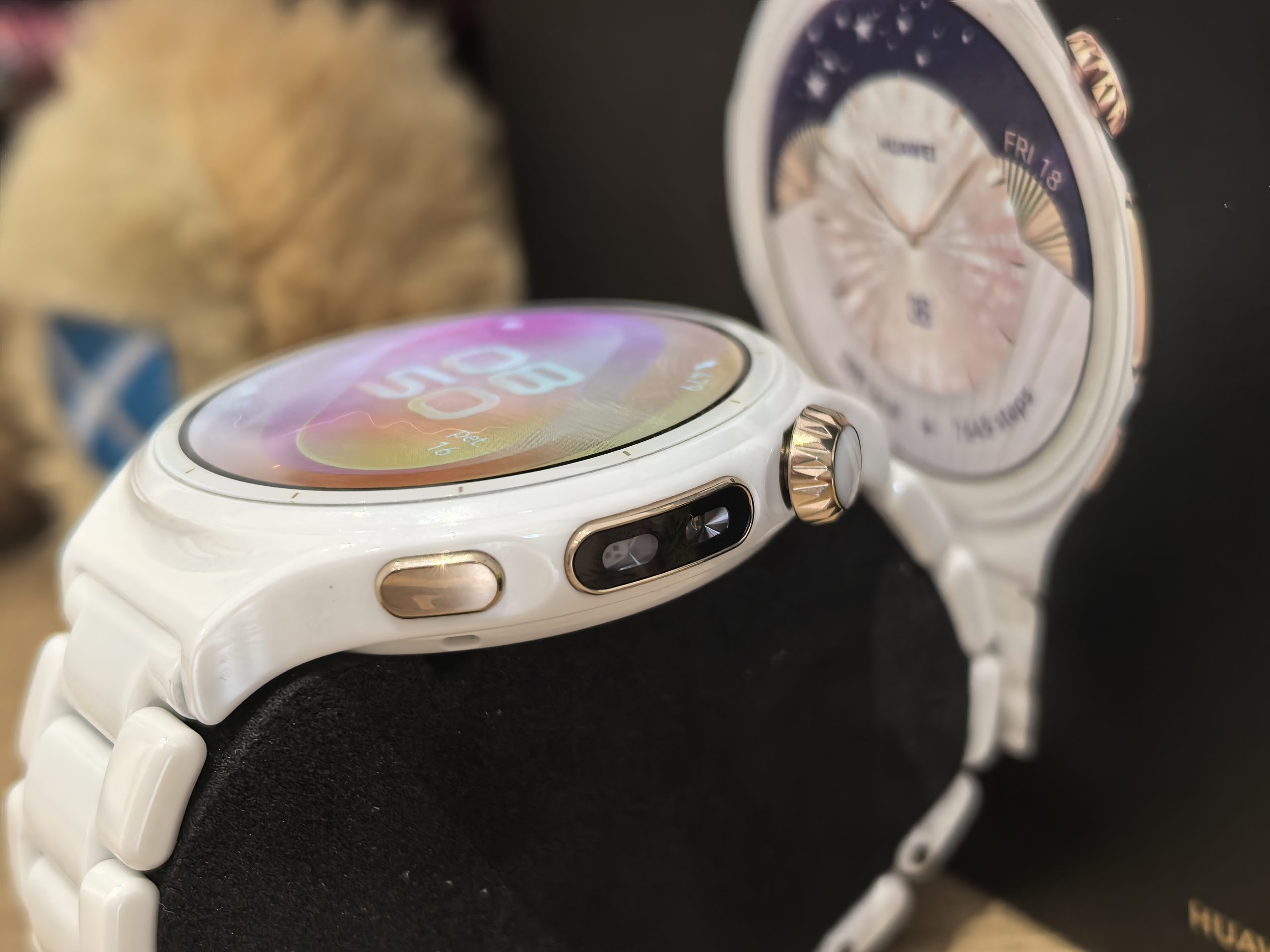
The rotating crown allows you to move through menus, change displays, and navigate the system. I especially like this way of operating it while walking or when I have something in my other hand.
X-TAP will give you a bunch of data
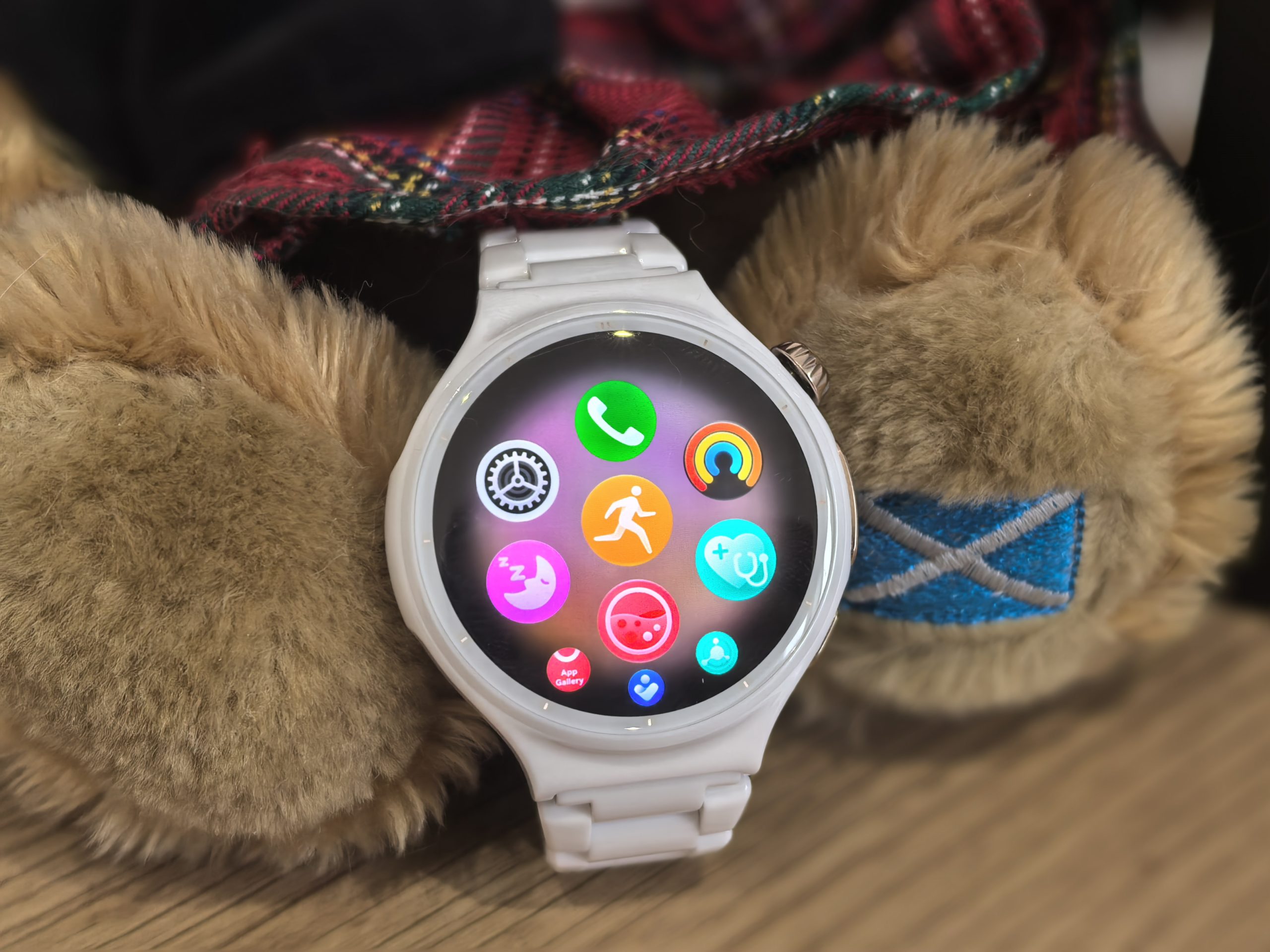
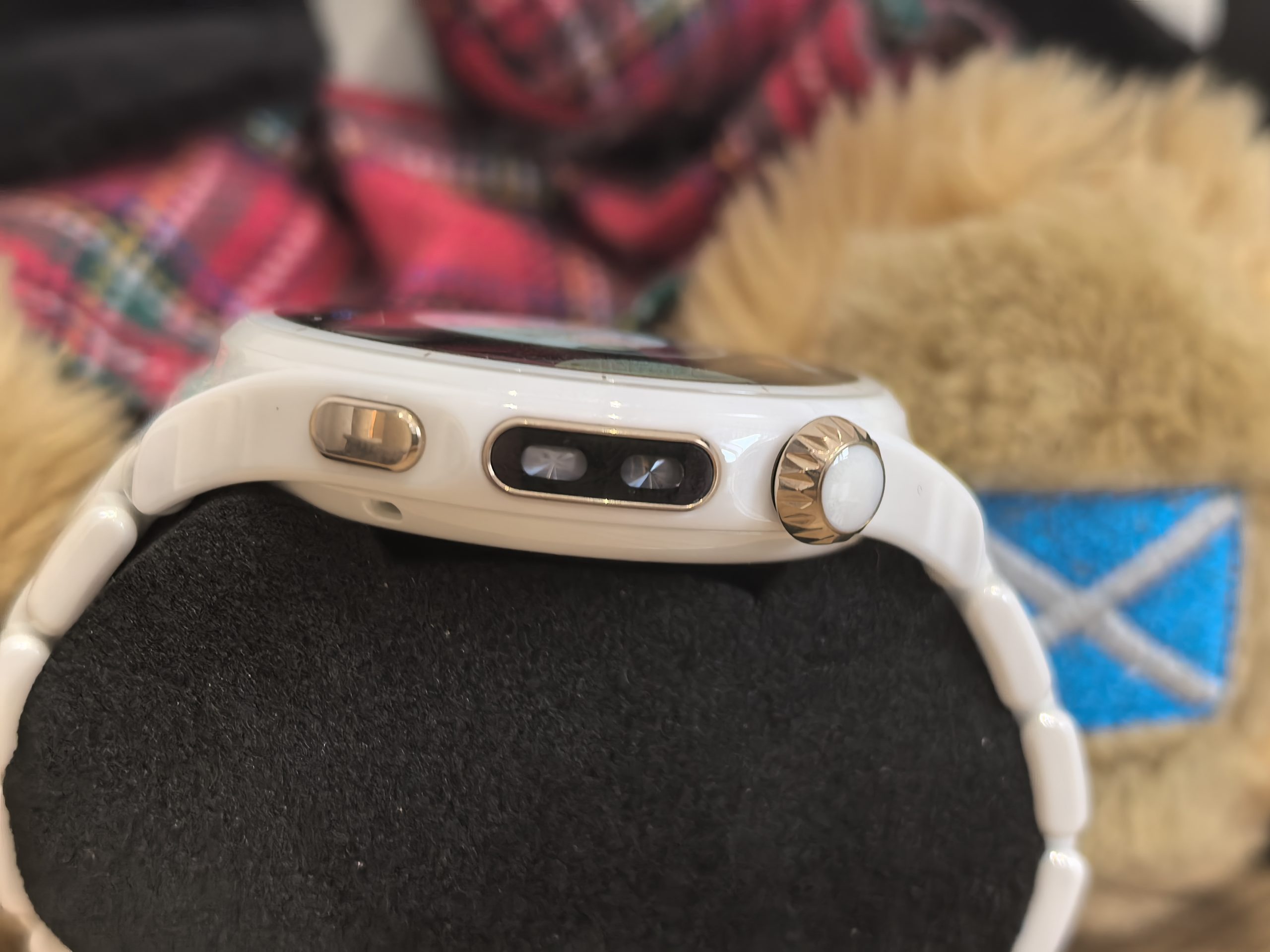
The X-TAP side sensor is between the crown and the bottom button. The Watch 6 Pro has a 12-channel optical sensor (the Watch 5 had 4) and doubles the pressure sensitivity. I place my finger on the sensor and hold it for three seconds, and the watch then generates a Health Glance report in about a minute. It covers up to 11 metrics, including an ECG (which takes 30 seconds), heart rate, and blood oxygen saturation, which the watch measures at the tip of the finger. We've seen a similar measurement on Watch 5.
The ECG is useful, especially for those who have already been diagnosed with heart problems, but for me, apart from testing the watch, it is not a decisive factor that would convince me to buy it. I have used it every now and then, more for fun, but I am aware that the results are not comparable to being switched to 10 electrodes in a hospital. If you happen to get a warning that something is wrong, of course, take it into account and contact a doctor for a preventive check-up.
The addition of three studies to assess the risk of coronary heart disease, diabetes and high blood pressure is interesting. You have to join through the Huawei Research app, and the watch must first collect enough data. Huawei itself emphasizes that this is not a medical device, the results are only informative. It is still more suitable for blood pressure measurements Huawei Watch D2 or its successor D3.
Sleep, regeneration and cycle
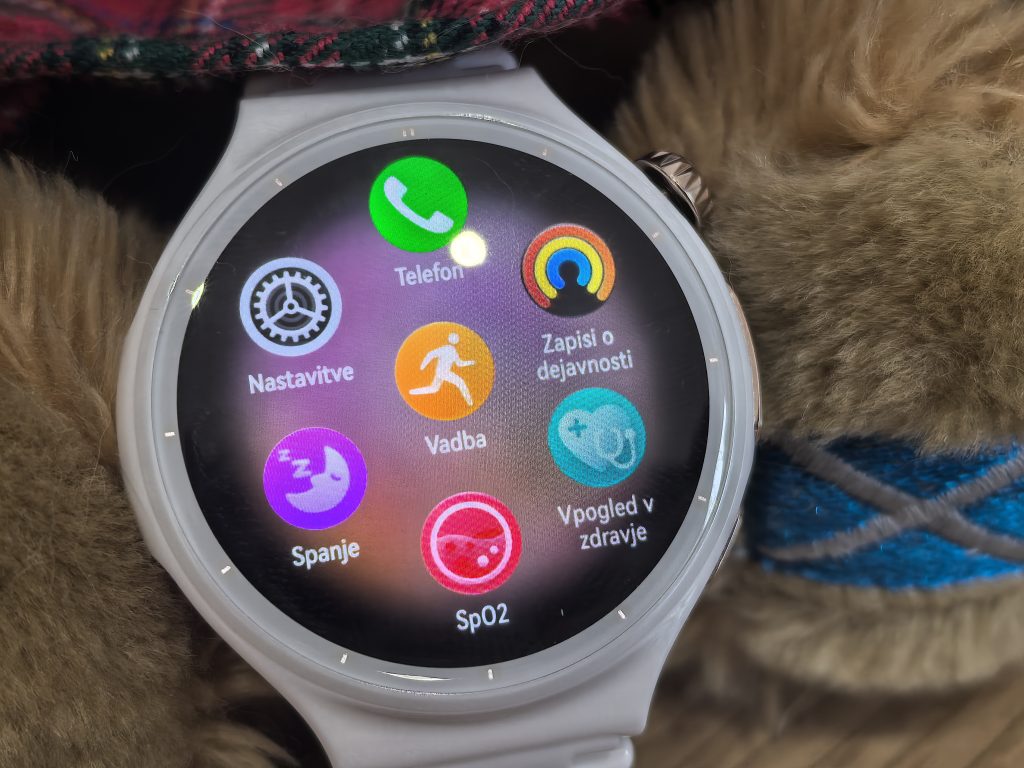
The Watch 6 Pro tracks heart rate, HRV, skin temperature, stress, sleep breathing, pulse wave arrhythmia analysis, and includes a menstrual cycle calendar. New is the Physical Readiness score (like the Watch GT 7), which combines sleep and recovery data in the morning and suggests whether the day is suitable for exertion or rest. There is also a Morning Summary and Health Insights, which shows trends by day, week, and month with graphs.
The watch also detects falls and can call for help, and the Safety Check feature shares your location and status with selected contacts.
Some days I had very accurate measurements of my sleep, with wake-ups accurate to the minute. Afternoon naps were also mostly recorded well, especially the time range. Then there was a day when the watch didn't record all my wake-ups at night. For example, I woke up five times, but the watch only detected two wake-ups. Although I stayed in bed for the other three wake-ups, I would still think that my heart rate had changed enough for the watch to realize that I was awake. For example, this happened once in a week, so it's not time to panic yet, but I hope that in the coming weeks there won't be as many of these days as I would like.
Fitness score is an interesting metric, but ultimately it doesn't affect my daily decisions. If I didn't sleep well, if I overdid my workout the day before, I still did all the typical activities the next day, even though I had a low fitness score.
The Huawei Watch 6 Pro also includes menstrual cycle tracking. It can use data you enter into the app and information from the temperature sensor. Skin temperature can change throughout your menstrual cycle, so tracking your temperature trend can be a useful addition to your calendar. However, wrist skin temperature is not the same as basal body temperature, which is used in some fertility tracking methods. The results can also be affected by environmental temperature, illness, how you wear the watch, and other circumstances.
Huawei Health is good at presenting data, but sometimes there's too much of it
Every year, Huawei Health adds something new to its already rich data portfolio. Sometimes it's a completely new measurement, and other times it's just a different, more comprehensive overview of certain data. In my opinion, the watch itself has almost all the data you need to instantly assess how you feel, what you did that day, what else you could do, how you slept, and so on. The app, if you're not too curious, is no longer even needed for most tasks. You use it most at the beginning, for example, to download some watch face, of which there are a lot in the Huawei store.
If you've never had a smartwatch before, you'll probably love browsing through different menus, looking at sleep graphs, comparing ECG results, making a report for all the sports activities you've proudly completed recently, and then eventually, at least that's always the case with me, you can forget about it because you already have all the main data on your watch. If you purchase an additional subscription to Huawei Health+, you also get access to digital coaches, pre-prepared workouts, meditation, and a bunch of other benefits. The subscription isn't too expensive, but I don't think most people will need it because you have similar information available for free basically anywhere online, especially today, when LLM can do the same for you in a matter of seconds.
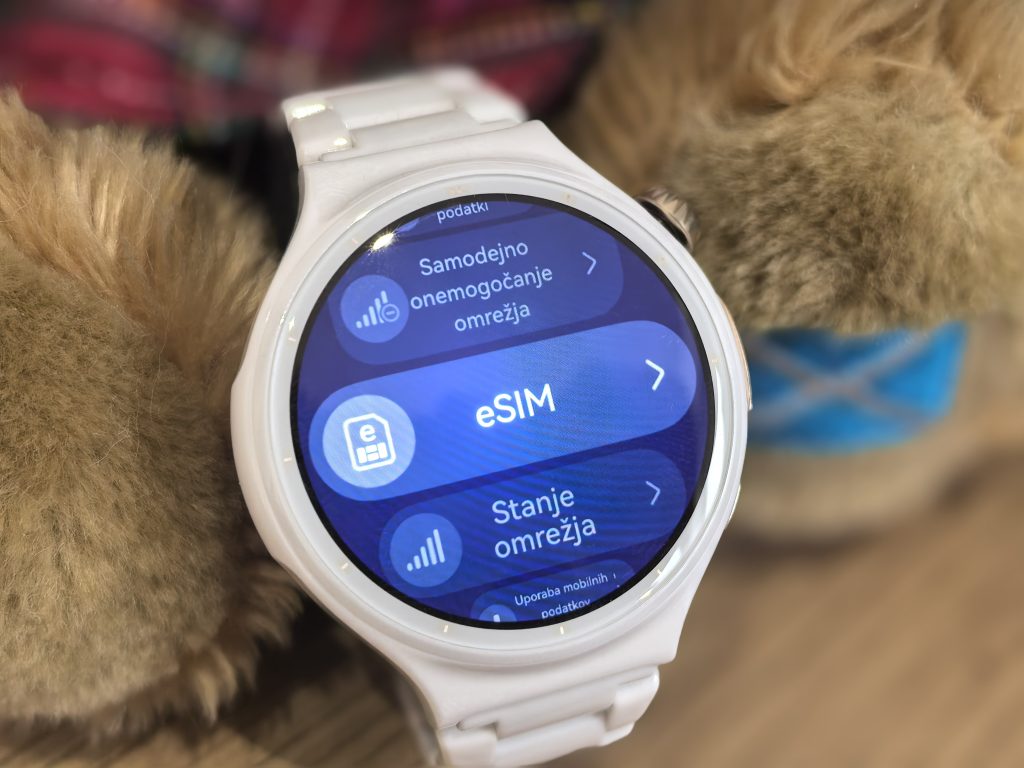
eSIM can be useful, but it also consumes battery like crazy
With eSIM, the watch can make calls and transfer data without a phone, and it also uses WiFi 6. I think all operators in our country now support having the same number on your phone and watch, but you should still check with your provider. But be prepared for this to be just another big power drain.
Contactless payments are made through Curve Pay. You need to install the app, add a card, and select Curve instead of Huawei Wallet in the NFC settings. The process is longer than with Google Pay and Apple Pay, but once it's done, it works.
Huawei AppGallery remains more modest than Wear OS and Apple Watch. There is no WhatsApp, Spotify and Google Maps cover third-party apps. The watch also comes with dual gestures (double tap, double swipe), a new wrist-turning gesture to mute a call, and connection to two phones at once, although the latter requires another device with HarmonyOS installed. The Huawei Health app for Android is not in the Play Store, it must be downloaded via the AppGallery or Huawei's website. The watch also works with iPhones.
The battery is not what we've been used to from Huawei lately
I've gotten used to very good battery life on Huawei watches. The recently launched Watch GT 7 lasts a whopping three weeks. It's not a fair comparison, as they're two different architectures and sizes, but the 3-day battery life on the Watch 6 Pro is still pretty poor. But it's still more than most of its rivals, which is more a reflection of their modesty than Huawei's excellence.
Fast charging alleviates this problem somewhat. The Huawei Watch Wireless SuperCharger 2nd generation magnetic charger with USB-C connector is included. Just about 15 minutes of charging can provide enough power for a significant part of the day, depending on how you use it. This means you can leave it on the charger for a while while getting ready in the morning or taking a shower.
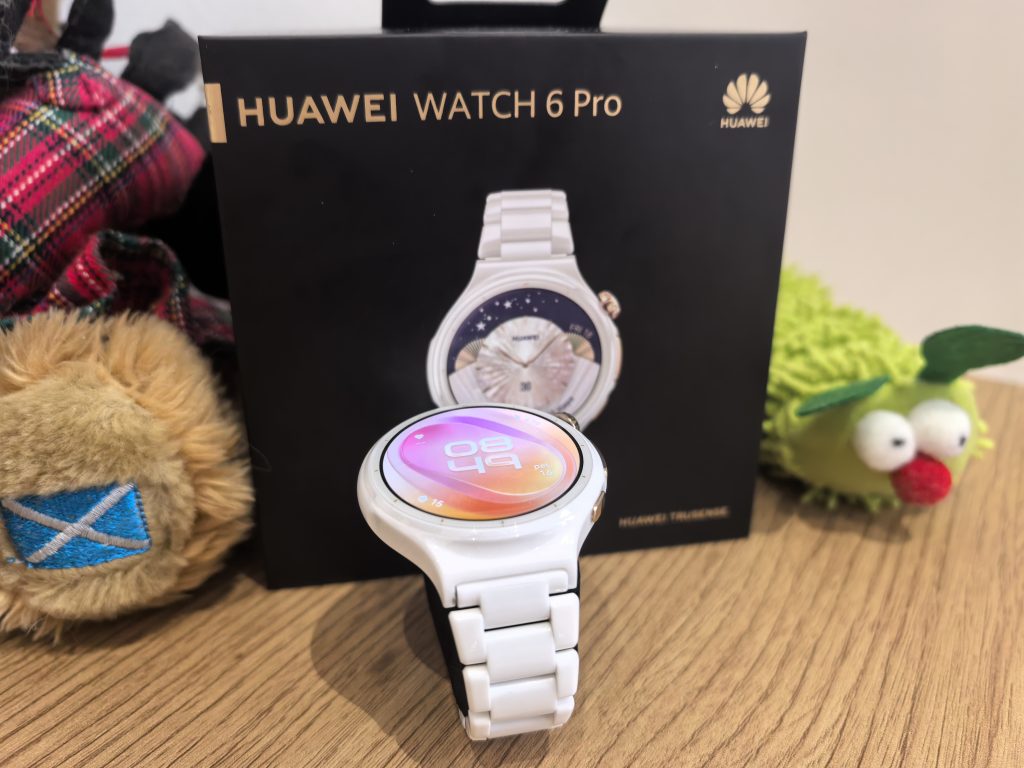
Huawei Watch 6 Pro – excellent workmanship, advanced measurements and some annoying limitations
The Huawei Watch 6 Pro in ceramic is an interesting combination of a luxury watch and modern electronics. The white ceramic, sapphire glass, and carefully crafted details create a very different impression than most sports smartwatches. I like that Huawei has retained almost the entire set of its best features despite the smaller case.
The X-TAP offers additional health metrics, extensive sleep tracking, a wide range of sports features, and dual-band satellite navigation, which is a big advantage for outdoor activities. I would also like to praise the high-quality display and the contactless payment option.
I have a couple of concerns, though. The first is the battery. Two to three days of normal use isn't a particularly bad result, but I've come to expect more from Huawei. The second is the software. The basic functions are well developed, but the selection of additional apps is still quite limited. If you expect a similar software experience to the Apple Watch or Samsung Galaxy Watch, you have to be prepared to compromise. The third is the price. Almost 700 euros is a lot for a smartwatch, especially when there are cheaper models with very similar health and sports features.
So, some concerns, but also a huge amount of benefits that can easily overshadow the negatives.
Test author: Vesna Lopatič