

Share with others:

ANTHBOT M9 Pro test: a robotic lawnmower that is not afraid of trees, shadows and narrow passages

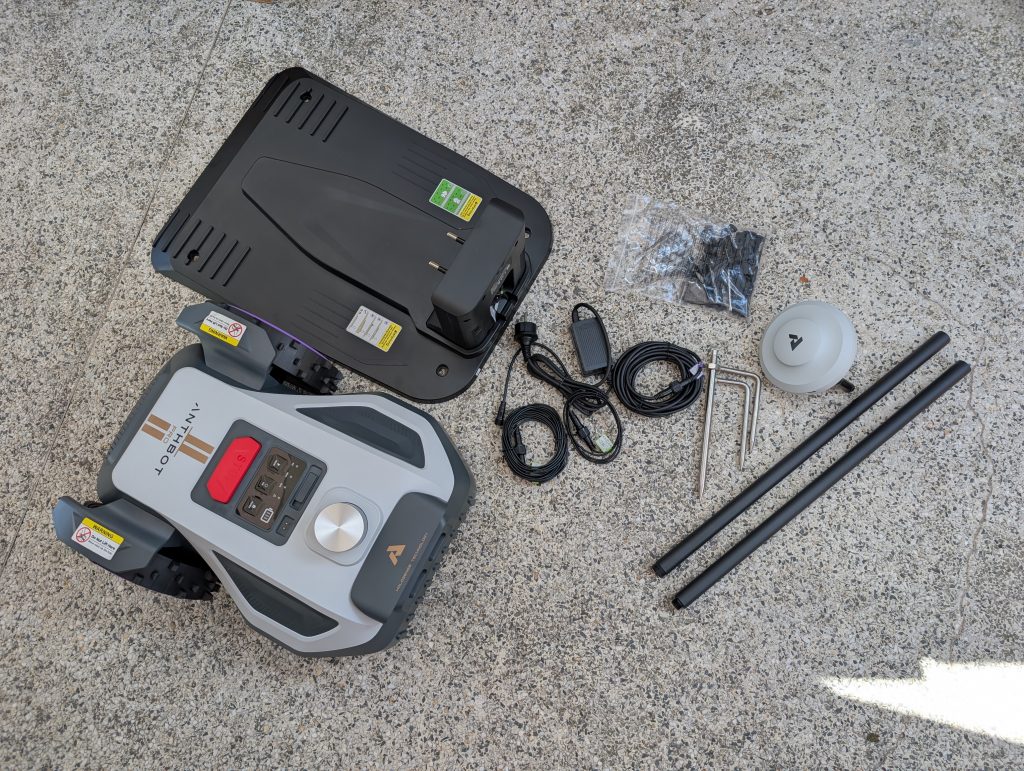
Classic models of robotic lawnmowers with boundary wires have become an endangered species, replaced by more advanced devices that use satellite navigation, cameras and LiDAR for orientation. The ANTHBOT M9 Pro excels in all of these, so I checked what it can do in practice.
On paper, it promises wireless setup, automatic garden mapping, a combination of LiDAR, RTK, NetRTK and dual cameras, mowing up to 1,000 m², electronic cutting height adjustment and a host of smart features. That doesn't sound bad for a price range just over €1,000.
Advantages
- Advanced HoloSense Navigation: Combines 360° LiDAR, RTK, NetRTK and dual AI cameras
- Without boundary wire
- Quick and easy mapping
- Neat mowing in a U-pattern
- High level of security
- Extremely quiet operation
- Built-in rain sensor, IPX6 water resistance
- Excellent value for money
Weaknesses
- Restrictions on steep slopes
- There are still a few inches of grass left along the walls and fences.
Navigation can be a problem with robotic lawnmowers, but HoloSense makes it no longer a problem
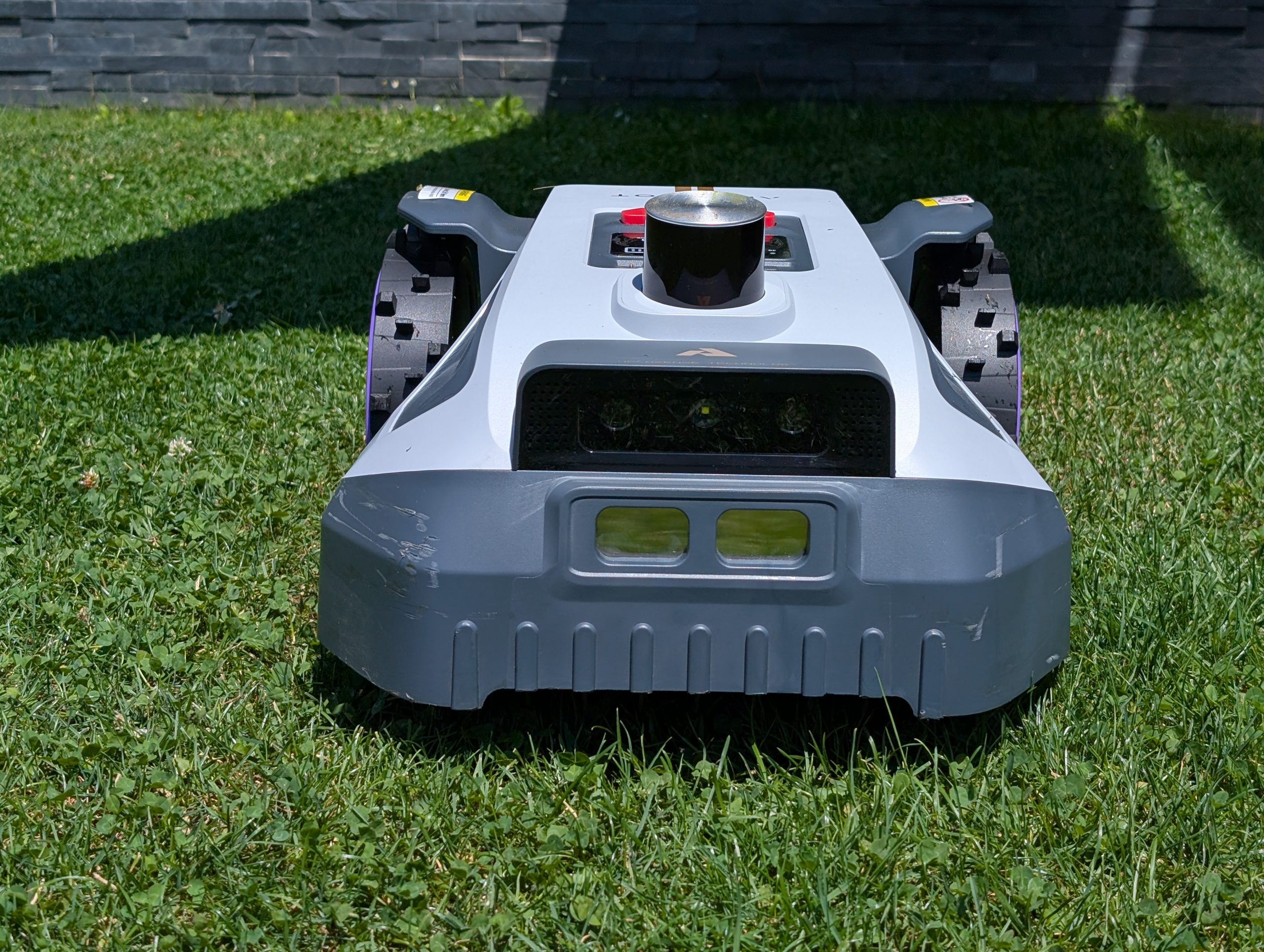
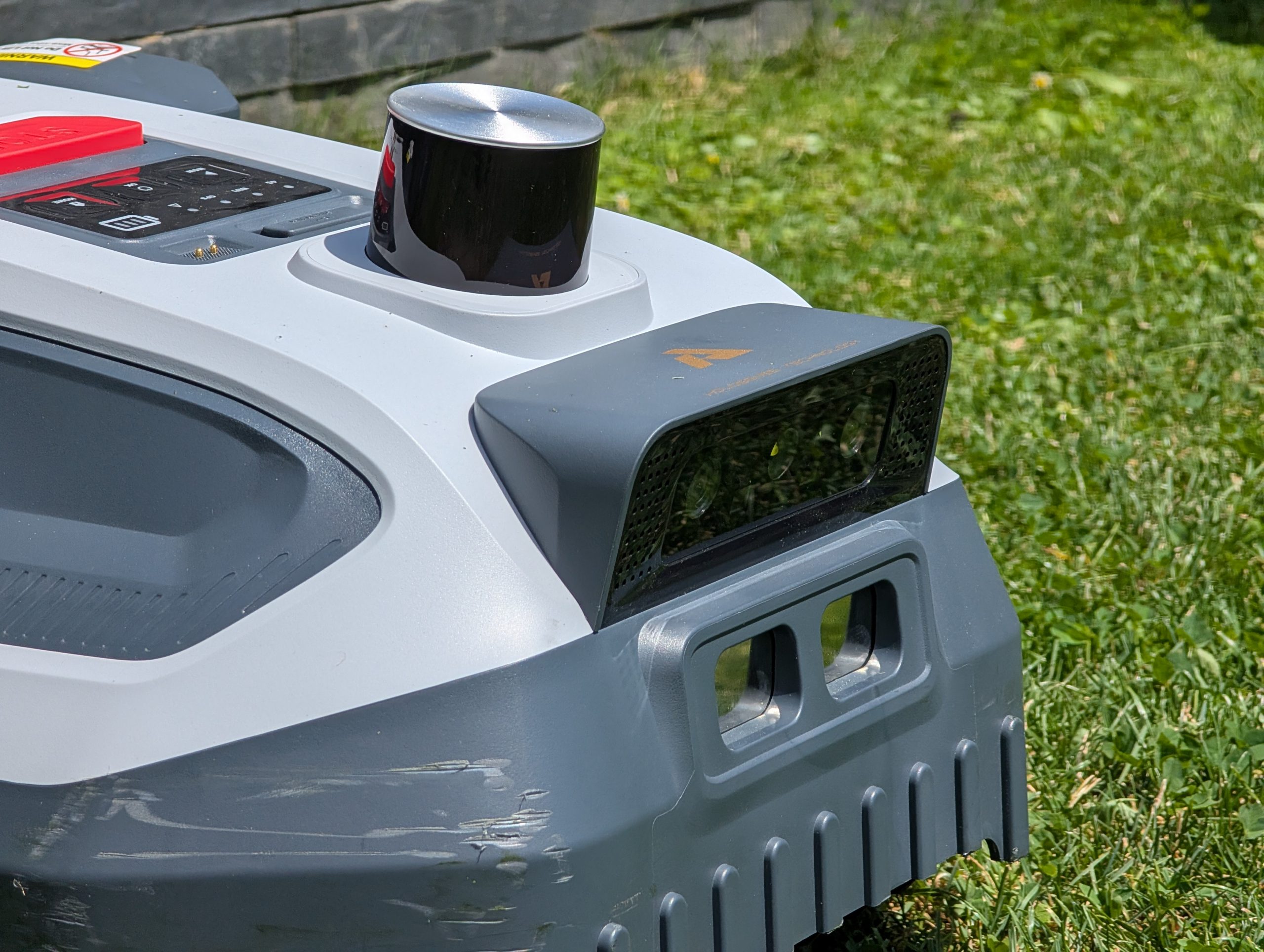
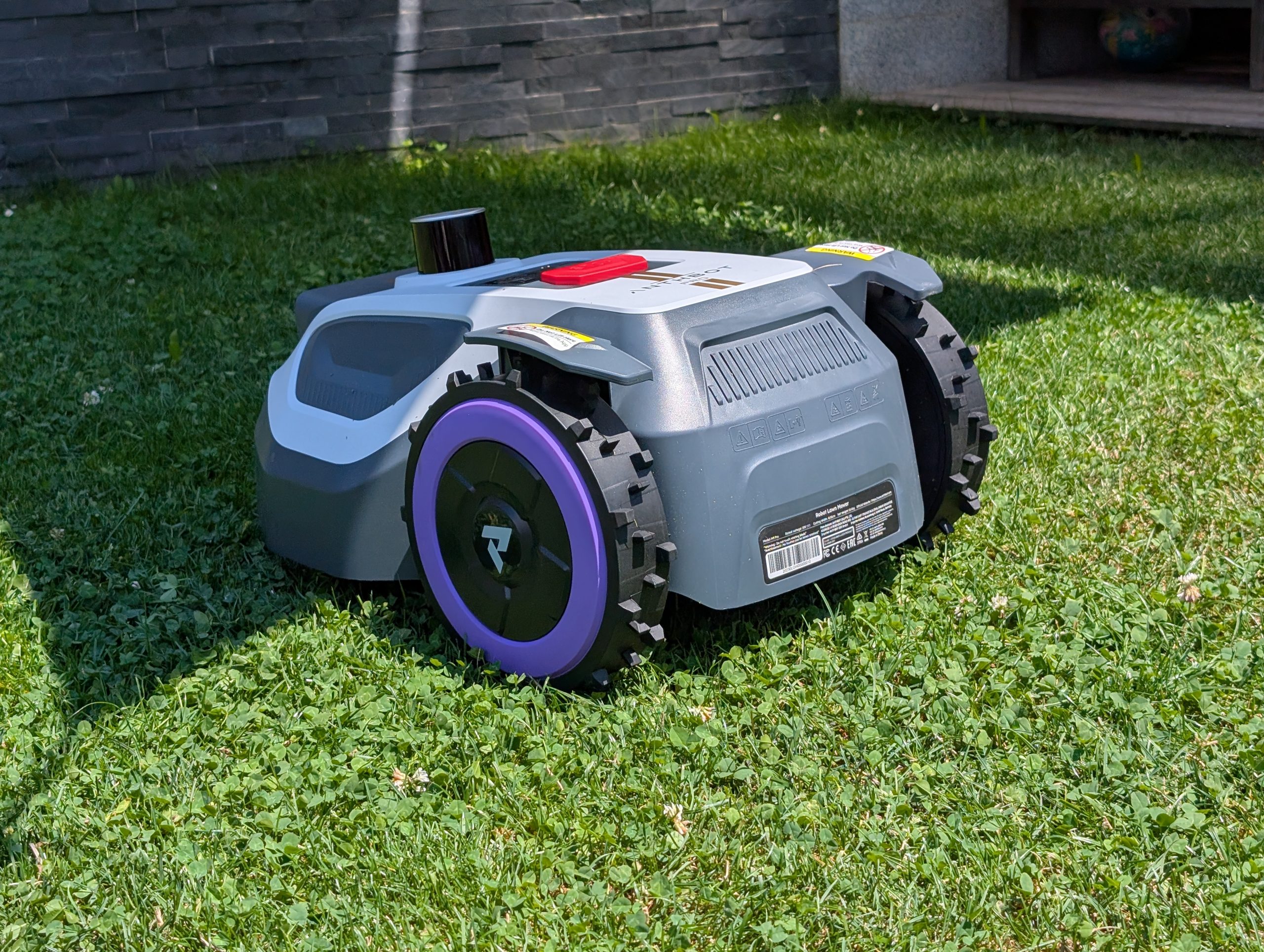
A new feature of the M9 Pro is the HoloSense Quad-Fusion navigation system, which combines the four aforementioned positioning technologies:
- 360-degree LiDAR,
- RTK satellite navigation,
- NetRTK via mobile network (optional),
- dual AI cameras.
Instead of the mower relying solely on GPS signals or cameras, it checks and combines all the information. The result is greater reliability in different environments. What I notice as a user is that it doesn't get lost, and that's very important to me.
For example, RTK mowers have problems under dense trees or next to houses where they "can't see" the antenna, so the M9 Pro's LiDAR allows for the creation of a real-time 3D map of the surroundings, which solves any potential problems.
It doesn't matter whether part of the lawn is in the open or under the canopy of trees - the mower uses the technology that is most suitable at the given moment.
It is not a given that the lawnmower will not get lost and end up at the neighbor's or on the road.
Installation without boundary wire
Let's go back a few years in time. Back then, the first concern of the user was the price of the lawnmower. For those who didn't mind paying a few thousand, the very thought of installation was likely to put them off. Laying several hundred meters of boundary wire was time-consuming, and the wire often posed a problem later on – it could be damaged when aerating or digging up the lawn.
ANTHBOT M9 Pro It does not require a boundary wire. However, it is true that technology is moving in this direction with all lawnmowers today, and the boundary wire is practically gone.
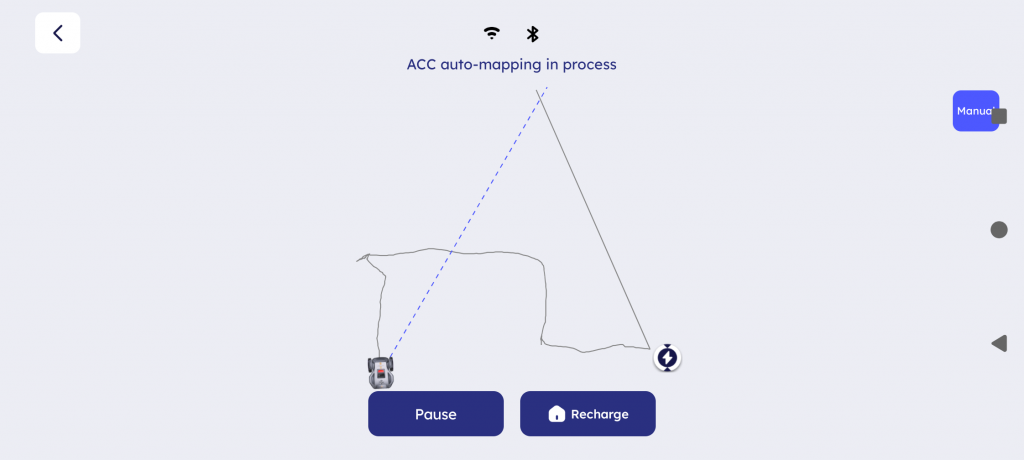
How do we define its boundaries? After placing the charging station, you create a map of the garden in the ANTHBOT app. You have two options. The mower can try to recognize the area automatically, but if this is not accurate enough, it can be guided manually along the edges.
During testing, I placed the RTK antenna on a stand designed for this purpose and in a visible place, so that the mower had contact with it almost all the time. Then I got to work. The entire process of creating a map is very quick and easy. However, I noticed that when automatically creating a map (if the terrain allows it and has logical boundaries, such as a wall, fence, tiles, asphalt) it is careful and does not take too many risks, so for example it preferred to leave a centimeter more than less near the wall. Since I wanted it to mow closer to the edge, I later corrected this manually in the application.
Even with robotic lawnmowers, the long-term results are better if you at least start working with them a little and see for yourself where they could mow better and which areas they should avoid. If you tell them, it will be easier for them and the job will be done exactly as you imagined.
Mowing is precise and neat
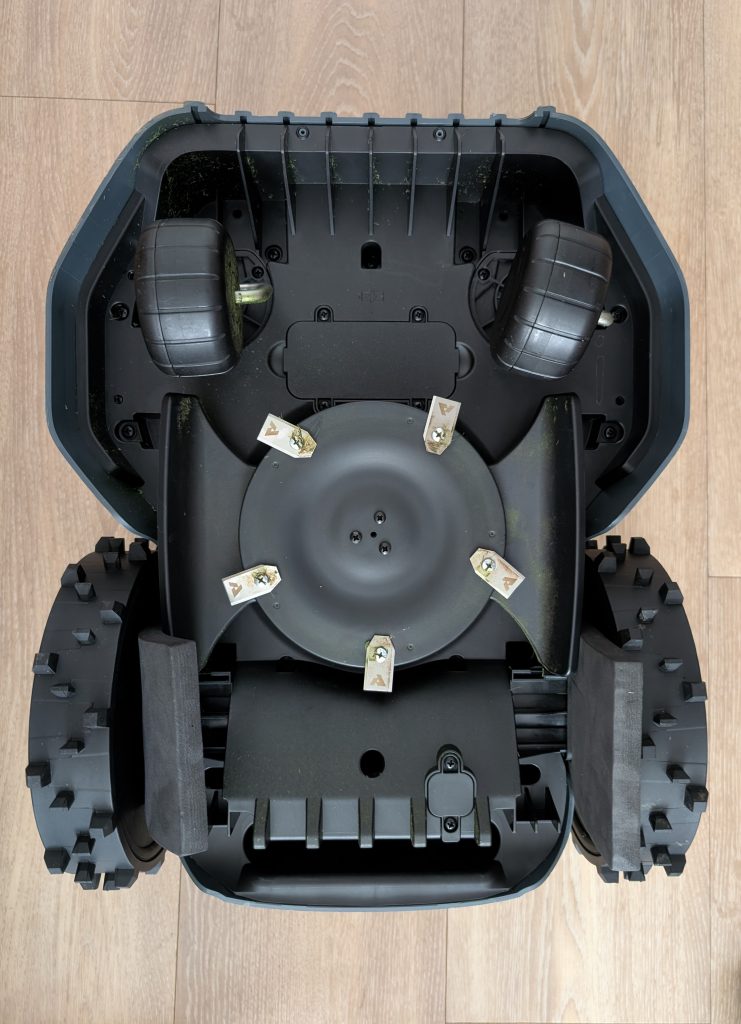
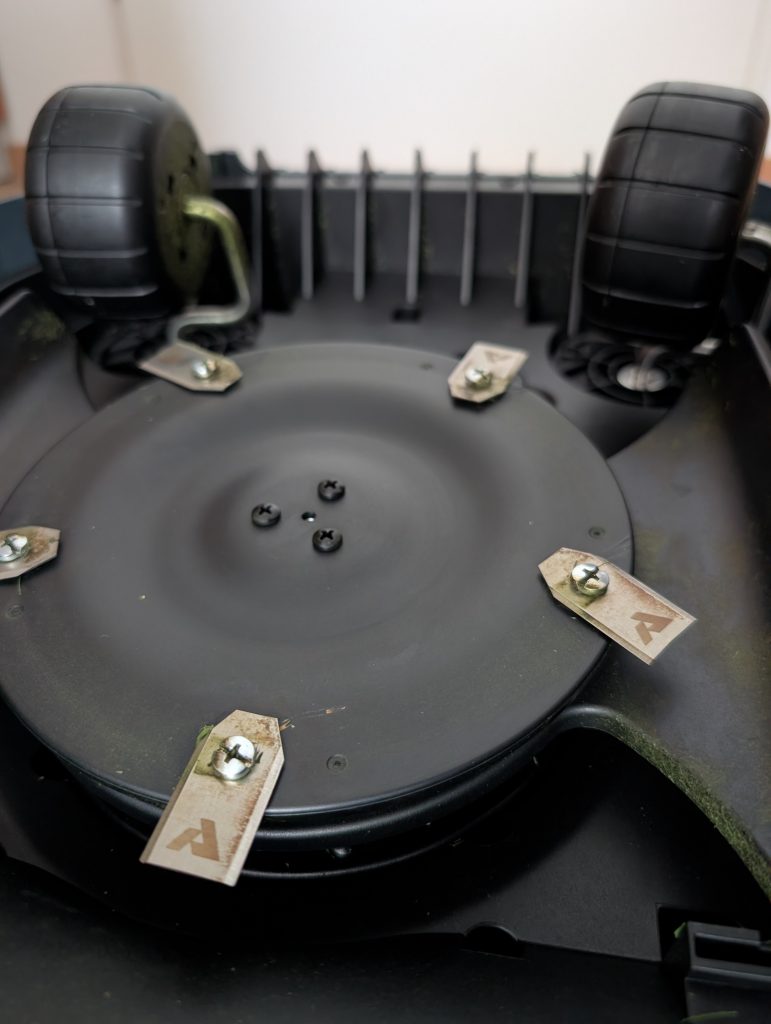
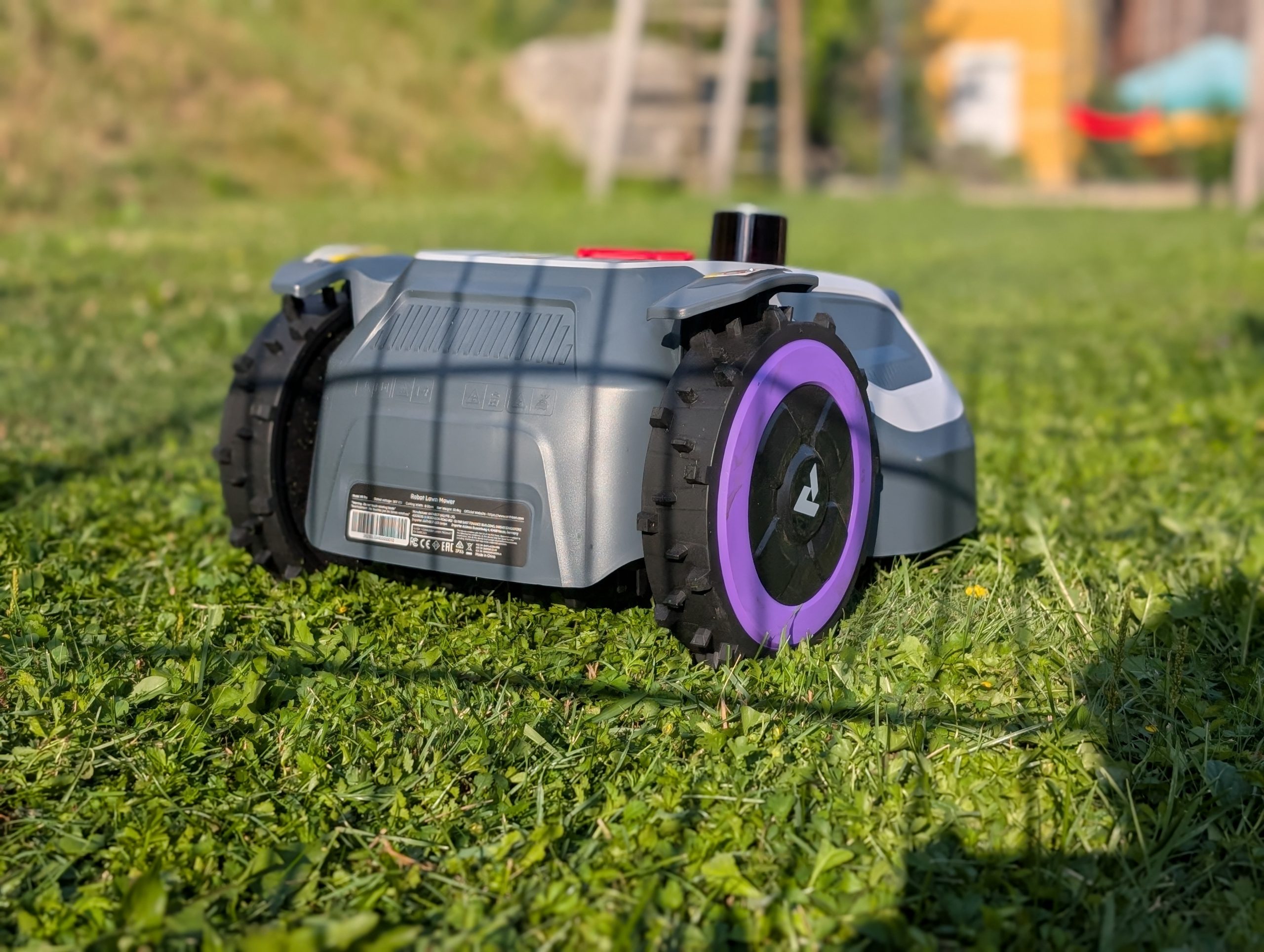
If we turn the ANTHBOT M9 Pro on its back, we see that it uses a 20-centimeter cutting disc with five rotating blades.
This is not a record width, but it is large enough for the mower to effectively cover even slightly larger areas. The five blades ensure a clean cut and the grass looks nicely and evenly cut after mowing.
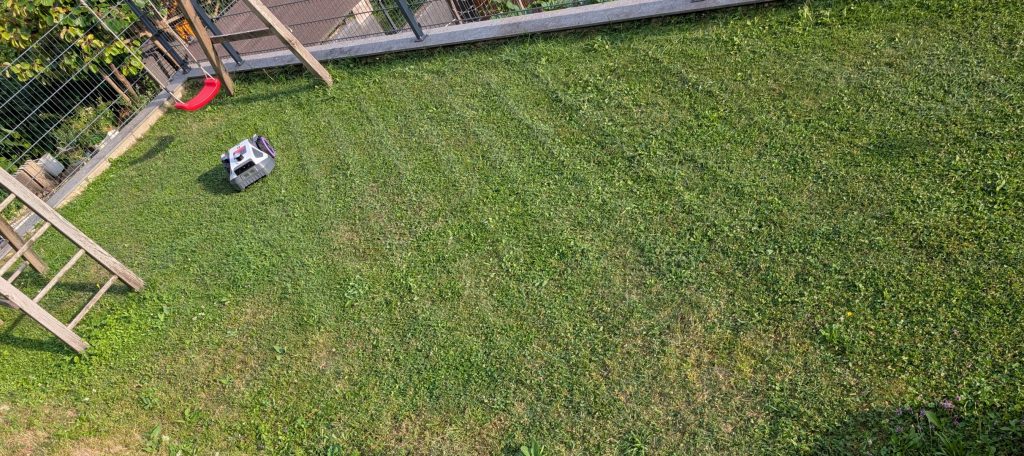
The mower uses a U-shaped cutting pattern, so the grass is not cut randomly, but in neat parallel lines. The look? Over time, it becomes as if a gardener had visited your garden a few times a week.
You can also set the mowing direction in the app, which impressed me when I first started using it. ANTHBOT Genie 800.
You can also set the cutting height in the app, so there's no need to turn the mower around and adjust it manually. You can choose from a range of 3 to 7 cm. I also mow my grass manually between 4 and 6 cm, so this is a logical range that I think will suit everyone.
EdgeWiz reduces the need for additional trimming, but does not eliminate it
Besides navigation and the possible placement of a boundary wire, uncut edges are one of the biggest problems with almost all robotic lawnmowers.
ANTHBOT has developed the EdgeWiz system, which uses LiDAR and cameras to distinguish between grass and other surfaces and tries to drive as close to the edge as possible. This means less work with a hand mower or string.
Of course, physics cannot be fooled. Since the cutting disc is not completely on the edge of the housing, a few centimeters of grass will still remain uncut next to fences, walls or high curbs. This is the case for most robotic lawnmowers on the market. However, some have already started to solve this problem with discs up to the edge or even with a line that moves out of the housing as an additional arm.
It performs well on various terrains
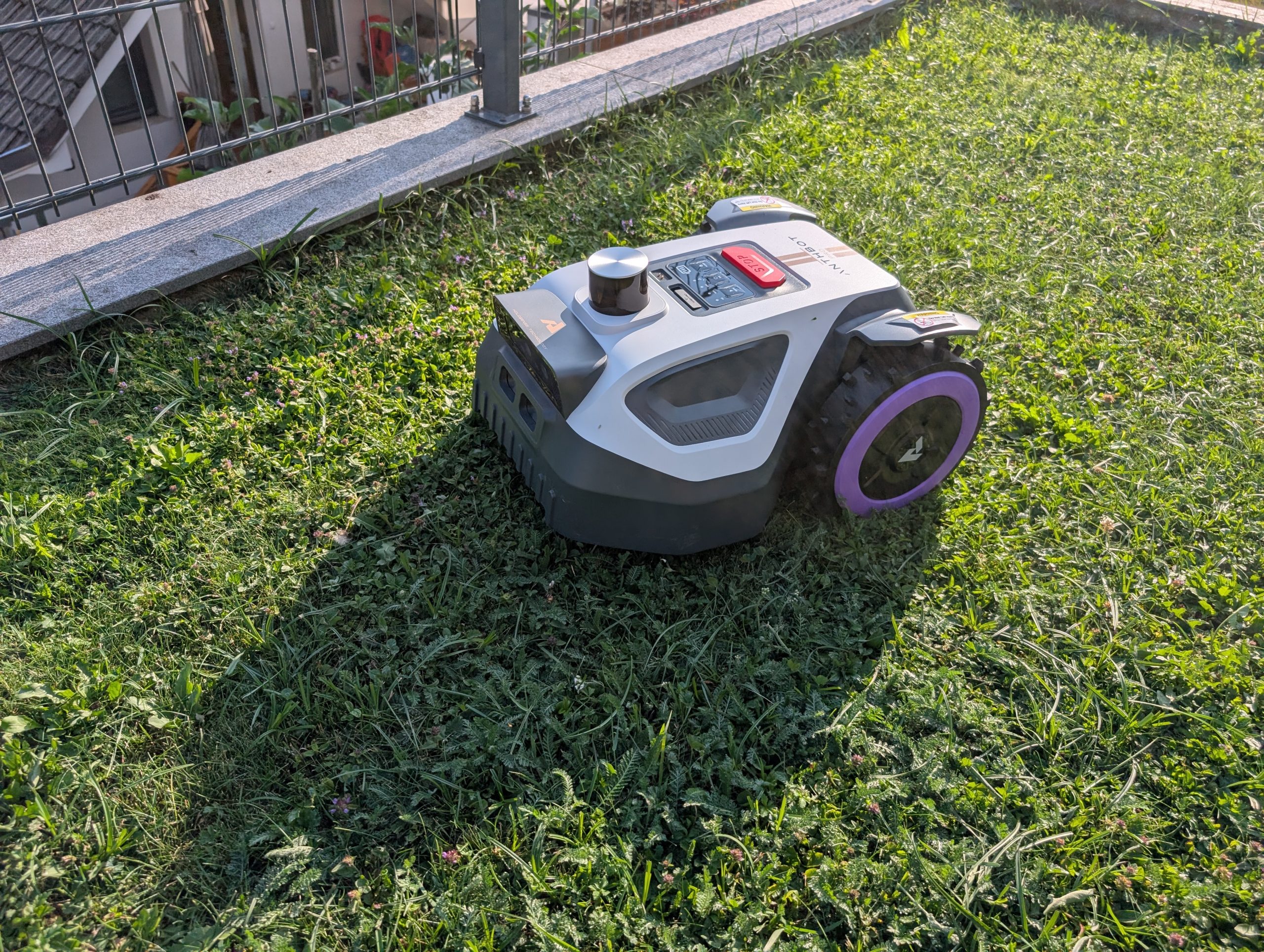
The ANTHBOT M9 Pro robotic lawnmower is designed primarily for small and medium-sized gardens. It is designed to mow up to 1,000 m². If you have a narrow passage between two plots, you can mark it on the map, it will walk through it and continue mowing. If the passage is grassy, it will mow there too. It only knows one limitation, and that is the width of the passage, which is 65 cm.
I'm always a little skeptical about robotic lawnmowers when it comes to hill climbing. On paper, it can climb up to about 45 % (24°). That's an ideal scenario. It's more realistic to think about 35 %. Of course, this hill climbing ability is reduced if the grass is wet or the terrain is uneven or "porous". This can be a challenge for it. But that's the case for most robotic lawnmowers. It also has a TCS traction control system, which comes in handy when it's going up a hill or - to make it easier to imagine - when it's driving parallel to it.
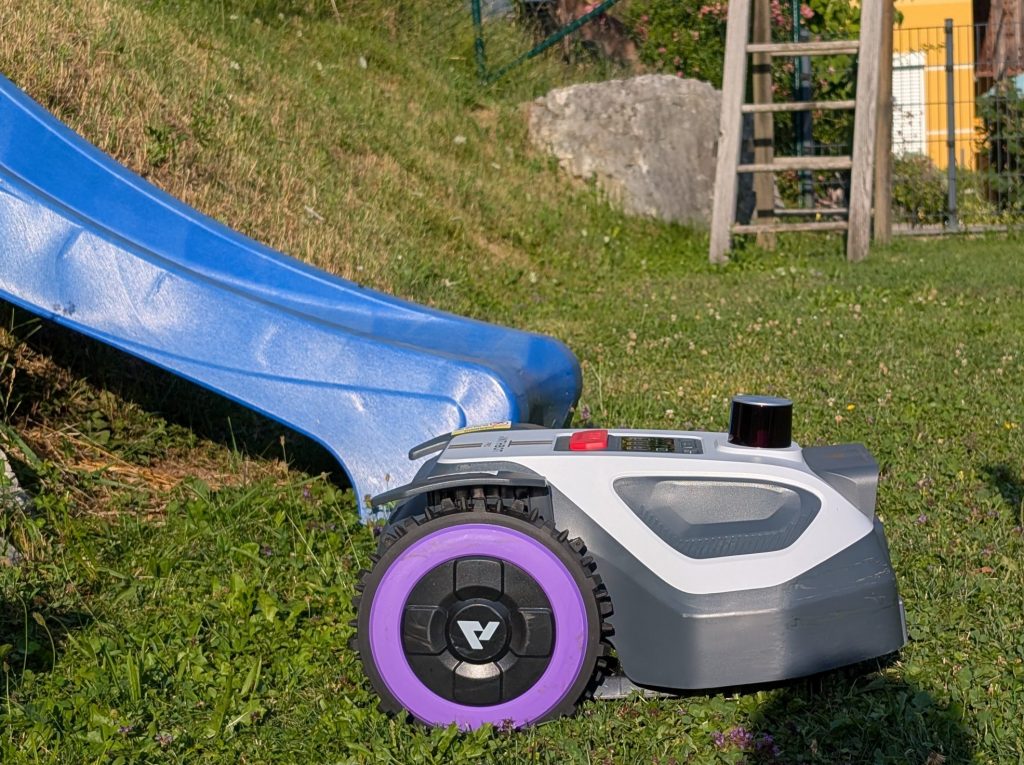
Even if it can handle less than 45 % in real conditions, as stated on paper, it covers the needs of the vast majority of Slovenian gardens.
This time, I tested the mower on a plot of land that has two flat terraces, and the rest is on a steep slope. I would say by eye that it at least approaches the 45 % limit. I have to praise the rear wheels (drive wheels), which do not start to slip and grab the slope nicely. The problem arises when it gets too steep, because the rear wheels do their job perfectly, but the front ones lose grip. That's how I managed to tip it over onto its back. The lesson of this story is that I was exaggerating a bit, but also that it will turn over sooner than it can't handle the slope. Until then, it will do its job perfectly. My estimate is that the limit is somewhere around 30, maybe 35 %.
Extremely rugged terrain with deep depressions or prominent roots can also pose problems for robotic lawnmowers. They can stop or skip a section on such terrain. But this is more a consequence of the mechanical design of the chassis, as similar problems are also known from many competing models.
It detects people, pets, tools, small objects...
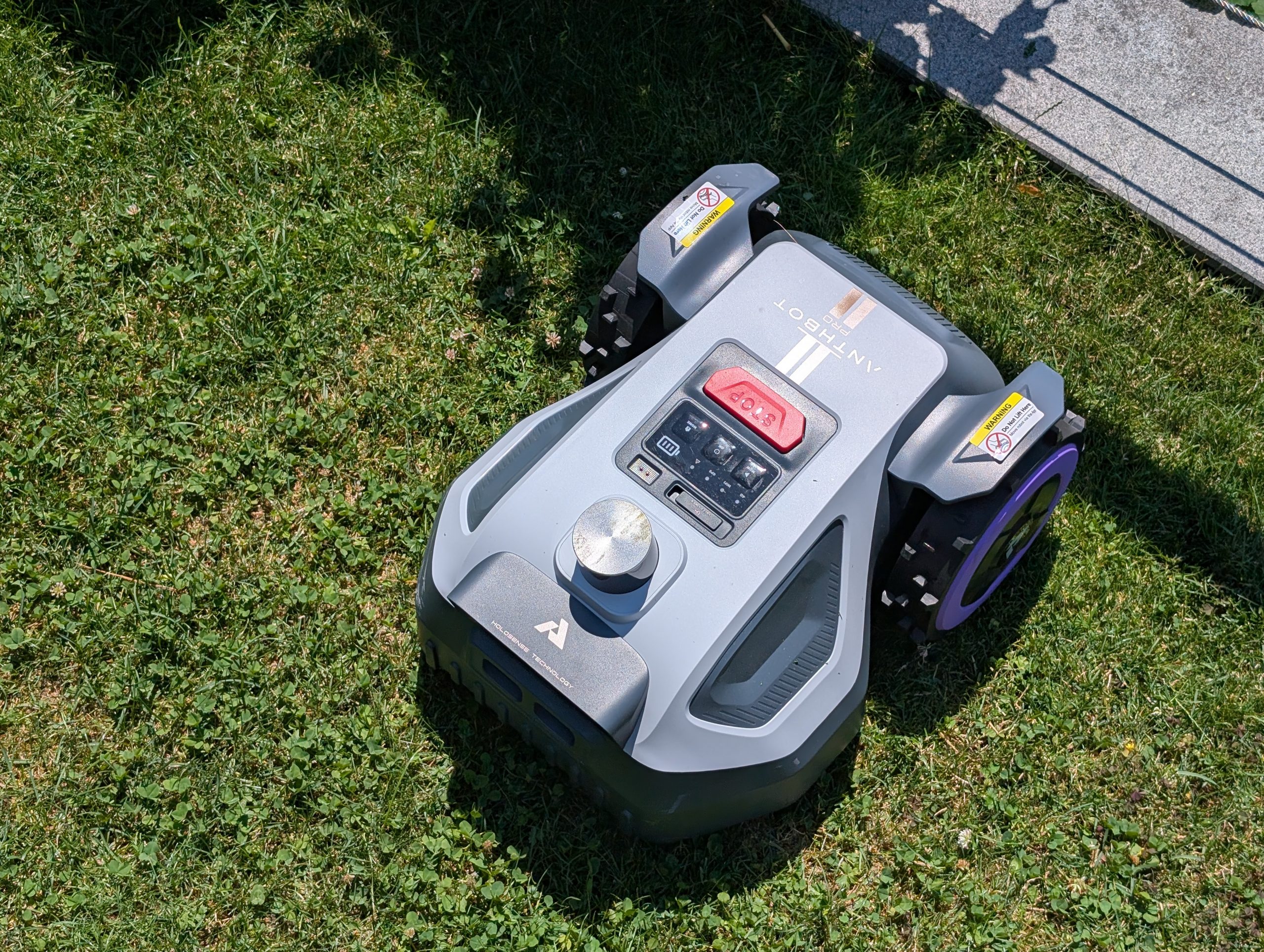
Two HDR cameras enable the recognition of various obstacles in the path. The mower detects people, pets, as well as garden equipment and small objects. This reduces the risk of collisions and increases operational safety.
I don't have pets, but I do have children, and the fact that the lawnmower doesn't just drive along a predetermined route, but constantly analyzes the surroundings is key.
You will find all the important functions in the app
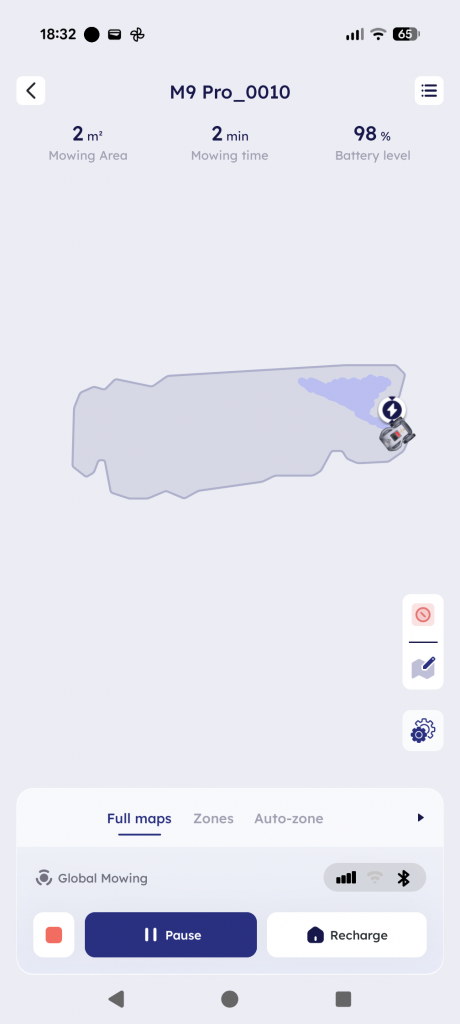
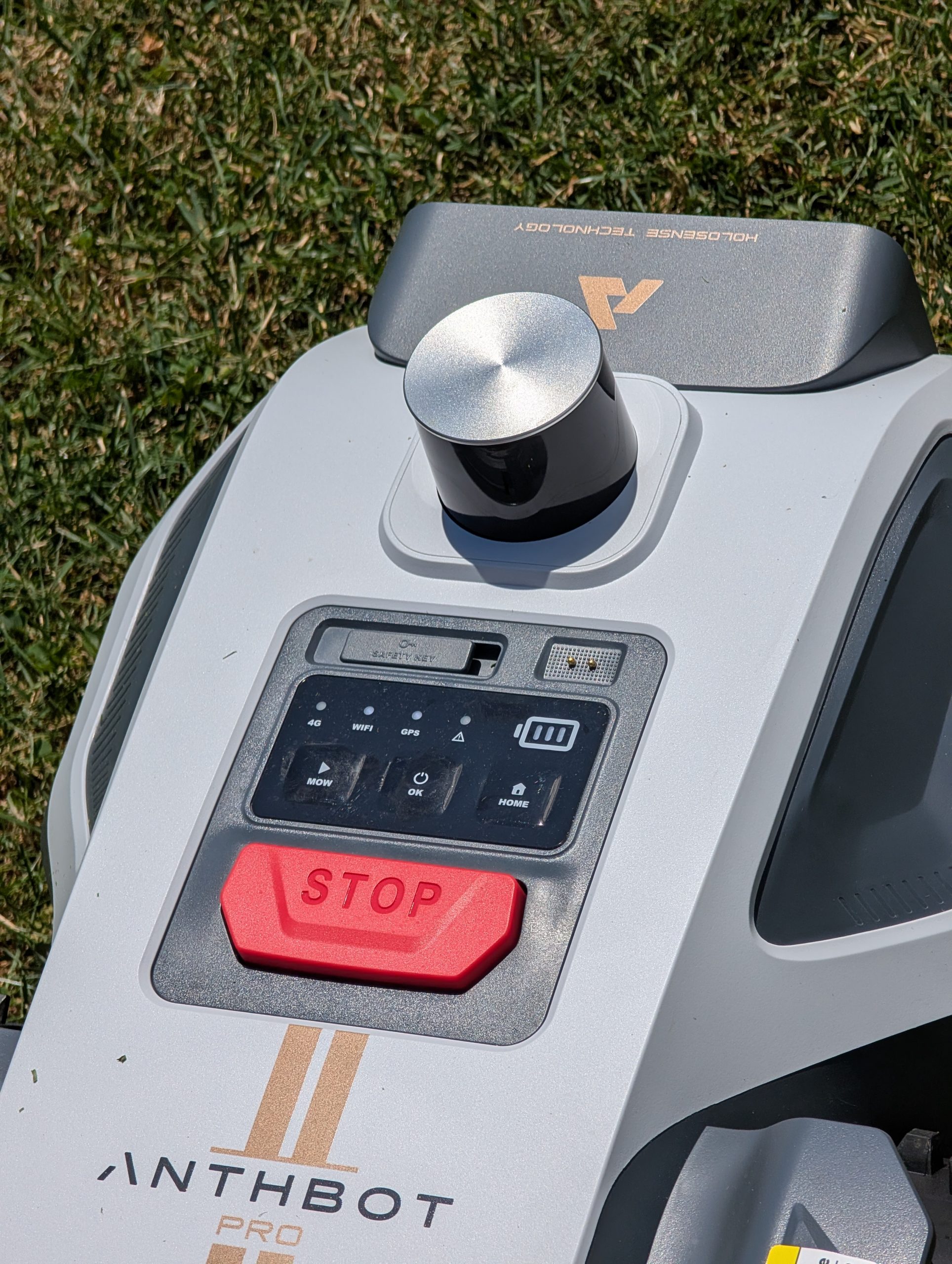
The mower is equipped with a few buttons, but the central point of control is the mobile application.
The application allows:
- map making,
- creating multiple mowing areas,
- schedules,
- choosing the mowing direction,
- cutting height adjustment,
- determining prohibited areas,
- monitoring the mower status.
Anti-theft protection, water resistance, rain sensor...
ANTHBOT has also added quite a few useful protections:
- Rain sensor: the mower automatically detects when it starts to rain and returns to the charging station. It resumes mowing when conditions are suitable again.
- IPX6 waterproof: you can wash it with a garden hose.
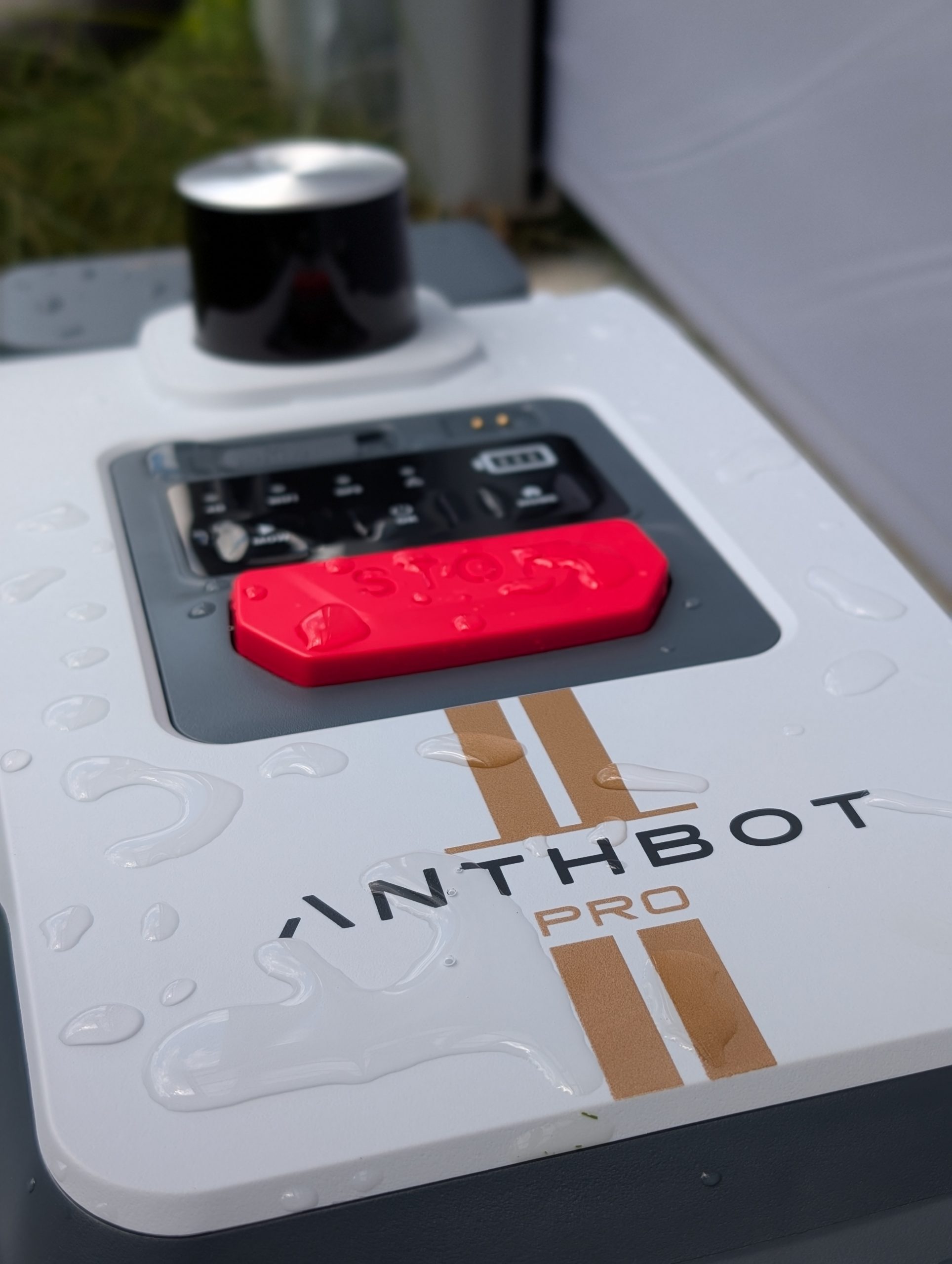
- Instant stop button: gives you the ability to quickly stop it at any time if something unexpected happens.
- Anti-theft protection: the app on your phone notifies you if the mower leaves the virtual boundary,
Robotic lawnmowers are usually really quiet, and the ANTHBOT M9 Pro is no exception. Thanks to its low noise level (less than 58 dB), it can mow early in the morning or late in the evening without significantly disturbing the surroundings.
I mowed without worry in the evening, early morning, and on Sunday, when I usually give my neighbors peace by mowing, as it is practically inaudible.
Do you have a mostly flat or moderately rolling lawn up to 1,000 m² in size?
ANTHBOT M9 Pro is a modern robotic lawnmower that builds its greatest advantage on an advanced navigation system.
It is also very easy to install, similar to ANTHBOT Genie 800The advantage of the M9 Pro in this case is also LIDAR, not just the cameras.
It also has everything else we expect from any lawn mower that we would be happy to host in our garden: electronic cutting height adjustment, effective obstacle detection, quiet operation, and a user-friendly app.
A realistic expectation is that it will achieve the best results on relatively well-maintained lawns without extreme holes and roots (otherwise – who wants a garden like that?) and that bushes, trees, trampolines, deck chairs and similar obstacles will not cause it any problems.
If you have a mostly flat or moderately rolling lawn up to about 1,000 m², the ANTHBOT M9 Pro will happily mow it every day. It does the job perfectly and easily justifies its price (a good thousand), which is among the more affordable for a robotic lawnmower.
You can see more at ANTHB websiteOT, where you can also buy the ANTHBOT M9 Pro robotic lawnmower.
The ANTHBOT M9 Pro robotic lawnmower was provided by ANTHBOT, and everything written is based on our independent testing.