

Share with others:

Statistics say you use Chrome. Have you considered switching browsers?

Why not use Chrome? If you have an Android phone, it's installed by default. On a Windows PC, you use Edge to install it. Most people have all their passwords stored in Google Vault, tabs sync across devices, and it's easy to migrate when you buy a new device. Everything seems to work the way users expect and want it to. That's why Google has over 68% of the total browser market, according to Google. StatCounterSecond is Safari (16.5 %), then surprisingly Edge (5.4 %) and only then Firefox (3.3 %), which is the first real alternative to Chrome, at least outside of Apple's ecosystem.
Why the first real alternative? Edge, Locks, Opera, Vivaldi are browsers that are alternatives to Chrome, but they are all based on the Chromium project. Firefox is based on Gecko and Safari is based on WebKit, so technically they are the only technological alternatives to Chrome.
What is Chromium and how does it power the web?
Chromium is an open-source project led by Google that forms the basis of the Chrome browser. Within Chromium are two key building blocks. Blink, which is responsible for rendering web pages, i.e. converting HTML, CSS and JavaScript into the image we see on the screen, and V8, Google's JavaScript engine. Blink was created in 2013 as a fork of Apple's WebKit engine, so the two still share common roots.
Because Chromium is open source and Google is investing a lot of resources into it, almost every other browser company has adopted it. Microsoft Edge abandoned its own EdgeHTML engine in 2020 and switched to Chromium. The same goes for Opera, Vivaldi, Brave, and Samsung Internet. So, technically, all of these browsers are “suits” on the same foundation. They have different interfaces, different default settings, and different business models, but the same code is rendered inside the page. This explains why websites on Chrome, Edge, Opera, and Brave work practically identically, and why extensions from the Chrome Web Store mostly work on all of these browsers.
Why are there so few real alternatives?
Why are there only three truly independent engines, Blink (Google), Gecko (Mozilla), and WebKit (Apple), and almost nothing else? The browser is one of the most complex software categories in the industry. It is tens of millions of lines of code that must implement hundreds of long and constantly changing specifications, HTML, CSS, ECMAScript, WebGL, WebGPU, WebRTC, Web Audio, DRM via Widevine, and much more. In addition, the engine must endure an aggressive security model (sandboxing), as code from millions of untrusted sources is executed in the browser every day.
A good example is the Ladybird project, led by SerenityOS creator Andreas Kling. Ladybird is building a completely new engine without a single line of code from Blink, WebKit, or Gecko, which makes it extremely unique. The project currently employs around seven full-time developers, is funded by the non-profit organization Ladybird Browser Initiative, and is scheduled to release its first alpha version in the summer of 2026. So, after several years of work, it has cost, according to rough estimates by some industry commentators, tens of millions of dollars in investment in development power alone.
A similar but more narrowly focused project is Servo, originally started by Mozilla and now developed by the Linux Foundation Europe as an embedded engine, rather than a full-fledged browser for end users. These two examples illustrate why virtually no one has seriously attempted to build a completely new engine in the last fifteen years. The cost is enormous, the standards are a moving target, and the three existing engines are so advanced that it is difficult to catch up, let alone surpass them.
How do browser drives work and how do they differ?
All three engines (Blink, Gecko, and WebKit) roughly follow the same page processing pattern, differing in the execution of individual steps.
When the engine receives HTML, it parses it into a DOM (Document Object Model) tree structure. In parallel, it parses the CSS into a CSSOM, merges the two trees into a so-called "render tree", calculates the exact placement of each element, and finally draws the pixels and assembles them in layers. Most engines leave this last step to the graphics card to relieve the processor.
The differences are mainly evident in the JavaScript engines. Blink is powered by Google's V8. The code is first converted to bytecode via the Ignition interpreter, and frequently called functions (hot code) are subsequently translated into machine code (JIT, just-in-time compilation) by the TurboFan optimizing compiler.
Gecko is powered by SpiderMonkey, which goes through a similar cycle of base interpretation and JIT optimization (Ion/Warp). Mozilla rewrote part of the page style calculation system (called Stylo or Quantum CSS) in Rust, which allows for parallel CSS calculation on all processor cores at the same time. This is one of the few technologies that Gecko inherited from the experimental Servo project.
WebKit uses JavaScriptCore with a multi-stage system of JIT compilers (LLInt, Baseline, DFG, FTL), which optimize the code progressively more aggressively depending on how many times each part is actually executed.
Architecturally, all three are now based on a multi-process model. Each tab or even each individual domain runs in a separate operating system process, which prevents a malicious page from accessing the memory of other tabs through a single vulnerability. Chromium was the first to introduce this type of site isolation as a direct response to the Spectre class vulnerabilities in 2018. Mozilla introduced a similar approach under the name Fission a few years later, and WebKit is gradually spreading its version (WebKit2) mainly to macOS and iOS.
Also worth mentioning is the Interop project, in which Google, Mozilla, Apple, and other partners have been participating since 2020. Every year, they agree on a list of functionalities that should work the same on all three drives, and they publish their progress publicly. It is a direct response to years of web fragmentation, when the same page looked and worked differently on different browsers.
Finally, it's worth highlighting a special feature that many people overlook. On the iPhone and iPad, regardless of which browser I install, every app must use WebKit internally, because Apple's App Store requires developers to do so.
The European Digital Markets Regulation (DMA) formally ordered Apple to lift this restriction in March 2024 and allow Blink or Gecko, but Apple has put up so many additional contractual and technical hurdles, including requiring the company to develop and maintain a completely separate version of the app for EU users, that neither Google nor Mozilla has actually offered their engine on iOS to date. In April 2026, the British regulator CMA ruled that Apple must lift the restriction entirely by January 2027, which is likely to accelerate changes in the EU as well. Until then, Chrome and Firefox on the iPhone are technically just Safari with a different interface, not actual Blink or Gecko.
Why is Chromium so dominant?
There is a lot of diversity within the Chromium family, although they all share the same foundation for rendering pages.
Chrome remains by far the most widely used browser in the world. The current share (68 %) is even its lowest share since 2020. Its popularity stems primarily from its close connection to the Google ecosystem. Syncing with a Google account, saving passwords, bookmarks and history is transferred between devices, and integration with Gemini features is increasingly prominent. Edge is Microsoft's default browser on Windows, which ensures it a steady influx of users who do not even change their default browser. In addition, it offers Copilot and MS365 integration, vertical tabs and similar features.
Opera and Opera GX stand out with their built-in free VPN and messaging side panels (WhatsApp, Telegram), while Opera GX targets gamers with its RAM and CPU usage limiter. Vivaldi, founded by Opera co-founder Jón von Tetzchner, is known for its extreme interface customization, from tab grid layout to built-in notes, and appeals primarily to more technically demanding users who want control over every detail.
Is Firefox really a non-profit project?
The Mozilla Foundation is an American non-profit organization with 501(c)(3) status, registered in California. However, Firefox is not directly developed by the foundation, but by Mozilla Corporation, a tax-exempt company formed in 2005 and 100% owned by the foundation. Mozilla Corporation employs developers, coordinates the releases of Firefox and Thunderbird, and enters into commercial agreements, including partnerships with search engines (Google pays Mozilla a significant sum to remain the default search engine in Firefox). Mozilla Corporation's revenue was estimated at around $680 million in 2024.
In short, the umbrella organization is non-profit and sets the mission and ethical guidelines, while the operating company under it is formally for-profit, because this allows it flexibility in its operations, which is limited for non-profit organizations under American law. All of Mozilla Corporation's profits are structurally returned to the foundation's mission. It is therefore a hybrid structure, not a classic non-profit project in the narrow sense of the word, but also not an ordinary commercial company without supervision.
Why are people looking for alternatives to Chrome?
The single biggest driver of the move away from Chrome in the last two years has been the transition to Manifest V3. This is a new extension architecture that replaced the webRequest API with the more limited declarativeNetRequest.
This made a big difference for ad blocking systems. Instead of dynamically intercepting traffic in real time, the extension can only work via pre-declared rules, which were initially limited to about 30,000 (later expanded to about 330,000). Google removed the full version of uBlock Origin from the Chrome Web Store at the end of 2024, and in July 2025, with Chrome 139, it finally disabled all remaining Manifest V2 extensions, including for businesses. An alternative, Manifest V3-compatible version, uBlock Origin Lite, achieves a significantly lower ad blocking rate compared to the full version according to independent tests. The author of uBlock Origin, Raymond Hill, explicitly recommends Firefox as the only browser where his tool works at full power, but partially full functionality also remains on Bravo.
In addition to Manifest V3, users are also being driven away from Chrome by the browser's increasingly tight connection to their Google account, the extensive collection of telemetry and data for the advertising ecosystem, and the general unease with the fact that a single actor (Google) physically controls the engine that drives by far the largest share of web traffic, through Blink, and thus has a disproportionate influence on which web standards the industry adopts.
Brave: attractive privacy, with a controversial background
Brave is a Chromium browser founded by Brendan Eich, the co-author of the JavaScript programming language and former Mozilla CEO who left in 2014. Brave features built-in ad and tracker blocking (Shields), its own search engine with an independent index, a cryptocurrency wallet, and a Leo assistant UI. For many, it's the ideal combination of privacy and the convenience of the Chrome ecosystem.
I used it myself for quite some time until I came across its controversial past.
When Brave launched in 2016, it announced that it would replace publishers' ads on visited pages with its own ads and share revenue with them, without the publishers' consent. A group of seventeen major media outlets, including the Wall Street Journal and the New York Times, sent Bravo a formal warning before a lawsuit, calling the practice an illegal appropriation of their content.
In 2018, the BAT token rewards system allowed users to send “tips” to websites and content creators who had not even signed up for the system and were unaware of it. The interface displayed the creator’s name and photo, giving the impression of direct support, but the money remained with Bravo until they could later sign up. After public outcry, the company changed its policy so that tips can no longer be sent to unregistered creators.
In 2019, users discovered a list of exceptions in the source code that allowed some Facebook and Twitter tracking scripts to operate despite tracking protection being enabled. Brave explained that this was a technical necessity to maintain the functionality of the Facebook share and login buttons, which is partly true, but communication about this exception was not transparent until users discovered it themselves.
In 2020, the autocomplete feature in the address bar silently added Bravo’s affiliate code when a user typed in the address of a well-known cryptocurrency exchange, such as Binance, Coinbase, Ledger, or Trezor, without any notification. Brendan Eich publicly called this a bug and fixed the feature within days, but the incident further reinforced the impression that the company, which markets itself as a privacy advocate, was quietly monetizing users’ everyday actions.
The most recent episode of this story is unfolding right now. A few months ago, News Corp, the owner of the Wall Street Journal and the New York Post, filed a countersuit against Bravo, claiming that Bravo's web crawlers operate covertly, so that publishers cannot detect or block them, and that Brave sold their copyrighted content to artificial intelligence companies before March 2025. Brave had previously filed its own lawsuit against News Corp, claiming that indexing and displaying summaries fall under fair use.
What all of these cases have in common is that they have generally been fixed after public pressure. But it is precisely the recurring pattern, from ad replacement, through non-transparent handling of user money and tracking exceptions, to the silent monetization of the address bar and now the dispute over data for artificial intelligence, that is the reason why I personally do not trust Bravo unconditionally, even though it is a technically capable and fast browser.
Which browser do I use?
There is no honest answer as to which browser is the “right” one. Every choice involves a trade-off between privacy, convenience, and compatibility. I recently settled on Waterfox, a fork of Firefox based on the same Gecko engine and therefore fully compatible with extensions from the official Mozilla store, including the full version of uBlock Origin. Waterfox has been an independent project under the British company Waterfox Limited since 2023, after being owned by the advertising company System1 for several years. Waterfox recently built its own ad blocking system into the browser, which uses the same open source Rust engine adblock-rs in the background that Brave uses in its Shields, but without the rest of Brave's business infrastructure around it.
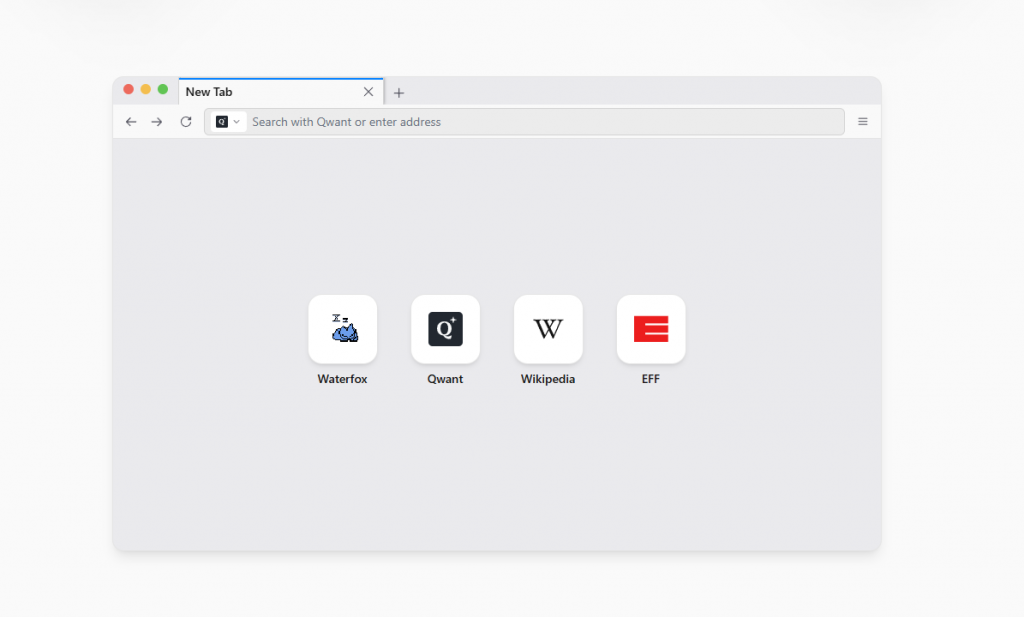
The result is a telemetry-free browser that is relatively fast and memory-efficient, and strikes a good balance between privacy, usability, and the absence of hidden business interests, at least in my experience so far. I still have one Chromium browser (Vivaldi) as a backup for when a particular web service simply requires Blink. Results may vary for everyone.
The overall conclusion I've come to after all this research is simple. The engine under the hood says far less about whether a browser is right for me than the business model of the company behind it. It's worth taking the time to do this part of your homework, as priorities (speed, privacy, extensions, syncing) vary greatly from user to user.
| Browser | Drive | Open source | Full uBlock Origin | Business model |
|---|---|---|---|---|
| Chrome | Blink (Chromium) | Partially | No (Lite only) | Advertising and data (Google) |
| Edge | Blink (Chromium) | Partially | No (Lite only) | Microsoft/Windows ecosystem |
| Opera / Opera GX | Blink (Chromium) | Partially | No (Lite only) | Advertising, partnerships |
| Vivaldi | Blink (Chromium) | Partially | No (Lite only) | Search partnerships |
| Locks | Blink (Chromium) | Yes | Yes | Crypto rewards, search API, advertising |
| Firefox | Gecko | Yes | Yes | Search partnerships (Google pays for the default search engine) |
| Waterfox | Gecko | Yes | Yes | Independent, minimal monetization |
| Ladybird (in development) | LibWeb (independent) | Yes | Not available yet | Donations, non-profit foundation |