

Share with others:

Swedish researchers find solution to extend battery life in electric cars

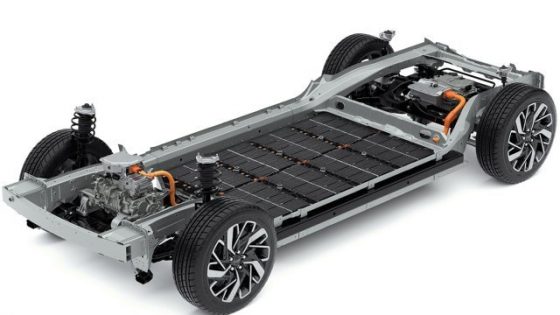
Manufacturing variations and uneven aging cause some cells in a battery pack to lose capacity more quickly. In a traditional fixed-link system, this means that the entire vehicle must adapt its performance to the cell that is in the worst condition. The researchers compare this to a group of hikers tied together by a rope, where the entire group must move at the speed of the slowest member.
The new system solution, called “adaptive” or “reconfigurable battery packs,” allows the connections between cells or groups of cells to be changed using switches and control systems. When an individual cell begins to limit its performance, the system simply removes it from the circuit, allowing the rest of the battery pack to continue operating. Data shows that idealized control at the individual cell level can extend battery life by more than 20 percent in high-voltage vehicles. In practice, control at the cell group level is more likely to be used, which simplifies the hardware but has a slightly smaller effect.
Modeling results for an electric car with an 80 kWh battery and driving 12,000 kilometers per year show that the need to replace the battery pack could be postponed by about 14 months. While a conventional battery would need to be replaced after ten years, the flexible architecture would only reach the same level of wear after about eleven years. Since the benefits are more pronounced with a larger number of cells connected in series, the technology is particularly interesting for high-voltage, long-range vehicles and electric trucks.
A techno-economic analysis shows that the additional investment in switches and control electronics can be recovered. The system is economically justified if the additional production cost does not exceed approximately 7 percent and the vehicle travels less than 12,150 kilometers per year.