

Share with others:

Electric car charging is now measured in seconds, not minutes

The race to develop batteries for electric vehicles has entered a whole new era. Chinese manufacturers are no longer competing to see who can charge a battery in less than half an hour, but every second counts. Geely Group subsidiary Lynk & Co. has therefore introduced a series of vehicles with a “Golden Brick” battery, which allows charging from 10 to 70 percent of capacity in just 4 minutes and 22 seconds. Competitor BYD, with its “Blade 2.0” technology, needs about 5 minutes to reach the same percentage.
But the innovations don't stop there. The world's largest battery manufacturer CATL has unveiled a light-duty vehicle battery that can charge from 10 to 80 percent in an almost unbelievable 3 minutes and 44 seconds. Although this battery has not yet been installed in a production vehicle on the road, it is a fully completed product in the real-world testing phase. FAW has announced a battery that can reach the same range in 3 minutes and 41 seconds. The common denominator of all these announcements is clear: China has switched to measuring charging times in seconds.
Such fast charging brings huge benefits. In addition to the convenience for drivers, the extremely high charging power means a higher flow of vehicles at each charging station. This reduces the need for a large number of charging points and surfaces, which is especially crucial in dense urban environments where many do not have the option of charging at home.
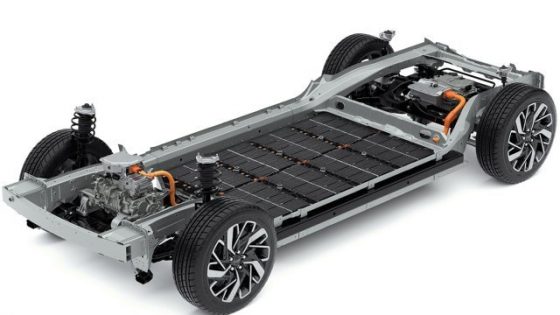
While China is setting new benchmarks, the situation is quite different elsewhere in the world. In the United States, the fastest vehicles are those based on the Hyundai/Kia E-GMP platform, which take around 18 minutes to charge from 10 to 80 percent. The upcoming Mercedes AMG GT EV is expected to do so in around 11 minutes on a 600 kW charger, but it is a prestigious model with a price tag well over 100,000 euros, while Chinese cars with fast charging are available for less than 25,000 euros.
In addition to the batteries themselves, infrastructure is key. Chinese companies such as BYD, Geely and Dongfeng are already rapidly installing charging stations with a capacity of up to 1,500 kW. BYD plans to install 20,000 such units by the end of the year. In the US, 350 kW charging stations are still rare, and construction is progressing slowly due to bureaucratic and political obstacles and strict requirements regarding the origin of components. Nevertheless, BYD is already expanding its superfast charging stations to Europe, and will soon also welcome them to the Canadian market.