

Share with others:

ChatGPT will gain insight into bank accounts

Trust in artificial intelligence is about to be put to a new, much more personal test. OpenAI has introduced a new personal finance feature in ChatGPT that allows users to securely connect their financial accounts through the Plaid platform. The platform acts as a middleman between banks and apps and supports over 12,000 financial institutions. The feature is currently available to ChatGPT Pro users in the US, and OpenAI is rolling it out gradually.
The idea is simple at first glance: instead of asking a ChatGPT user general questions about saving, spending, or planning to buy a property, the chatbot will be able to answer based on their actual financial data. OpenAI says that users are already using ChatGPT extensively for financial questions, and the new feature is supposed to give them a more holistic view of their personal finances in the context of their goals, lifestyle, and priorities.
Once a user connects their accounts, ChatGPT can display a dashboard with an overview of their spending, active subscriptions, upcoming payments, investments, and the broader financial picture. This means that a user could ask where they are losing the most money, which subscriptions they rarely use, how their spending has changed in recent months, or whether buying a house is realistic given their current income, debt, and savings.
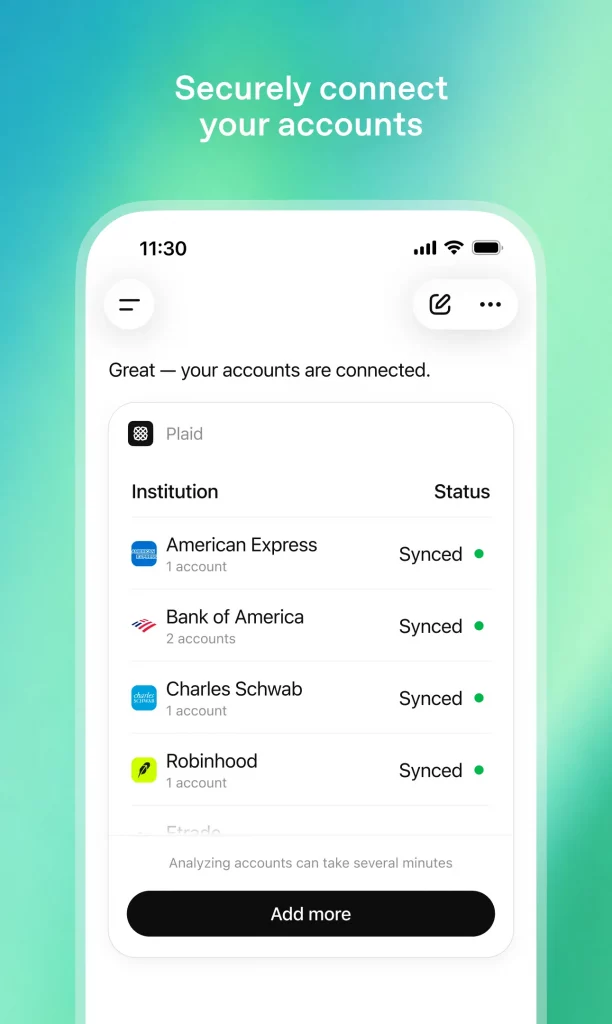
But that's where the more important part of the story begins. According to OpenAI, ChatGPT won't be able to change bank accounts, make transactions, or see full account numbers. But it can see data that is extremely sensitive to the user: account balances, transactions, investment portfolio, liabilities, loans, credit card debt, and other elements of a personal financial picture.
OpenAI emphasizes that users retain control over their data. They can disconnect accounts at any time, and they can also delete stored “financial memories,” such as goals or financial commitments that ChatGPT used to provide more personalized responses. The company also states that users can decide whether data from financial conversations can be used to improve models. It is important to note that OpenAI reserves up to 30 days to delete data from its systems after accounts are disconnected.
This feature is not directly available to users in Europe and Slovenia at this time, as it is being rolled out first to Pro users in the United States.
In the European space, such a function would be under the scrutiny of regulators. Financial data is among the most sensitive personal data, and its processing should be in line with the requirements of GDPR, open banking rules and financial services regulation. OpenAI should have very clear explanations of who processes the data, where it is stored, how long it remains in the systems, whether it is used to train models, who has access to it and what happens in the event of a security incident.
Would ChatGPT even be able to recognize subscriptions from domestic providers? Would it understand Slovenian bank statements, local payment habits, loans, limits, pension savings and tax specifics? Would it be able to distinguish between general financial advice and regulated investment advice? And above all, would the user really want a foreign company to have insight into their salary, expenses, debts, purchases, transfers to family members and investments?