

Share with others:

Samsung Galaxy A57 review – a phone in the wrong price range

Samsung Galaxy A57 is among the first to succumb to the market situation (shortage of RAM, NAND, helium and other raw materials). I expected the price increase much earlier and especially for premium phones, but not in the mid-range, where the fight between rivals is relentless. Any slip-up is immediately punished, there is simply much more competition. Redmi Note 15, POCO F8 and X8, the upcoming HONOR 600 (and 600 Pro), also similar last year's models are the phones that stand against the new Galaxy 57.
The latter is very different when viewed at a starting price of €529 (€100 more expensive than Galaxy A56) or at a price of €799, where we get 4 GB more RAM and 512 GB of total data space. A truly dizzying number, for which you can get much more elsewhere, which is what the Galaxy A57 offers, but more on that later.
The question is whether Samsung miscalculated or decided this year to sell fewer phones in the mid-range for more money.
| Very good workmanship | Weaker fingerprint reader |
| Large and dynamic display | Average performance |
| Very good operating system | Ultra-wide and macro camera useless |
| Long support | High price |
| Front camera satisfactory | No wireless charging |
| Main camera solid | Weaker Wi-Fi antenna |
Samsung Galaxy A57 price and specifications
| Property | Data |
|---|---|
| Processor | Exynos 1680 |
| Graphics core | Xclipse 550 |
| Screen | 6.7″ AMOLED, 120 Hz, 1900 nits |
| RAM | Up to 12GB LPDDR5X |
| Drive | Up to 512GB UFS 3.1 |
| Main camera | 50 MP, f/1.8, OIS |
| Ultra-wide camera | 12 MP, f/2.2 |
| Macro camera | 5 MP, f/2.4 |
| Front camera | 12 MP, f/2.2 |
| System | One UI 8.5, Android 16 |
| Battery | 5000mAh, 45W |
| The rest | IP68, Bluetooth 6, Wi-Fi 6E |
Samsung Galaxy A57 – it's definitely premium in the hand
The period when I got the feeling that I was holding something cheap, something "plastic", in the mid-range is long gone. I don't remember the last time I had a comment about any manufacturer that they had made a mistake in the production. I know that with Samsung, they never do, because if anything, they know how to make a phone that feels very good.
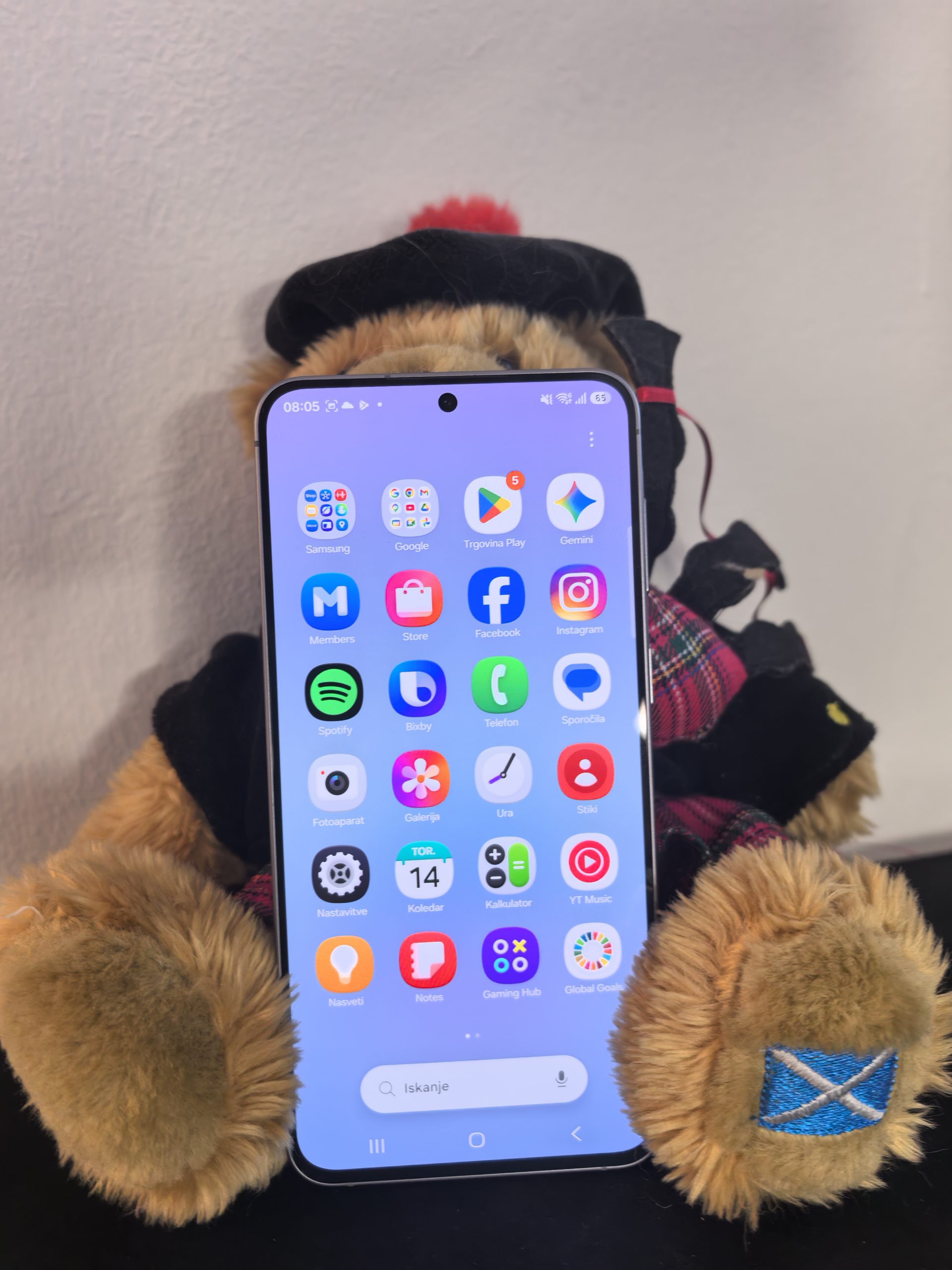
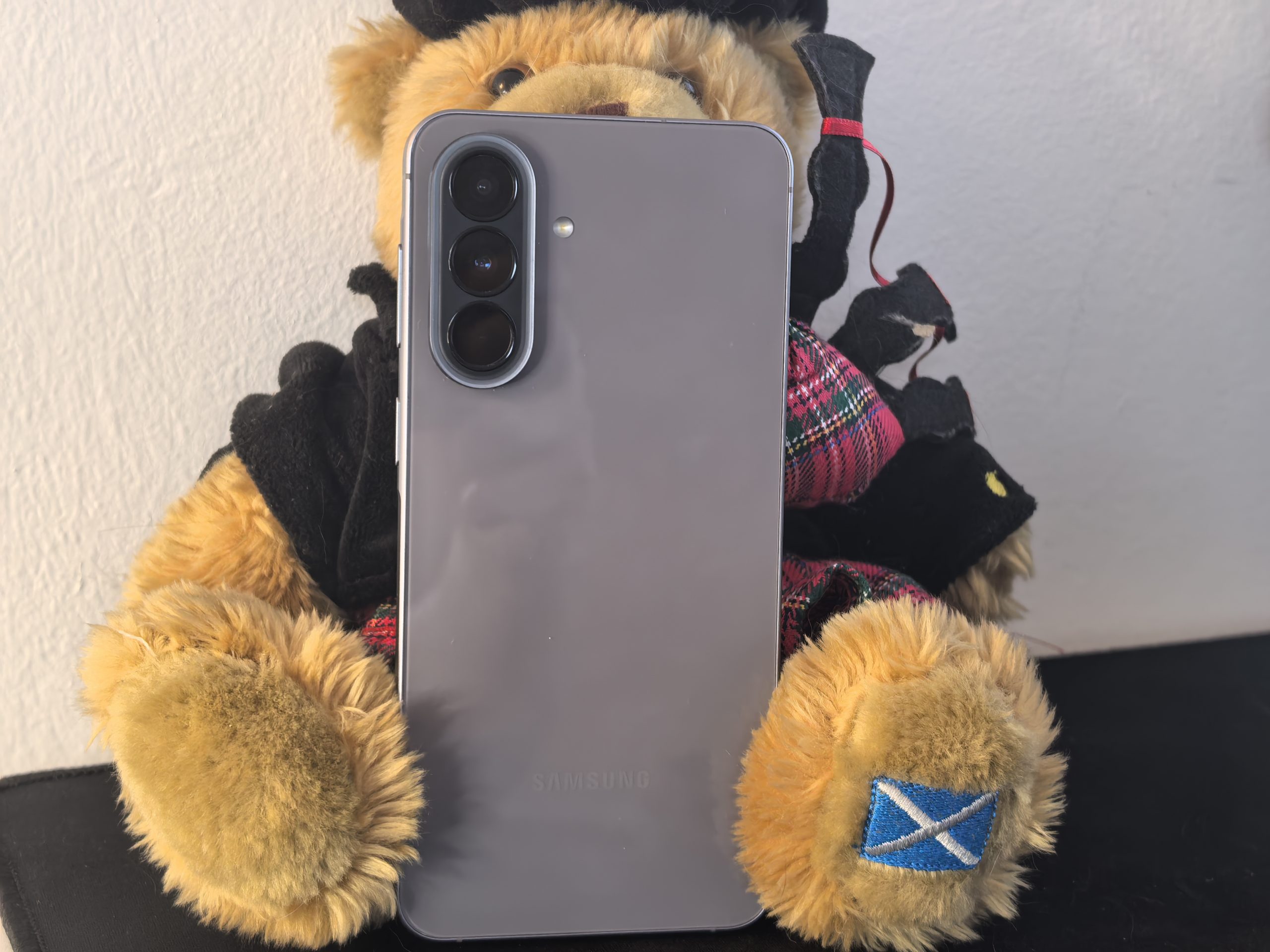
Given its size (6.7 inches), I expected it to feel chunkier in my hand. But that's not the case. The rounded edges save it because they don't "stick" in your palm while you're holding it. It's also surprisingly thin (6.9 mm) and extremely light (179 g). The body is made of strong aluminum, the back is glass (and also shiny and not very resistant to stains), and wherever possible, we find Corning's Victus+ protection. The IP68 rating for resistance to water and other foreign objects is also another proof of good workmanship. Otherwise, HONOR reigns supreme in terms of resistance, but Samsung is only a step behind.
Overall, the look hasn't changed drastically from its predecessor. The camera bezels are unified and reminiscent of the more expensive S series, just like they have been for the past few years. Personally, I would have liked it better if the A and S series had two unique designs to differentiate them better and give each series its own identity.
The optical scanner under the screen could also be improved, as I often had trouble detecting it.
Many components need a major upgrade, starting with the screen
The screen (6.7-inch AMOLED) is far from bad. Colors are accurate, vivid, contrasts are very good, and brightness is average. The highest stops at 1900 candelas (nits), while rivals at least double this number, if not more. The resolution (1080 x 2340) and the resulting pixel density (385 ppi) are also not top-notch, just "okay".
Support for the HDR10+ standard is expected, Dolby Atmos and Dolby Vision are missing (as every year Samsung refuses to pay for certification) and the display is still less friendly to those users who have problems with screen flickering. Others solve this with high-frequency PWM dimming or DC dimming, but Samsung does not pay much attention to this.
Exynos is part of the identity of Samsung's mid-range phones
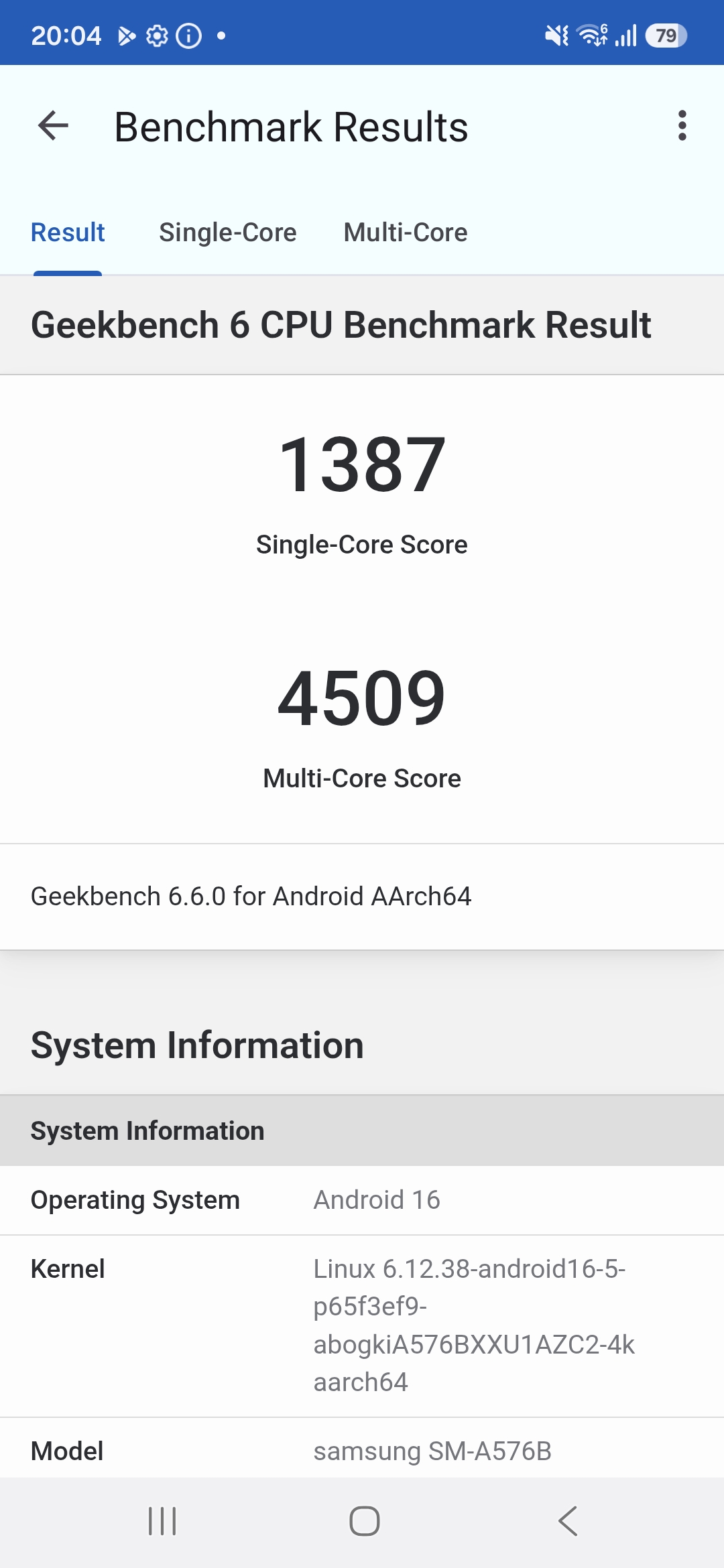
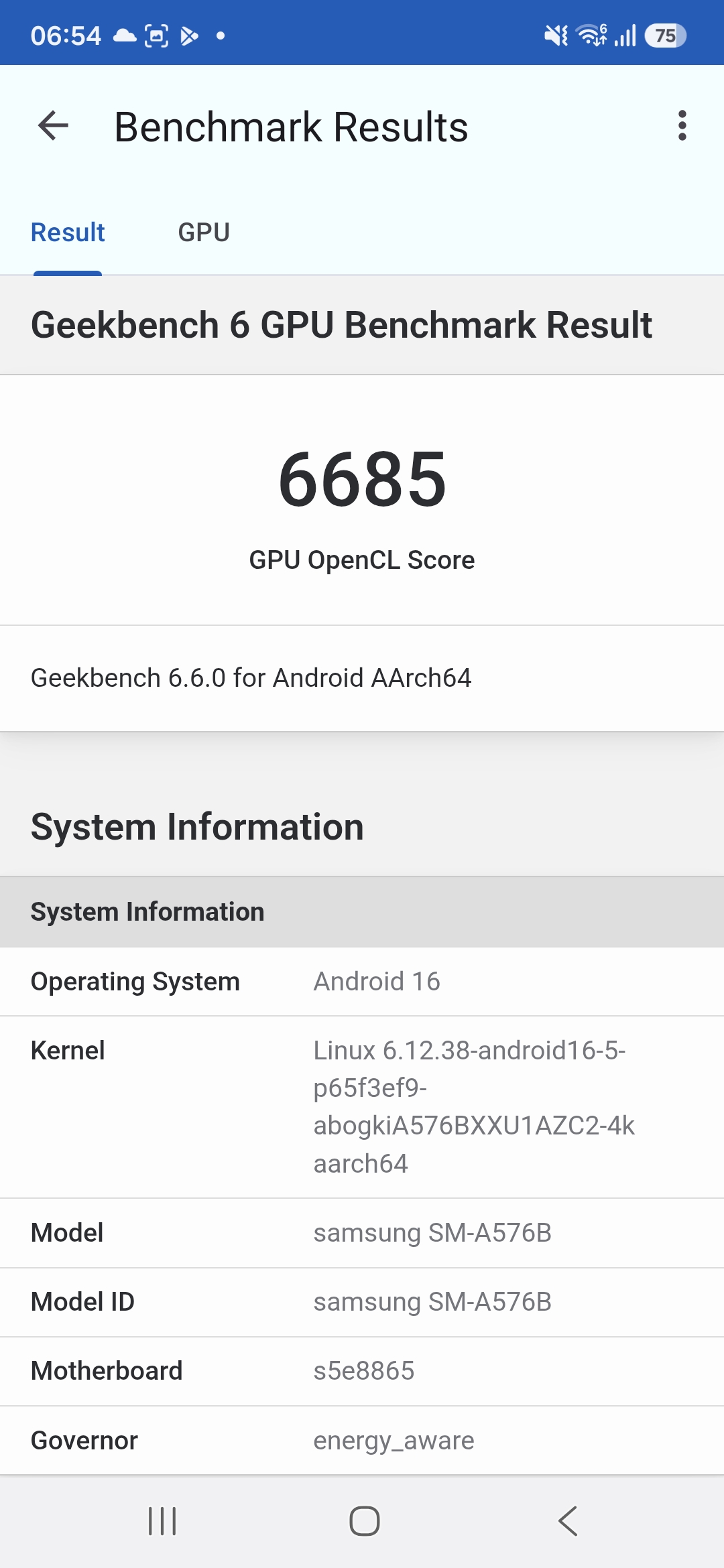
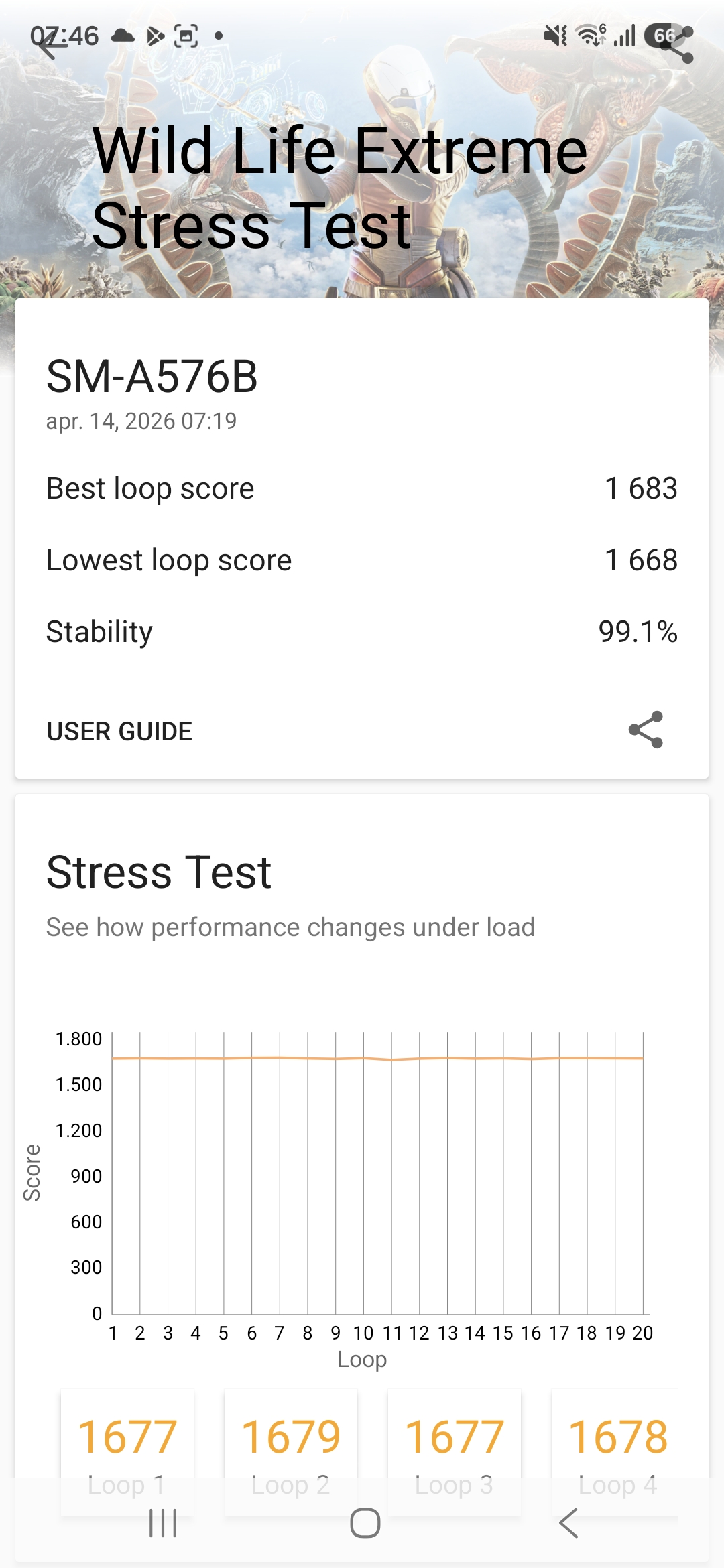
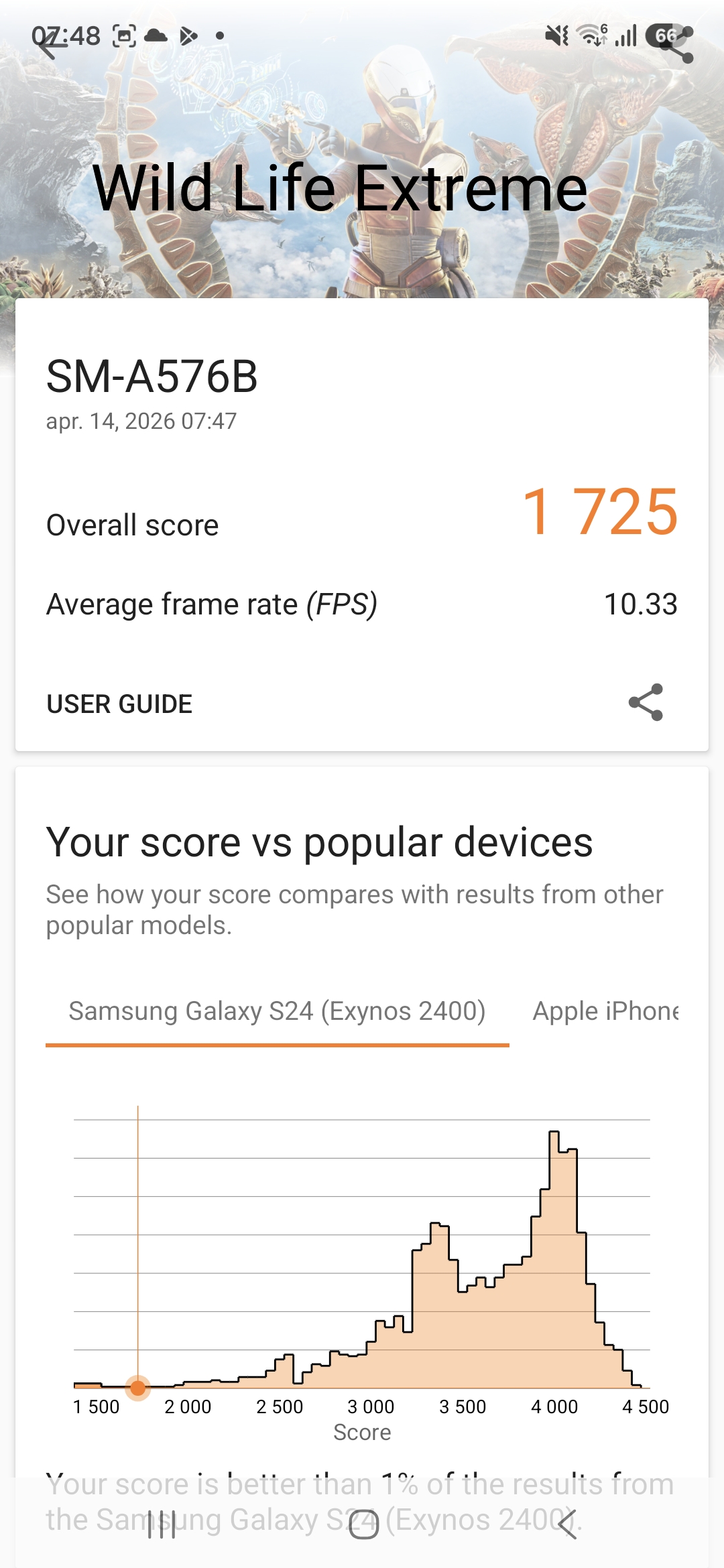
This year they have also opted for their own Exynos chip. The Exynos 1680 and the Xclipse 550 graphics core are a duo that takes care of powering the components. The graphics side is much better than the processor side, it's just a shame that game and application developers still (with good reason) emphasize Snapdragon chips. Even with emulators (although the graphics are good), you can immediately tell that they are not optimized for these chips, which is why you also have problems launching games that are a bit of a snack for Snapdragon phones. With purely classic games (Genshin Impact, COD, PUBG ...) you mostly have no problems. I was able to play almost everything at quite decent fps (but not at the highest and highest settings), the only serious problems are Where Winds Meet and Wuthering Heights, especially in the later parts of the games, when much more is happening on the screen than at the beginning of the game.
I didn't notice any serious overheating, which is understandable, since the power isn't as much as, for example, the Snapdragon 8 Elite. The drive is another component that could be upgraded. The initial capacity of 128 GB is ripe for retirement. If you still had the option of expanding with an SD card, I would have it easier to digest, so I recommend that you look at at least 256 GB of space, otherwise you will have to regularly delete files or (God forbid) rent space in the cloud every month. The speed of the drive standard (UFS 3.1), although quite solid, lags behind its rivals. You don't notice this easily, because the system works very responsively, quickly, without lags, but when you start, for example, to unpack a larger .RAR file with a huge number of smaller files, you notice that you don't have access to the UFS 4.0 or 4.1 standard, which is comparable to third-generation SSDs in some respects.
The battery has a capacity of 5000 mAh and charging up to 45 W, but only via cable. There is no wireless charging. The autonomy is solid, I got a day and a half of moderate use without any problems. Even if I focused on gaming, I was able to survive from morning to evening without a socket.
I also noticed that the Wi-Fi antenna is worse than I'm used to. There's no support for Wi-Fi 7, which doesn't bother me, but even with the 6E standard, the speeds are lower than, for example, on the HONOR 600 Pro, which I'm currently testing.
One UI 8.5 is one of the few trump cards
It's happened before that the operating system saved Samsung. When HONOR's foldable phones drastically improved and it took Samsung another year to do the same, One UI was what kept Samsung on top.
If I had the choice of which system my Android phone would have, I would probably choose between One UI and Android on Pixel phones. The system is clean, transparent, and also attractive to the eye, but not to the point where they overdid it and approached the border of kitsch. The functions are logically placed, the shortcuts work well and logically, the level of personalization is among the best, and you also get a rich range of UI features (but not as much as on the Galaxy S26), if that's important to you.
For now, you have Gemini and Gemini Live available, and Perplexity is also expected to be coming, but I don't yet have any information on how you will switch between the two.
Can the cameras save the Samsung Galaxy A57?
Unfortunately not. Samsung, where is the optical zoom?
The main camera (50 MP, f/1.8) is fine during the day, but only satisfactory at night. If the light is right, the details are good, the dynamic range is wide, and the color reproduction is also good with an emphasis on natural tones. At night, the Galaxy A57 combines multiple photos to create the best possible image, but the physical limitations are simply too great. The sensor is too small to really take pictures that are comparable to daytime ones, at least in terms of detail. There is a lot of noise, contrasts are average... Zooming, which is a trademark of Samsung on more expensive phones, is sidelined. There is no optical zoom, so you always rely on digital zoom, which is lost at magnifications above 3x.
To capture fast-moving subjects, Samsung has introduced Shot to Shot, which shortens the time between shots and reduces shutter lag, allowing for clearer shots of moving subjects without excessive blur. The results aren't always great. If you're patient, you might be able to catch the youngest family member kicking a ball or having fun on the playground.
Portraits are mostly fine. The separation of the background from the subject works well, and even hair is well captured in the frame. You can partially adjust the bokeh effect, but it's not as good as if you had a physical variable aperture.
In addition to the main camera, the system includes a 12-megapixel ultra-wide-angle camera for landscape shots and a 5-megapixel macro sensor for close-up photography, although their usefulness is somewhat limited due to their lower resolution.
Video capabilities stop at 4K and 30 frames per second, which is enough for the average user. Image stabilization is okay or good if you're using the main camera, which has optical stabilization.
The front camera is solid. I wouldn't recommend it for serious vloggers, but for home videos it's perfectly satisfactory.








Is the Samsung Galaxy A57 catching up with an (insurmountable) lag this year?
It's well made, the screen is fine, the system is top-notch, Samsung's support is the best, the main camera is also satisfactory, but that's where the praise ends.
Going back to the chip, the Exynos 1680 is a reasonable choice considering the starting price of €500, although even there I can quickly find phones with more muscle. But for this price I can forgive its lack of power because it is still reliable and efficient, which may be more important to some than raw power.
As soon as you choose the more expensive configurations, cracks appear in the Exynos armor that I can no longer ignore. Why would I choose the Exynos 1680 when you can get the Snapdragon 8 Elite or even the Snapdragon 8 Elite Gen 5 for the same price (or cheaper)? And on top of that, more RAM, a faster drive, faster charging, even better cameras...
There are really plenty of rivals. Xiaomi has its seventeen for around €700-800, then the POCO F8 Pro (Snapdragon 8 Elite) for around €500, the F8 Ultra (Snapdragon 8 Elite Gen 5) for €700, the X8 Pro Max for €400. Also Samsung of its S26 selling for a good €700, HONOR has a 400 (Pro) phone and an upcoming 600 (Pro)...
All of these are better than the Samsung Galaxy A57 in almost every way, so I wonder who it is aimed at and how they will convince buyers to ignore everything else on offer. I know Samsung has strong consumer confidence, but will that be enough this year?