

Share with others:

Huawei Watch GT 7 Pro review: a great watch that I charge twice a month

I've been testing smartwatches for long enough that a new generation rarely surprises me. The screen is a bit brighter, the sensors are a bit more accurate, they add two or three sports modes, and the manufacturer promises a few hours more battery life. Then, after a day or two, I put the watch back on the charger and life goes on.
Even Huawei has reached a point where it can no longer promise revolutionary changes every year. A watch is a watch, after all. If you want something different, you can check out their watch, for example. Huawei Watch D2/D3, which is (to my knowledge) the only watch that can accurately monitor blood pressure. This is an example of something different. The Huawei Watch GT 7 Pro is in many ways a smaller evolution of a very good predecessor. The design remains recognizable, the programming philosophy is the same, and we already know many of the measurements.
The biggest upgrade happened where it will hurt its rivals the most Samsung and Apple. While the latter boast a maximum of two days of battery life, Huawei is currently in its third week (if you're being modest about your usage). I can't even imagine how such giants could have allowed such a gap to form between their watches. But the gap remains and I see no signs of this gap being filled any time soon. Good news for Huawei, who can now focus on other elements.
But that's not the only upgrade. We also got new measurements, but more on that below.
| Advantages | Weaknesses |
| Three-week battery life | The app ecosystem is more modest than Wear OS and Apple Watch |
| Very bright and high-quality AMOLED | Steps are less precise when the arm is still while walking |
| Accurate GPS | Advanced golf features are reserved for Pros |
| Excellent sleep tracking | |
| Works with Android and Apple | |
| Curve Pay for contactless payments | |
| New ways for cyclists, skiers and golfers | |
| The EasyCross strap is very comfortable | |
| Premium materials |
Huawei Watch GT 7 and Watch GT 7 Pro price and specifications
- Huawei Watch GT 7: from €299
- Huawei Watch GT 7 Pro: from €429
| Huawei Watch GT 7 46mm | Huawei Watch GT 7 Pro | |
| Housing | stainless steel | titanium alloy |
| Screen protection | protective glass | sapphire glass |
| Screen | 1.47-inch AMOLED | 1.47-inch AMOLED |
| Resolution | 466 × 466 pixels | 466 × 466 pixels |
| Maximum brightness | 3000 threads | 3000 threads |
| GPS | dual-band GNSS, Sunflower, AI-XDR | dual-band GNSS, Sunflower, AI-XDR |
| Health measurements | heart rate, SpO2, HRV, skin temperature, stress, sleep | heart rate, SpO2, HRV, skin temperature, stress, sleep + ECG |
| Water resistance | 5 ATM + IP69 | 5 ATM + IP69, free diving up to 40 m |
| Sports features | running, cycling, skiing and many other sports | running, cycling, skiing, golf, diving and many other sports |
| NFC and Curve Pay | yes | yes |
| Calls from the watch | yes | yes |
| Compatibility | Android and iOS | Android and iOS |
| Occasional use | up to 21 days | up to 21 days |
| Typical use | up to 15 days | up to 15 days |
| Use with AOD | up to 7 days | up to 7 days |
Titanium, ceramic and sapphire... it's hard to find a more premium watch
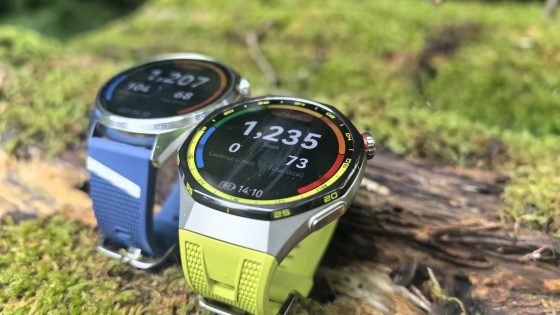
The Huawei Watch GT 7 Pro is a big watch. The Pro version only comes in a 46mm version, and weighs about 55.5 grams without a strap. Huawei has used a titanium alloy case, a nano-ceramic bezel, and sapphire glass. Underneath it is a 1.47-inch AMOLED with a resolution of 466 × 466 pixels and a peak brightness of 3,000 nits.
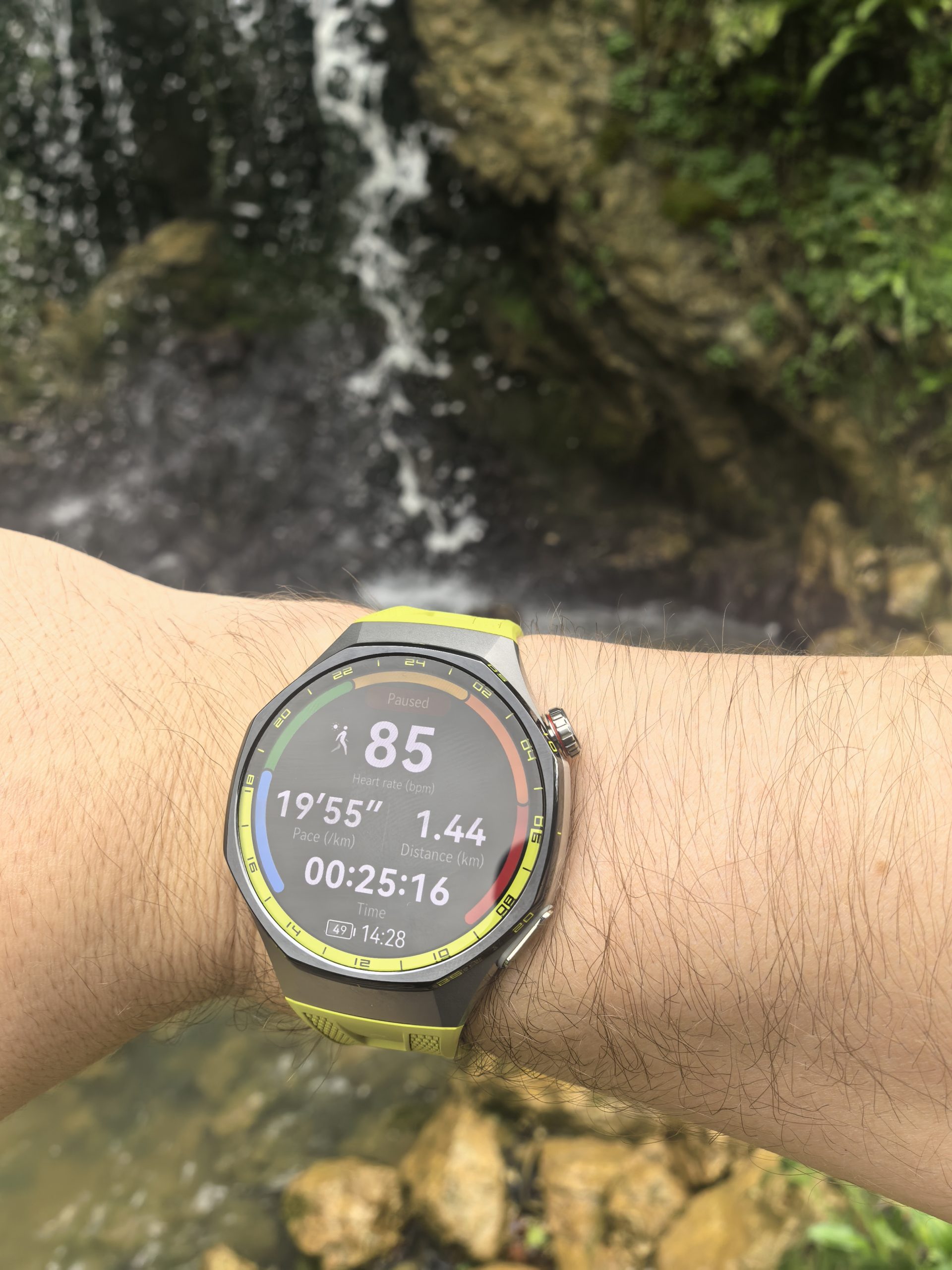
It all reads very similar to the previous generation and the numbers are very similar. You definitely won't be upgrading from the previous generation due to the materials. Huawei Watch GT 6 Pro. I have no complaints about the design and durability. Huawei makes very nice watches. Although it is a more sporty watch, it is sophisticated enough that I could (and should) wear it with other styles of clothing, even in more refined scenarios. Maybe that yellow-green strap is a bit too flashy, but it can be replaced.
During the testing period, I hit it several times against the edge of the table and the wall. It also fell while I was recording. Of course, I don't drop devices on the floor on purpose during testing, but if you use them every day, something like that will happen sooner or later. After all these incidents, my watch has no visible scratches on the sapphire glass and no noticeable damage to the case.
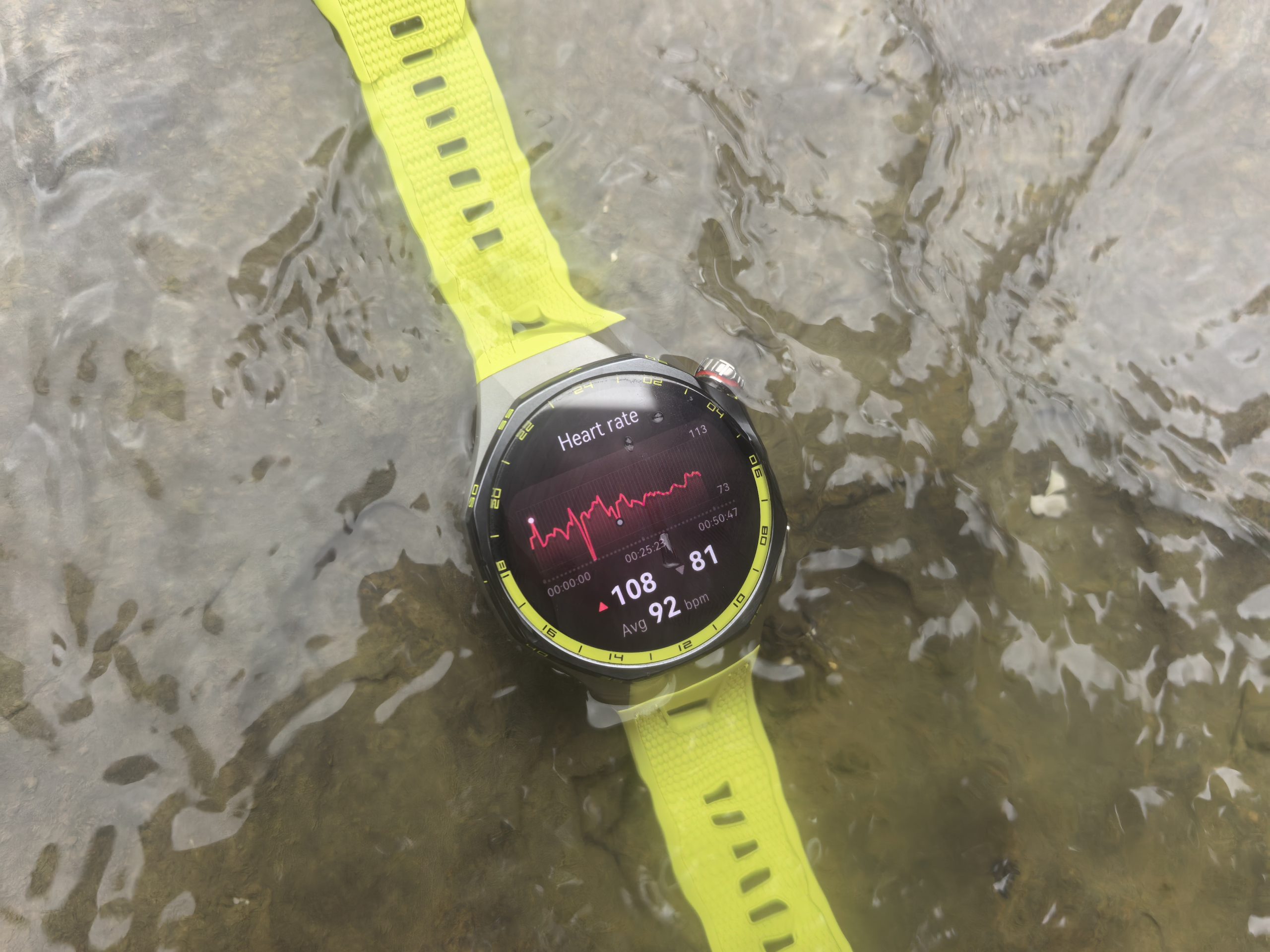
The watch is also certified for 5 ATM and IP69, and also complies with the EN 13319 standard and supports free diving up to 40 meters. I used it while swimming and even had it on my wrist in a hot shower without any problems. All manufacturers advise against contact with hot water, but my previous watch (which belonged to a lower rank) was in a hot shower every day for more than 5 years and I did not encounter any problems. However, it is of course your decision whether to follow the manufacturer's advice.
The screen is great, but water still doesn't understand personal space
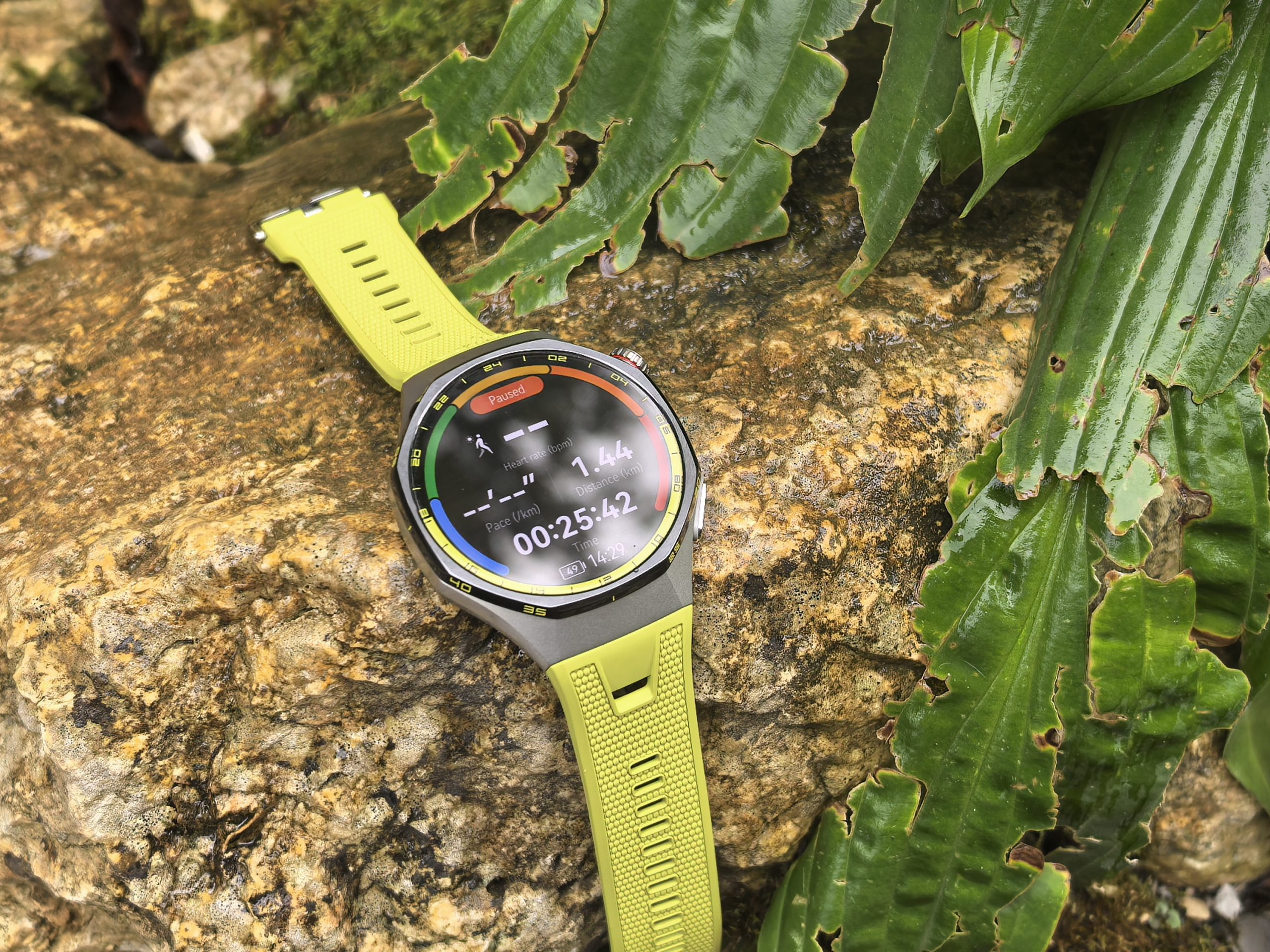
The 1.47-inch AMOLED is sharp, contrasty, and above all, bright enough that I have no problems reading data outdoors. 3000 nits is the highest laboratory value, but independent measurements have also shown that the watch is indeed capable of reaching this brightness.
Even the smaller numbers are easy to read during exercise, the viewing angles are excellent, and the black is of course true AMOLED black. Always-on Display is available, and with such a battery, you can turn it on without a bad conscience.
I have a comment that is not specific to Huawei. Smartwatch manufacturers need to do something about wet screens. When I'm swimming or in the shower, water droplets can trigger unwanted touches on the screen. We've come a long way in phones when it comes to water detection and preventing false touches. It's time for smartwatches to get similar algorithms. It's not a dramatic problem, but in 2026 it's a bit funny to watch a watch that can analyze ECG, HRV, GPS, sleep, and G-forces while skiing, then be confused by one large drop of water.
EasyCross is a very good strap
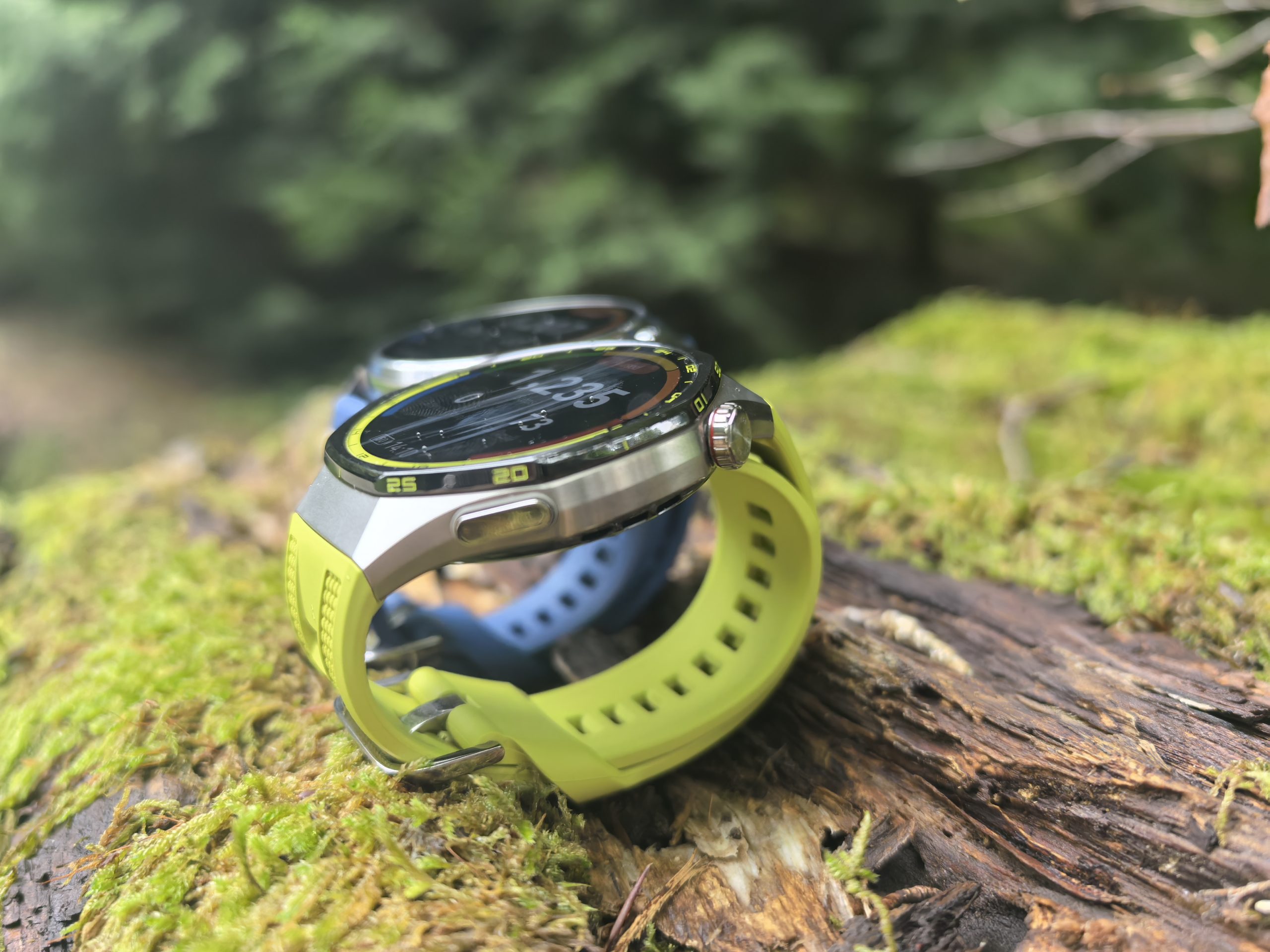
The new EasyCross strap is one of the minor changes that I actually really liked during the test. The end of the strap hides under the other part after fastening, so nothing sticks out from the wrist. The strap is soft, very comfortable and at the same time sturdy enough to keep the watch in the right place during exercise. This is also important for heart rate measurements, where moving the watch around on the wrist can quickly worsen the results.
Huawei makes it from fluoroelastomer, and the width on the 46mm model is 22mm. My initial concern is mainly the range of replacement straps. The original EasyCross is very good, but it remains to be seen how quickly the range of reasonably priced alternatives from third-party manufacturers will develop. At least the 22mm width is not exotic, so we will certainly not be completely without choice.
Xiaomi and Samsung have had similar straps in the past, but in newer generations they have switched to classic straps with a tab, which, at least in my experience, is the weakest part of the strap. If I've ever had to replace a strap, it's because of this tab.
15 days. With GPS on. Crazy!
I can list the sensors, materials, and sports modes of the Huawei Watch GT 7 Pro, but its biggest advantage is still the battery.
Huawei says the watch can last up to 21 days of casual use, 12 days of typical use, seven days with the always-on display, and up to 51 hours in trail running mode. A full battery can be charged in about 95 minutes using wireless charging.
During daily exercise or walking, where I usually also use GPS, I got about 15 days of battery life.
Fifteen. Not hours. But days. If I limited my usage to mainly checking the time, notifications, and basic health metrics, the watch lost about five percent of its battery per day. In that scenario, Huawei's promise of 21 days is entirely realistic.
With Huawei watches, I haven't even thought about charging my watch in the evening after a hard day of sports for a few years now. I don't check the battery before every long walk. I can go on vacation for a week or two without a charger. If there was a real crisis, I could charge it with my phone.
With the regular Apple Watch, Galaxy Watch, and most watches with Wear OS, battery life is still measured primarily in days, or rather hours. With the Huawei Watch GT 7 Pro, I measure it in weeks.
There are Garmin sports watches that can last even longer, so I wouldn't absolutely declare the GT 7 Pro the watch with the longest battery life in the world. But among premium smartwatches with an AMOLED display, calls, NFC, advanced health metrics, and such a rich feature set, the Huawei is in a class of its own.
Hi Curve Pay. I hope you stay with us longer than Quicko.
If you had asked me last year what Huawei watches were missing the most, the answer would have been contactless payments. It took them a long time to solve this conundrum. They had NFC, but it was useless without Google Pay. In the meantime, they added contactless payments to one generation with the Polish app Quicko, and the partnership ended very quickly. The logical choice was Curve Pay, which has been the best option for contactless payments on Huawei phones since the beginning of the US blockade. Why not just extend this to watches. And that's what they did. After the initial setup, you can pay directly with the watch at the terminal, and you don't need a phone to do it. Curve officially supports the Huawei watch, regardless of whether it's connected to Android or iPhone.
It's not as simple as Google Pay or Apple Pay. With them, I add a supported card and that's it. With Curve, I first have to set up my account and cards in the app, then connect Curve Pay to my watch and set up the appropriate NFC option. In my case, it didn't go smoothly either. I couldn't get Curve Pay to work properly on my watch on the first two attempts. After resetting it, I repeated the process and it's been working flawlessly ever since.
Once it's set up, the experience is great.
The Huawei Watch GT 7 Pro is not tied to a Huawei phone, and it's not tied to Android either. It also works with an iPhone. It sounds obvious, but unfortunately it's not. Samsung watches work best in their own ecosystem. Apple watches don't want to leave their comfort zone at all.
It's true that not all features are necessarily identical on all platforms. Huawei itself warns that the availability of individual options depends on the operating system, and on the iPhone some integrations are limited. But the basic clock, sports tracking, metrics, Huawei Health, notifications, and even Curve Pay also work in combination with iOS.
Insight into health, physical fitness...
Huawei has taken health monitoring to a very high level in recent generations. The Watch GT 7 Pro monitors heart rate, SpO2, skin temperature, HRV, stress or emotional well-being, sleep, offers ECG and pulse wave arrhythmia analysis.
The new system also combines sleep, recovery, and activity data into a physical readiness score. You have to wear it for at least 7 days, and then you'll get an assessment of how physically fit you are, how much rest you need, and so on. It's basically just a new way to see all your metrics in one view, instead of having to open multiple different metrics. Useful, for sure, but not something that will make you start using your watch differently.
Of all these measurements, I had almost ideal sleep testing conditions this year. Since I wake up a lot at night with my baby, I know very well when I was awake. I look at my watch, get up, go back to bed later, and I know roughly when I fell asleep. On about 95 of the %'s nighttime awakenings, it detected the time I woke up and fell back asleep within about two minutes of what I remembered. That's a fantastic result for a wrist-worn device.
I have less confidence in the final sleep score. Sometimes I know I slept terribly, wake up exhausted, and the watch gives me a surprisingly good score. Other times I sleep longer, wake up rested, and get a lower number. This isn't unique to Huawei. I have the same comment about practically every smartwatch and bracelet I've tested so far.
I didn't notice any obvious anomalies in my heart rate during use or periods where the watch completely lost touch with reality. I have a Polar chest strap and the numbers match up well.
Huawei uses multi-band GNSS and its Sunflower Positioning System, which is supplemented with the AI-XDR algorithm in the Huawei Watch GT 7 Pro. The system aims to improve path reconstruction when direct satellite signal is not ideal, such as between buildings, under trees, or during short signal interruptions. Huawei advertises up to 20% more accurate tracking compared to the GT 6 Pro for fast-paced winter sports.
It's not a magic solution. If you're between blocks, there will still be a deviation. Or under the canopy of trees or anywhere where there are jammers for the satellite signal. But the result is better every year.
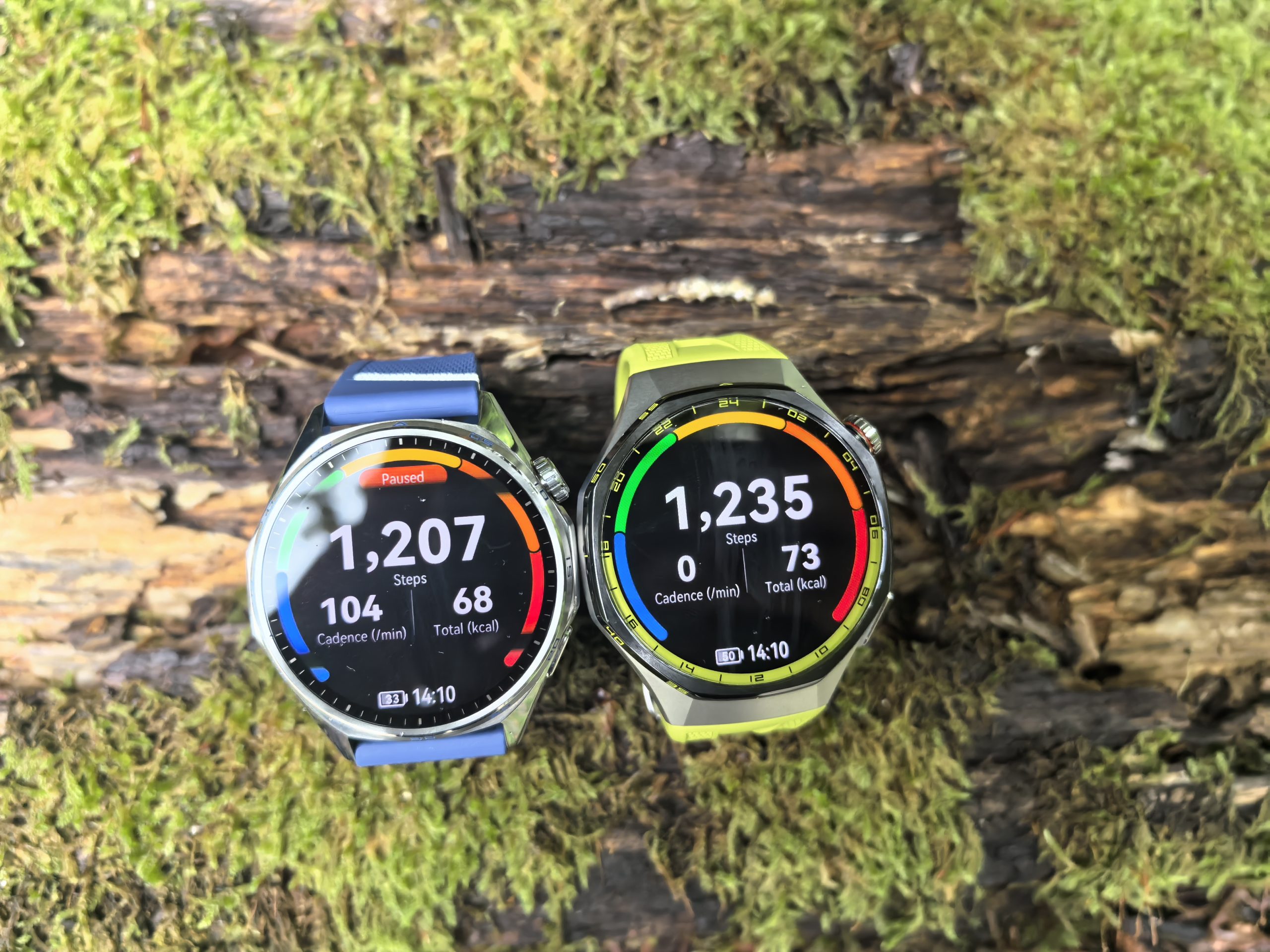
I found a much more mundane problem with step counting. Smartwatches traditionally use a combination of an accelerometer, a gyroscope, and algorithms to determine whether we're walking from the movement of our wrist. But what happens when our wrist isn't moving? Like when I'm carrying a baby. Or when I'm pushing a stroller. That's when our arm is relatively still, and the watch loses one of the main signals that tells us we're walking.
In such a case, the Huawei Watch GT 7 Pro (and other watches) starts to guess much more about how much I actually walked. If I turn on GPS and start exercising, the problem practically disappears, as the watch still has information about the actual movement through space. Without GPS, the result is much less reliable. In my experience, Samsung watches estimate this a little better. Samsung is not miraculous either, but in such a scenario they estimate a little better that I am walking despite my hand being still. Huawei still has some room for improvement here.
For cyclists, the Huawei Watch GT 7 Pro is an increasingly serious tool
Huawei clearly wants to bring the GT series even closer to athletes. When cycling, I can sync the route from the Huawei Health app before starting and check the upcoming climbs on the watch. While riding, I get data on the distance to the climb, the elevation gain, and the average gradient, and the watch also warns of upcoming sharp turns. After the ride is over, I can check the analysis of individual climbs. Connection with smart trainers is also supported.
Are they a good enough reason for a GT 6 Pro owner to immediately buy a GT 7 Pro? In my opinion, not, but if they continue like this, in a generation or two they will be on par with Garmin and Suunto in terms of the number of useful sports features.
Skiing is one of the more interesting innovations, but of course I haven't tested it.
The new generation also pays much more attention to skiing. The Huawei Watch GT 7 Pro can automatically distinguish between descents, cable car rides and rest, records the maximum speed, average slope, total descent and number of rides. The watch can monitor the number of turns, the frequency of turns and the G-forces that I put on my body during turns. There are also maps of more than 3,000 ski resorts in 59 countries, which can be downloaded to the watch in advance. They display the names of the slopes, difficulty and cable car facilities.
I'm not a skier and it's not the right time of year, but based on what's written, even skiers will have a good reason to consider buying a new Huawei watch.
The same goes for golfers. The database contains more than 17,000 courses (I don't know how many are Slovenian), the watch shows maps, distances, and adjustments based on the slope of the terrain, allows manual changes to the position of the flag, and has an automatically rotating view of the green. I can enter the results of individual holes on the watch in real time, and later I can also review the trajectory of individual shots in Huawei Health.
The Huawei Watch GT 7 Pro is one of the most complete Huawei watches ever
I will have a hard time taking it off my wrist after testing it. For me, this is already a watch that has everything I need. The battery is the most important thing for me, and I think I have already listed enough superlatives about it. It has become the standard for all other watches. And everywhere else it is at the highest level.
The PS is accurate. The heart rate tracking is reliable. The sleep tracking is one of the best I've seen at detecting my nighttime awakenings. The sapphire crystal and titanium survived my accidental knocks without any consequences. The new EasyCross strap is comfortable. The screen is excellent. And finally, I can pay normally with it, although that's not so important to me because I always have my phone or card close by.
I still see room for improvement. Step counting with a stationary hand could be better. Wet drops shouldn't trigger the screen so easily. Curve Pay requires a bit more initial work than Apple Pay or Google Pay. The app ecosystem remains more limited.
And I would hardly say to the owner of the Huawei Watch GT 6 Pro that he urgently needs to run to the store for the new generation. For everyone else, the Watch GT 7 Pro is an extremely interesting combination of a sports watch and a classic smartwatch. Also because it doesn't have to decide whether it wants to work with Android or Apple. It works with both.