

Share with others:

LeRobot humanoid robot for home craftsmen

Advanced technology has become increasingly accessible to a wide range of people over the years. Computers, smartphones, and high-speed internet connections, once considered luxury goods, are now part of everyday life. Of course, this is not entirely true for the field of advanced robotics. Although simple hobbyist robots that follow lines on the ground are extremely cheap, more powerful humanoid models still cost more than the average car.
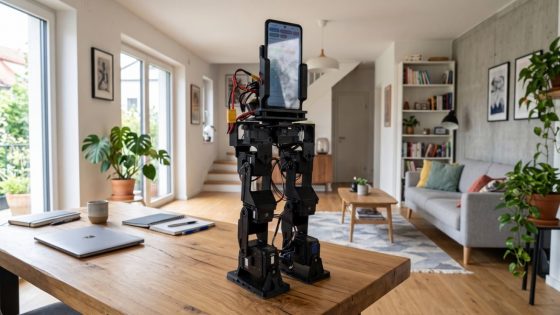
The LeRobot Humanoid project aims to change that. It is an open and affordable platform based on 3D-printed parts. Technically, this project is a pair of robotic legs that cost an estimated €2,300. While this price tag is still a significant financial barrier for many, for those with access to a 3D printer, it is one of the best development environments for learning.
The developers have targeted the project primarily at researchers, students, and hobbyists who want to build, repair, and modify a humanoid robot themselves. Although it is not a consumer product, the team has released a comprehensive platform that includes, in addition to hardware blueprints, detailed assembly instructions, wiring diagrams, simulation tools, calibration tools, and machine learning training environments.
The robot structure is made up of printed components, complemented by commercially available electronics and inexpensive drive motors. This approach allows for the structural part to be easily reprinted or quickly changed in the event of a failure, without waiting for expensive factory spare parts.
The current version focuses on a bipedal lower body that is capable of both standing and moving. The main goal is to bridge the gap between simulation and the real world, as robots in practice often behave differently than in a computer program. The entire system is divided into several programming stages, covering all phases from mechanical design to simulation testing before actually running the code on a physical device.