

Share with others:

BYD to install 3,000 ultra-fast charging stations in Europe

This is an important step in the company's strategy, which does not only want to sell cars, but also build the infrastructure around them.
Charging in five minutes
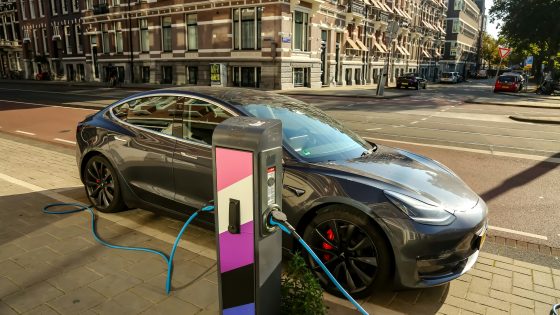
The new “Flash Charging” technology reaches a power of up to 1,500 kW, which is about three times more than the latest generation of Tesla Superchargers. BYD claims that vehicles with the new generation of “Blade Battery 2.0” batteries can charge from 10 to 70 percent in about five minutes, or almost to full capacity in less than ten minutes.
This could eliminate one of the biggest obstacles to the wider use of electric vehicles: long charging times.
More than two billion dollars of investment
Establishing the network won't be cheap. According to recent estimates, each charging station would cost around 580,000 euros, and the total investment could approach two billion dollars.
The first stations will be set up in Germany and the United Kingdom, and then the network will expand across the rest of Europe.
BYD wants to control the entire experience
The move reflects a broader strategy by the Chinese giant. Traditional automakers have largely focused on vehicles, while Tesla has shown that charging infrastructure can become a significant competitive advantage.
BYD is now trying to do something similar. The company wants to compete not just with cars, but also with the user experience of charging.
Although the charging stations will be open to all vehicles with a CCS connection, the highest speeds will only be available for BYD vehicles with the new generation of “Blade Battery 2.0” batteries. The first such model in Europe will be the Denza Z9 GT.
This means that the infrastructure will be open, but the full potential of the technology will remain primarily BYD's competitive advantage for now.
The European electric vehicle market is entering a new phase. While the debate has focused on the range of vehicles, attention is increasingly shifting to the speed of charging. If BYD delivers on its promises, electric vehicles could for the first time come close to the user experience of conventional cars, even on longer journeys.